The Linnaean Society of New York

In Memoriam
 

Search

Remembering Lee Rogers: Artist, Birder, and Caretaker of Central Park’s Birds

ARTIST, BIRDER, AND CARETAKER OF CENTRAL PARK’S BIRDS

For decades, Francis Lee Rogers, also known as Elise Bainbridge Hill, was a familiar presence in Central Park’s Ramble. To the birders, artists, park regulars, and friends who knew her there, she was simply Lee.
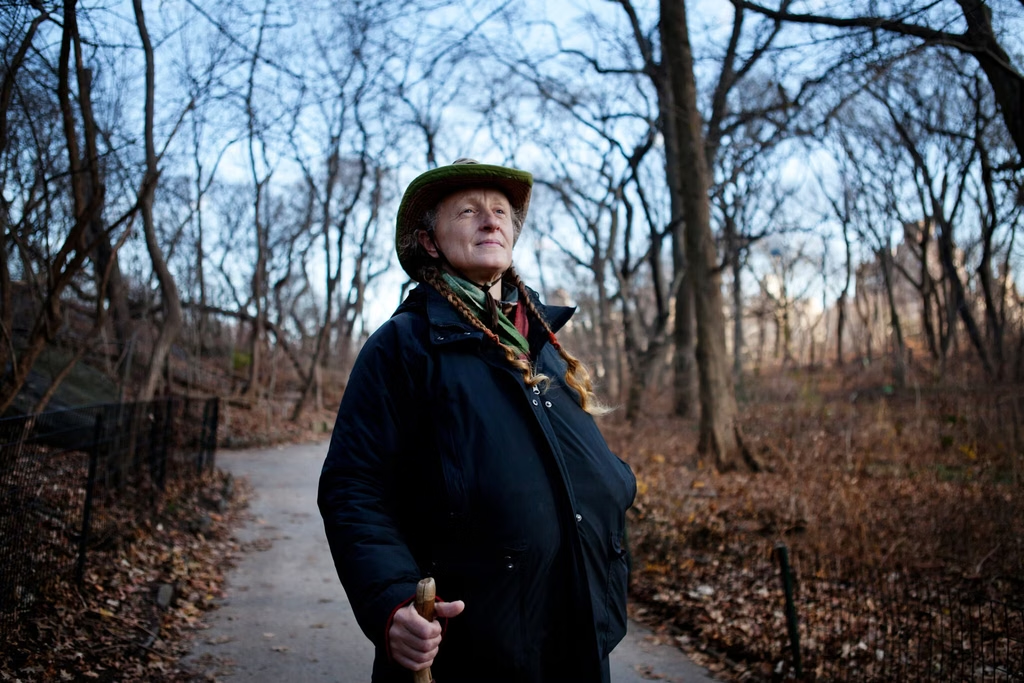
Lee Rogers on a path in Central Park's Ramble in winter, wearing a green hat and dark coat
Photo from the New York Times

You might see her walking through the Ramble with her distinctive long braids, wide-brimmed hat, walking stick, and a bag filled with her artwork. She knew the birds, painted them, and for years helped keep the bird feeders filled.
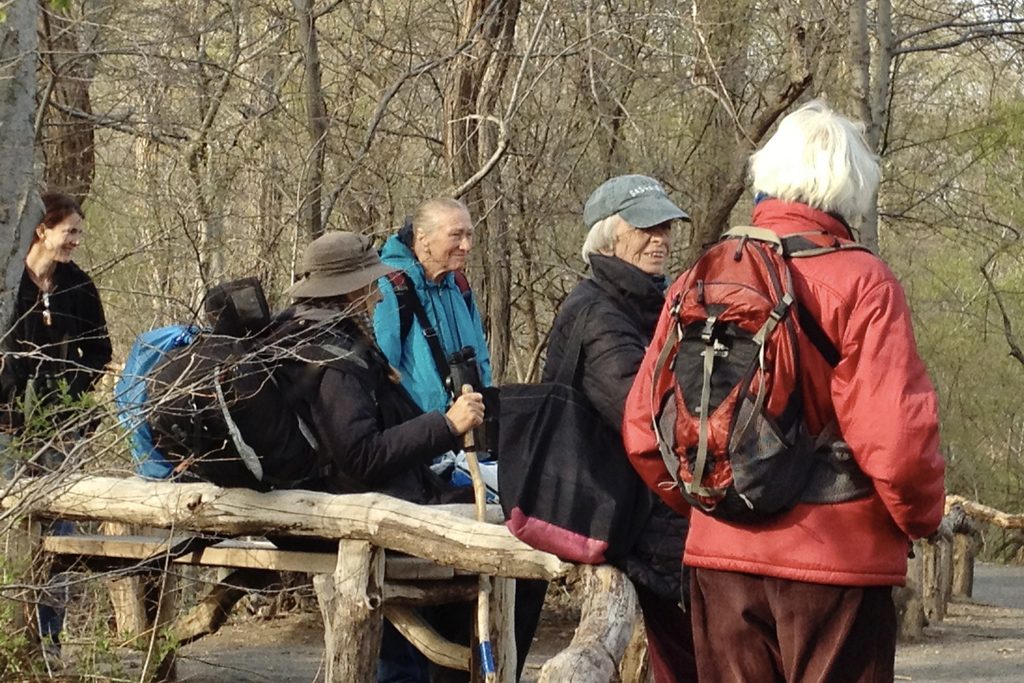
Lee with a group of birders beside a rustic wooden fence in Central Park
Photo by Jean Shum

Lee died on September 27 at the age of 63. Her sudden death has been deeply felt by the Central Park birding community and by the many others who knew her. Many have contributed to a memorial at the Rustic Shelter where Lee would often rest among her birds.
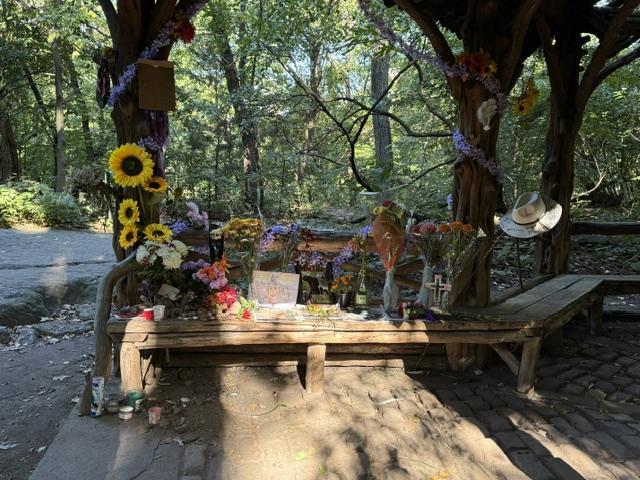
Memorial for Lee in Central Park: a rustic bench covered with flowers, sunflowers, and her hat
Photo by Miriam Rakowski

Lee also has an important connection to something many Linnaean Society members know well: the bird feeders at Evodia Field.
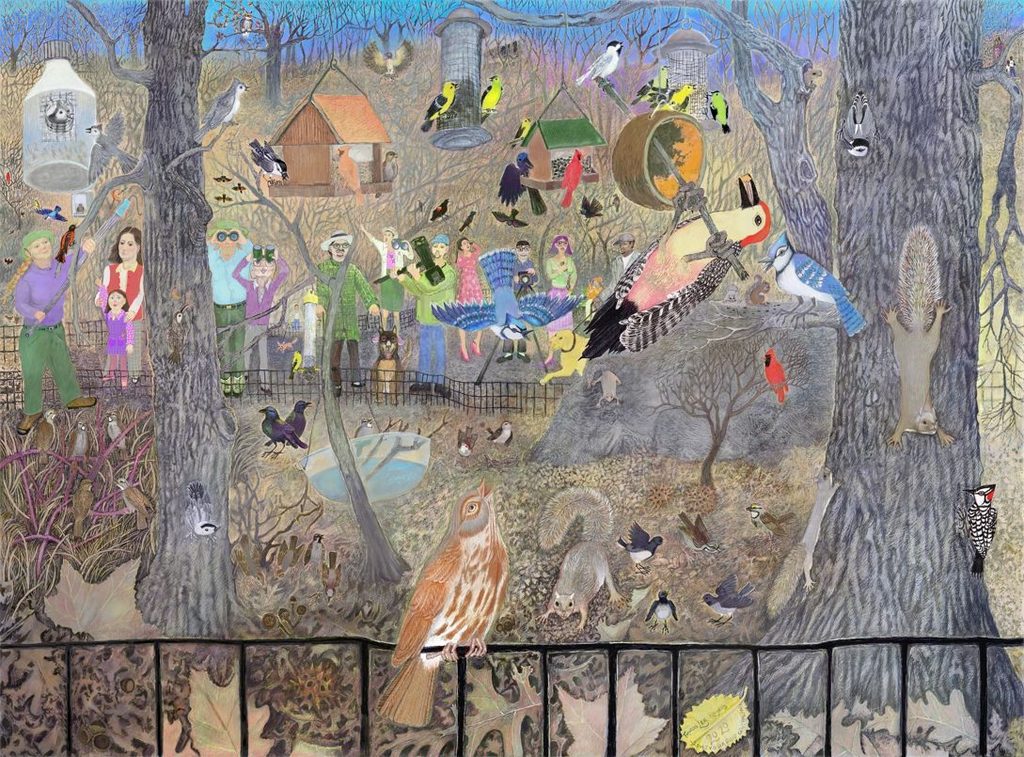
Lee Rogers' painting of the Central Park bird feeders, crowded with birds, squirrels, and visitors
Lee Rogers’ painting: Central Park Bird Feeders

LEE AND THE BIRDS OF CENTRAL PARK

Lee did much more than watch the birds.

For years, she maintained a homemade network of feeders in the Ramble, suspending them from lines looped over high branches and keeping them supplied with seed and suet. She used her own money as well as donations from birders to keep the feeders full. The feeders became part of Lee’s life in the park and part of the experience of generations of Central Park birders.

Lee’s connection to the feeders also overlapped directly with the Linnaean Society. Years ago, when the feeders at Evodia Field needed replacing, LSNY member Will Papp worked with Lee to install new ones. He continued to help her over the years, delivering bags of seed and occasionally filling the feeders himself.
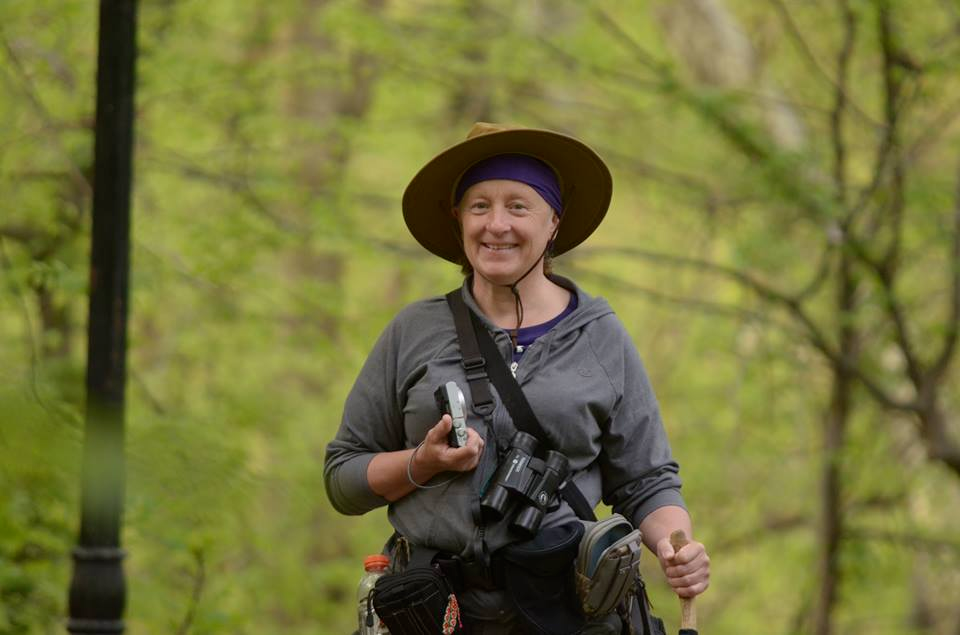
Lee smiling in a wide-brimmed hat with binoculars in Central Park in spring
Photo from Lee’s Website – photographer unknown

Today, that tradition of care continues through the Linnaean Society. LSNY volunteers Will Papp, Kevin Sisco, and Ken Chaya maintain and refill the bird feeders at Evodia Field, particularly during the winter months. The Society raises money through its birdseed fund to help pay for seed and other food. In honor of Lee, the Society renamed it the Lee Rogers Birdseed Fund.

REMEMBERING LEE

By Will Papp, LSNY member and longtime Central Park birder


I knew Lee for many years. Initially, I knew her as a fixture in the Central Park Boathouse Cafe and from seeing her wandering or sleeping in the Ramble. I also knew she set up and managed the feeders at Evodia Field in Central Park.
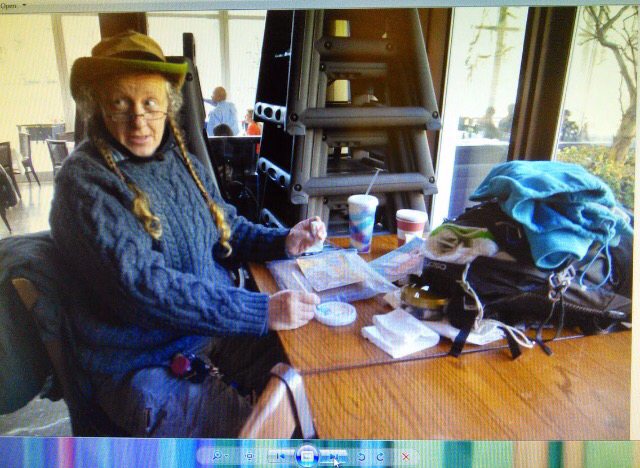
Lee Rogers painting at a table in the Central Park Boathouse café
Lee Rogers’ painting at the Central Park Boathouse café,

Many years ago, when we desperately needed new feeders, she and I worked together to replace them. From that point forward, we were on friendly terms. I would occasionally check in on her, help deliver bags of seed, and fill the feeders.

She worked hard to keep those feeders full, which wasn’t easy, and brought great joy to many people by doing so.

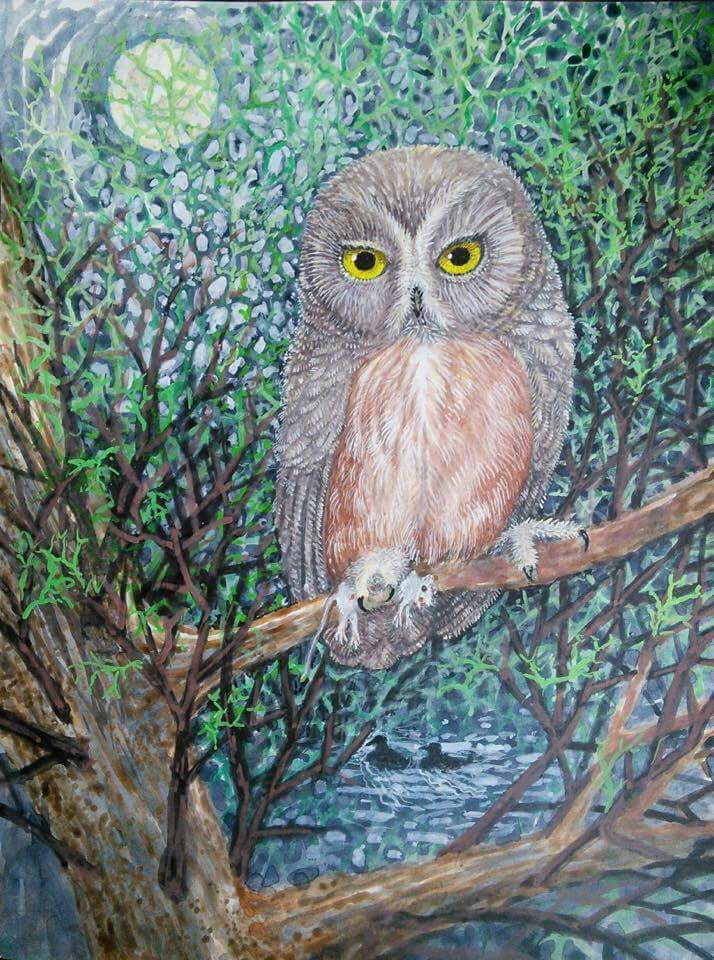
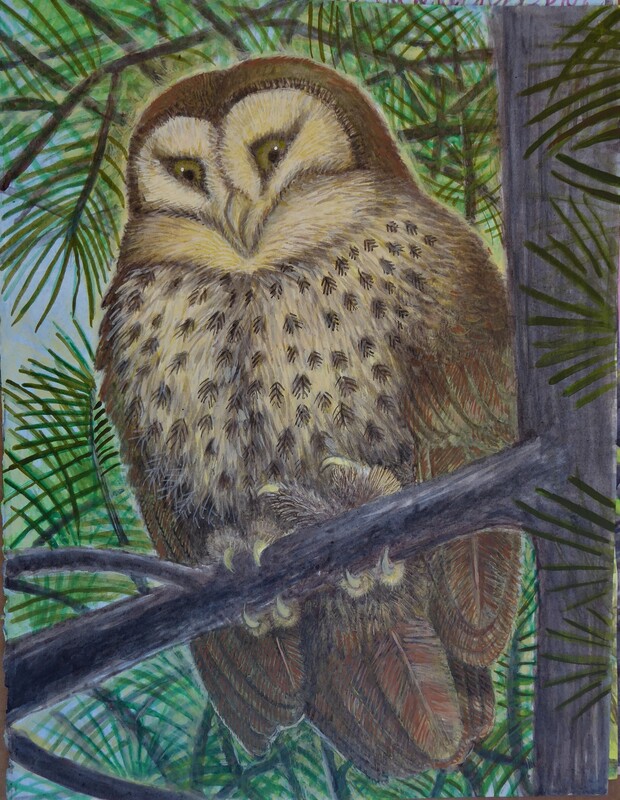
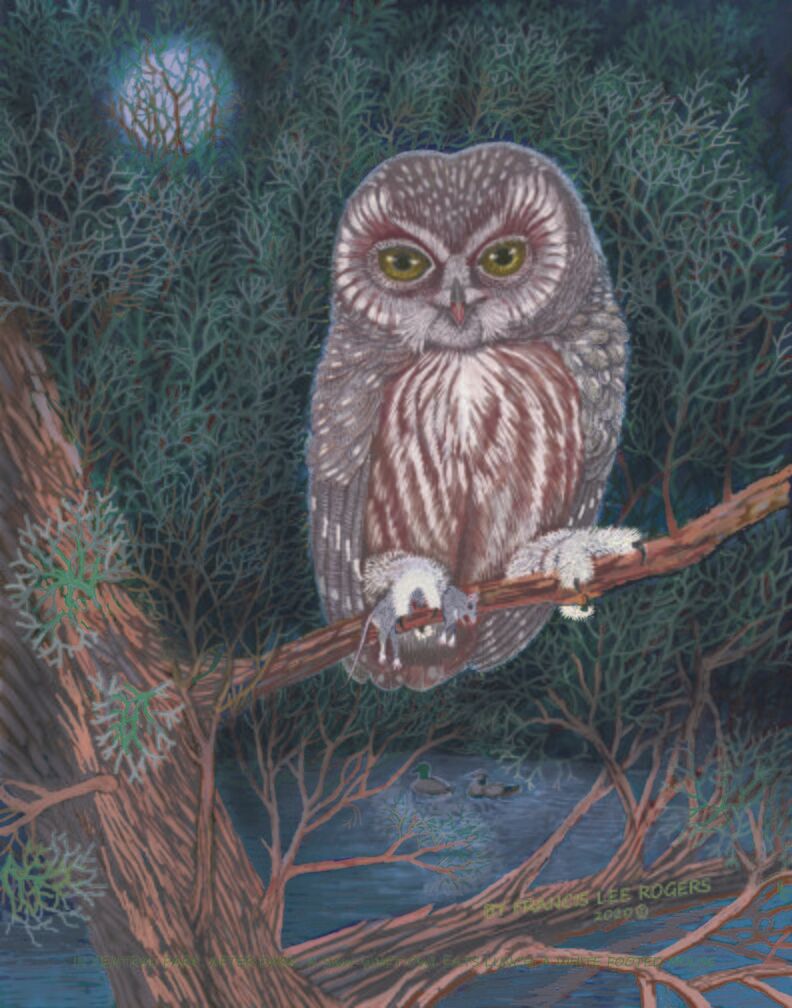
There are many stories I could share about Lee, but one in particular stands out. I sat next to her on a bench at Evodia Field to look at a collection of her watercolors. She showed me one of a Northern Saw-whet Owl, with its eyes wide open, perched on a branch.

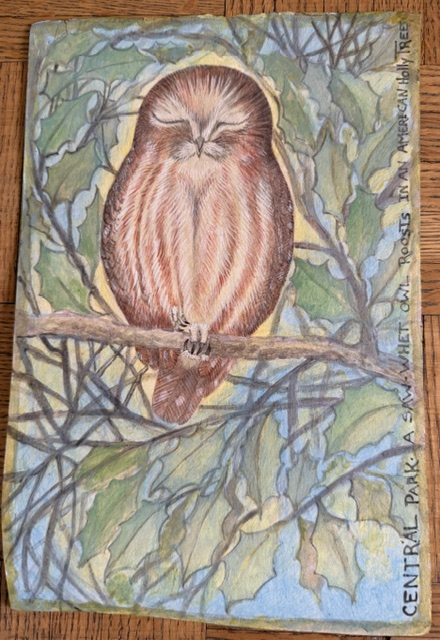
After five minutes of describing the painting, she suddenly said, “A terrible thing happened!” After a couple of quiet minutes, she finally said, “It fell asleep.”

She then turned the watercolor over and very quietly said, “I had to paint it all over again with its eyes closed.” A big smile came to my face. I still cherish this lovely watercolor, which I purchased that day and which now graces my home.
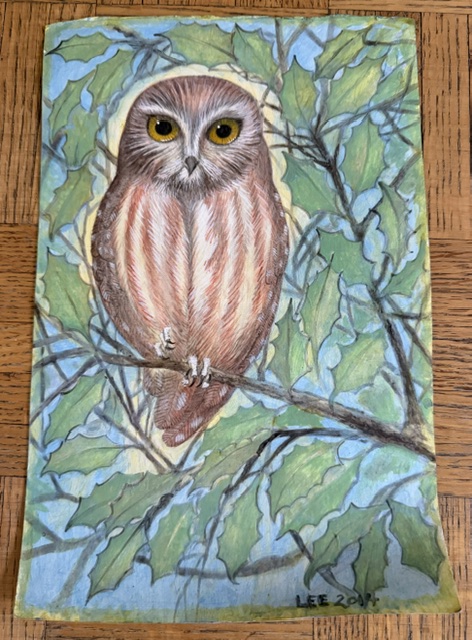
Lee Rogers' painting of a Northern Saw-whet Owl with its eyes open
Lee Rogers' painting of a Northern Saw-whet Owl with its eyes closed

AN ARTIST OF THE RAMBLE

The birds Lee cared for were also among her greatest artistic subjects.

She spent decades painting Central Park wildlife, creating hundreds of works that found their way into the homes of birders, friends, and collectors. She was often seen working at her regular table in the Central Park Boathouse café, sometimes using the plastic lid from a coffee cup as a palette while surrounded by windows looking out toward the lake and the Ramble.
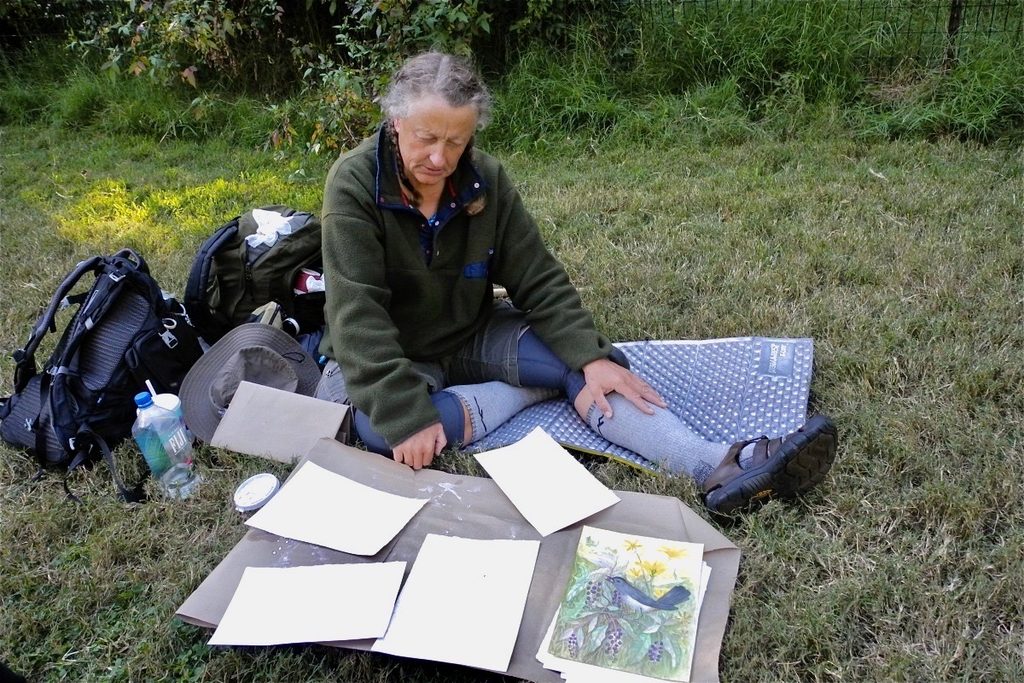
Lee sitting on the grass in Central Park, surrounded by her drawings
Photo by Jean Shum

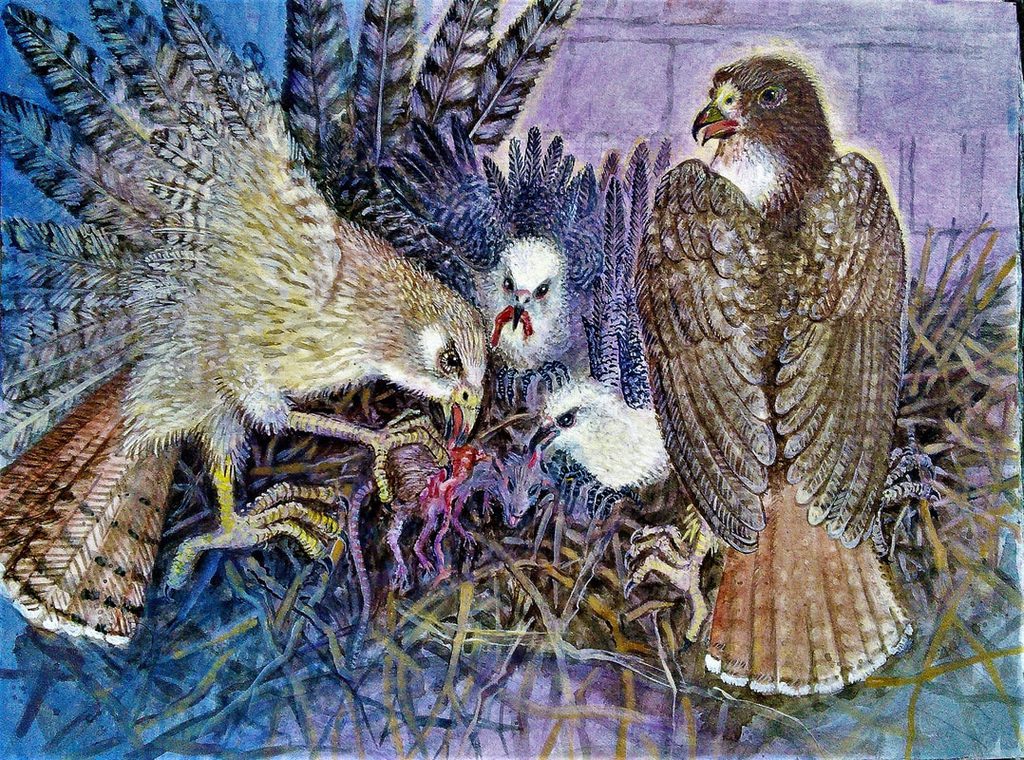
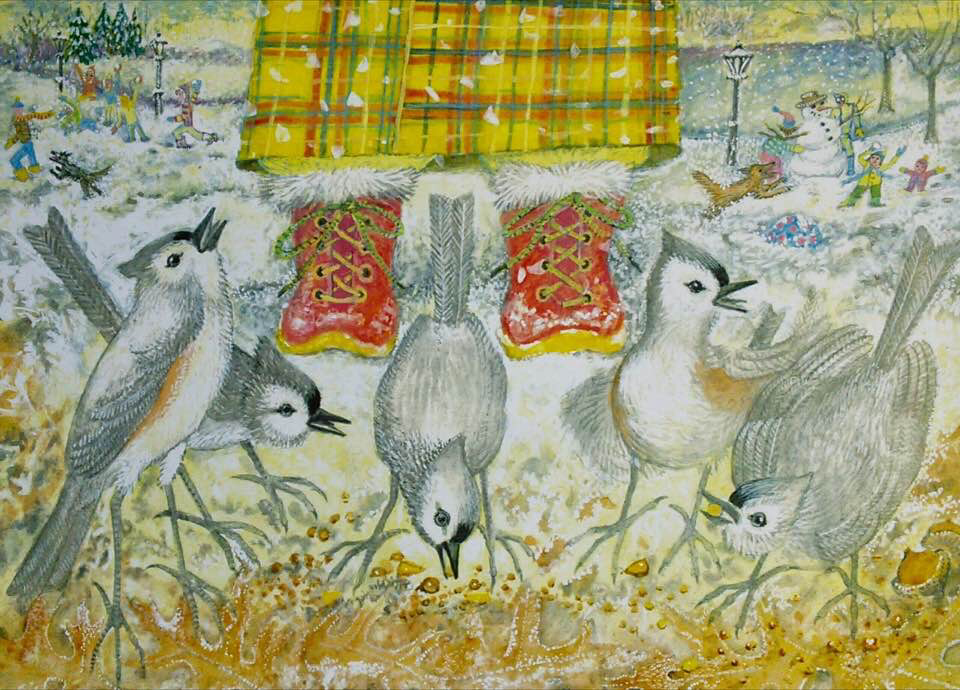
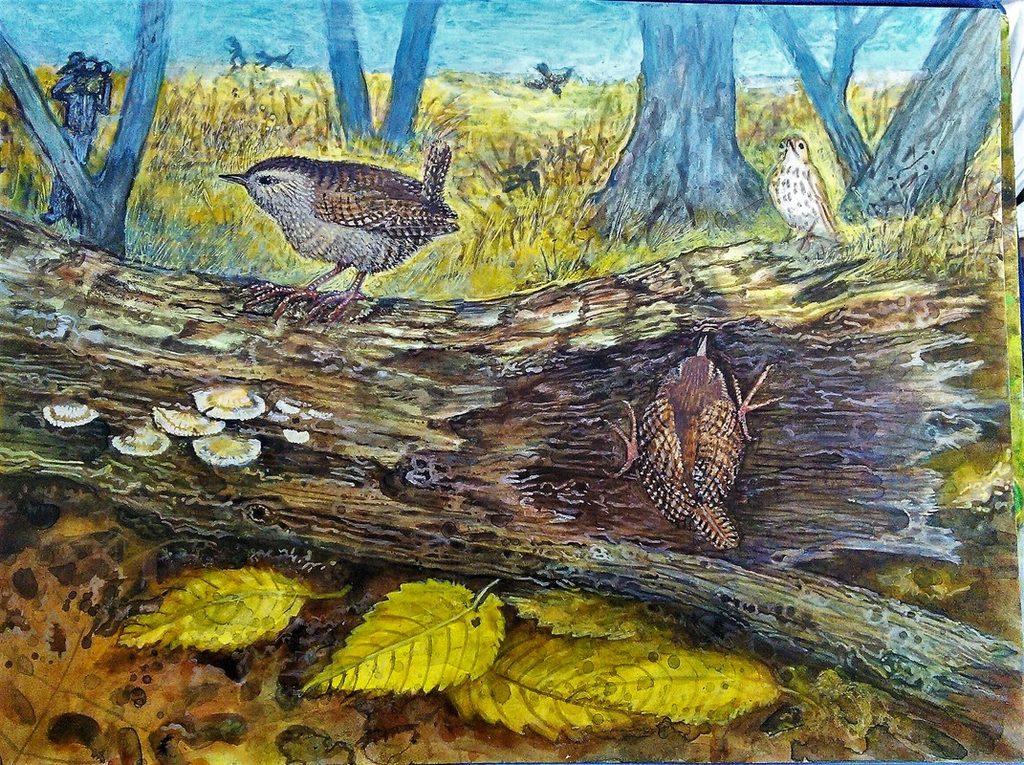
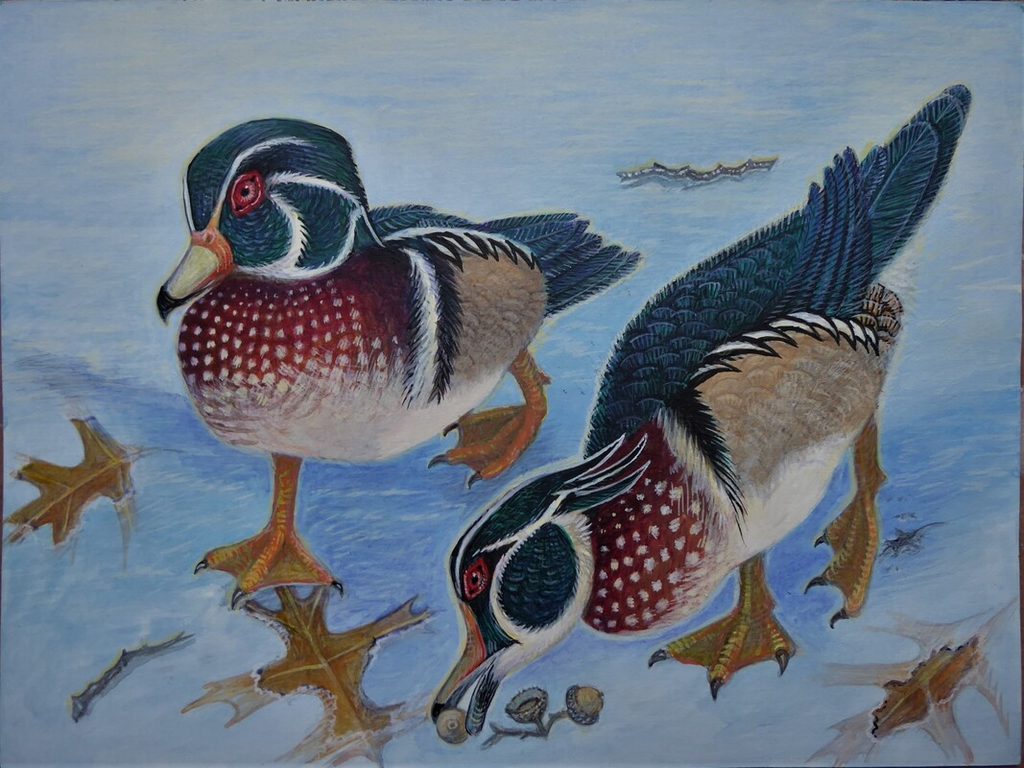
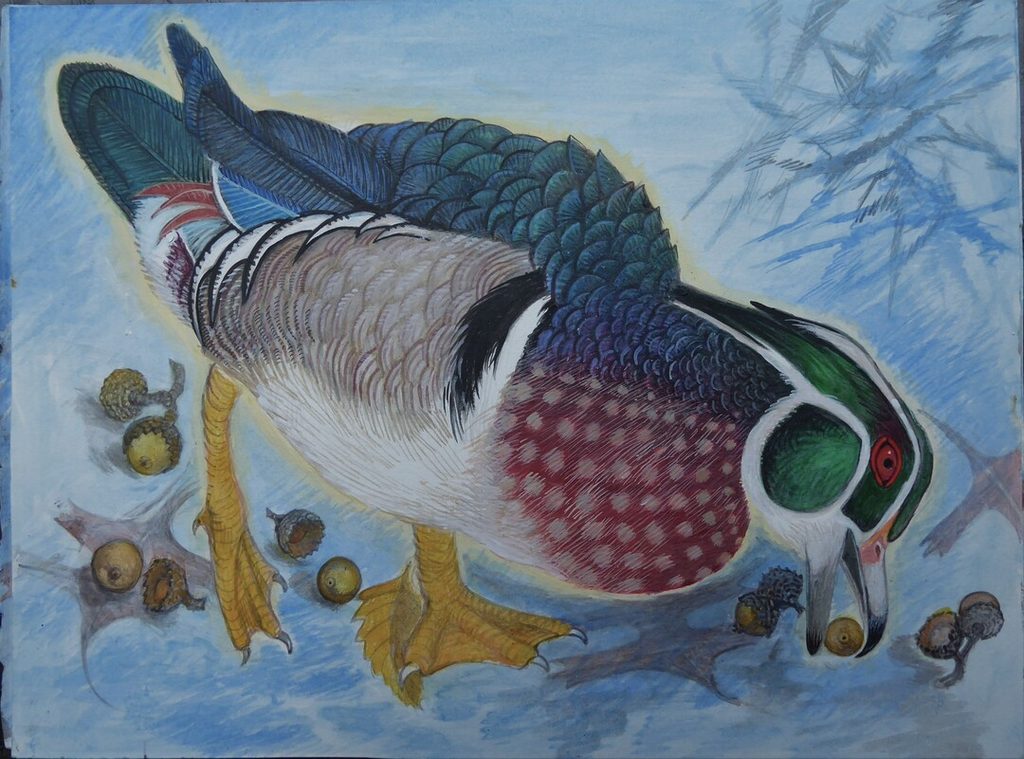
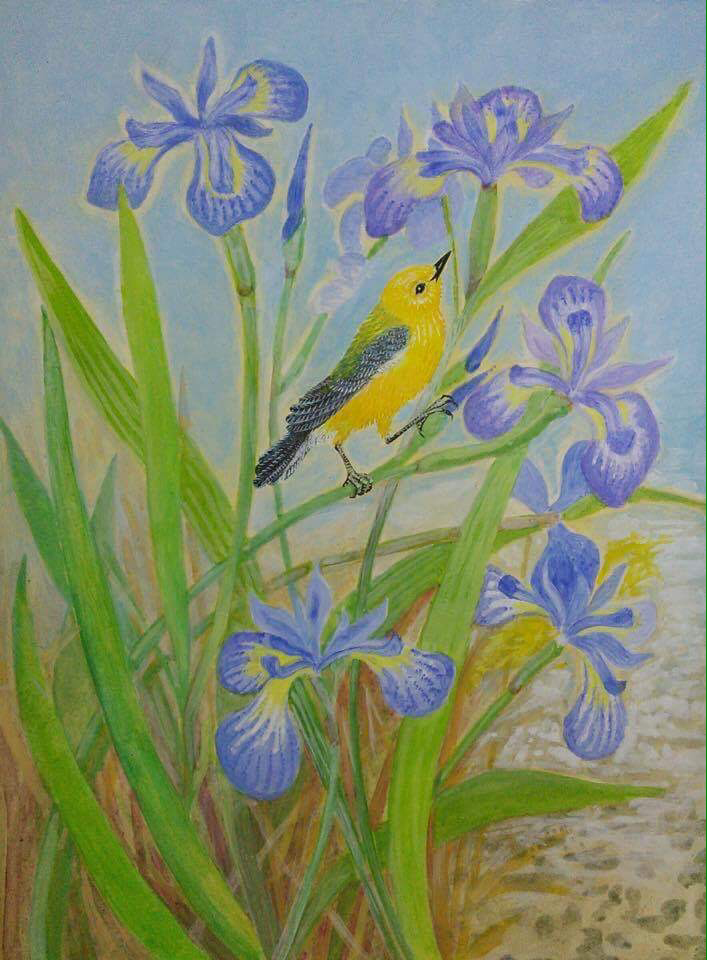
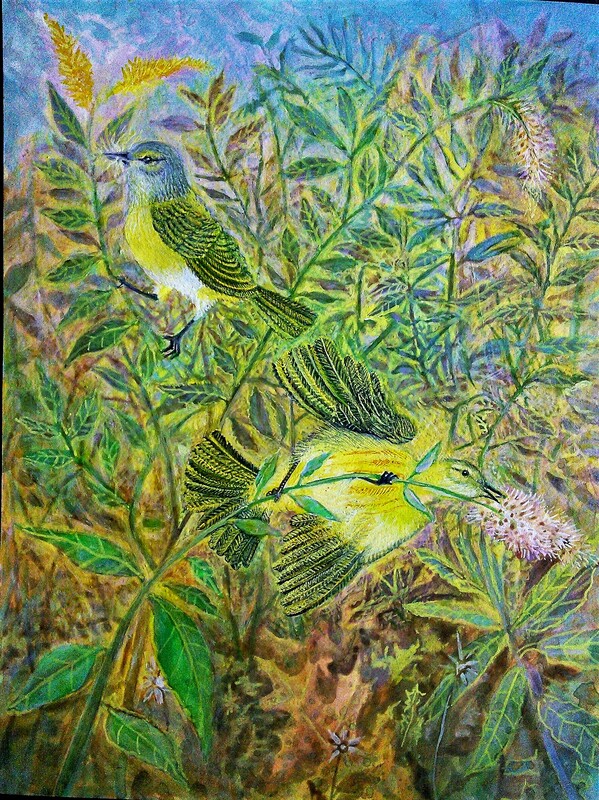
Her surviving work provides an extraordinary record of the world she observed. Her own website is filled with paintings and drawings of owls, robins, raccoons, trees, and other inhabitants of Central Park. She even has a work titled Central Park Bird Feeders, bringing together two of the things with which she became so closely associated.
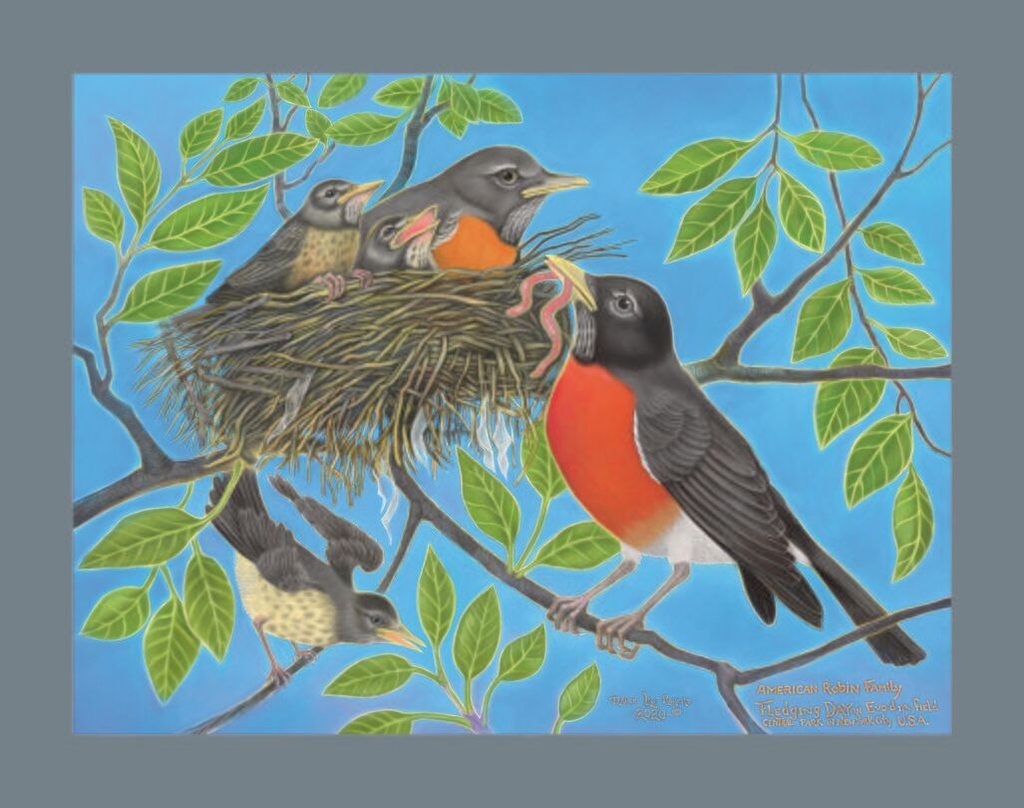
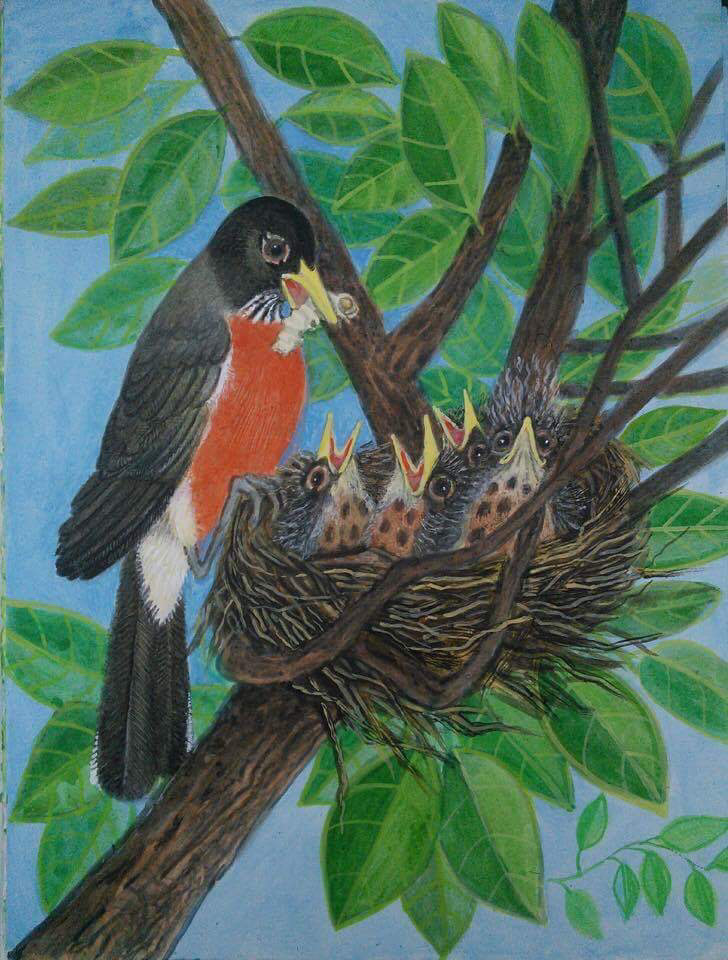
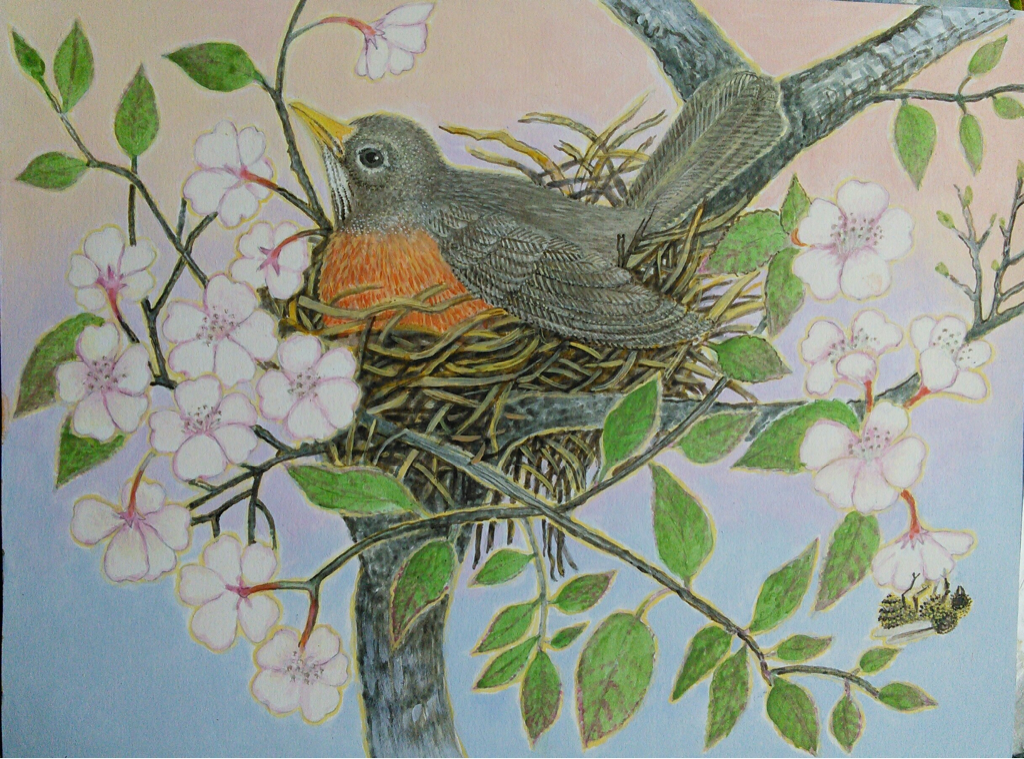
Lee Rogers' painting of American Robins feeding their chicks at the nest

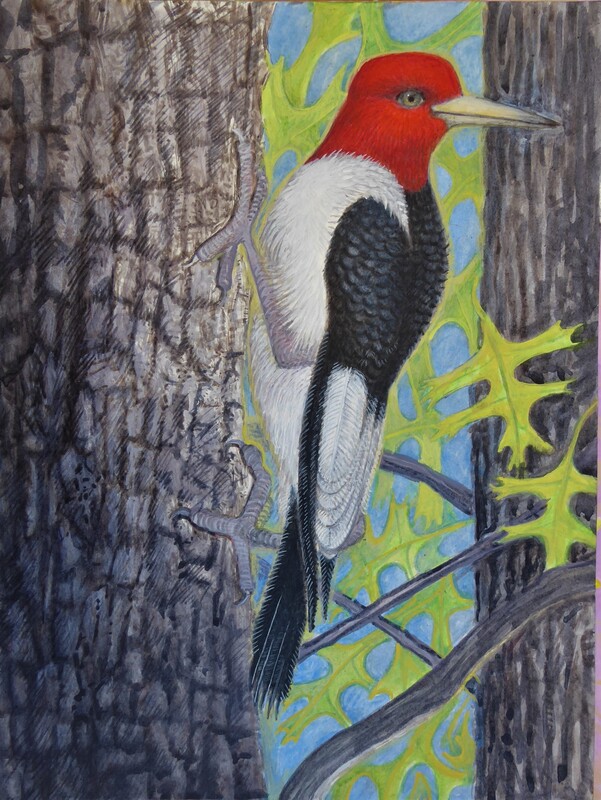
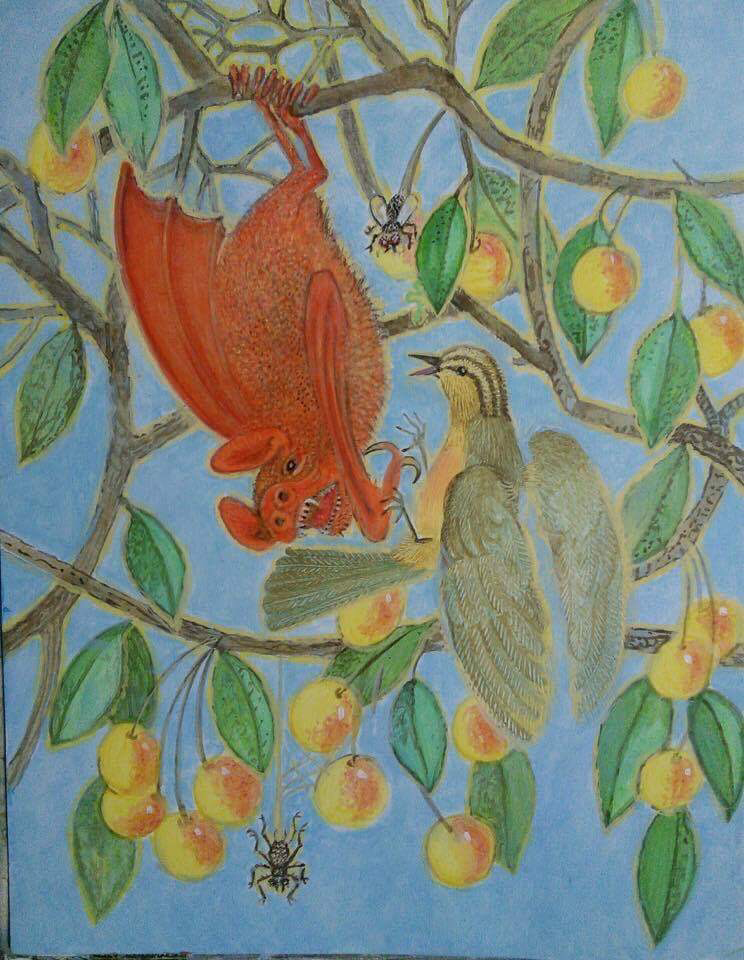
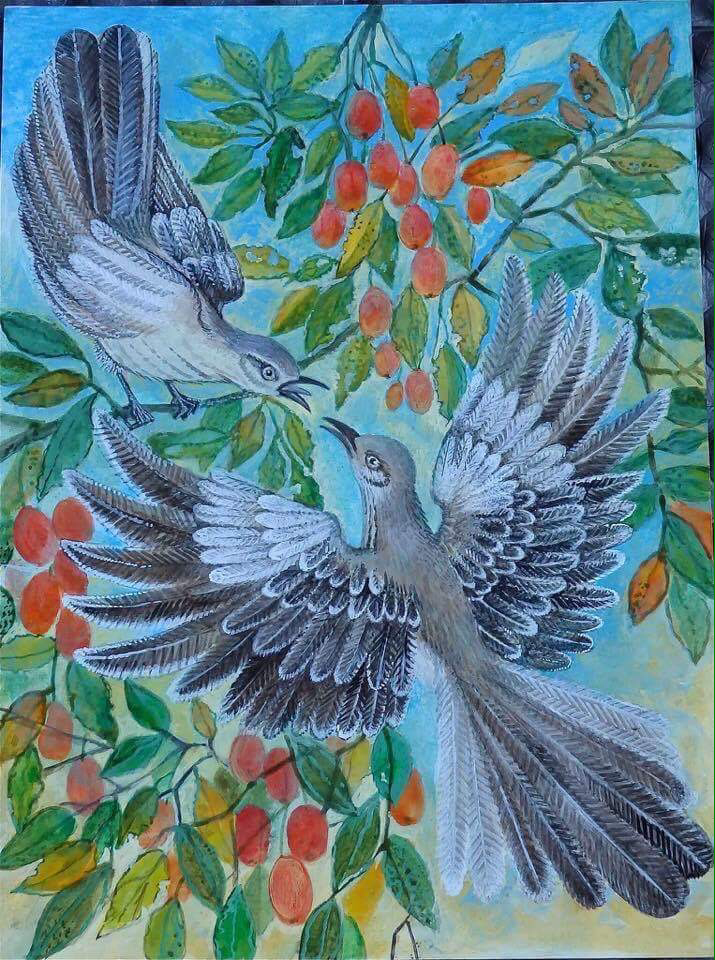
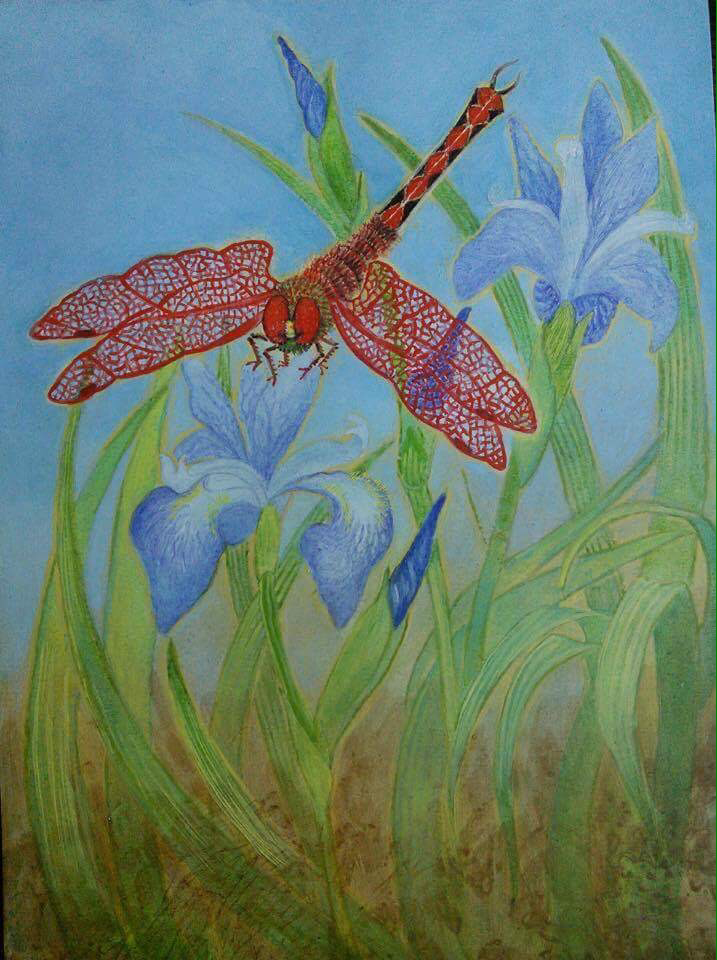
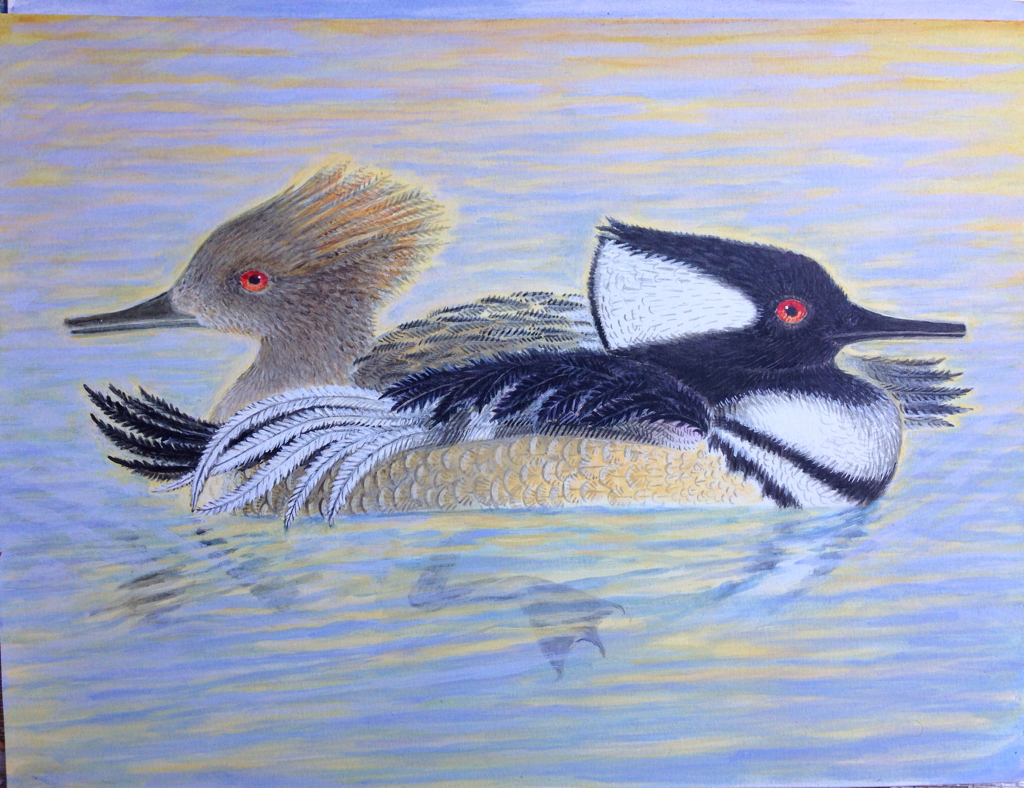
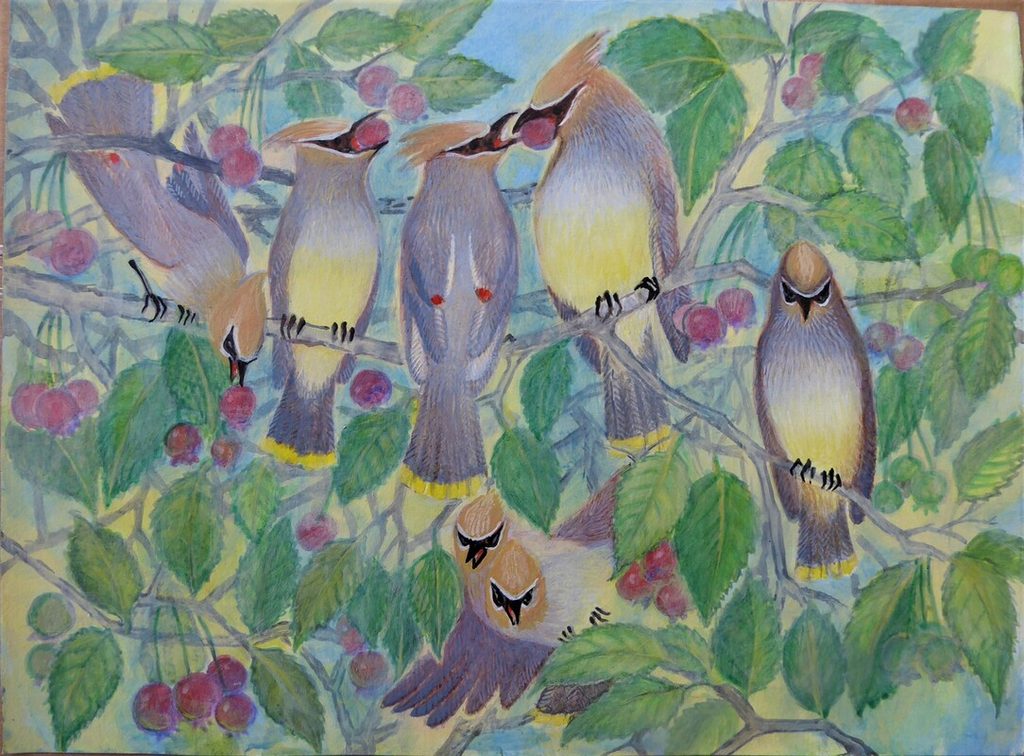
Central Park wasn’t simply where Lee made her art. It was what she painted. Birds dominate her work, but she also painted squirrels, raccoons, trees, landscapes, and familiar corners of the park. Taken together, the paintings show how closely she looked.
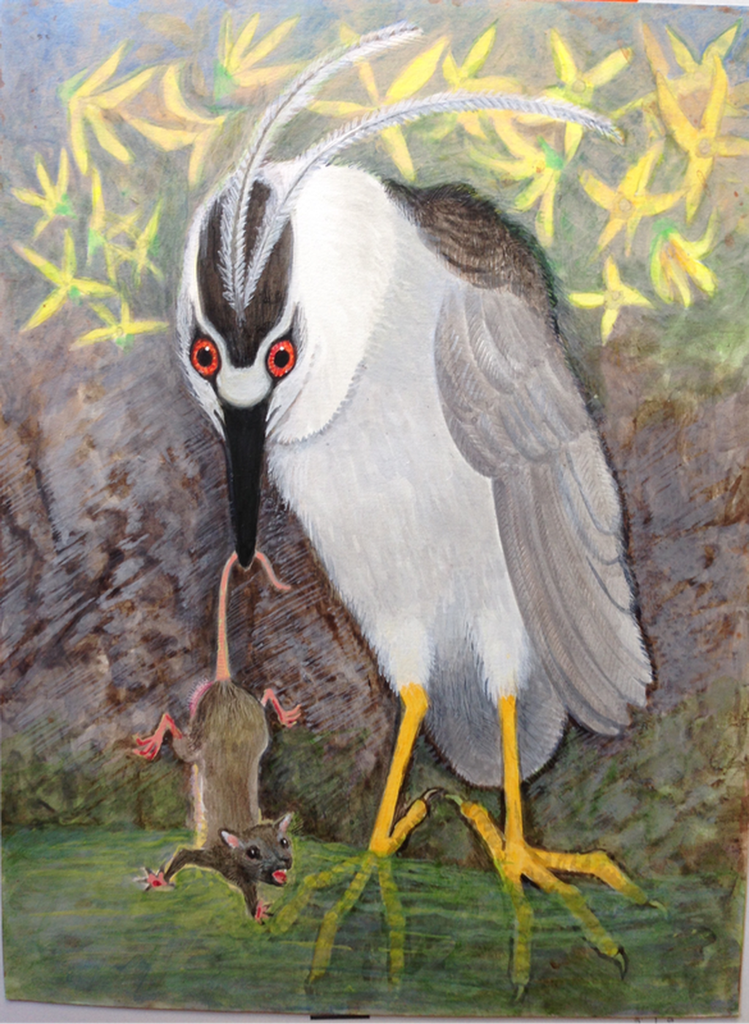
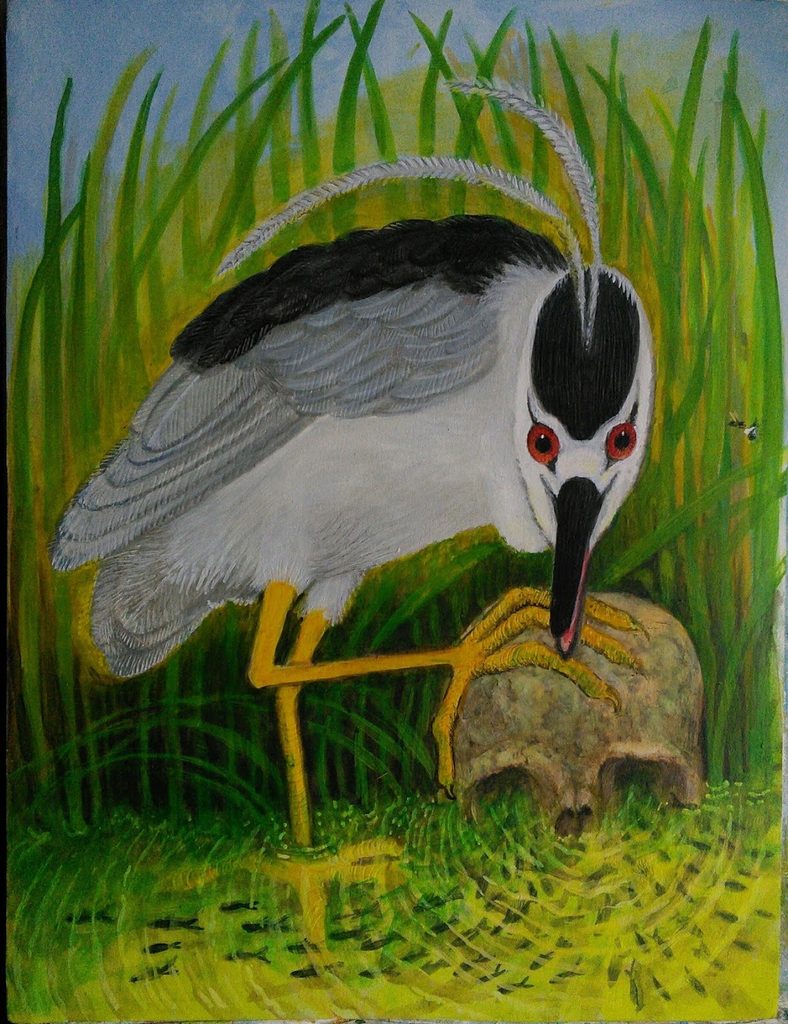
Lee Rogers' painting of a Black-crowned Night-Heron catching a rat
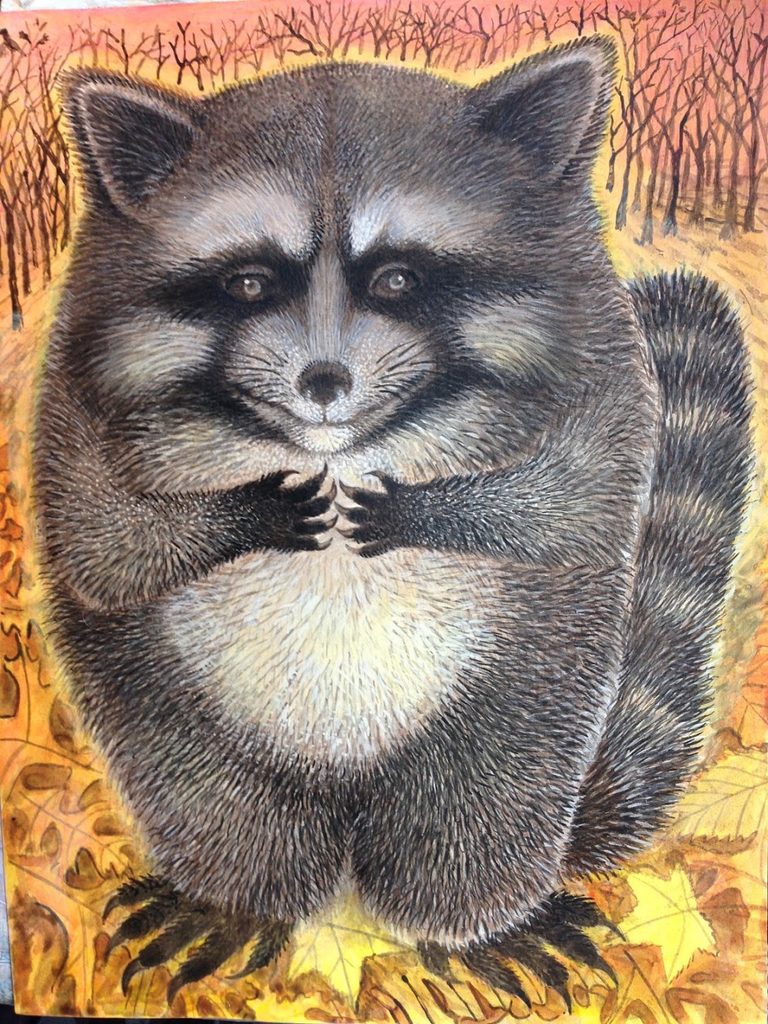
Lee Rogers' painting of a mother raccoon in the Ramble
Lee Rogers' painting of a Red-headed Woodpecker in Evodia Field, Central Park
Lee Rogers' painting of a red bat startled by a Worm-eating Warbler in a crabapple tree
Lee Rogers' painting of two young Northern Mockingbirds in a sibling rivalry
Lee Rogers' painting of a Cherry-faced Meadowhawk dragonfly on wild iris
Lee Rogers' painting of a father American Robin bringing food to his young
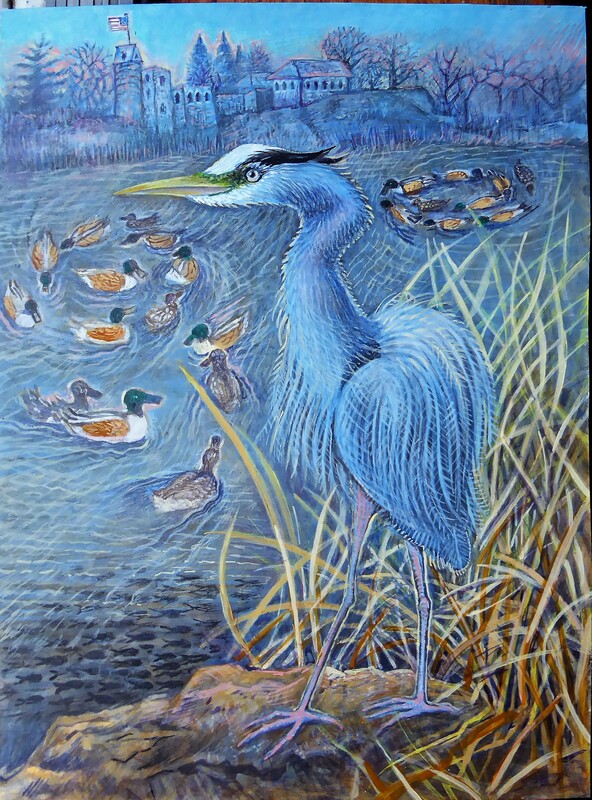
Lee Rogers' painting of a Great Blue Heron and Northern Shovelers at Turtle Pond
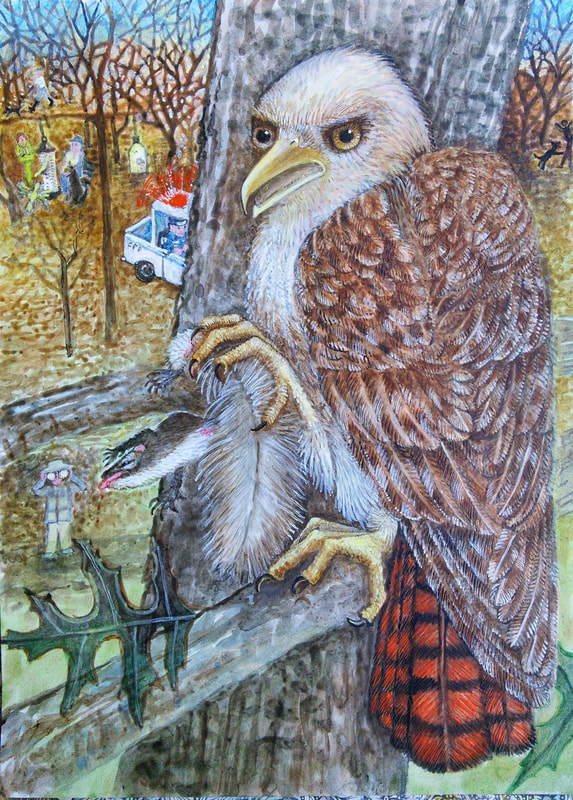
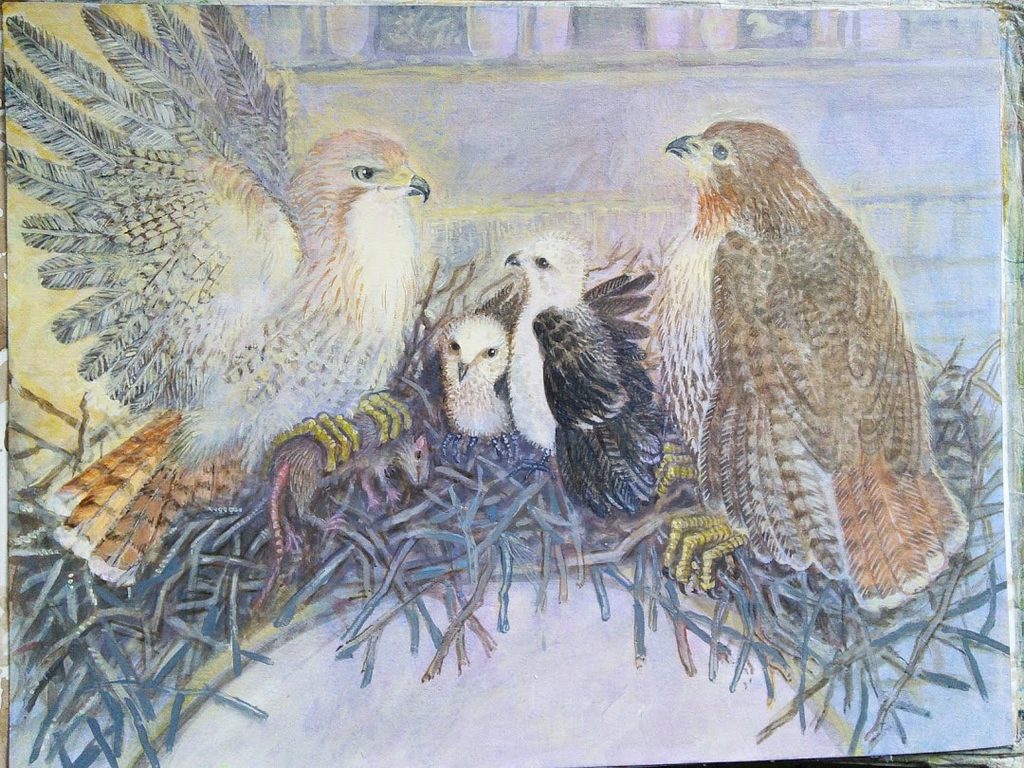
Lee Rogers' painting of Pale Male the Red-tailed Hawk catching a squirrel
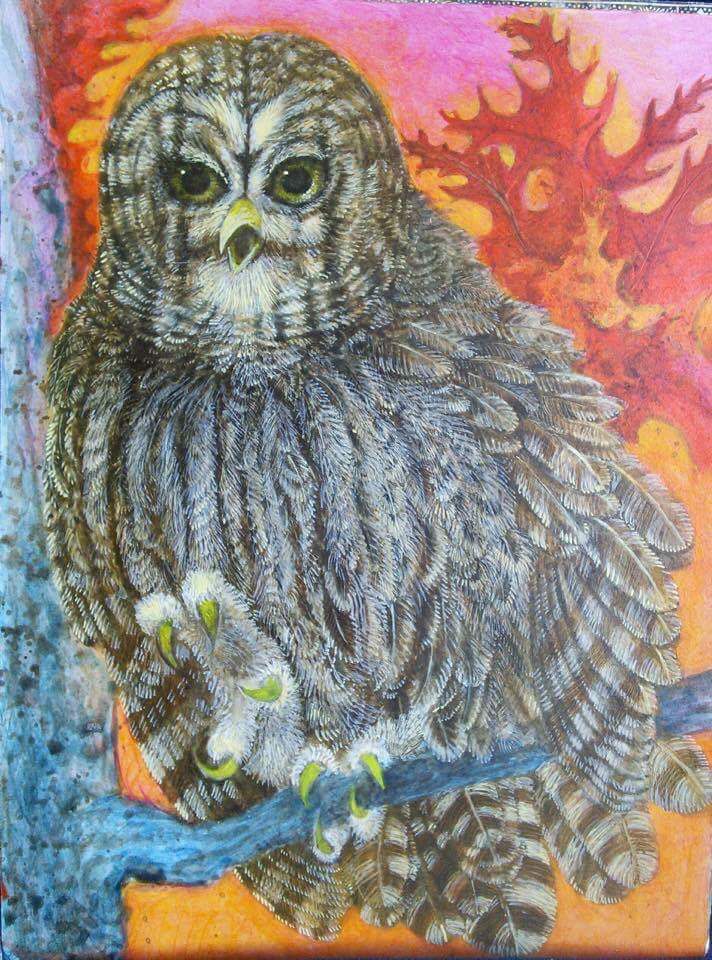
Lee Rogers' painting of a Barred Owl waking at a pink sunset
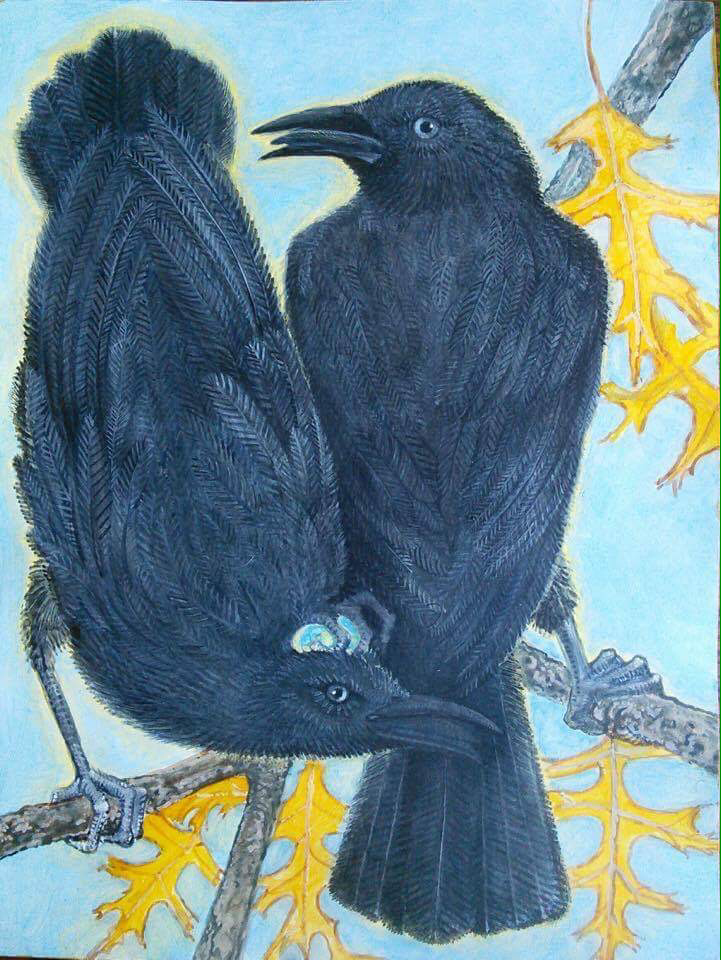
Lee Rogers' painting of two American Crows
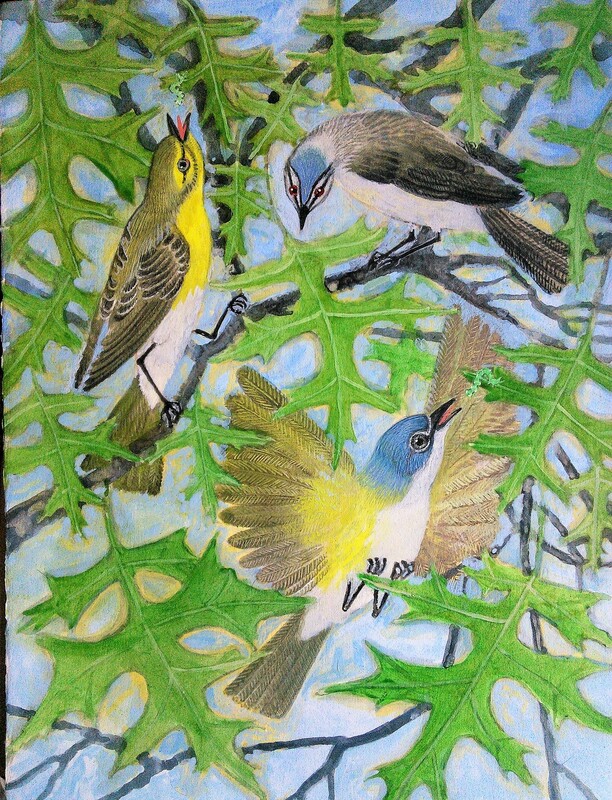
Lee Rogers' painting of three species of vireos

REMEMBERING LEE

By Jean Shum, LSNY member and longtime Central Park birder


In 2009, I noticed a woman doing pull-ups in the Pinetum. I was like, whoa… She put those guys to shame! That woman was Lee.

Birders in the park respected Lee. In the late fall, everyone would put their money together and hand it over to Lee to buy the seeds. She often spent time in the library researching the best feed. She even developed a homemade seed mix that was extra nutritious.

In 2012, I asked Lee if she wanted me to create an album on my website to showcase her artwork. She said yes. If she couldn’t find me in the park, she would take a picture of her latest painting with her cellphone and send it to me.
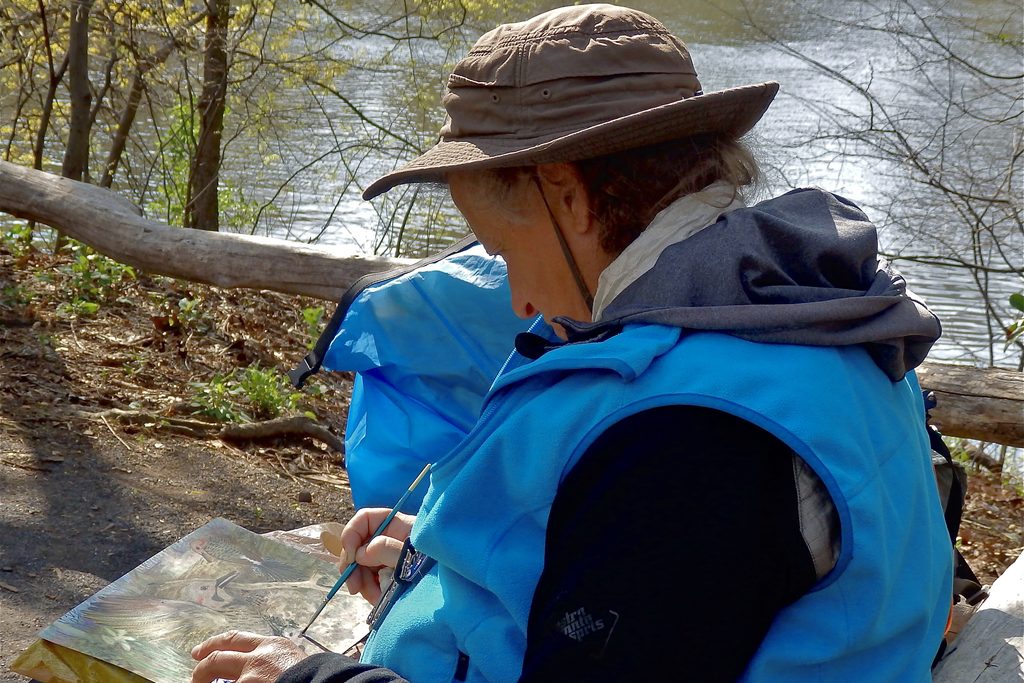
Lee sketching outdoors beside the water in Central Park
Photo by Jean Shum

Lee used to draw on napkins and sell them for 5 bucks. She gradually upgraded as she made more money. Lee was not one to take handouts. She worked for her food and clothes on her back. She was independent, strong-willed, neat, and organized. She functioned best with a routine. She attended church on Sundays, went to Bible studies, swam at the 92nd Street Y every day, and cared for the feeders in the park.
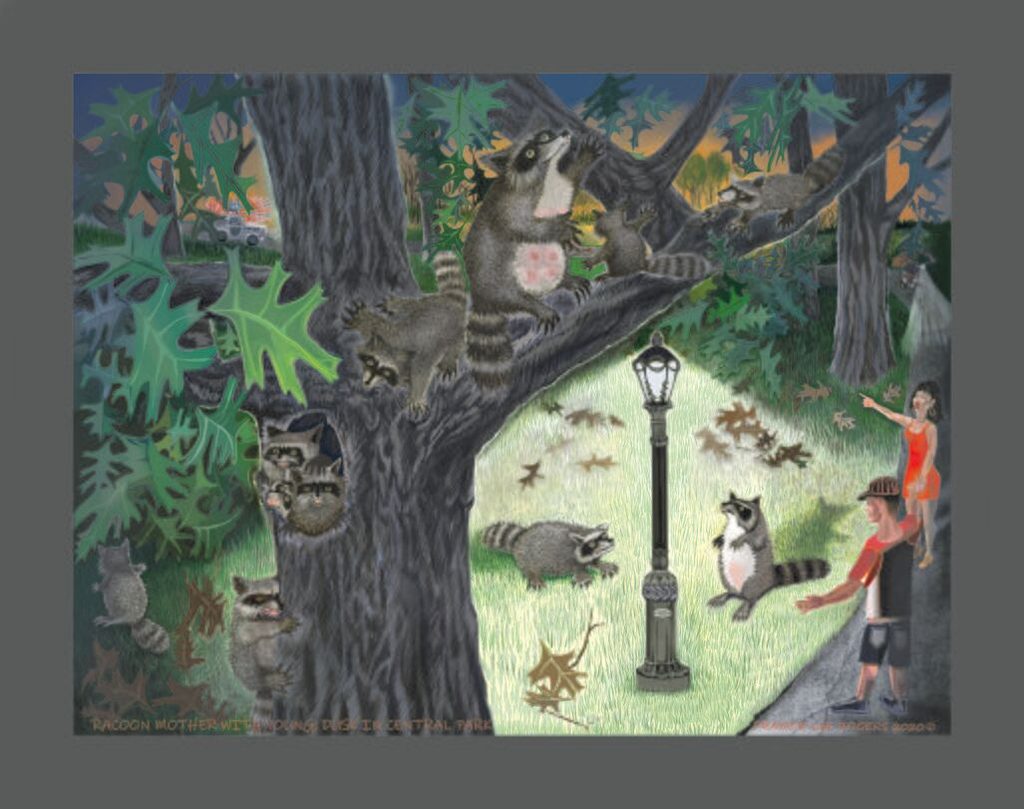
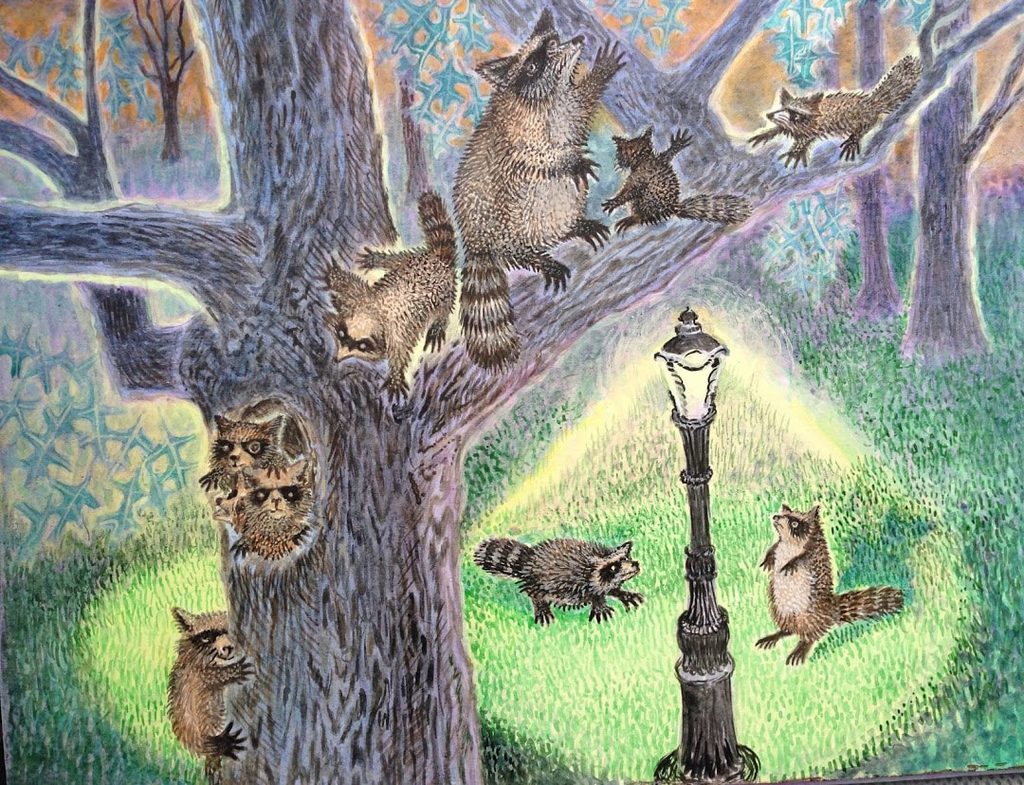
Lee Rogers' painting of a family of raccoons in a tree beside a lamppost as park visitors watch

Sadly, things changed during the pandemic. Lee became increasingly withdrawn and stayed away from people she had known. For whatever reason, she still mustered up the energy to say hello to me. I’ve asked her time and time again if there was anything I could get her, and the answer was always no. I knew several birders wanted to support her financially. I asked if she wanted me to start a GoFundMe or just collect cash and hand it over to her, and she said no.

It wasn’t until this winter that she let me buy some items for her. The last thing I brought her was a can opener. I gave it to her on Monday, and we chatted a bit. By Sunday, she was gone.
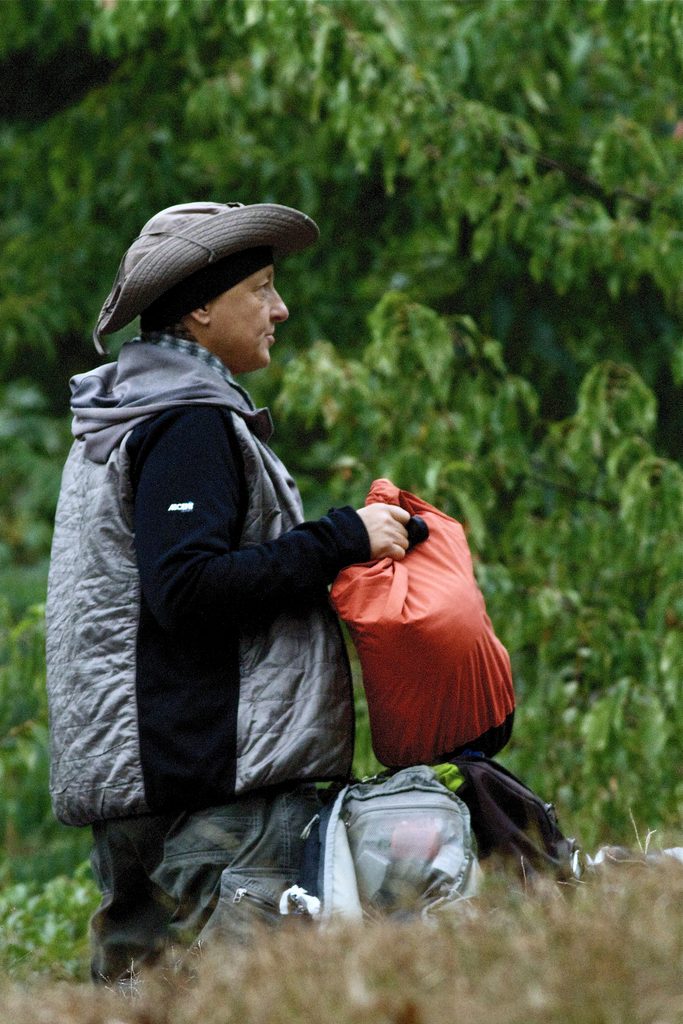
Lee in a wide-brimmed hat packing up her bag in Central Park
Photo by Jean Shum

To me, I never looked at her as a homeless person. Central Park was her home! She was intelligent and super talented. She just needed a little support. I am deeply saddened by her passing.

I used to feel unsafe around Swampy Pin Oak, but I knew she was always watching my back from the rustic shelter. She would yell out, Jean, what are you looking for? I would tell her, and suddenly I would hear her calling me over because the bird I wanted was right by her. This happened several times, and it became a joke between us. I got to the point where I would walk up to her and give her my bird list.

I will forever miss her, but we had some good laughs that I will hold onto forever.
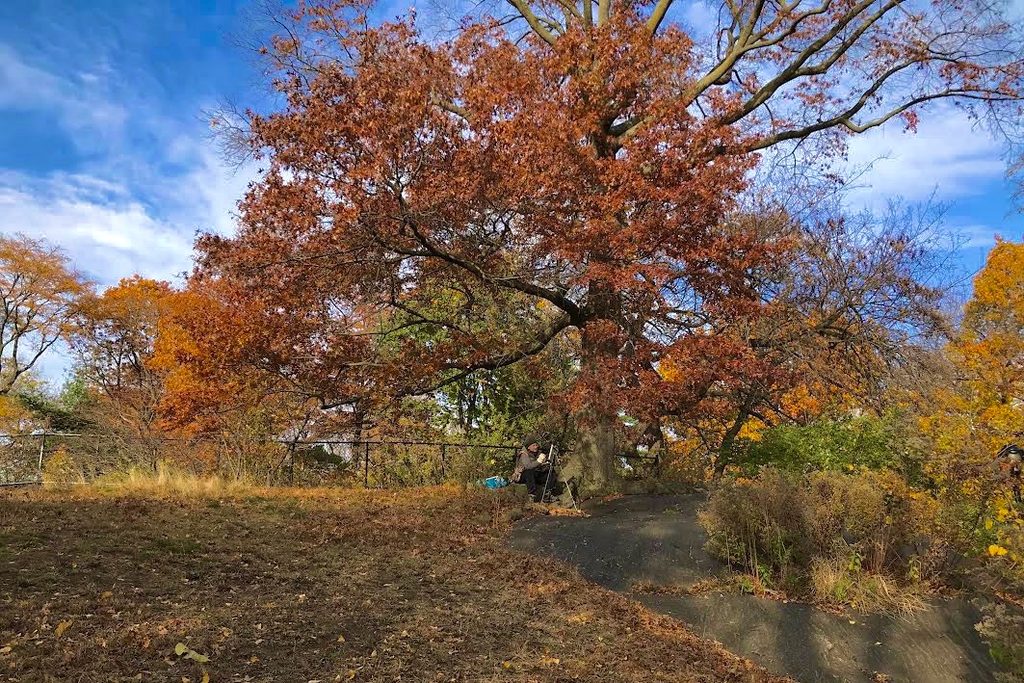
Lee working beneath a large oak in autumn color in Central Park
Photo by Jean Shum

THE BIRDS SHE FED, THE BIRDS SHE PAINTED

Today, LSNY volunteers continue to care for and refill the bird feeders at Evodia Field, particularly during the winter months. Many people who stop at the feeders today won’t know their history, or the role Lee played in keeping them going. Those who knew her will.

Her paintings offer another record of the years she spent observing Central Park and its wildlife. Together, the birds she fed and the birds she painted tell an important part of Lee’s story and her long connection to this place.
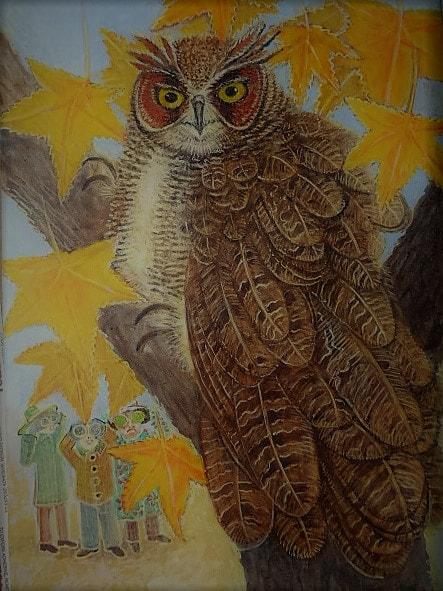
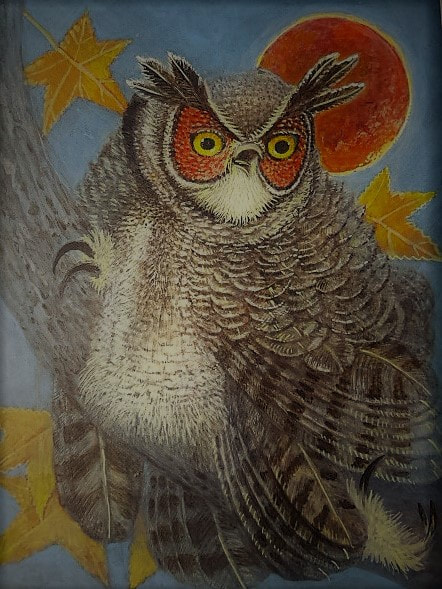
Lee Rogers' painting of a Great Horned Owl in a pin oak in the Ramble

Thank you, Lee, for the birds you fed, the birds you painted, and the beauty you found in Central Park.

— Kristin Ellington, Board of Directors with remembrances from Jean Shum and Will Papp
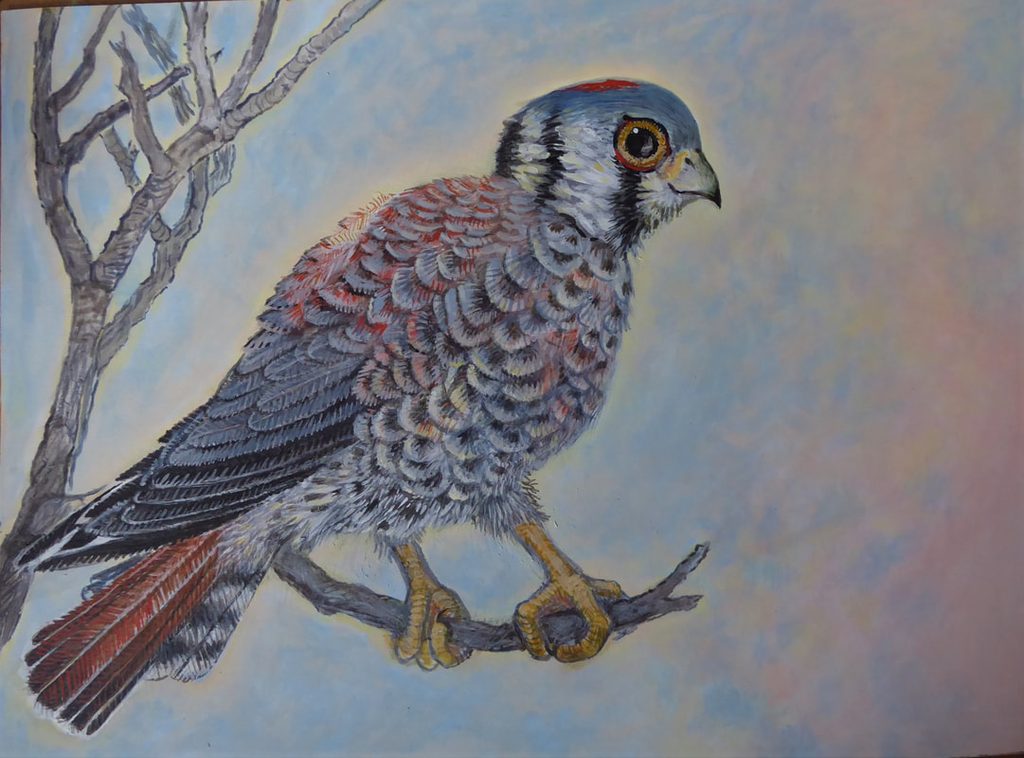
Mary Yrizarry, 1932-2025

It was back in April 1977 that I first really got to know Mary Yrizarry. The Linnaean Society of New York’s bird trip to South Florida was held on April 23 – May 1 of that year and was organized by Mary herself and Gretel Neuberger. It was a true success, with many specialties of the area being seen by the attendees. From there, through in-person LSNY meetings and other scheduled field trips, I got to know Mary better. I found her to be a good-humored person with always a smile on her face. Never once can I recall Mary uttering a negative word about anybody.

After living in Brooklyn, NY for many years, Mary and her husband John (who died in 2023 at aged 97) moved up to a  family home in Tuxedo, NY, near Sterling Forest. Both she and John were instrumental in saving this crucial habitat from development. In 2008, the Linnaean Society of New York honored Mary to receive the Natural History Service Award for her role in saving the last piece of unprotected land in Sterling Forest.

We all should have gratitude for Mary’s work whenever we visit Sterling Forest in the Spring.   

— Richard ZainEldeen

Alison Bruce Rea

Alison Rea died at home in Manhattan on June 28, 2024, aged 72, after a long and brave battle against cancer. In the 1980s Alison made her home in New York where she became a distinguished business journalist and bird watcher, well known to other birders in Central Park. She was also a very gifted artist and keenly interested in the decorative arts. At the same time as pursuing her career and interests, she diligently looked after her mother and aunt.

Alison was born on April 30, 1952, in Washington DC and raised in Denver where her parents moved in 1953. In Denver, Alison attended Graland Country Day School. When her mother remarried and returned to Washington DC, Alison finished high school at the National Cathedral School for Girls (class of 1970). She graduated cum laude from the University of Pennsylvania in 1973 with a degree in Communications: filmmaking.

A superb skier, she took time out to work at the Angel Fire resort in Eagle Nest New Mexico and then became the sole teacher in a one room primary school in Bondurant Wyoming. In 1977 she moved to New York where she received a degree in primary education from Adelphi University (1978) and then taught for two years at the Rudolph Steiner School in Manhattan.

In 1980, Alison made the life-changing decision to get an MBA in finance and international business at New York University which paved the way to her career covering business and banking over the next three decades. In 1982 she started at Fortune Magazine as a fact checker and in 1985 was promoted to the international finance team.

A love of birds meant that Alison never had less than six ‘budgies’ who were allowed to fly freely around the kitchen of her Riverside Drive apartment. Such was her gift of storytelling, that tales of the birds and their love lives could reduce her most ornithophobic friends to a fit of giggles.

Her passion for textiles and ceramics took her to Central Asia but especially to Turkey where she made friends despite her limited command of the language, her only phrase in Turkish being ‘I have six birds’. On her first trip there, she met some top ceramicists at an artists’ fair. She persuaded the assistant of the renowned ‘Iznik’ master, Mehmet Gursoy, that she needed to study with him even though he rarely took on apprentices. The result was a series of beautiful, perfectly executed painted pottery inspired by the patterns of Iznik ware.

She is survived by her brothers Malcolm Dunbar Rea, John Drayton Rea, her nephew Nicholas Edwards, step-siblings Phoebe Barnard, Anne Barnard, Robin Angly and step-nephew Hart Fukutomi.

Lenore Swenson, 1946-2024: A Remembrance

Lenore Swenson, an active member of New York’s bird-, butterfly-, and dragonfly-watching communities, passed away on June 18, 2024, a few days short of her 78th birthday, after a lengthy battle with cancer.

Lenore grew up on Long Island and attended Valley Stream Central High School. She received an undergraduate degree from SUNY Stony Brook and a master’s from the New School for Social Research. She was a social worker for New York City for many years until she retired.

Lenore first joined the Linnaean Society in 1994. She served as council member from 2011–2013 and again from 2014–2016. She was also chairperson of the field trips committee in 2011, 2012, 2013, and 2014. She initiated and then led the Starr Saphir Spring Migration and Fall Migration Memorial Walks, beginning in 2014 up until the present. She was elected a Fellow of the Linnaean Society in 2013.

I first met Lenore in 2001, when I began attending Starr Saphir’s walks. She was Starr’s scribe, keeping detailed records about each walk as well as consulting with Starr about what we saw and heard. She was also an avid butterfly and dragonfly student, and freely shared her expertise with others around her. Her other interests included archaeology; before she was a birder, she travelled to Egypt and the Middle East to see ancient ruins. 

Lenore supported many nature organizations. She donated to the Long Island Nature Conservancy, which purchases key properties for conserving habitats, and was a member of New York City Audubon, New Jersey Audubon, National Audubon, Massachusetts Audubon, the Northeast Chapter of the American Littoral Society, the NYC Butterfly Club, the Appalachian Club, the American Museum of Natural History, the Brooklyn Bird Club, and the Queens Bird Club.

She also traveled throughout the U.S. to see birds. As Kathleen Howley recalls, “Once she could afford a car, I remember she made a trip to Michigan specifically to see the Kirtland’s Warbler. Later, she laughed about it because the following year or so, a Kirtland’s was found in Central Park.” She also participated for many years in New York City Audubon’s Christmas Bird Count (CBC) as well as the Massachusetts CBC on Cape Cod.

Perhaps I can best describe Lenore from the numerous comments made by her friends and colleagues on social media:

            She was a veteran birder and a dedicated naturalist.

            She was a gentle person and a wonderful birder. 

            She had a passion for ornithology. 

            She was a patient source of bird wisdom. 

            I have good memories of observing nature with her. 

            Her passing is a huge loss for the nature community.

I miss her. Over the years Lenore became one of my closest birding buddies. She shared so much of her knowledge about birds—she was always my authority. I treasure her memory.

— Alice Deutsch, Past President

Anne Rose Shanahan, 2023

Anne Rose Shanahan passed away peacefully on September 5, 2023, at the age of 92, in the city she loved, New York. Anne was born to Thomas J. Shanahan and Anne Rose (née Burke) Shanahan in Brooklyn, NY. Anne was a scholar, a gifted artist, a beloved sister, aunt and an avid birdwatcher. She spent her early years as a teacher at both Marymount Academy and Marymount College in Tarrytown, New York. An accomplished academic, Anne spent a year studying theology at Regina Mundi in Rome. She also received a doctorate in history and a master’s degree in theology. After history, Anne’s true passion was nature. She was happiest amongst the bird watchers of Central Park photographing the birds, butterflies, flowers, and fauna. Her photographs were featured in multiple publications and exhibited at the Museum of Natural History and the New York University Institute of Fine Arts.

Anne Shanahan was loved by all simply because she was kind and polite to everyone. Birding can be challenging, but Anne always had your back. She made birding and photography fun! Anne was one of the longest Pale Male followers, and she shared her knowledge with all those who fell in love with this beautiful Red-tailed Hawk. She always managed to find and photograph Pale Male on Christmas Day, her definition of a happy holiday. Anne spent years during migration photographing dead birds around the Metropolitan Museum of Art. Despite her attempts to get the museum to place decals on the windows, her pleas fell on deaf ears. But she encouraged the younger people she met to continue to push the museum to change, hoping a new generation will succeed in protecting the birds. That would be a great tribute to Anne.

Because Anne’s funeral was private, there will be a memorial gathering on November 12, 2023 (Sunday) from 1-3 pm by Azalea Pond.  All are welcome to join us. 

—Jean Shum

John Yrizarry, 2022

I met John Yrizarry in September of 1988. I was a beginning birder and he was the instructor of the Brooklyn Botanic Garden (BBG) birding class that I had just signed up to take. My experience with birds was basically limited to the Cardinal and Blue Jay that I had gotten to know from the recently established bird feeder that I set up in my backyard. I remember the first bird that I saw with John right outside of the administration building in BBG. It was a Red-eyed Vireo and as I was later to find out this bird was called a “lifer” for me as it was the first time in my life that I had seen the bird. It was great! I started to ask John all kinds of questions about birds and birding and through his enthusiasm and knowledge I began learning. John told me and the class about the terminal moraine that went right through Brooklyn and especially Prospect Park and Greenwood Cemetery. Prospect Park was his favorite venue and he only lived a block away. We saw, on that brisk fall day, a Ruby-throated Hummingbird, a bird I didn’t know existed and better than that a bird that could be found right in Brooklyn. John told us why it didn’t have a ruby throat and that it was a female migrating south. All his knowledge bestowed on our group made the classes a real treasure for all the students. John really touched a nerve in me and my enthusiasm which he ignited has remained with me for all these years.

He made every trip exciting with tons of knowledge about birds, plants, butterflies and the entire natural world that we experienced. There were always stories related to birding and sometimes he acted them out getting many laughs from the class. As I got to know John better I found out that he was a top bird artist and illustrator. At that time he was working on the “Parrots,” a project for the U.S. Government to identify birds that were being smuggled into the U.S. I also found out that he illustrated some of the plates in the “Birds of Colombia,” the number one book for any birder going to Colombia.

With the BBG group John took us to many birding hotspots in the NYC area. I remember my first trip to Riis Park where I recorded my first Brown Creeper and to Jones Beach where I actually ran after a Yellow-bellied Sapsucker, another “lifer.” In 1990 John led me and the BBG group on our first overnight birding adventure to Delmarva. We saw about 100 bird species. But more importantly, it was the beginning of the socialization of birding—traveling with a group of people, getting to know them and enjoying the great venues with people of like interests. John made us all feel as one. I have to thank John for all that.

In 1992 we talked John into leading a birding trip to Venezuela. It was so popular that we had to have a huge bus to transport all of our group, I believe 25 in all. His wife Mary came with us. She made everything work smoothly and found many of the birds. John and Mary were the team that made birding that great experience that it was and still is. The BBG birding classes continued every spring and every fall. It was something that you always looked forward to. No matter what happened during the week, at your job or your home, you always knew that there was birding with John on Saturday.

John moved from Brooklyn up to Sterling Forest. Through his actions and with the help of his wife Mary they protected the 17,000 acres that we visit for birding. It was the breeding location of what I believe to be his favorite bird, Golden-winged Warbler. The commute from Sterling Forest to Brooklyn on Saturday started to become too much for him. So in the fall of 2002, John asked me to take over the guiding of the BBG group. It is a position that I still have to this day.

John made all of this possible. He was the inspiration for getting out in nature, being a birder, working with people and basically just enjoying life. He will be truly missed.

— Joe Giunta

Matthew Cormons, 1941-2022

Though Matt Cormons was a Linnaean Society member for nearly 50 years, many current members did not have the pleasure of knowing him, since he left the New York metropolitan area in 1985. He joined the Society in 1973—coincidentally, the same year I joined, and we got to know each other through our involvement in the Great Gull Island project.

Matt was a native New Yorker, born in the City on March 30, 1941. After graduating from the City College of New York in 1963 with a degree in biology, he worked for five years at the American Museum of Natural History as a teacher and lecturer, and, later, as a scientific illustrator. In that last capacity, he accompanied Dr. Pedro Wygodzinsky to Venezuela to study black flies, two new species of which were named for him (Simulium cormonsi and Gigantodax cormonsi). He received a master’s degree in animal behavior from the University of Wisconsin in 1972.

From 1974 to 1983, Matt served as director of the Tenafly Nature Center in New Jersey. It was during those years that I first got to know him. He personified the spirit of the Linnaean Society, being interested in all aspects of the natural world, with a special focus on birds. He was a licensed bird bander and expert bird carver. His wife, Grace Donaldson Cormons, was also a bird bander and led the Roseate Tern work on Great Gull Island for many years. Together they imbued their two sons, Tom and Peter, with their love of birds and nature.

In 1985 the family moved to a 43-acre working farm on the Eastern Shore of Virginia. There, Grace established an innovative, nature-based family learning program: SPARK (Shore People Advancing Readiness for Knowledge); she and Matt ran the program along with the farm for many years. Besides leading nature field trips, Matt contributed material and photographs to SPARK’s nature books for young people and wrote the young peoples’ guide, “Wildflowers of the Chincoteague Wildlife Refuge.” Whenever possible, he continued his involvement with the Great Gull Island project. His trips to the Azores to band Roseate Terns are featured in the recent award-winning film about the project, “Full Circle.”

Matt passed away on his farm on December 16, 2022, after a long fight with cancer. In recent years, his illness curtailed much of his active field work, but he continued to work on his writing. The Entomological Society of Washington recently published a paper on digger wasps based on his master’s thesis, and a longer one on homing behavior has been submitted to another journal.

Grace says that “sharing his love of nature with his five enthusiastic grandchildren was probably his greatest joy.”

—Joseph DiCostanzo

Alan Messer, 1955-2022

Alan Messer, past president of the Society, passed away at home on December 26, 2022, after a lengthy battle with cancer. Alan was born in Albany, Oregon, and attended the San Francisco Art Institute. After moving to New York he began spending time in Central Park, deepening his love for nature and birding. Alan was an accomplished artist, especially of the landscapes of New York City and the Oregon coast. He was also a published illustrator of birding journals and guidebooks, and his line drawings graced the pages of both the Linnaean Society’s Proceedings and our annual schedule of events for many years.

Alan joined the Linnaean Society of New York in 1991. He led walks and served on the council (now called the board of directors) for several years, as recording secretary from 1999-2001 and 2003-2005 and as president, from 2005-2007. Below is the eulogy that I prepared for the memorial service that was held on Friday, December 30. A recording of the service is available.

—Rochelle Thomas, President

I know the exact date I met Alan for the first time. It was Saturday, June 2, 2012. The Wild Bird Fund’s center had just opened, and it was packed shoulder to shoulder with people from all over, anxious to see the inside of New York City’s brand-new wildlife hospital.

On that day, I was the unofficial tour organizer, shouting at people to sign in, form lines, and make donations. In the midst of all this chaos, a tall, bespectacled man walked up to the front desk and said, “I’m here to lead the Central Park walk.”

“What walk!?” I barked, “No one told me about a walk! It’s not on the tour list!!” And because the center was teeming with bodies, I sent him immediately to the Columbus Avenue curb, where he waited patiently until I rounded up four people who would go on to enjoy the extraordinary experience of an Alan Messer-led bird walk.

Within a few short months, Alan’s walks were a regular feature at the center, and he and I formed a pretty solid partnership. I organized and promoted the walks and checked folks in at the desk, and then Alan took over, pointing out the subtle beauty of a grackle while implanting an ever-so-important conservation message (along with a requisite number of jokes). On those walks, Alan taught me nearly everything I now know about birds. (I mean—I knew a few birds before I met Alan, but didn’t really consider myself to be a birder.) And for this I feel extremely lucky, because to learn to see birds or to observe any kind of nature with Alan was a special gift. In Alan’s world, every bird or plant had a distinctive shape and color that when described by him, made them seem even more beautiful than they actually were. I joked that Alan had some kind of supernatural color vision, or, at least, could see more shades of green than humanly possible; but I really thought it was true. And it’s because of Alan that I’ll never NOT see the “citrine” breast of the Great Crested Flycatcher or think of a Prothonotary Warbler as anything but “cadmium” yellow.

The Wild Bird Fund walks were also great fun. They were filled with jokes, inappropriate political rants, discussions about art, culture, and New York City, old and new. Often there was more talking than walking, and when Alan got stuck on the splendor of a bird’s scapulars, I’d be right there behind him, physically pushing his body forward so we could move faster than 50 feet an hour.

Alan was the best kind of best friend. The kind who always had my back no matter what. The kind who did not take it personally when I was too stressed out to even meet up in the park. He was also an inspiration to most of us in this room, never giving up on his causes, social and environmental, despite being so sick for so long. Alan’s will to go on, to endure treatment after treatment, hoping to see the return of migrants in the spring, or refine a painting that was already perfect, or, most importantly, to spend just a little more time with his beloved Janet, are sentiments I will carry with me forever.

It’s winter now, but soon it will be spring and I’ll think of Alan when the warblers return. In summer, I’ll remember sitting with him on a park bench while he sketched a robin on its nest, somehow capturing the look of sweet love the mother robin gave to the young she was protecting. When autumn comes, I’ll channel his keen eye and patience whenever I try to differentiate between blackpoll and bay-breasted in fall plumage. And when the leaves fall, and winter comes again, I’ll think about one of my first park memories with Alan, a day in late November when we tallied three different Barred Owls, or as we liked to refer to it later, “the three-owl tour.”  I feel so lucky for everything that Alan has given me and although I’ll miss him so very much, I also know that he will always and forever be a part of all of the wild and wonderful things that are outside waiting to greet me.