Registrar: Anne Lazarus
Participants: 8
Weather: Mid 80s, sunny and calm
We met our expert leader, Seth Wollney, and his expert friend and assistant, Dave Eib, at Mount Loretto, where dragonflies also greeted us in the parking lot. Wandering Gliders and Spot-winged Gliders surrounded us, consuming invisible flying insects. Rarely do we see these two species perched—they are fliers. We walked a few feet and looked over the fence at the Swamp Milkweed, where we were overwhelmed by the diversity of butterflies, dragonflies, and other fascinating insects.
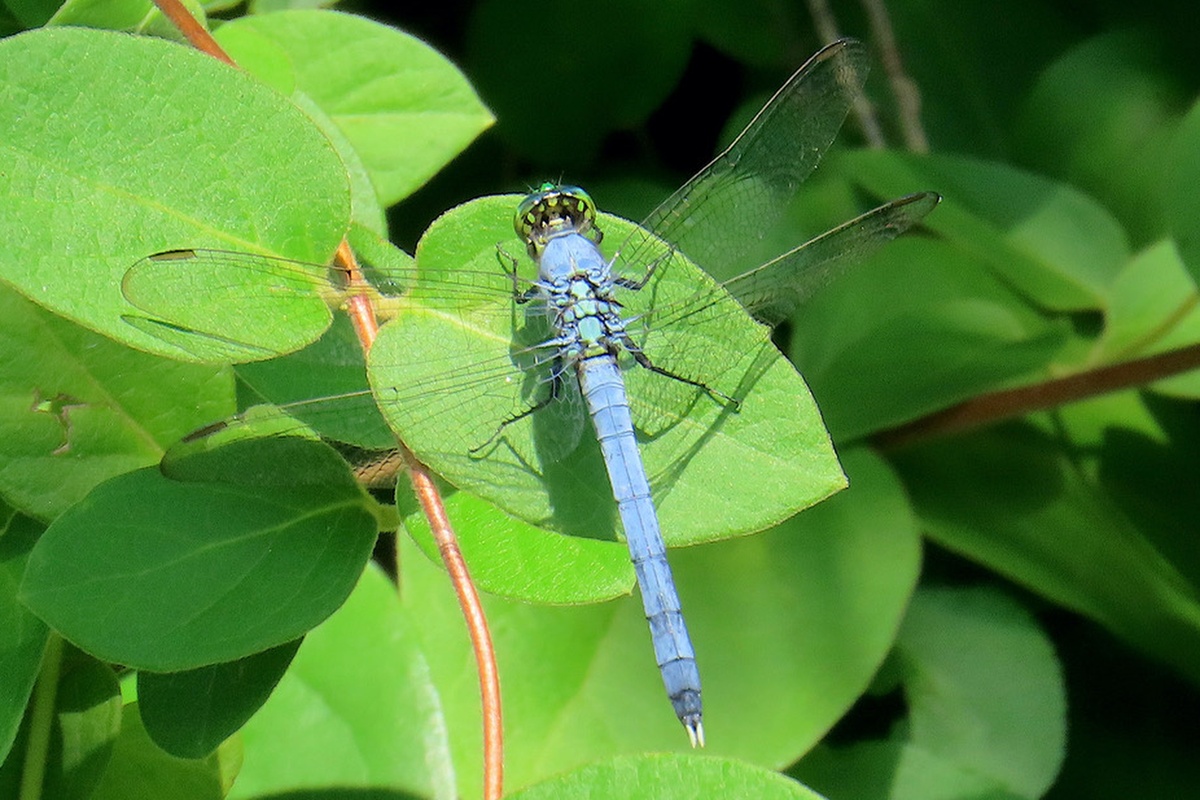
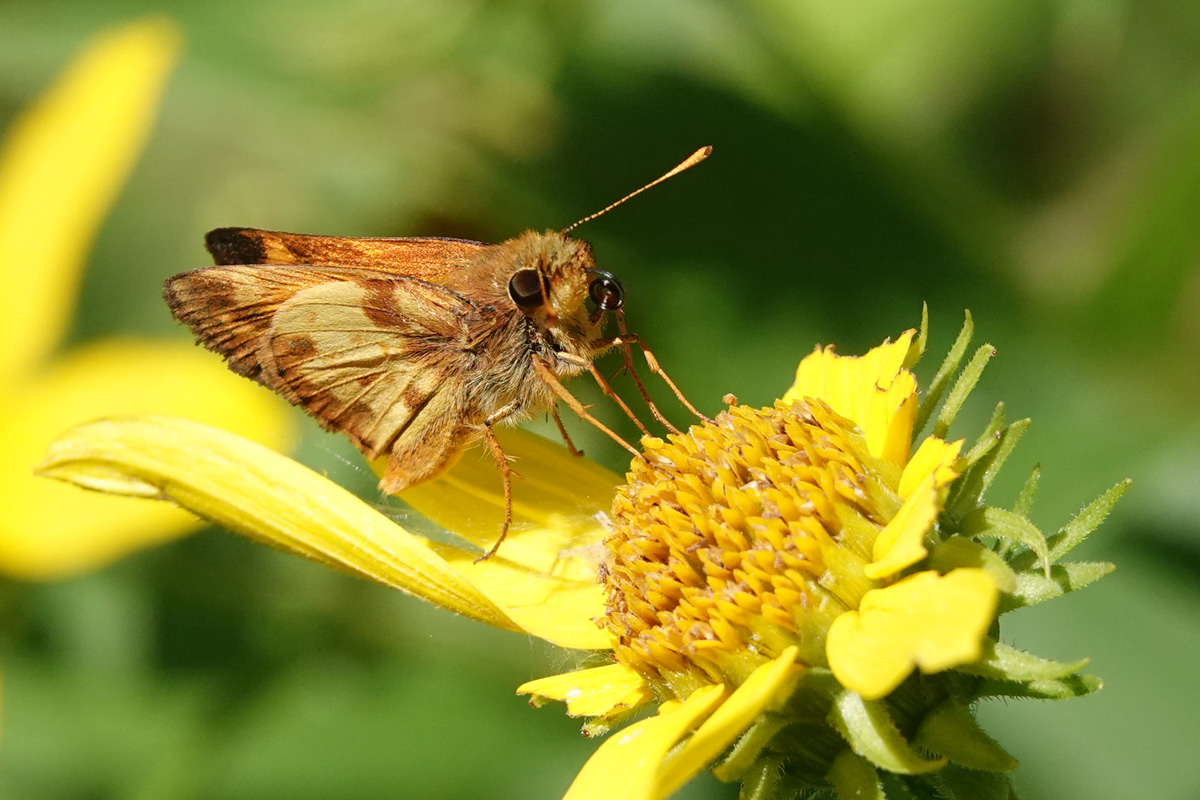
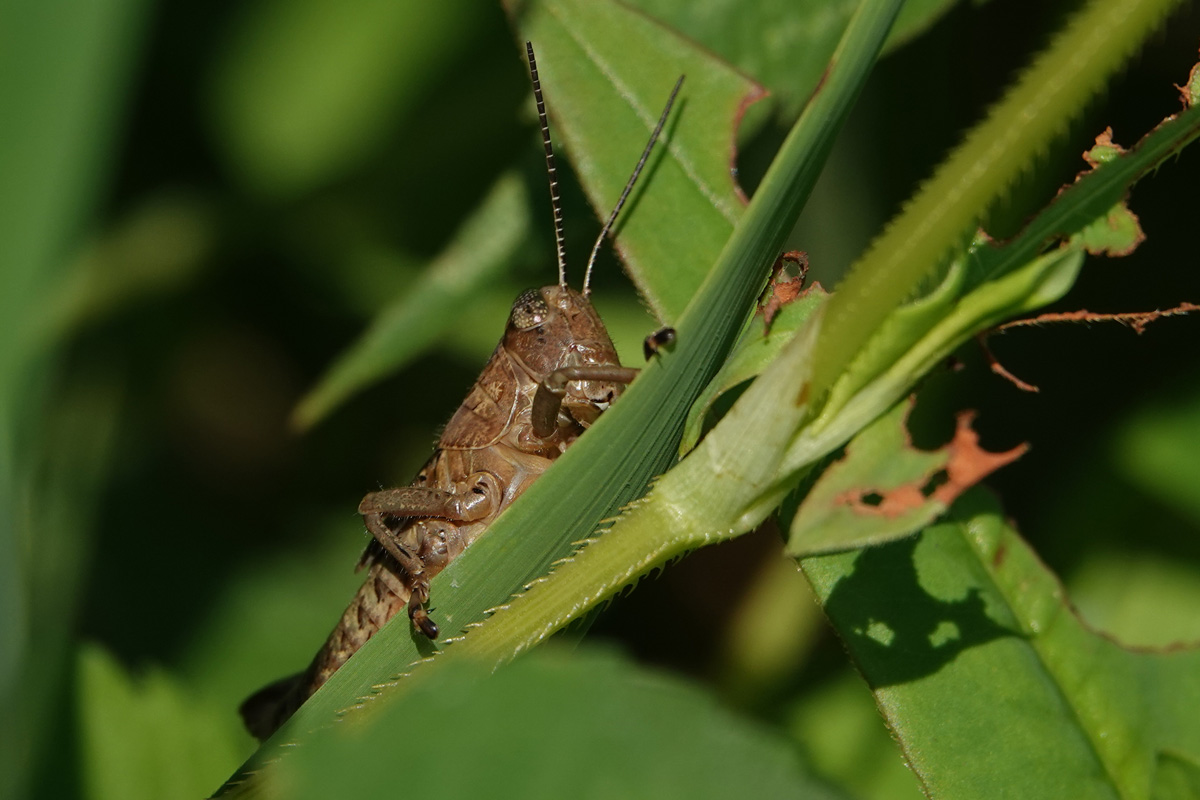
The Swamp Milkweed attracted large numbers of Monarch Butterflies, as well as a number of skippers, including Least, Sachem, Peck`s, and more. The field also hosted a Differential Grasshopper, Milkweed Bugs, a Black Saddlebag, Blue Dasher dragonflies, and many more invertebrates.
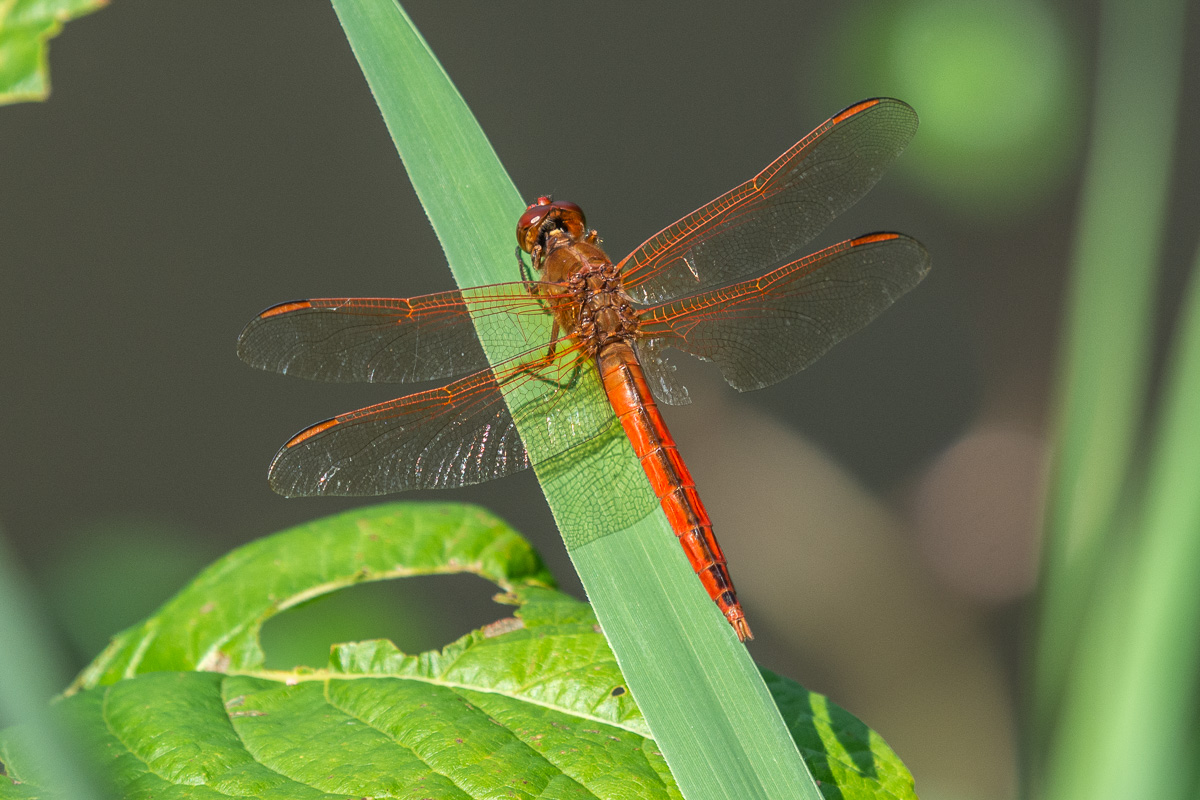
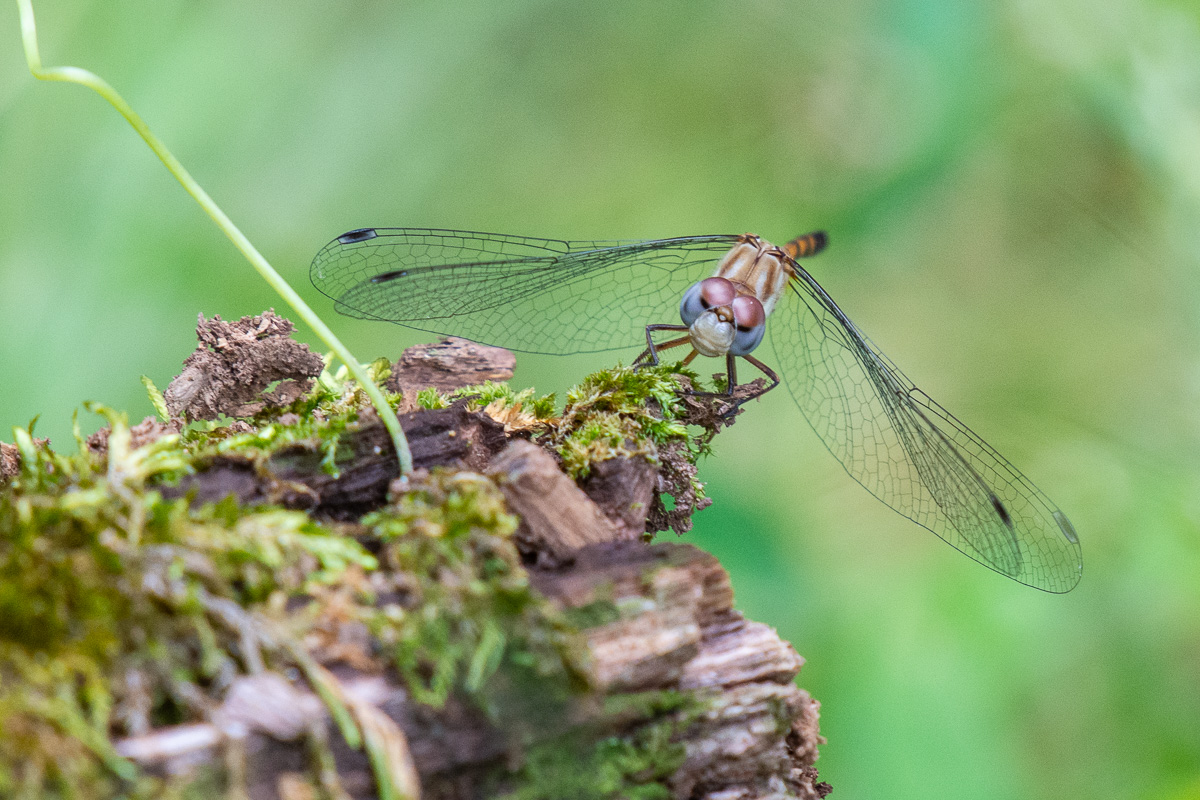
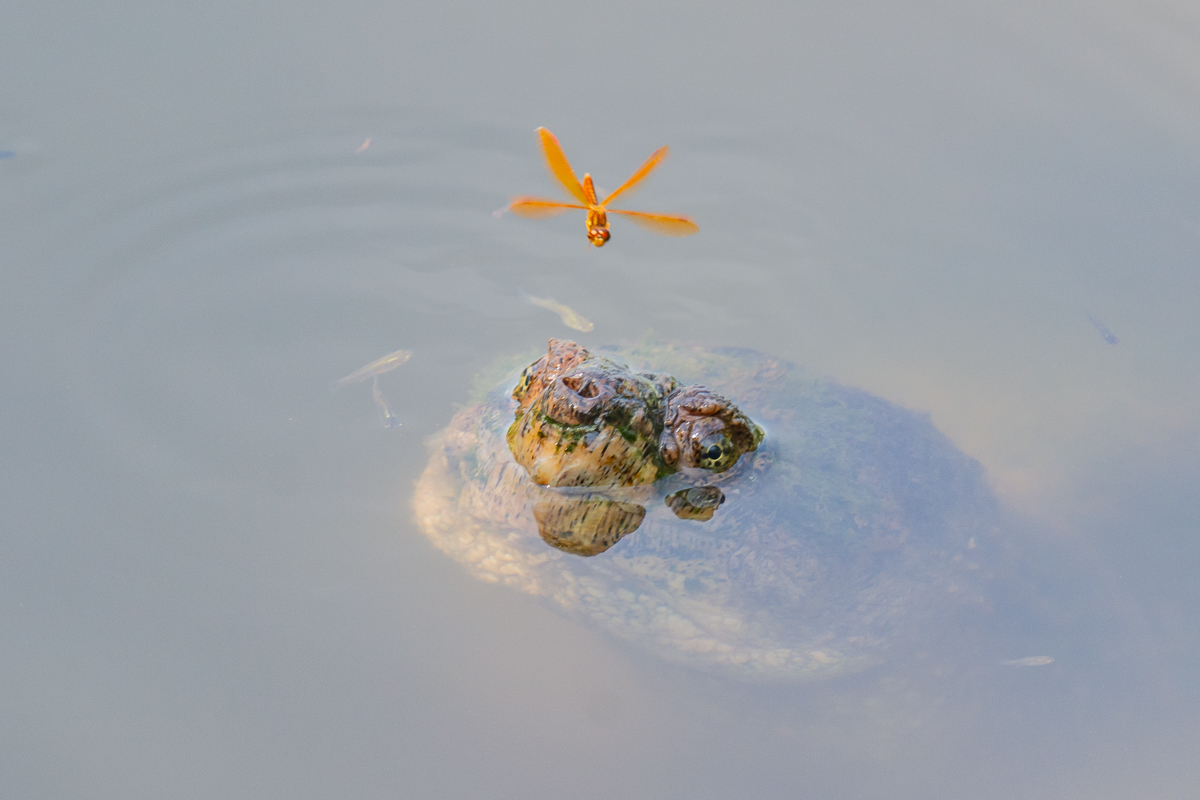
We continued along the path to the pond. Along this short walk we had good views of a Common Buckeye and a Pearl Crescent. The Cabbage Whites were almost ubiquitous. Mount Loretto is known for its population of Needham Skimmers, a magnificent red dragonfly. It was one of the first dragonflies we saw at the pond. All cameras were focused on this beautiful dragonfly, a percher. Other dragonflies included: Slaty Skimmers, Eastern Pondhawks, Eastern Amberwings, Blue Dashers, Green Darner and Blue Dashers. The Snapping Turtles often raised their massive heads. We finally departed and walked to the south pond.
As we continued our walk to the second pond, we saw a Snowberry clear-winged moth and a Spicebush Swallowtail. We arrived at the second pond to the croaking of a Bull Frog, and we saw a Green Frog. Shortly after our arrival, Dave spotted a most unusual dragonfly, the Mocha Emerald, an excellent sighting A very worried mama Mallard was perched on a tiny rock in the water with her two duckings. She was watched by Snapping Turtles, but she outsmarted them and swam safely to shore with her ducklings. Seth spotted a Yellow-billed Cuckoo in an adjacent tree and a Ruby-throated Hummingbird. We then began our walk to the parking lot.
Damselflies are small odonates. They keep their wings folded when perched. Dave directed our eyes to a tiny one called Fragile Forktail and explained how to identify that species. As we were approaching the parking lot, Seth spotted the tiny Eastern-tailed Blue butterfly. Our next and final destination was Blue Heron Park.
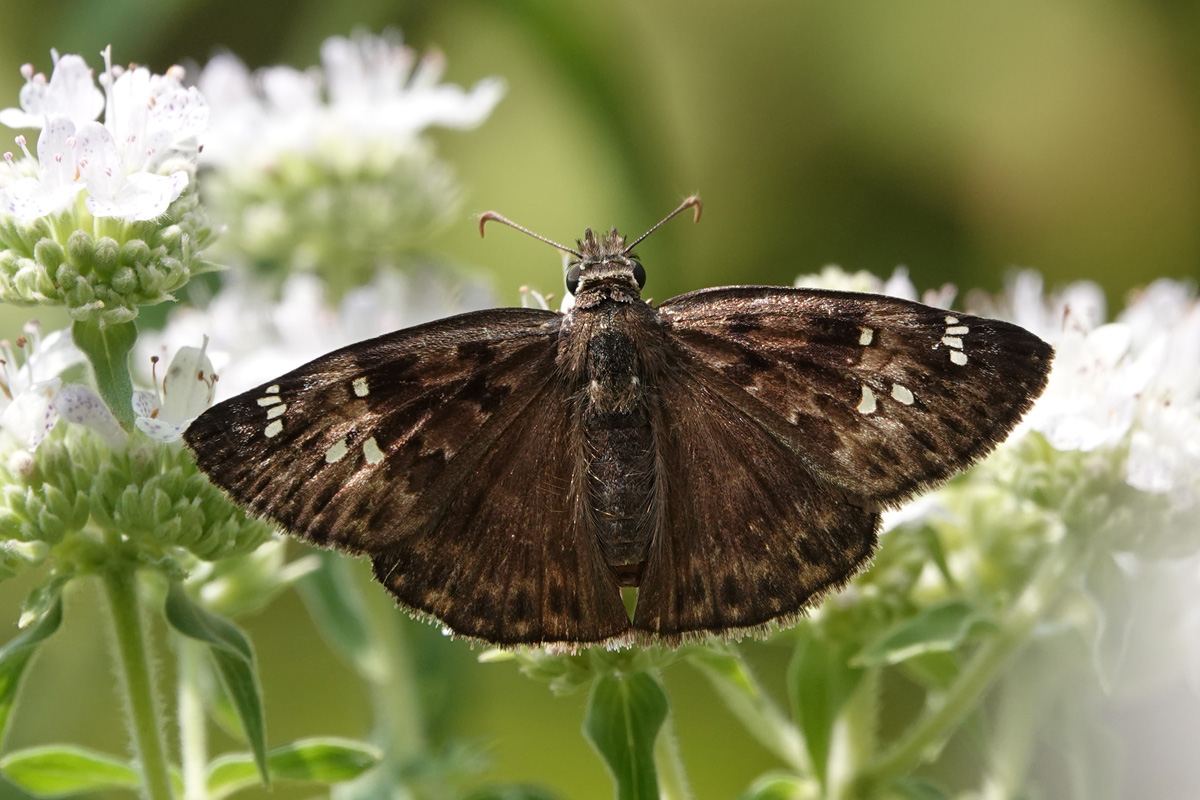
Blue Heron Park, with its woodlands, ponds, grasses, and shrubs, hosts a large variety of wildlife. The parking lot has bushes and flowers that welcome butterflies, odonates, bees, and more. Upon arrival, Seth immediately spotted a Gray Hairstreak, a diminutive, beautiful butterfly perched inconspicuously on a bush. The vegetation here also attracts Silver-spotted Skippers and Broadwing Skippers and various bee species, including Carpenter Bees. Scolia Dubia Wasps and Hover Flies were also finding sustenance in these bushes. Hover Flies (diptera, two wings) are bee mimickers. They pollinate, but do not sting.
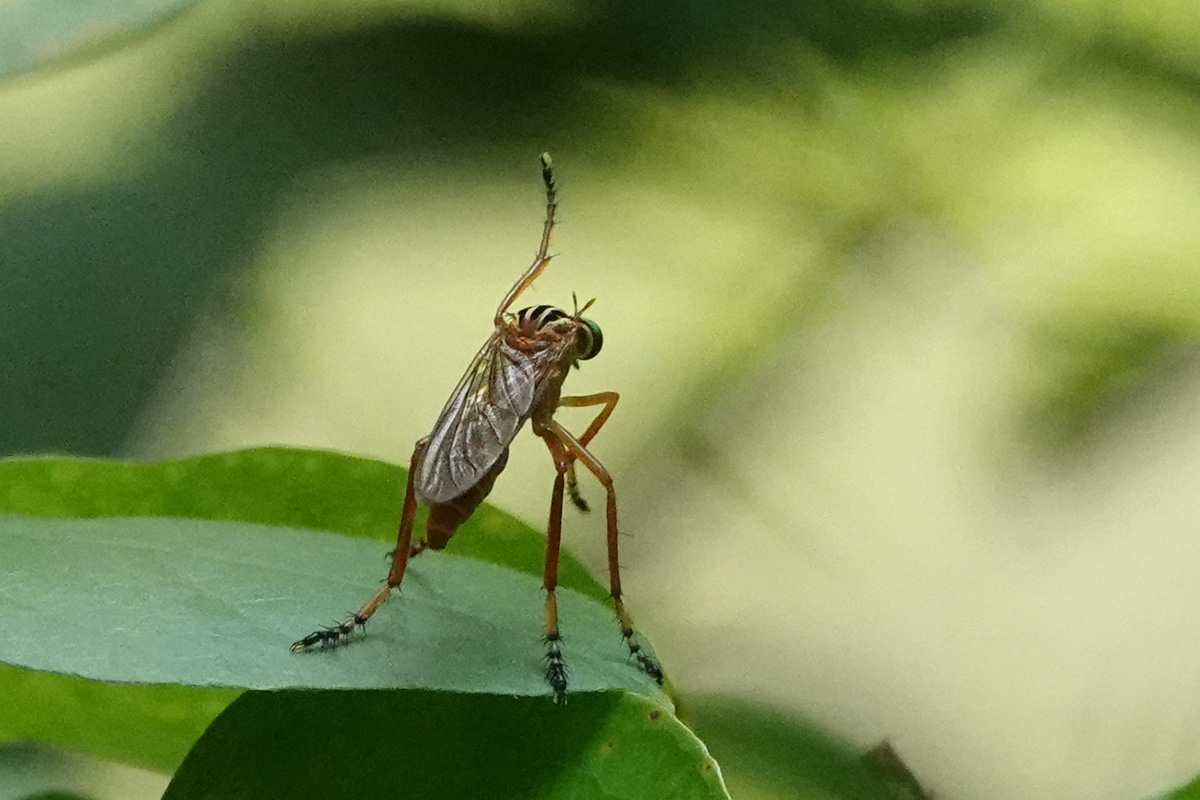
We proceeded to the adjacent pond and had fun watching the antics of a Spotted Sandpiper. This pond was also home to many Slaty Skimmers, Blue Dashers, Eastern Amberwings, Eastern Pondhawks, and more. Another attraction here was the Plain-tailed Hanging Thief, a ferocious robber fly that lives up to its name.
We also identified birds. The Pileated Woodpecker was calling, and the Eastern Wood Pewee and Wood Thrush were also vocalizing.
Seth spotted a Spreadwing Damselfly, but it disappeared. Neither Seth nor Dave could relocate it, but the piece de resistance was a rare Blue-faced Meadowhawk. This meadowhawk, found by Seth and Dave, is usually seen In Illinois and surrounding areas. As it is a percher, it was most cooperative, and we all have pictures.
Our wonderful trip ended, but our memories will be with us.
Species Lists
Birds (Mt. Loretto)
Mallard
Chimney Swift
Ruby-throated Hummingbird
Killdeer
Great Egret
Great Blue Heron (flying south of Mt. Loretto)
Double-crested Cormorant
Osprey
Bald Eagle
Northern Flicker
Great-crested Flycatcher
Eastern Kingbird
Warbling Vireo
American Crow
Common Raven
Tree Swallow
Barn Swallow
Northern Rough-wing Swallow
Purple Martin
Blue-gray Gnatcatcher
Northern House Wren
Carolina wren
European Starling
Gray Catbird
American Robin
Ceder Waxwing
American Goldfinch
Orchard Oriole ( female-yellow type )
Red-winged Blackbird
Common Grackle
Common Yellowthroat
American Redstart
Yellow Warbler
Northern Cardinal
Indigo Bunting
Birds (Blue Heron Park)
Ruby-crowned Kinglet
Spotted Sandpiper
Red-bellied Woodpecker
Pileated Woodpecker ( heard )
Northern Flicker
Eastern Wood Pewee ( heard )
Blue Jay
American Crow
Fish Crow
Purple Martin
Blue-gray Gnatcatcher
Carolina wren
Gray Catbird
Wood Thrush ( heard )
American Robin
Red-winged Blackbird
Yellow Warbler
Northern Cardinal
House Sparrow
Butterflies
Spicebush Swallowtail
Eastern Tiger Swallowtail
Cabbage White
Eastern-tailed Blue
Pearl Crescent
Common Buckeye
Monarch Butterfly
Horace’s Duskywing
Silver-spotted Skipper
Peck`s Skipper
Least Skipper
Zabulon Skipper
Broad-winged Skipper
Odonates
Fragile Forktail
Spreading species
Mocha Emerald
Green Darner
Black Saddlebags
Spot-winged Glider
Wandering Glider
Eastern Amberwing
Needham’s Skimmer
Common Whitetail
Slaty Skimmer
Blue Dasher
Eastern Pondhawk
Blue-faced Meadowhawk
Other Invertebrates
Cicada species
Cidada Killer
Scolia Dubia
Snowberry Clearwing Moth
Assassin Bug
Milkweed Bug
Differential Grasshopper
Plain-tailed Hanging Thief
Hover Fly
Lantern Fly
Herps
Green Frog
Bull Frog
Red-eared Slider
Snapping Turtle
Mammals
White-tailed Deer
Eastern Gray Squirrel
Groundhog