

Recollections of 76 years of birding in the park with Peter W. Post
By Ken Chaya, with assistance from Jean Shum and Debbie Becker
I don’t recall the first time that I met Peter Post. It most likely would have been in the 1980s when I began birding in Central Park. Like the birds, the trees, the water and the rocks, Peter seemed to be a permanent part of the landscape. Wherever one went, there was Peter. During the spring and fall migration seasons, Peter could be found wandering through the Ramble and other wooded areas in search of migrants. In the winter he appeared at the Reservoir, bundled up against the cold, wearing his beret and lugging several pounds of photography equipment with him in order to document winter waterfowl. And in the summer, in addition to observing the local breeding birds, Peter roamed the park in search of seasonal insects to photograph. Over the many seasons and visits, his expertise as a photographer and naturalist continued to flourish. Today, Peter’s impressive body of remarkable wildlife photography is an enduring document of nature—much of it urban nature—captured through his eye and lens in Central Park. Talking with Peter reveals even more about Central Park’s fascinating history as an important habitat for birds.
Growing up in Manhattan, Peter was always interested in biology and the natural world. He recalls as a child that his father would place him on his shoulders and walk through the halls of the American Museum of Natural History. For this article, when I asked Peter what his “spark bird” was, he replied, “I didn’t have a spark bird. I had the Museum of Natural History. That’s how I first became interested in birds.”
Peter began birding in Central Park in 1950 when he was 11 years old. Seventy-six years later, having traveled to many parts of the world, seeing and photographing exotic birds and other wildlife, he tells me that his favorite place to bird is still Central Park. Peter lives on Manhattan’s Upper West Side, not far from the neighborhood where he grew up. In 1958, as the construction of Lincoln Center was about to begin, Peter and his family were forced to relocate to another apartment in the Fort Washington neighborhood. He recalls that his family was the very last one to move from his block on West 63rd Street as the demolition began. From his new neighborhood in Fort Washington, Peter would ride the subway downtown to go birding in Central Park. His first binoculars were a pair of opera glasses that were loaned to him. “You couldn’t get good optics until the Japanese began manufacturing them in the mid 50s.” he tells me. That is when he bought his first pair for $27. The optical magnification was 7×50. He adds, “The Japanese manufacturers were required to put quality standards on their optics which greatly improved them and set them apart from any other competition. At that time, Bausch and Lomb made the best spotting scopes. Years later they and other US manufacturers began making binoculars for public use as well.”
Peter holds a Master’s degree and a PhD in Anthropology with a special interest in biological anthropology from Columbia University, where he taught a course in Field Ornithology. The members of the class liked it so much they asked him to repeat it. Peter has been birding in Central Park for 76 years. Longer than anyone I know and perhaps longer than anyone, period. When I ask Peter about Central Park and birding, he has much to say.
As a child in the 1940s, Peter remembers the sweltering summer days and nights before air-conditioning. “Back then, to deal with the oppressive heat, people came to the park in the evening and slept on the ground in Sheep Meadow.”
“Back in the 1950s and 1960s, Central Park was dangerous,” Peter explains. “It was so dangerous in fact that local banks handed out free plastic whistles so that park goers could use them to alert others if they were being attacked. I still have one.” I try to imagine myself in Central Park back in those days, carrying a whistle around my neck, right next to my binoculars, and always making sure to keep an eye out behind me.
“The birders were afraid of being mugged, so they often hid their binoculars beneath their coats. It was so bad, that a police officer would escort groups of birders around the Ramble.” is how Peter tells it. “Birders stuck to two main areas, the Ramble and the Reservoir. No one went up to the North Woods. It was off limits.”
Today, the Jacqueline Kennedy Onassis Reservoir is still a popular destination for birders. Long-time birders may remember that prior to 2003, an ugly seven-foot tall chain link fence surrounded the Reservoir and one had to peer through it to see birds. The fence was installed in 1926 in order to prevent drownings, some of which were suicides, according to local newspaper accounts of that time. In 2003, a replica of the original low ornate iron fence was installed around the Reservoir, providing a much improved experience for everyone, including the birders, joggers, and visitors.
On December 13, 1956, Peter recalls counting 116 Green-winged Teal on the Central Park Reservoir. The 1958 edition of Proceedings, the publication of the Linnaean Society of New York confirms this figure—a maximum high count for that year—and describes the species in those days as, “Fairly common to abundant winter visitant.”
“And there were large flocks of American Wigeon back then.” Peter tells me. Indeed there were. Another Proceedings article states that on November 20, 1956, Peter observed 152 American Wigeon in Central Park, a record high count for that year. He continues, “Lesser and Greater scaup were also commonly seen there in large numbers. They moved back and forth between the Hudson River and the Reservoir regularly.” Here again, Proceedings reports that a maximum of 375 Greater Scaup were found on the Central Park Reservoir on January 29, 1956. Another seasonal high count for this species, by who else? Peter Post.
Additional rarities on the Reservoir included Tufted Duck and Eurasian Wigeons. As for passerines, on August 29, 1956, as fall migration was commencing, Peter recorded an astonishing 817 Eastern Kingbirds on a single day in Central Park!
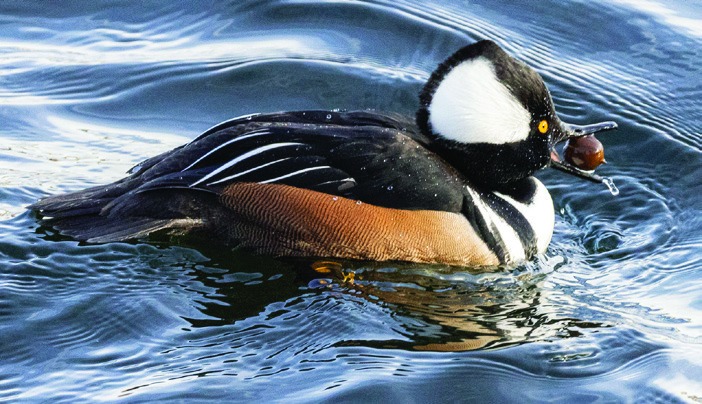
One might be surprised to hear that in the 1950s Shovelers were considered a “Rare winter visitant.” Wood Ducks were an uncommon transient. And only 5 records of Bufflehead were reported in Central Park between January 22 and October 26 of 1958, when on that date, Peter found 8 of them on the Reservoir. Peter’s list of uncommon park birds continues. “Back in the 50s, Hooded Mergansers were a rarity on the Reservoir. They became much more common winter visitors later in the 1980s and 1990s.” On November 2, 1955, Peter reported only a single Hooded Merganser on the Reservoir. Prior to that, one other single bird was observed on the Central Park Lake during Christmas week of 1944. Further research shows that a mere 3 Hooded Mergansers were recorded on the Lake in November of 1921. Recently, Peter wrote an article in the June 2026 issue of The Kingbird on the feeding habits of the Hooded Merganser based on his years of observations of them at the Central Park Reservoir.
Peter describes Central Park’s Ramble as being “much more open” back then. I assume this was because the woodland canopy was still reaching full maturity following the park’s ongoing plantings of additional trees and shrubs. He mentions other areas of the park that have changed. “The Great Lawn was not lush and green. It was a dusty, sandy lot. It didn’t have the dense carpet of grass sod that we have now. That was a multi-million dollar project that was completed in 1997. Because of the dusty ballfields and patchy grass, we used to commonly see pipits and meadowlarks there.”
Peter goes on to relate one of the early issues of controversy surrounding the management of the park. “An important period in Central Park was 1982. The Central Park Conservancy attempted to have many trees in the Ramble cut down. Sight lines were planned in the Ramble so that from the Mall one could see all the way to Belvedere Castle. Bird watchers were outraged and presented Parks Commissioner Gordon J. Davis with a petition signed by over 1000 park goers against the tree cutting. An article titled, Cutting of Central Park Trees Angers Birders, appeared in the New York Times on May 3, 1982. As a result of the public outcry, the plan was ultimately abandoned.”
When it comes to changes in species range dynamics, Peter explains, “Since I’ve been birding, a lot of southern species have moved north. The Red-bellied Woodpecker, the Tufted Titmouse, and the Black Vulture, all were once uncommon or unknown species in the park. Today, the Red-bellied Woodpecker is a common breeder there.” Peter recalls having documented the first Black Vulture sighting in Central Park on May 25, 1956. That record can be found in the annotated article, The Birds of Central and Prospect Parks by Geoffrey Carleton, published in the 1958 edition of Proceedings by the Linnaean Society of New York.
Over the years, Peter attended many of the annual Christmas Bird Counts held in Central Park. He recalls one in particular quite well. “At the luncheon compilation of the 2004 Christmas Count, Jim Demes reported seeing a Saw-whet Owl near the Tavern On The Green restaurant. I asked if it was photographable, and Jim said it was only about ten feet off the ground in an Eastern Hemlock. I went there immediately after the luncheon with Jim and some others, and the owl was still there! The first thing I noticed was the large head and overall size which told me it wasn’t a Saw-whet Owl. After getting a look at the horn-colored bill, the black border on the facial discs, and the fine white spots on the forehead, I realized that it was a Boreal Owl!” This was the first and only record of that northern species ever in Central Park.
Peter shared with me that in his early years of birding, on a good day in Central Park, he would see “14-15 different warbler species in one tree!” Sadly, this no longer is the case. Today, the loss of habitat and numerous other environmental issues has led to a serious decline in the bird population in Central Park and of course, in many other areas globally.
To those who began birding during the digital communication age, the idea of birding today without the use of modern technology such as social media, text messages, networks, apps, and even personal cell phones might seem terribly restrictive and limiting. Perhaps even uncivilized! Yet, back before it was possible to carry the whole world around in your pocket, the Central Park birders developed a number of ways to relay information about important species.
Peter describes it thus, “The Massachusetts Audubon Society started the very first Rare Bird Alert. People called in and left a message about what was seen. As far as I know, that was the first. One could call in to hear a recording of what was being seen that day or that week. Then, Tom Davis started the New York Rare Bird Alert. Tom Burke took it over when Tom Davis became ill and he still runs it today. Several members of the Linnaean Society of New York developed a phone chain network of interested parties to share rare bird alerts. It worked like this. To relay bird information, Caller #1 called Caller #2 on the list, who then called Caller #3 etc. If no one answered, you had to go to the next name on the list until you reached someone and passed along the rare bird message.
Talking with Peter is entertaining, enlightening, and at times, quite surprising. He explains that during the 1950s bird watching wasn’t very popular with the public. In fact, birdwatchers were looked upon as “something strange, something weird.” There was actually a cultural stigma attached to the activity itself and to the term, birdwatcher. As Peter describes it, “I knew someone who got married and he didn’t want to tell his wife that he was a birdwatcher. He had to sneak out of the house to watch birds because he thought she would think he was seeing another woman. He eventually gave up bird watching.”
In 1954, at the age of 14, Peter became a member of Linnaean Society of New York. At that time, he was the youngest member ever of the Society (and to my knowledge, he still holds that record today). I asked Peter if he felt welcomed back then as a young birder by the Linnaean community, and he told me that he did. He recalled a memorable Linnaean Society field trip early on to Canarsie Park on Jamaica Bay, “Where I saw 18 life birds, including a Curlew Sandpiper! Yes, they used to show up out there.”
Over the years, Peter gave a number of talks at the Linnaean Society. Some titles of his talks were: “Adventures in Arctic Siberia,” “From the Atacama Desert to the High Andes,” and “A Talk with Peter Post.” He also served on the Society’s counsel briefly.
In addition to Peter’s contributions to Central Park’s natural history, his influence extended well beyond. In the 1970s the tern colonies at Breezy Point were not being protected. As a result, Peter wrote a letter to Gateway Management. That letter resulted in protection of the colonies, and led to a seasonal appointment for Peter to survey the waterbird colonies in Jamaica Bay, and provide suggestions for management. These included the placement of Barn Owl nest boxes, which were installed by Don Riepe and others. In 1981, Congress requested a Natural Resource Management Plan for Gateway National Recreation Area. Peter was hired as an independant contractor to compile and contibute to the plan. The final report was a compilation of several people, whose arduous field work showed that greater protection of habitat and the birds that lived there was of paramount importance. It was an important step in the beginning of the slow and continuing restoration of this vital ecosystem.
And as if all this wasn’t enough, Peter once contacted Roger Tory Peterson, the distinguished author, artist, ornithologist, and environmentalist with a suggestion on the correction of the leg color of the Audubon’s Shearwater in Peterson’s Field Guide to Eastern Birds. Peterson made the change and credited Peter in his book!
When I asked Peter to tell me what he thinks about the state of birding today—in Central Park and beyond—he doesn’t hesitate to comment. “There is too much emphasis on the number of species seen, rather than the quantity of birds today. People are always interested in lists. How many warblers did you see? We all do it. I myself have been guilty of this. But we should really be talking more about species abundance and how that has been changing.”
He adds, “People aren’t learning birds like we did, from field guides. They are using apps while in the field which are prone to mistakes. Some are a great resource, but today some people don’t make the effort to learn the birds in the field because their cell phone already knows what it is.”
On the topic of insects, Peter related to me that as a child, even before he began studying birds, he had an insect collection, Many years later, Peter met and became friends with Guy Tudor, while watching an Evening Grosbeak together at Azalea Pond in Central Park. The late Guy Tudor was a gifted naturalist and a distinguished artist who illustrated numerous field guides including The Birds of South America, Vols. I and 2, among many other publications. In addition to birds, Peter and Guy were both interested in insects. In 1984, Guy helped found the New York City Butterfly Club with Jeffrey Glassberg. Peter was one of the Charter Members. The organization was largely responsible for increasing butterfly observation and conservation.
Over the years, as I got to know Peter, we often shared information about the insects we were seeing in the park. We took trips to the New Jersey Pine Barrens and Van Cortlandt Park in search of insects. One of my favorite insect-related stories about Peter takes place in 2020. That year, I found a Cloudless Sulphur butterfly in its larval stage (caterpillar) in Central Park. It was feeding in a large patch of Partridge Pea on the 102nd Street Cut-off Road. Cloudless Sulphurs are not commonly seen in the park, either as adults or larvae. This was an exciting find. When I told Peter about my discovery, he immediately headed over to the area with his camera gear. Because I was unable to accompany Peter on that day, I did my best to give him explicit directions on where to find this rare visitor. The Partridge Pea was growing knee-high in an extremely large and dense cluster along the road side. The patch was almost the length of a city block. To be perfectly honest, I never expected Peter to be able to find the larva in such a large area. Looking for a single, tiny green caterpillar among all of that vegetation would be like finding the proverbial needle in a haystack. Of course, Peter found it! And later sent me a victory photo of his prize.
Peter’s first camera was a Kodak Brownie. His serious commitment to photography started with a Nikon film camera and a Novoflex telephoto lens in the 1960s. He has since upgraded to a Canon R5 with 200-800mm lens. His work has appeared in many magazine articles, journals, and in the comprehensive reference, Birds of the World (Lynx Editions). A selection of Peter’s wildlife photography work follows this article.
Looking at Peter’s extensive collection of wildlife photos is a reminder of what love looks like. Peter loves the art of composition. He loves the vivid colors of nature’s palette. He loves reminding us that even in this urban metropolis, a remarkable encounter with nature awaits us, just beyond our door. And he’s gifted us with a lifetime of work as one of the most dedicated and talented photographers of wildlife in Central Park and beyond.
Like Central Park’s magnificent birds, trees, water, and rocks, we now have Peter’s enduring images to admire and enjoy.
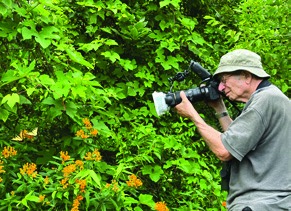
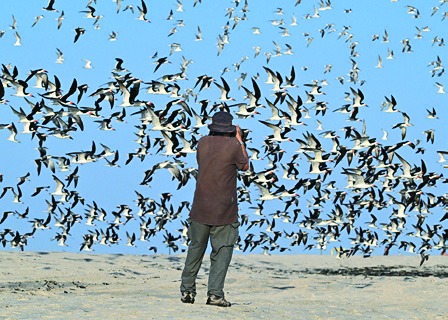
Peter Post photographed by Ardith Bondi
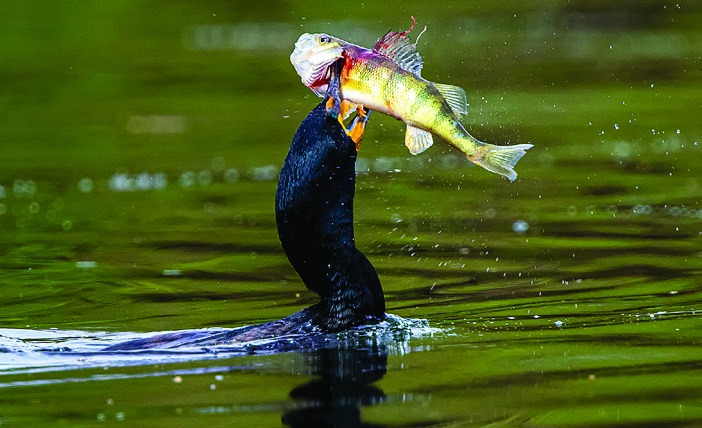
A Selection of Peter Post’s Wildlife Photography
All photographs © Peter W. Post. All rights reserved.
Click on any photo to enlarge.
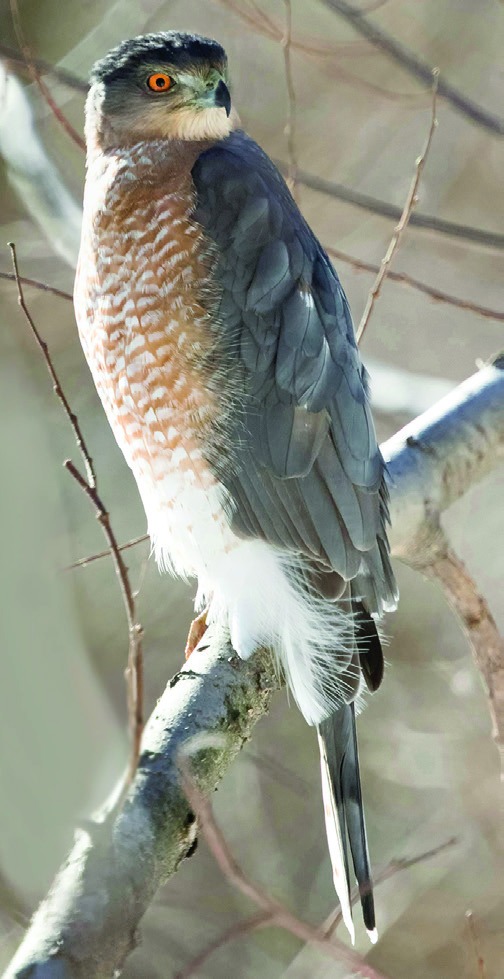
Cooper’s Hawk, at the Oven in Central Park.
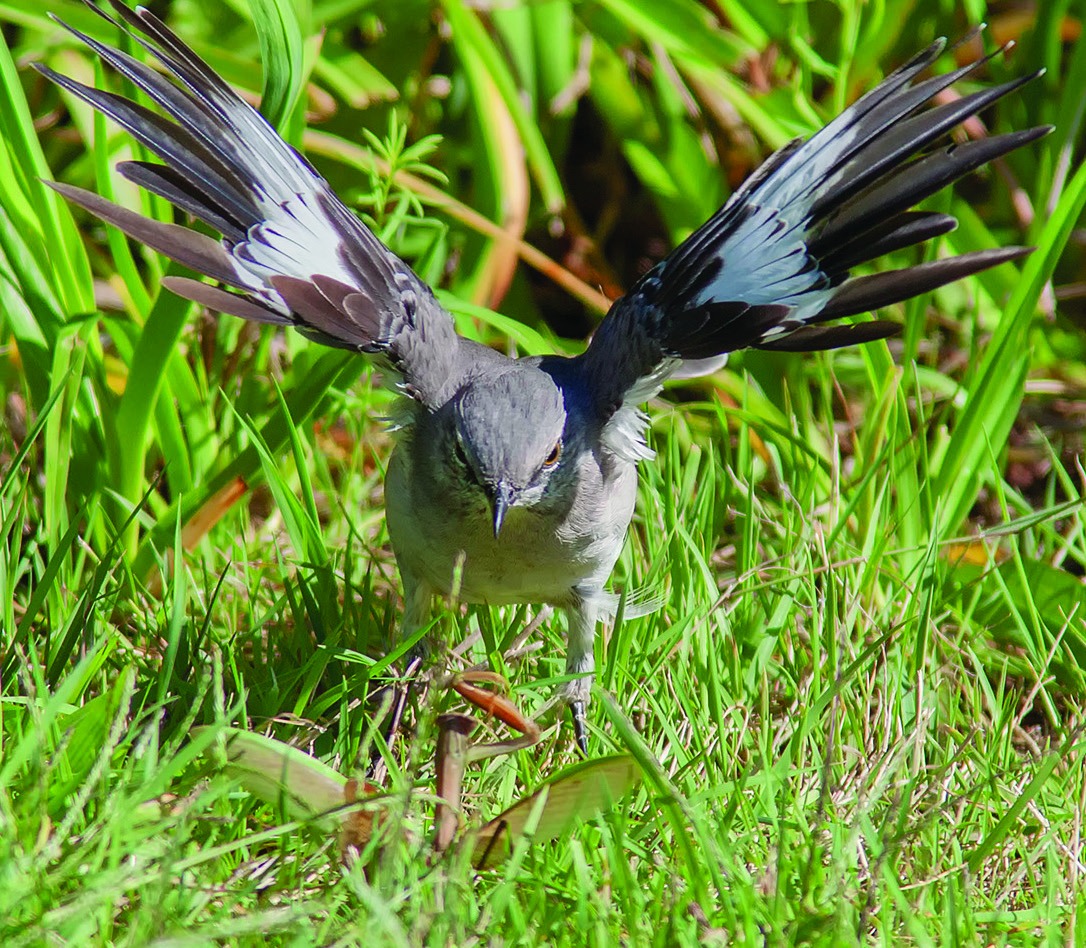
A Northern Mockingbird facing off with a praying mantis, Jones Beach State Park, New York. Who do you think won?
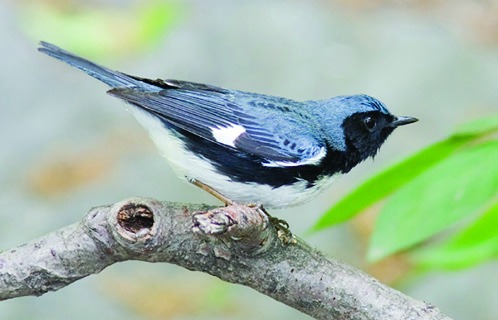
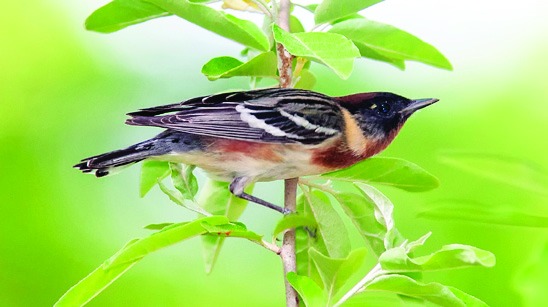
Male Bay-breasted Warbler, Central Park.
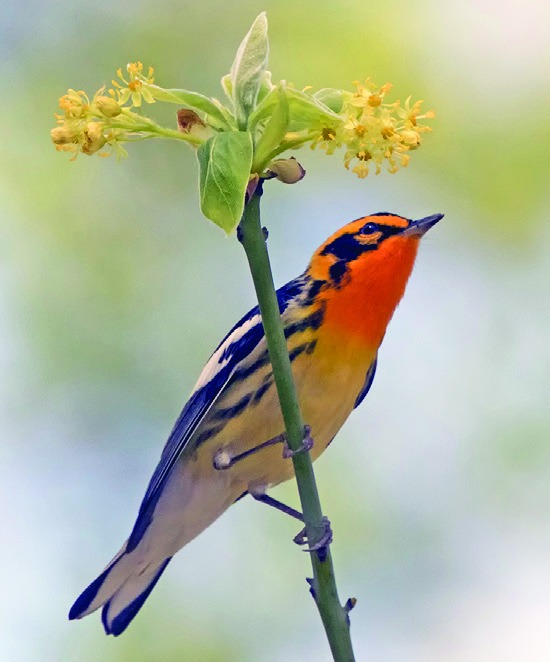
Male Blackburnian Warbler, Central Park.
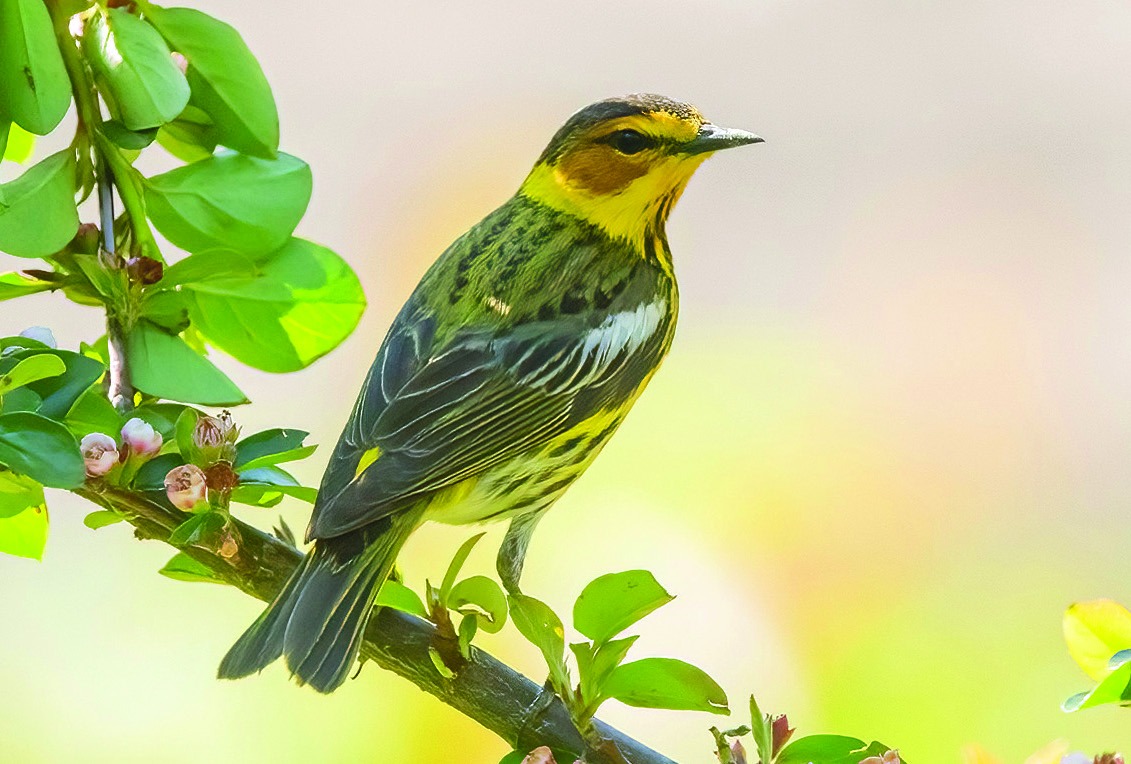
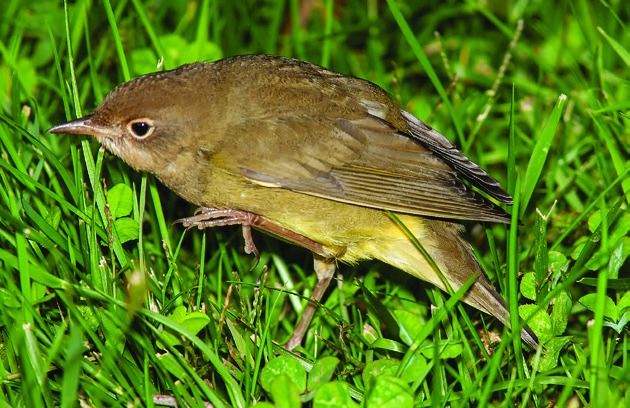
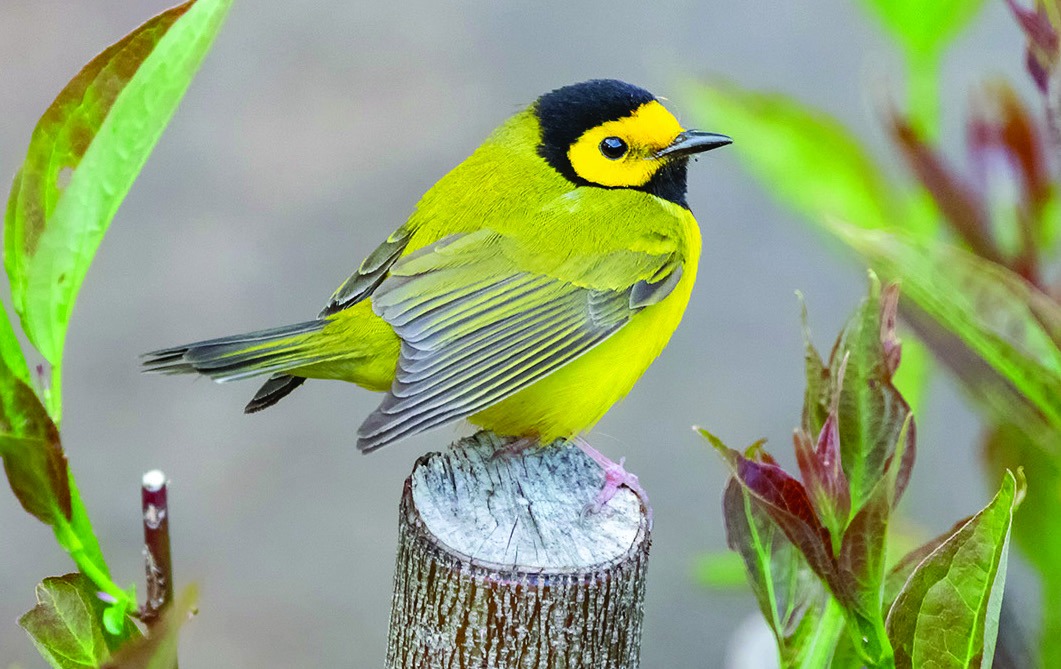
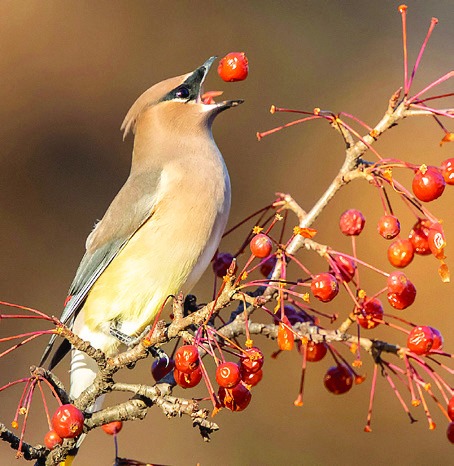
Cedar Waxwing feeding on crabapples, Central Park.
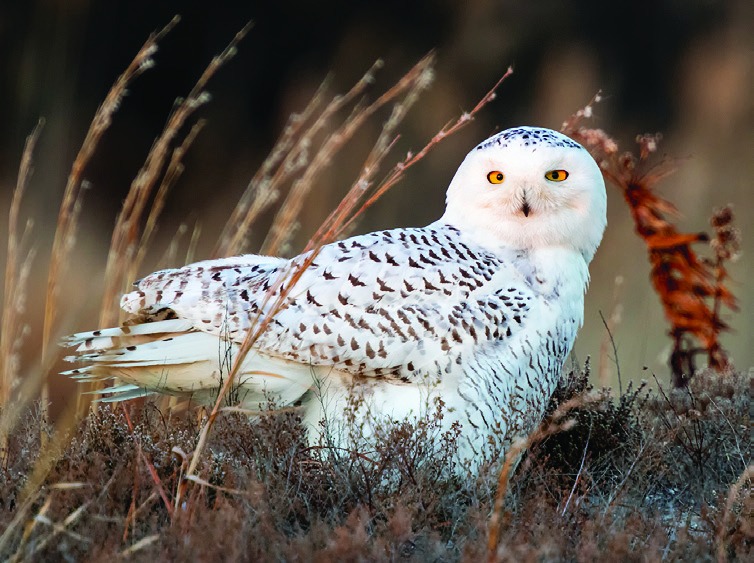
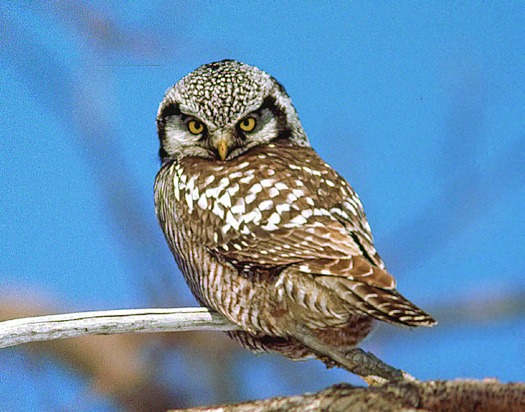
Northern Hawk Owl, Gilford, New Hampshire. (1973)
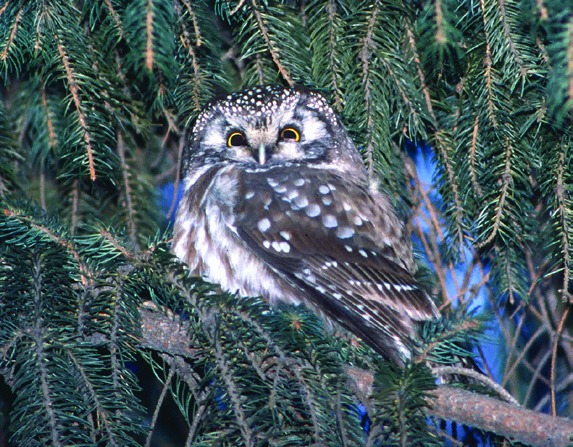
The rare vagrant Boreal Owl found on the 2004 Christmas Bird Count in Central Park, and correctly identified by Peter Post. At the time, this sighting was among the most southern recorded occurances of this species in the northeastern United States. Two other previous records from the New York City area are Bonhamtown, Middlesex County, NJ on November 1, 1962, and one found dead on Cedar Beach, Suffolk Country Long Island on January 15, 1975.
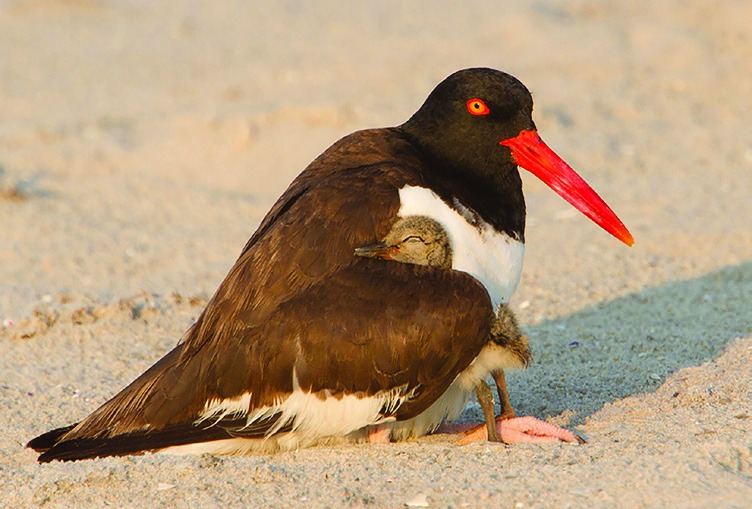
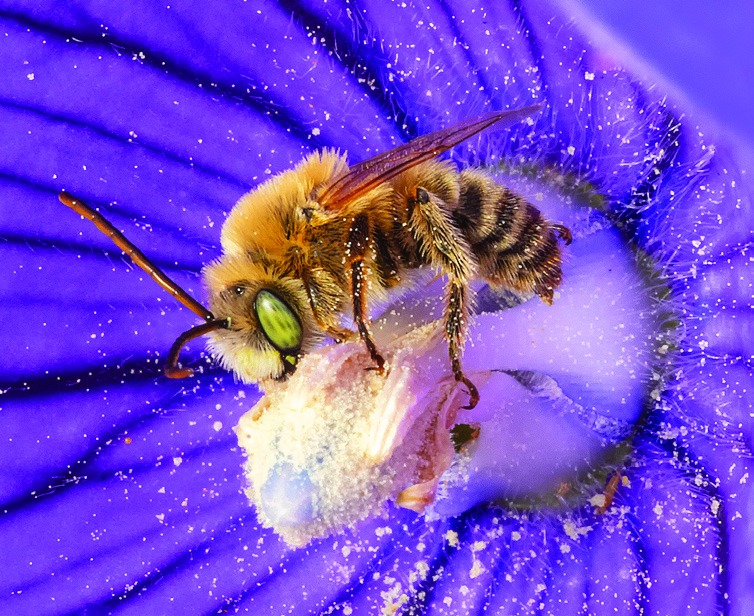
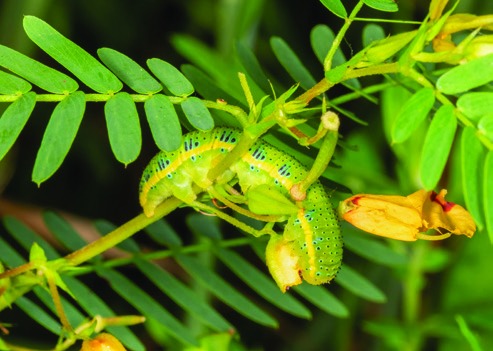
This is the larva of the Cloudless Sulphur Butterfly that I doubted that Peter would be able to locate hidden in a dense cluster of Partridge Pea in Central Park. As the photo confirms, he found it!
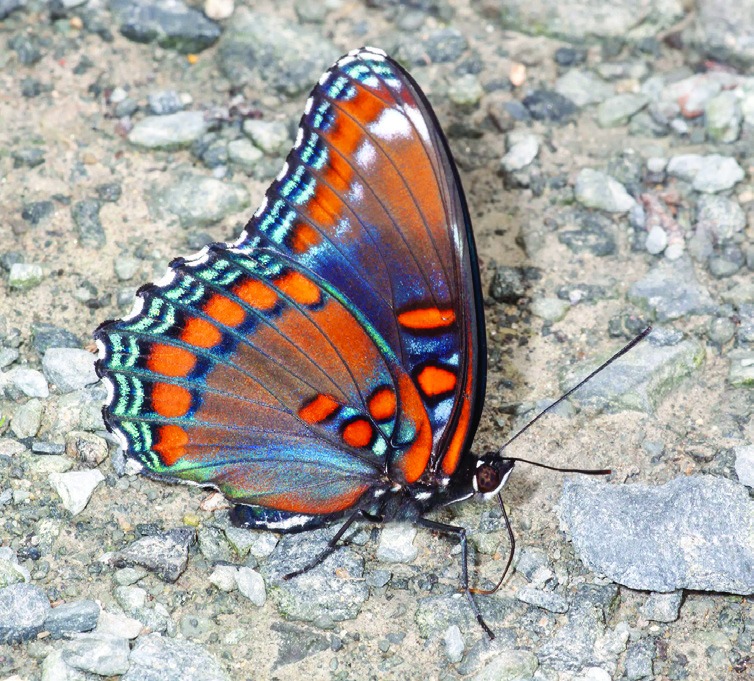
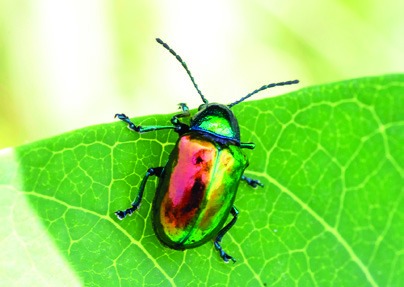
The colorful Dogbane Leaf Beetle. Rockefeller State Park, Westchester Co., New York.
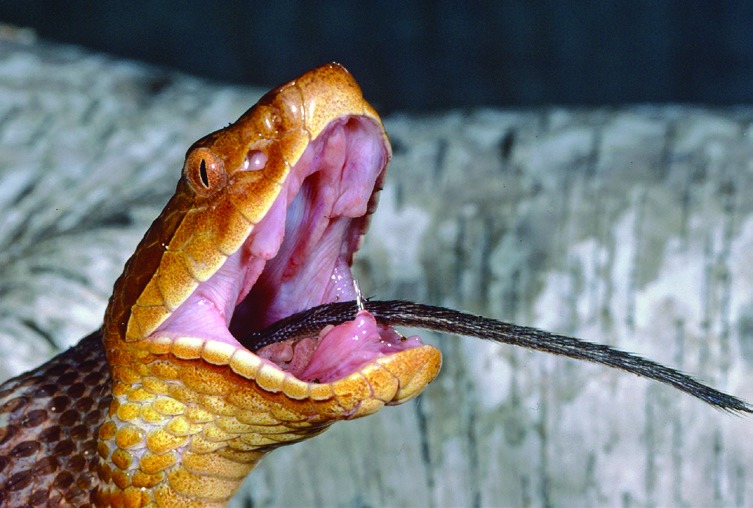
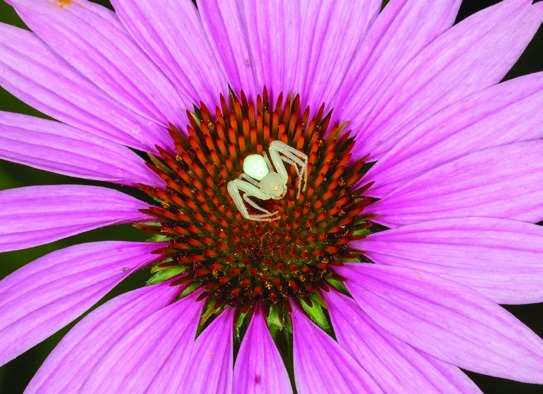
A tiny Crab Spider waits for prey in the middle of a Purple Coneflower. Rockefeller State Park, Westchester Co., New York.