

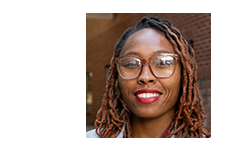
Dr. Deja Perkins – May 2026
7:00 pm, Tuesday, May 12, 2026
Linder Theater, American Museum of Natural History
Enter via the West 77th Street Entrance, between
Central Park West and Columbus Ave., New York City
Free and open to the public. Click here to Register for in person attendance.
You can also attend online via Zoom.
Click here to register for the Zoom webinar.
Patterns of Participation: Using Environmental Participatory Projects to Understand Data Gaps in Conservation and Nature Access in Urban Neighborhoods
Volunteers contribute millions of observations to conservation and science. These observations help scientists understand migration pathways, important management areas, and priority habitats to protect and manage for the future. Despite the millions of observations, participation is not distributed equally across landscapes. In this talk, Dr. Deja Perkins will demonstrate how using spatial analysis on geotagged observations helps uncover data gaps in environmental monitoring. She will also highlight the importance of diverse participation for understanding the holistic story of conservation.
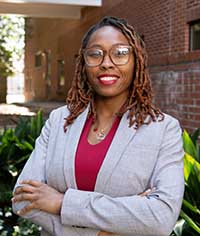
Dr. Deja Perkins received her PhD in Geospatial Analytics at North Carolina State University’s Center for Geospatial Analytics. She uses geospatial tools to investigate data gaps in participatory science projects. She is an environmental, social, and data justice advocate, primarily campaigning for equitable access to nature in urban spaces. In her research, she primarily works with large-scale, institution-driven projects (e.g., eBird, CoCoRHaS, iNaturalist, Audubon’s Christmas Bird Count), focusing on volunteer-generated environmental monitoring. Environmental monitoring encompasses a range of areas, including biodiversity, air quality, water quality, landscape change, climate change, plastic pollution, and more. Her doctoral research, entitled “The Geography of Participation: A Geospatial Analysis of Socio-spatial Gaps in US Participatory Science,” identified drivers of environmental data gaps in rural and urban areas and barriers to participation in science & environmental monitoring. As a member of the IDEAL Participatory Science Working Group, she is helping plan a framework for a more reciprocal community-engaged science.
Date
- Tuesday, May 12, 2026
Time
- 7:00 pm
Location
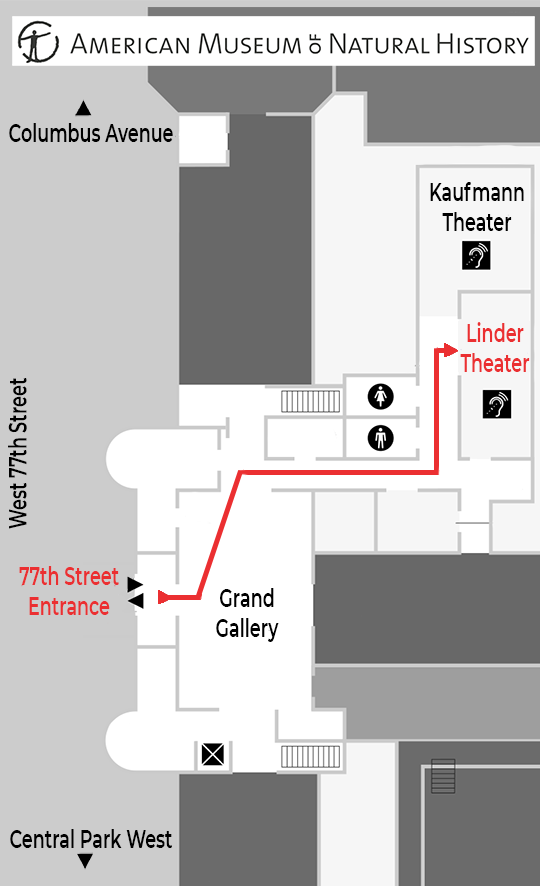
- American Museum of Natural History, West 77th Street Entrance