Registrar: Steve Holleran Participants: 10 Weather: Warm, in well lighted rooms
Combining his birding expertise with a lifelong love of art and a detailed knowledge of the museum’s collection, Kevin led us through centuries of bird-related images, from ancient Egypt, Greece, and Rome through the Middle Ages and into the Renaissance, Baroque, and Romantic periods. We explored the significance of birds in all of these cultures, depicted as everything from military mascots to symbols of virtue, food resources, and divine intermediaries, all while enjoying the beauty of the artworks and the leisurely fun of watching birds that don’t move.
While the birds were very cooperative, many were highly stylized and some completely imaginary. Here are some of the ones we recognized, and some of the things they’re thought to represent.
Species List
Ibis (Egyptian god Thoth, wisdom, magic, hieroglyphic symbol) Doves (peace, purity, Holy Spirit, messengers) Ducks, Geese (food offerings mostly) Swans (fidelity, love, Greek god Zeus) Eagles (coins, military mascots) European Goldfinch (joy, renewal, redemption) Falcons (Egyptian god Horus, kinship, hieroglyphic symbol) Owls (wisdom, Greek goddess Athena) Parrots, Macaws (decorative)(Note: eBird would question the identity of some of these) Peacocks (luxury, wealth) Rooster (reawakening) Raven (divine guidance)
Registrars: Amanda Bielskas & Kristin Ellington Participants: 14 Weather: Cold, around freezing, clear skies for most of Saturday with snow (3-5 inches) overnight into Sunday morning and then overcast. Bird Species: 73
Participants met in Manhattan and carpooled to our first stop, the Jones Beach Coastguard Station. Most of the groups were greeted there by a perched Peregrine Falcon, and some early arrivals also spotted Horned Larks in one of the medians in the area. Additionally, good numbers of ducks were seen, and there were distant views of a Common Loon and a Northern Harrier.
Our next stop was at Point Lookout, where a flock of Harlequin ducks was hanging out at the end of the closest jetty; there was also a large group of sanderlings foraging at the shoreline. After Point Lookout, we stopped briefly at Jones Beach again in search of some rarities that had been reported, but moved on after not finding them.
Our next stop, Eastport Lake, showed us large numbers of ducks and geese, including American Wigeons, Black Ducks, Northern Pintails, Canvasbacks, Redheads, Ring-necked Ducks, three types of Mergansers and one continuing Pink-footed Goose. In addition to the waterfowl, we had a Snowy Egret, a Belted Kingfisher, a Black-crowned Night Heron, a pair of nesting Bald Eagles, and a flyby Turkey Vulture and Cooper’s Hawk. At Mecox Bay we saw a Common Goldeneye and a Killdeer.
Last, we stopped at Sagaponack Pond, where a Dovekie was spotted in the surf just offshore, in addition to three types of Scoters. We proceeded to our hotel in Montauk for a quick break before heading to The Shagwong Tavern for dinner.
Sunday morning greeted us with a bit of lingering snow. After a quick stop at The Hampton Coffee Company for breakfast and/or coffee, we headed to Montauk Point, where we saw many Common Eiders, three types of Scoters, and—new for the trip—a handful of Razorbills. Second stop was at Camp Hero, where we spotted some Long-tailed Ducks and a Red-throated Loon.
After the morning stops we had a full breakfast at Jon’s Pancake House before heading back to the hotel to check out. Early afternoon stops included Lake Montauk, where we added Iceland Gull and Great Cormorant to our list, and Napeague, where we saw a Greater Yellowlegs; this species was also new to the trip.
One of the biggest highlights of the trip was a roadside stop in Water Mill, where we saw a rare (to the region) Northern Lapwing. There was also a large flock of Red-winged Blackbirds, among which were some Savanna Sparrows, Brown-headed Cowbirds, Common Grackles, and, towards the end of the stop, some Snow Buntings that flew in.
We then stopped at a farm stand—also in Water Mill—where a Lark Sparrow had been hanging out; we almost missed it, but it popped up right in front of some of the cars as we were about to leave the parking lot, giving us great views. Our last stop out east was at Shinnecock inlet, where there were large rafts of Common Eiders and a single continuing King Eider. We also had some nice views of Long-tailed Ducks and another Northern Harrier that flew over the inlet entrance.
We cruised Dune Road in search of more birds, but other than a few sparrows, gulls, and a Great Blue Heron, we didn’t add any new species to the trip list. Everyone then headed off in their cars and made their way back to Manhattan after a very successful weekend.
Species Lists
Birds Pink-footed Goose Brant Canada Goose Mute Swan American Wigeon Mallard American Black Duck Northern Pintail Canvasback Redhead Ring-necked Duck Greater Scaup King Eider Common Eider Harlequin Duck Surf Scoter White-winged Scoter Black Scoter Long-tailed Duck Bufflehead Common Goldeneye Hooded Merganser Common Merganser Red-breasted Merganser Rock Pigeon (Feral Pigeon) Mourning Dove Killdeer Northern Lapwing Greater Yellowlegs Sanderling Razorbill Dovekie Ring-billed Gull American Herring Gull Great Black-backed Gull Iceland Gull Horned Grebe Red-throated Loon Common Loon Great Cormorant Double-crested Cormorant Black-crowned Night Heron Snowy Egret Great Blue Heron Turkey Vulture Cooper’s Hawk Northern Harrier Bald Eagle Belted Kingfisher Northern Flicker American Kestrel Peregrine Falcon Blue Jay American Crow Common Raven Horned Lark Carolina Wren European Starling Northern Mockingbird American Robin House Finch Snow Bunting Clay-colored Sparrow Lark Sparrow Dark-eyed Junco White-throated Sparrow Savannah Sparrow Song Sparrow Red-winged Blackbird Brown-headed Cowbird Common Grackle Yellow-rumped Warbler Northern Cardinal
Mammals Eastern Gray Squirrel Red Fox White-tailed Deer
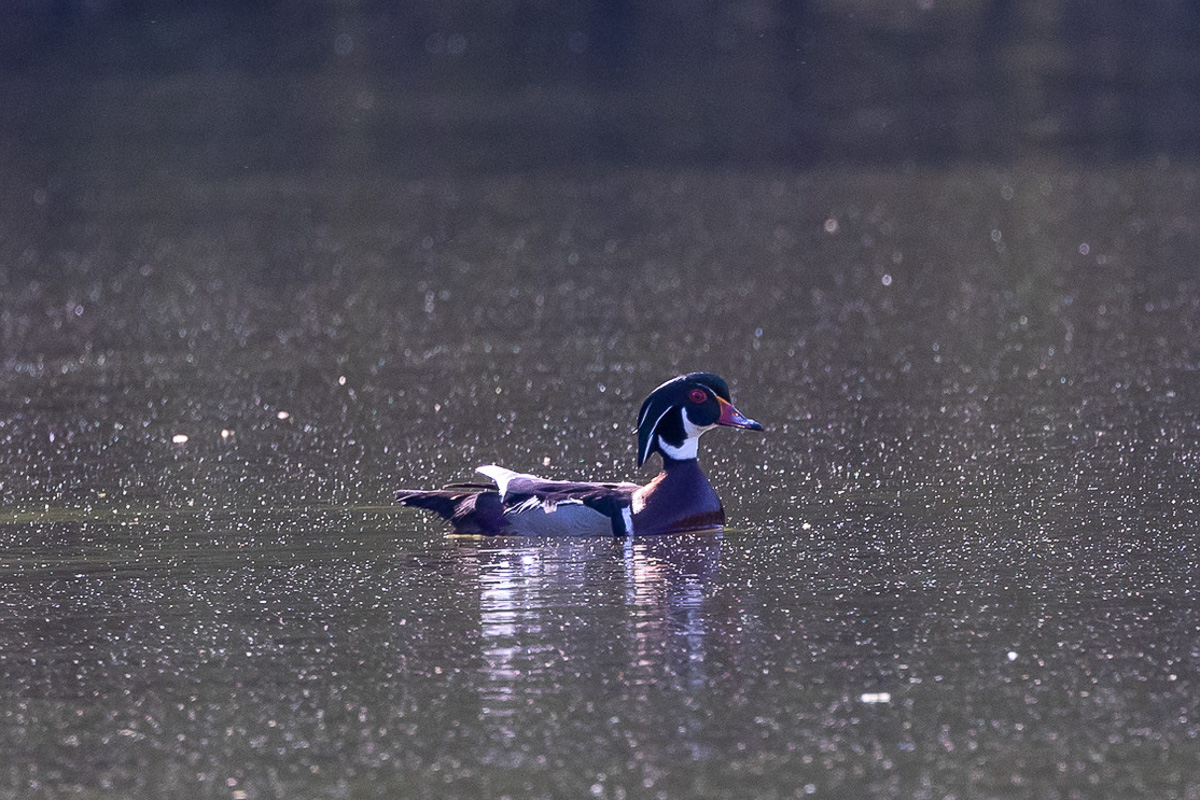
Thirteen of us braved the cold–and it was cold–in order to visit several sites on Staten Island under the expert guidance of Richard ZainEldeen. We began our tour at Wolfe’s Pond Park, where we saw a beautiful Wood Duck drake, a Surf and a White-winged Scoter, Common Goldeneyes and Red-breasted Mergansers.
From there we proceeded to Blue Heron Park Preserve, where we were hoping to see Pileated Woodpeckers. Unfortunately, although we saw lots of evidence of their presence in the form of large, oval-shaped holes in dead trees, we did not see or hear the birds. However, we enjoyed seeing a Raven flyover and a Hairy Woodpecker at the feeders.
Our final stop was at Mount Loretto Unique Area, where we hoped to see the King Eider that had been reported there for some time. This time we were successful and had very close looks at the female bird. We thank Richard for yet another wonderful trip!
Here is the link to the ebird trip report: https://ebird.org/tripreport/327206
Species Lists Brant Canada Goose Mute Swan Wood Duck Gadwall Mallard American Black Duck King Eider Surf Scoter White-winged Scoter Black Scoter Long-tailed Duck Bufflehead Common Goldeneye Red-breasted Merganser Rock Pigeon Sanderling Ring-billed Gull American Herring Gull Great Black-backed Gull Horned Grebe Great Cormorant Great Blue Heron Black Vulture Red-bellied Woodpecker Downy Woodpecker Hairy Woodpecker Blue Jay American Crow Common Raven Black-capped Chickadee Tufted Titmouse White-breasted Nuthatch Carolina Wren Northern Mockingbird House Finch American Goldfinch Dark-eyed Junco White-throated Sparrow8 Song Sparrow Red-winged Blackbird Common Grackle Northern Cardinal
Registrar: Matthew Fischer Participants: 18 Weather: A few clouds; temperature 23–27° F; moderate breeze from west; 20% cloud cover; humidity 49–58%. Sunrise: 7:10am; sunset: 5:04pm Bird Species: 41
As in past years, we started the day at the Fort Tilden area, which was very productive. From the beach we saw Long-Tailed Ducks and each of the three expected scoter species (including a Surf Scoter walking in the surf), and some Sanderlings. On the way back to our cars, we saw some Horned Larks in the ballfields (at the exact same spot we saw them last year) and a perched Cooper’s Hawk. Our walk down the Breezy Point 4×4 Trail was a lot easier than last year, and we were rewarded with a large flock of Snow Buntings and a perched American Kestrel when we got to the beach. At the jetty, we spotted a Purple Sandpiper and a raft of Common Eider. We saw a Northern Harrier (Gray Ghost) patrolling the dunes and multiple Great Cormorants mixed in with the Double–crested Cormorants.
Species List
Brant Canada Goose Mallard Common Eider Surf Scoter White-winged Scoter Black Scoter Long-tailed Duck Bufflehead Red-breasted Merganser Rock Pigeon Sanderling Purple Sandpiper Ring-billed Gull Herring Gull Great Black-backed Gull Red-throated Loon Common Loon Great Cormorant Double-crested Cormorant Great Blue Heron Cooper’s Hawk Norther Harrier American Kestrel Common Raven Black Capped Chickadee Horned Lark European Starling Northern Mockingbird American Robin House Sparrow House Finch American Goldfinch Snow Bunting American Tree Sparrow Dark Eyed Junco White-throated Sparrow Savannah Sparrow Song Sparrow Yellow Rumped Warbler Northern Cardinal
Registrar: Dom Ricci Participants: 14 Weather: Around 18-26 F, sunny, windy Bird Species: 29
Governors Island, sitting in the middle of New York Harbor, possesses a mix of coastal, field, and other environments unique in New York county. On a crisp, clear morning after an overnight snow, a group of Linnaean birders led by Annie Barry traversed the island in search of winter avian residents including Red-breasted Mergansers and Buffleheads. We encountered the usual array of gulls along the harbor coast and as well as several large flocks of Brant and Canada Geese, albeit with no sign of hidden rarities. The piers on the south side of the island held several pleasant suprises for observers: a Great Cormorant taking flight from among its Double-crested cousins; an American Wigeon napping alongside American Black Ducks on Lima Pier; and a lone Lesser Scaup swimming around Yankee Pier. Although we did not discover any storm-tossed vagrants, we were treated to the memorable image of a dozen Song Sparrows and a Swamp Sparrow feeding and staying warm atop an Earth Matter NY (https://earthmatter.org/) compost heap from which plumes of water vapor were visible rising into the sub-freezing atmosphere.
Species List
Brant Canada Goose Gadwall American Wigeon Mallard American Black Duck Lesser Scaup Bufflehead Red-breasted Merganser Rock Pigeon (Feral Pigeon) Ring-billed Gull American Herring Gull Great Black-backed Gull Great Cormorant Double-crested Cormorant Red-tailed Hawk Red-bellied Woodpecker Blue Jay American Crow Black-capped Chickadee Tufted Titmouse White-breasted Nuthatch European Starling Northern Mockingbird House Sparrow Dark-eyed Junco Song Sparrow Swamp Sparrow Northern Cardinal
Registrar: Debbie Mullins Participants: 4 Weather: 20° F with westerly winds at 15 mph Bird Species: 21
Weather is not always our friend on January birding trips, and this year it certainly was not. The trip was rescheduled for one week later than originally planned to avoid the bad weather that was forecast for January 7, but although conditionshad improved slightly by January 14, it was still a cold and blustery day.
We started at Shinnecock Inlet, hoping to see the King Eider that had been there most of the winter. Unfortunately, the eider rafts were far out in the bay, making it difficult to distinguish a single King Eider from among the hundreds of Common Eiders there.
After battling the wind for an hour, we moved on to Swan Lake, where we saw a nice collection of ducks. Patchogue Lake, however, was almost completely frozen over, and only a few species were visible.
We ended the day at the Atlantic Point Apartments, where Iceland and Glaucous Gulls had been reported recently. We were fortunate to spot a juvenile Iceland Gull on one of the small ponds in the apartment complex, but the Glaucous Gull was not present for our visit.
Species List
Canada Goose Mute Swan Gadwall Mallard Northern Pintail Green-winged Teal Ring-necked Duck Common Eider White-winged Scoter Black Scoter Long-tailed Duck Hooded Merganser Common Merganser Red-breasted Merganser Ruddy Duck Ring-billed Gull American Herring Gull Great Black-backed Gull Iceland Gull Common Raven Carolina Wren
Registrar: Nick Dawson Participants: 20 Weather: (Croton) 27–32°F, modest NNW winds, cloudy; (Shawangunk) 32–29°F, light NNW winds, cloudy to snowy to partly sunny. Bird species: 46
The Croton Point Park-Shawangunk walk led by Julien Amsellem is always an exciting one for Linnaean members, and this was arguably the most rewarding in recent years. As it was snowy early on, there was hope for some of the rarer grassland species at Croton, like Eastern Meadowlark, American Pipit, Horned Lark, Snow Bunting, and Lapland Longspur.
Unfortunately, however, our extended stay on the landfill did not result in the group seeing any of these species. We did, however, get a nice selection for January of New World sparrows (Song, Swamp, Savannah, Fox, American Tree, and Dark-eyed Junco), plus an assortment of raptors, including Bald Eagles, Red-tailed Hawks, a Turkey Vulture, a small Cooper’s Hawk trying to masquerade as a Sharp-shinned Hawk, and a couple of handsome Red-shouldered Hawks.
After a break for lunch, we drove onward to Shawangunk Grasslands National Wildlife Reserve for what was a truly memorable visit. When we arrived, well before dusk, Short- eared Owls were already active and abundant, putting on a real show. We counted 12 individuals hunting over the grassland, alongside an even greater number of Northern Harriers. The sheer volume of raptors coursing low over the fields, often coming very close, was remarkable, and the photographers in the group got great photos of both species. Also present were a handful of Red-tailed Hawks (including one Abieticola) and a light morph Rough-legged Hawk perched in a tree at the edge of the reserve, distant but well seen by all and a lifer for many in the group. All in all, it was an excellent day of birding.
Species List
American Black Duck American Crow American Goldfinch American Tree Sparrow Bald Eagle Black-capped Chickadee Blue Jay Brown Creeper Canada Goose Carolina Wren Common Merganser Common Raven Cooper’s Hawk Dark-eyed Junco Downy Woodpecker European Starling Fox Sparrow Golden-crowned Kinglet Great Black-backed Gull Great Blue Heron Hermit Thrush Hooded Merganser House Finch Mallard Mourning Dove Northern Cardinal Northern Flicker Northern Harrier Northern Mockingbird Red-bellied Woodpecker Red-shouldered Hawk Red-tailed Hawk Red-winged Blackbird Ring-billed Gull Rock Pigeon Rough-legged Hawk Ruby-crowned Kinglet Savannah Sparrow Short-eared Owl Song Sparrow Swamp Sparrow Tufted Titmouse Turkey Vulture White-breasted Nuthatch White-throated Sparrow Yellow-bellied Sapsucker
Registrar: Miriam Rakowski Participants: 20 Weather: 40 degrees F, going to 50, with winds WSW 14 to 25 mph. Bird Species: 32
The day began with some clouds, but soon turned sunny. As we were always close to the water, it was quite windy. Joe, our leader, asked if we were interested in chasing a rarity—the Sage Thrasher. As it would be a life bird for many, we said yes. There was some concern. as the bird hadn’t been reported for a few days. However, no sooner were we on our way than someone reported spotting it. We waited at the site for a few minutes and the bird soon appeared, giving all of us very good looks for an extended time.
We then went to the Coast Guard Station, where the tide seemed to be receding. There we some many loons and ducks, and one lonely Black Plover. We celebrated our morning sightings, which included lifers for many, by eating lunch.
Our next stop was Point Lookout, where we were hoping to see the Harlequin Ducks and a few other specialties. As it was windy, the water was very choppy. Happily, we saw at least five Harlequins and many Common Eiders. As we were leaving, having already given up on seeing Purple Sandpipers, we nevertheless took one last look, and there at the jetty, they appeared. A wonderful gift to end a fun day with good birds, and good camaraderie.
Species List
Brant Canada Goose Surf Scoter Black Scoter White-winged Scoter Black Scoter Common Eider Harlequin Duck Bufflehead Red-breasted Merganser Rock Pigeon (Feral Pigeon) Killdeer Black-bellied Plover Sanderling Dunlin Purple Sandpiper Ring-billed Gull American Herring Gull Great Black-backed Gull Lesser Black-backed Gull Common Loon Red-throated Loon Double-crested Cormorant Sage Thrasher Northern Mockingbird Rock Pigeon (Feral Pigeon) Mourning Dove Peregrine Falcon House Sparrow Snow Bunting Song Sparrow Yellow-rumped Warbler