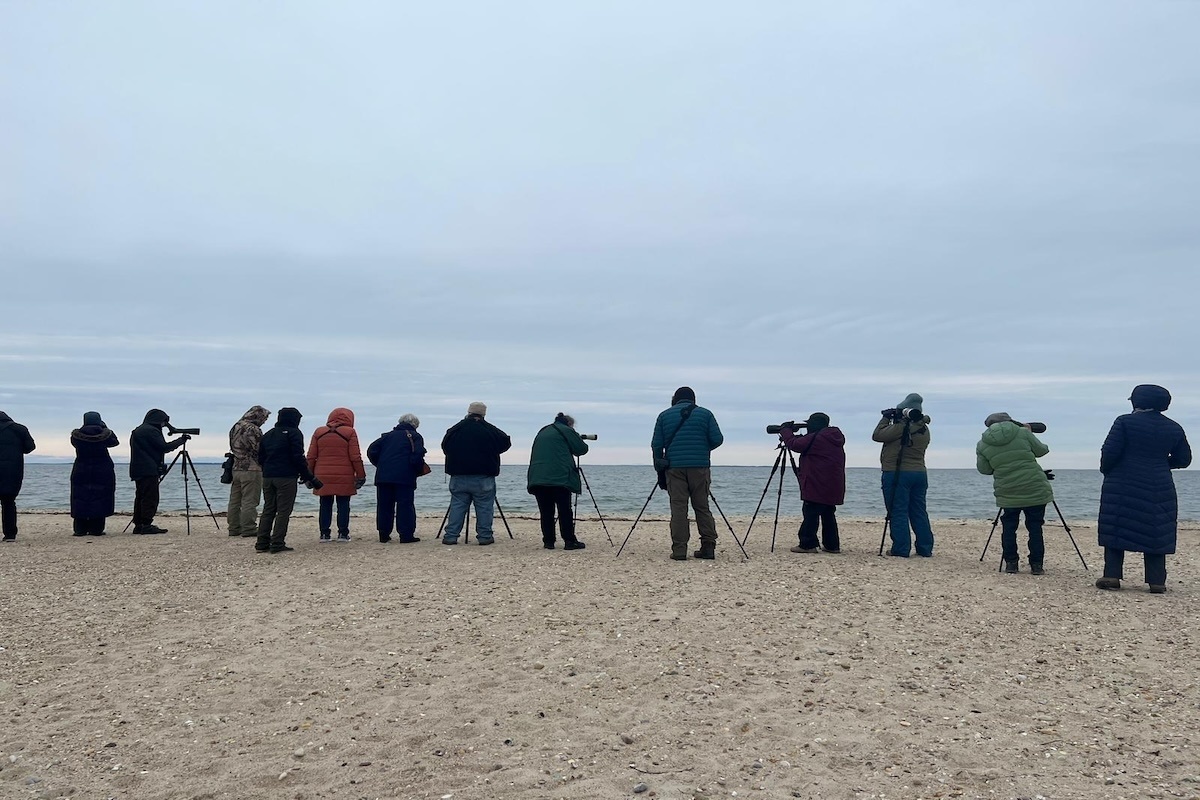
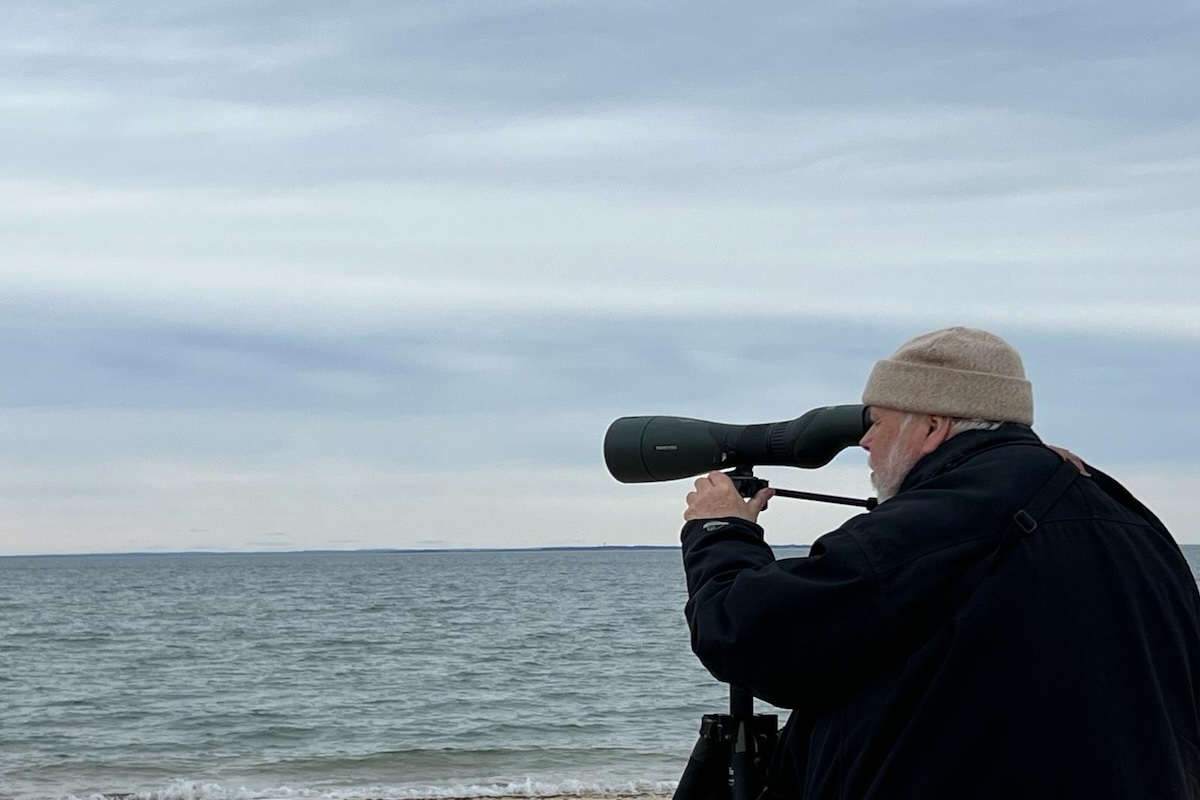
Adirondacks Winter Birding with Joan Collins, February 16–19, 2024
Registrar: Kristin Ellington
Number of Participants: 11
Weather:
Friday, Feb 16, in Saratoga and Washington Counties: Partially sunny and a bit chilly with a low of 25°, a high of 42°, and winds from the south averaging 7 mph.
Saturday, Feb 17th, in the Adirondacks: Sunny and cold with a low of 4°, a high of 17°, and little to no wind, with morning snowfall from the lake effect. In the afternoon, the chill increased as winds gusted up to 20 mph from the southwest.
Sunday, Feb 18, in the Adirondacks: Sunny and quite cold, with a low of 0°, a high of 8°, and little to no wind in the morning. In the afternoon, strong gusts of up to 25 mph came from the southwest at 3-9 mph.
Monday, Feb 19, in the Adirondacks and Shawangunk Grasslands NWR: Morning in the Adirondacks was sunny and quite cold, with a low of -6° and westerly winds at 8 mph. In the Shawangunk Grasslands, it was 36°, with winds at 8 mph.
Number of Bird Species: 57
Day 1: Friday, February 16
Saratoga County and Washington County Grasslands
On a gorgeous but chilly Friday morning, an enthusiastic group of Linnaean Society members embarked on a trip from the city to the Adirondacks. Along the way, we made stops at the hotspots on our loaded itinerary. Our primary targets were wintering ducks, grassland songbirds, and as many raptors and owls as possible. Our list for the day totaled an impressive 39 species.
Peebles Island State Park – Saratoga County
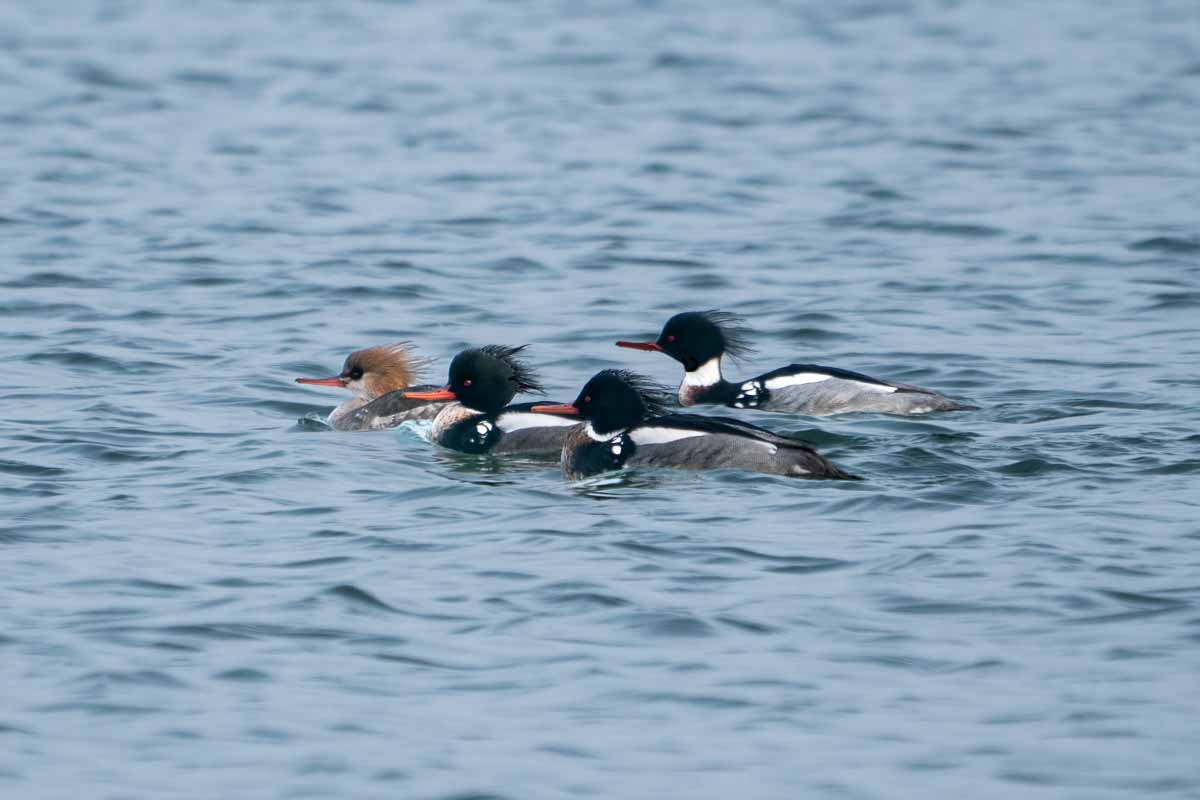
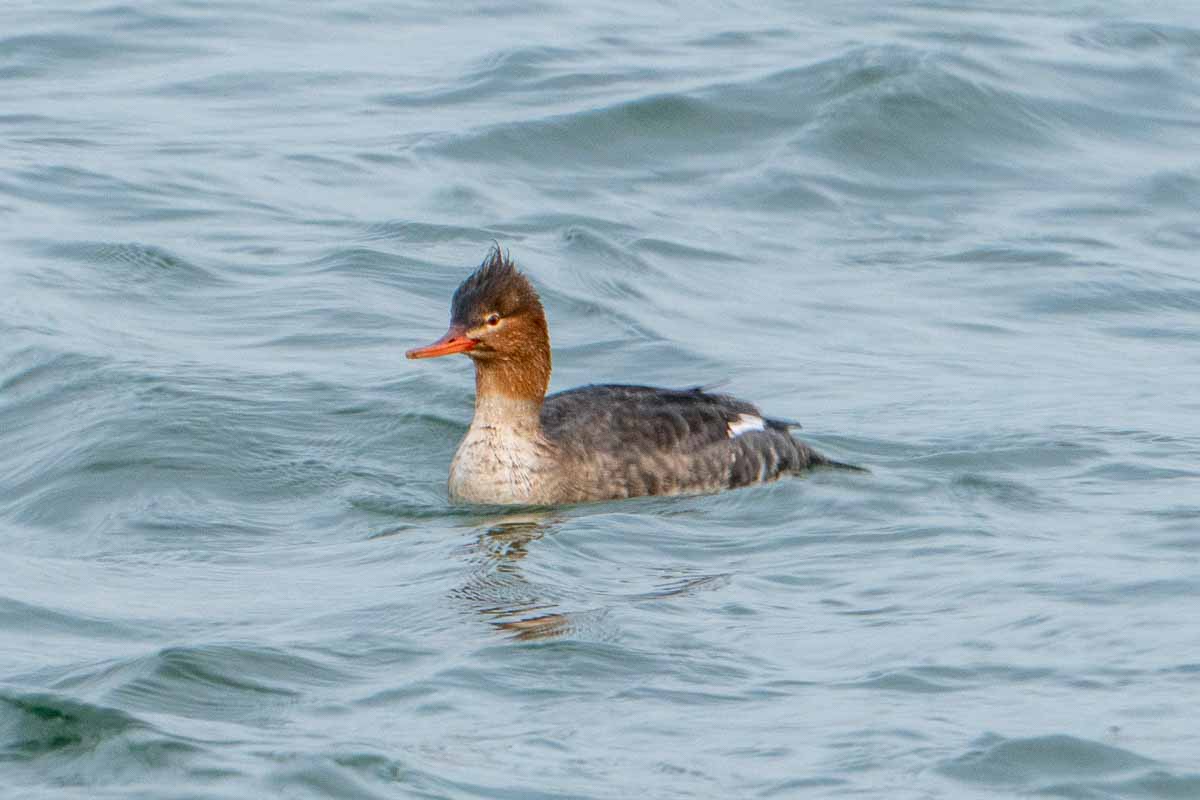
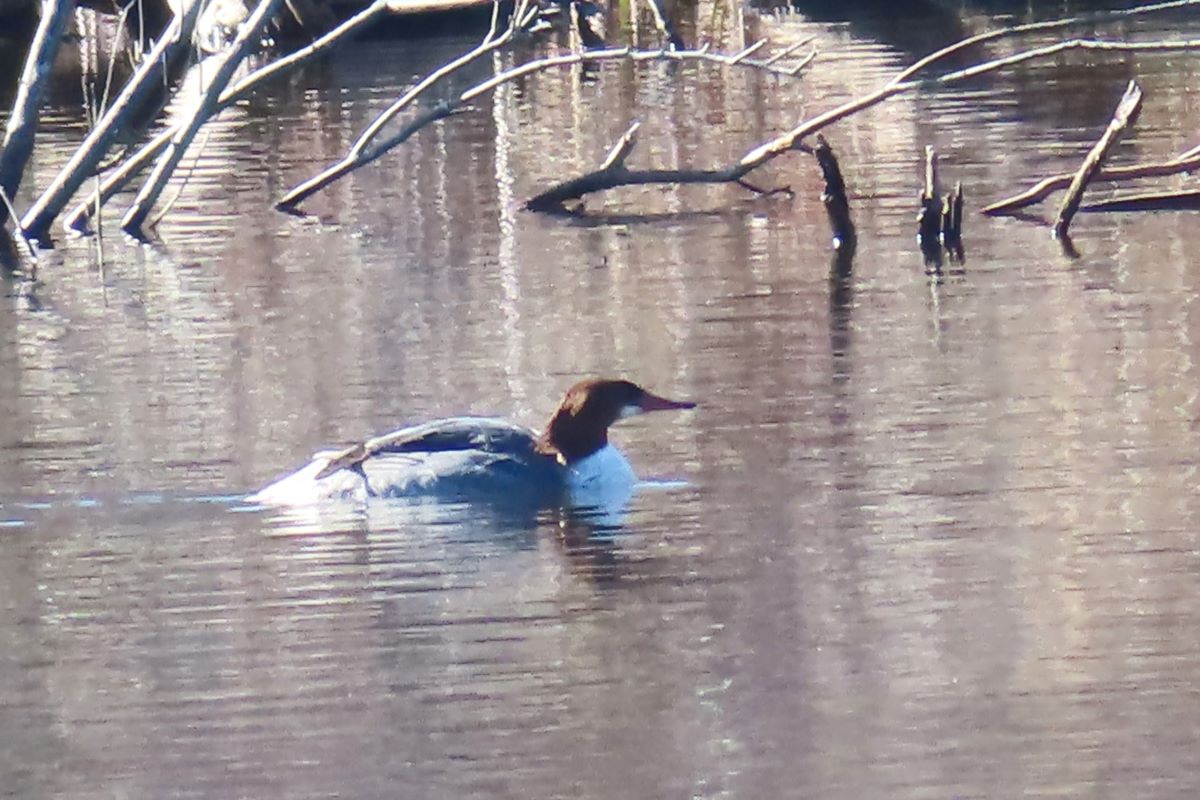
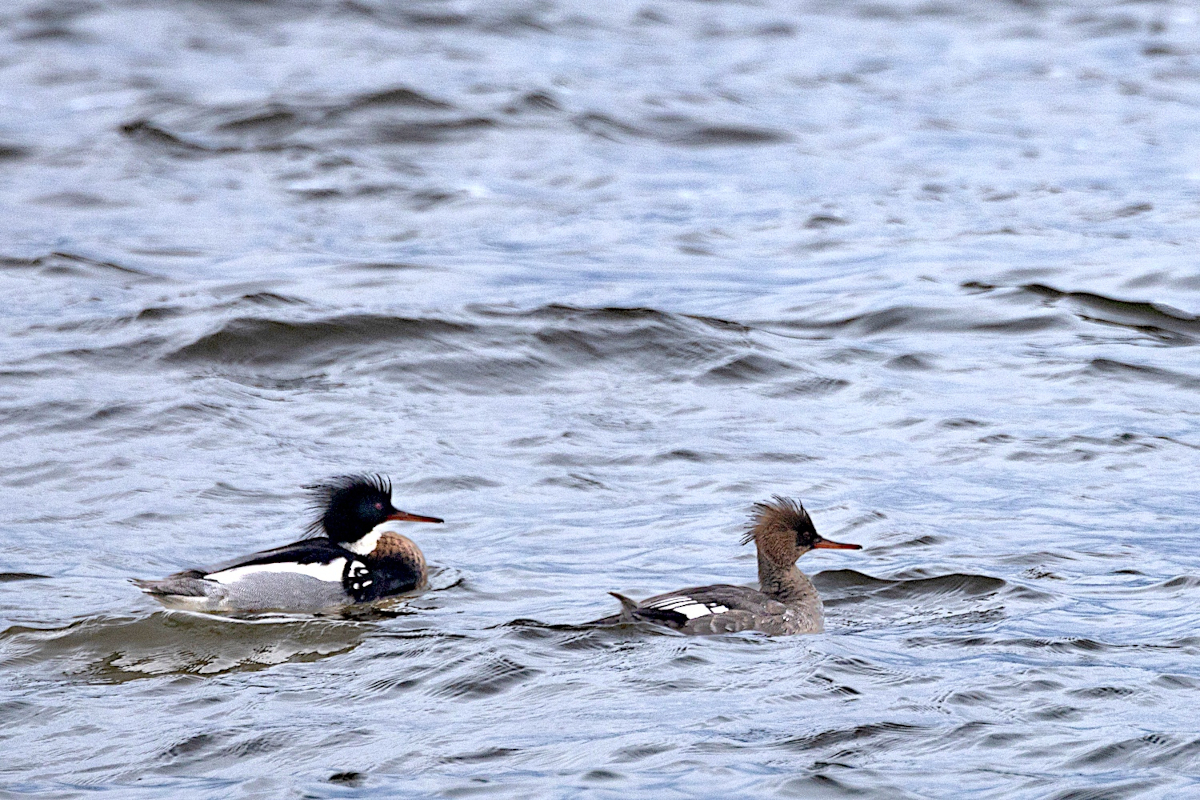
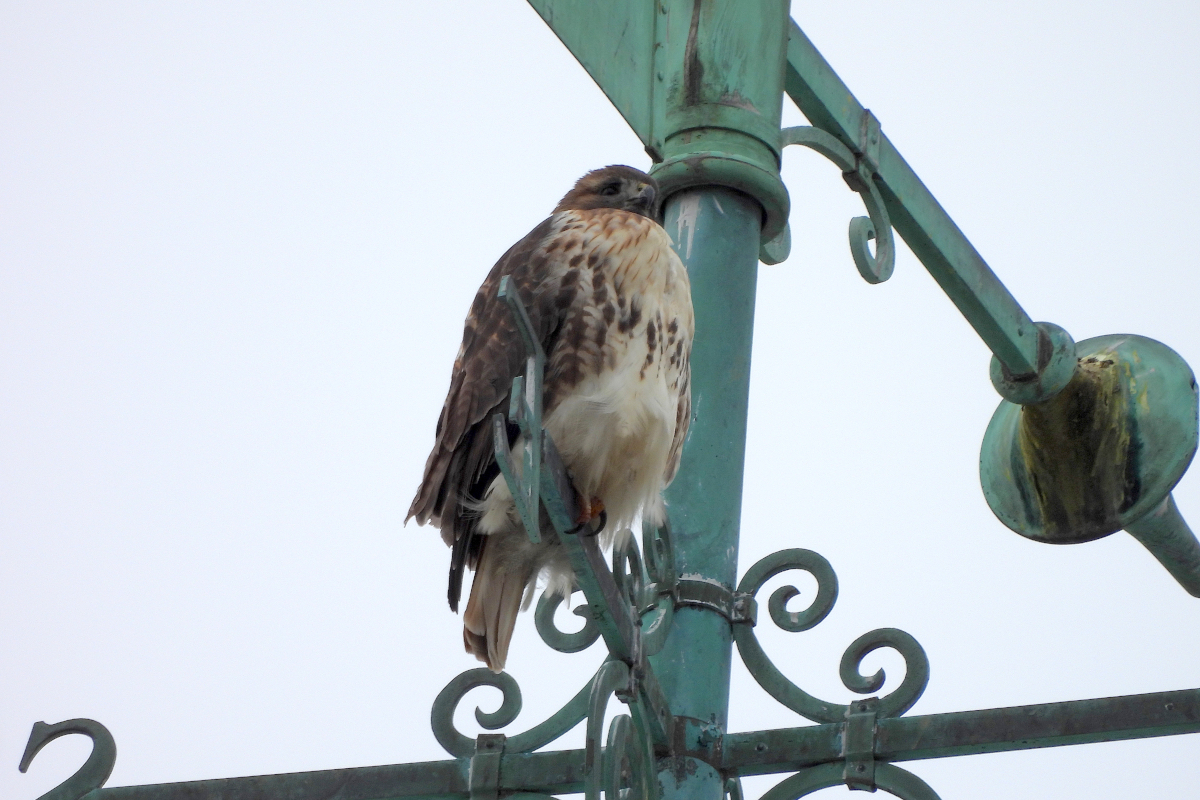
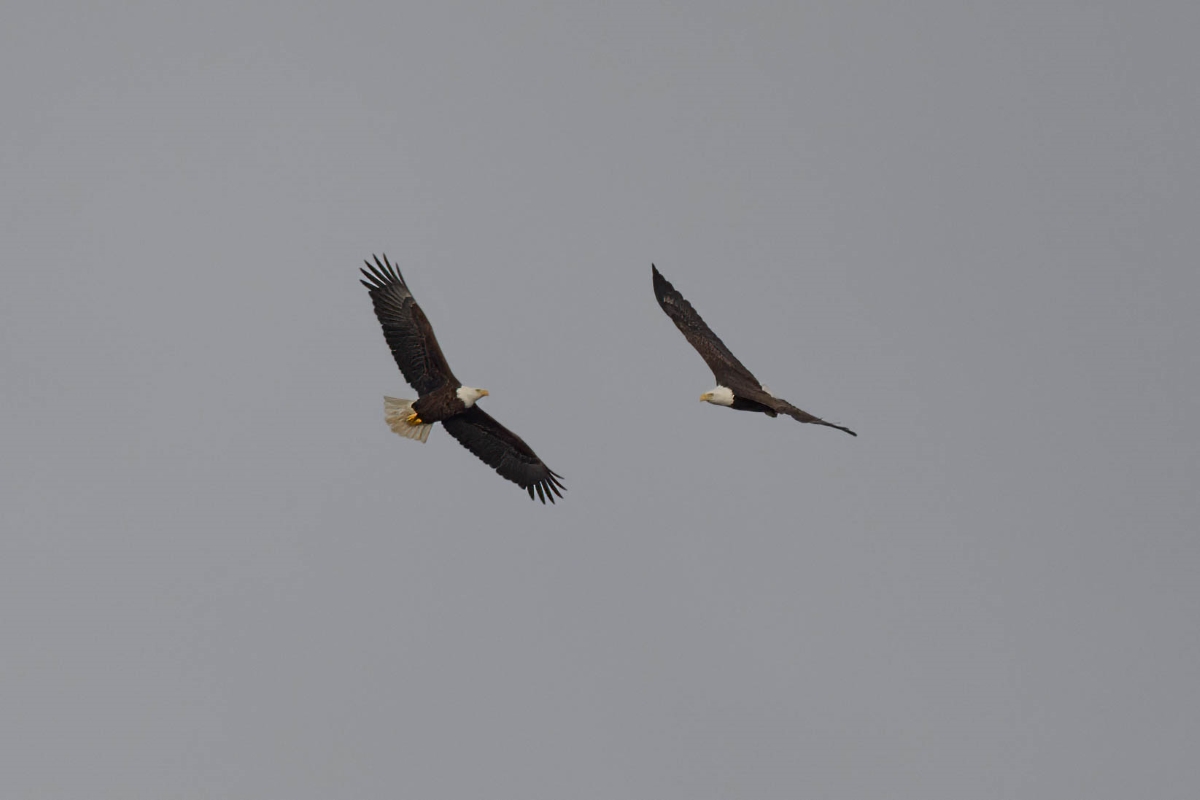
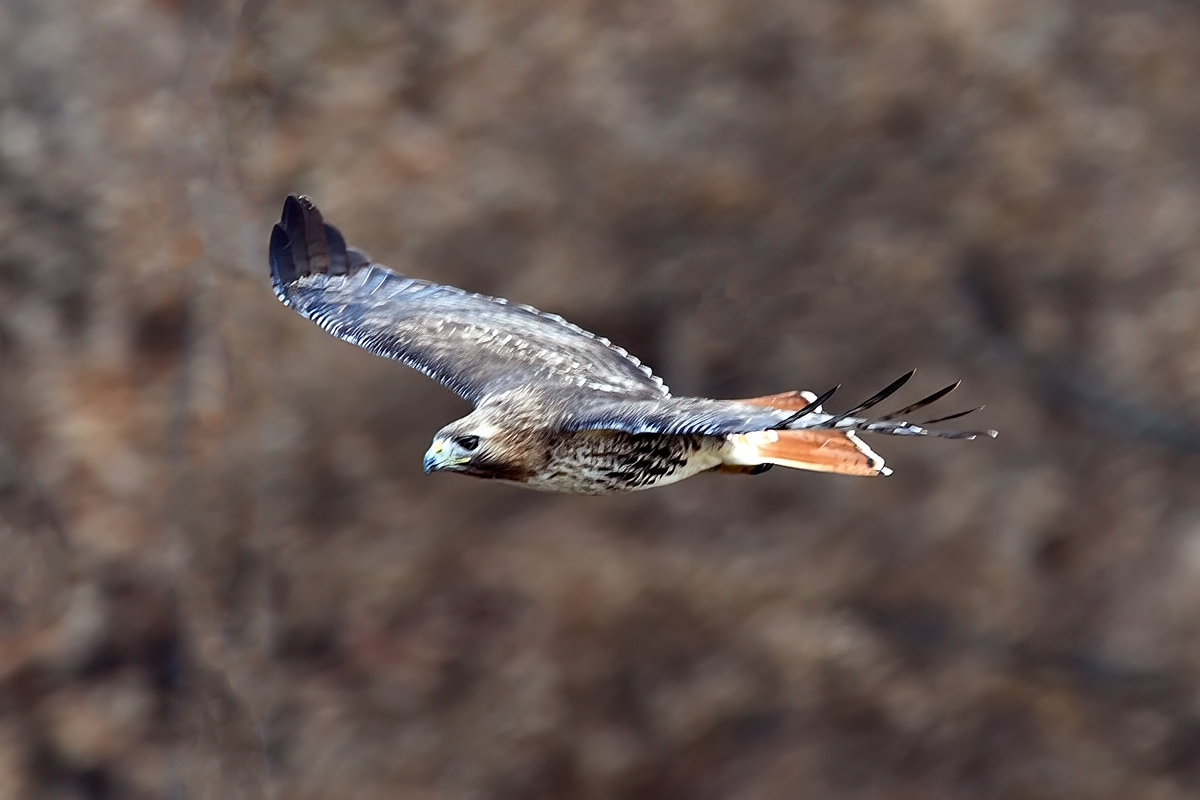
Our first destination was Peebles Island State Park, located at the confluence of the Mohawk and Hudson rivers. Participants were delighted by a close view of several Common Mergansers. We also saw a Bald Eagle, a Red-tailed Hawk, a Red-bellied Woodpecker, and a Common Raven. Overall, the location was fairly quiet, so we quickly moved on.
Hudson River Hotspots – Saratoga County
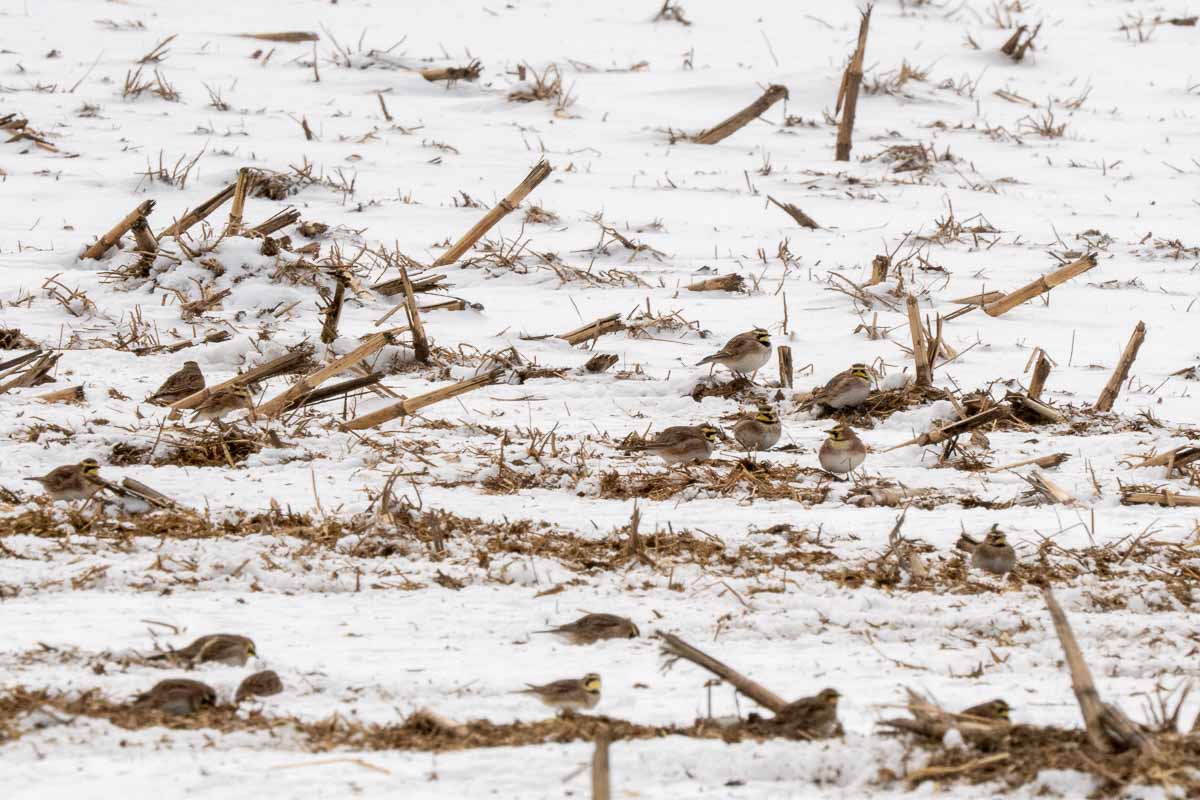
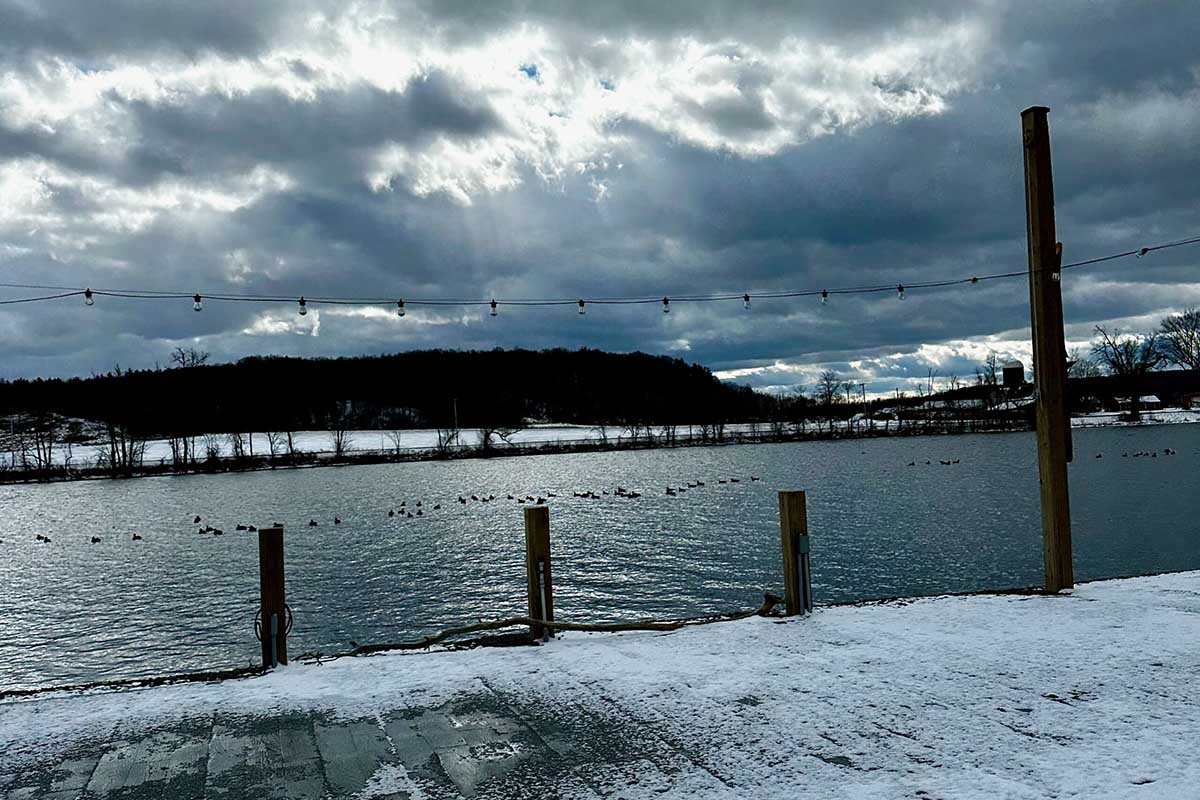
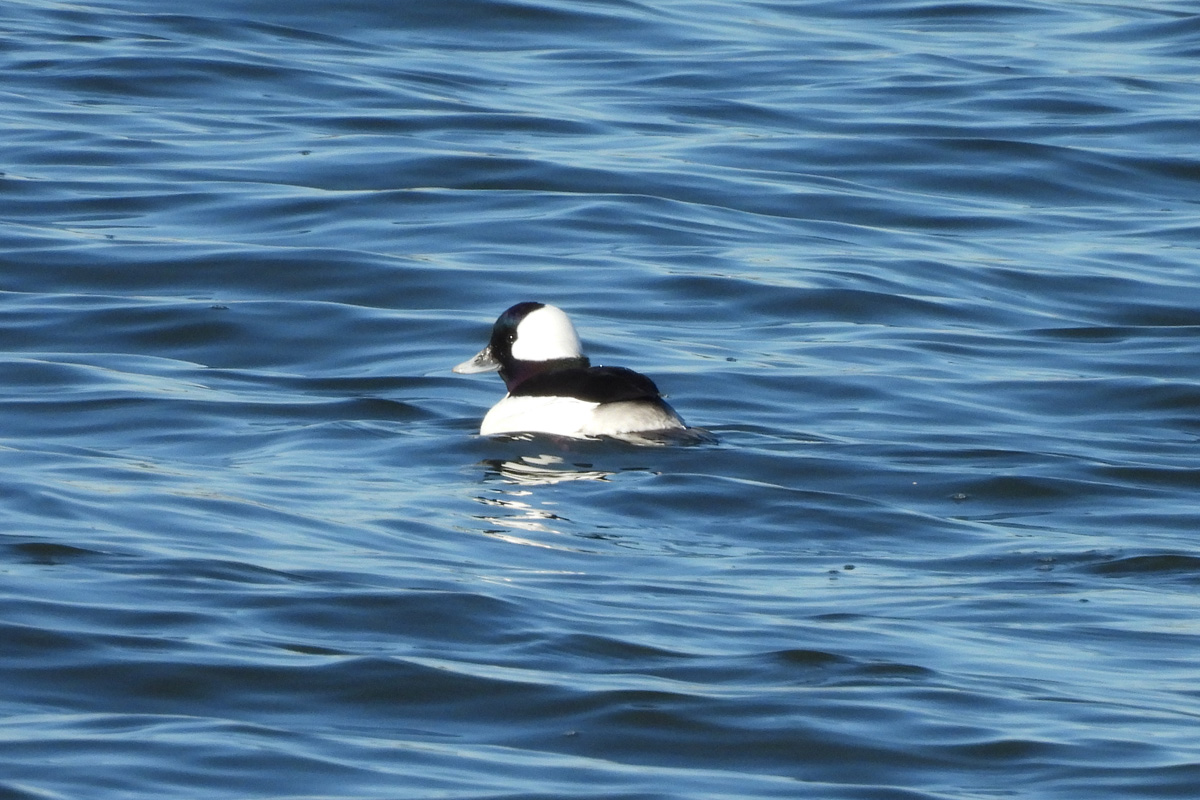
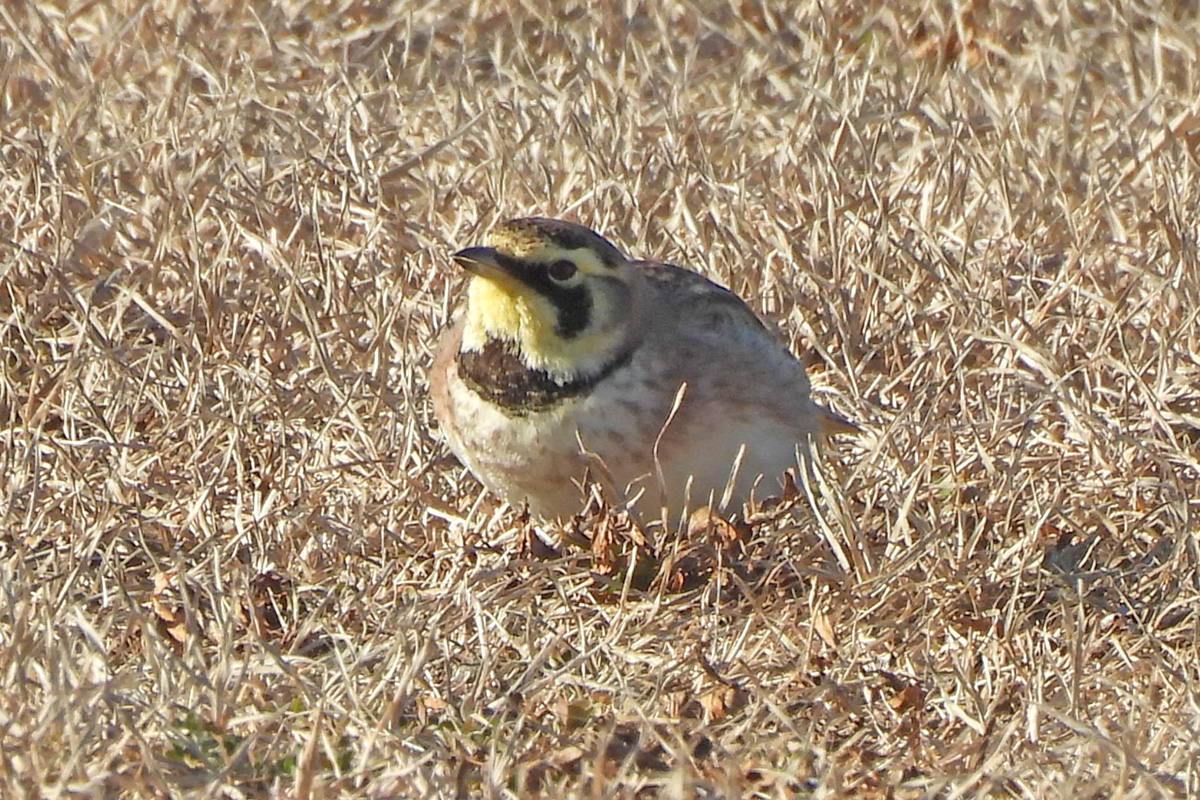
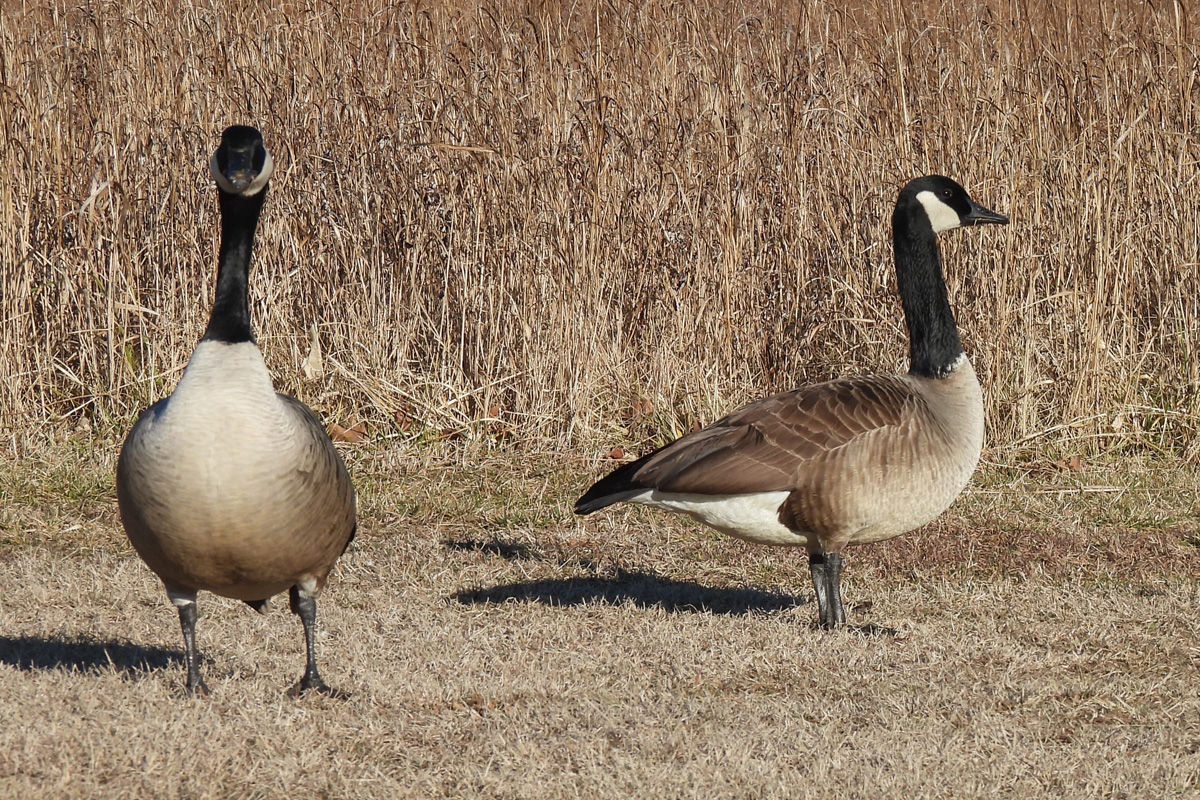
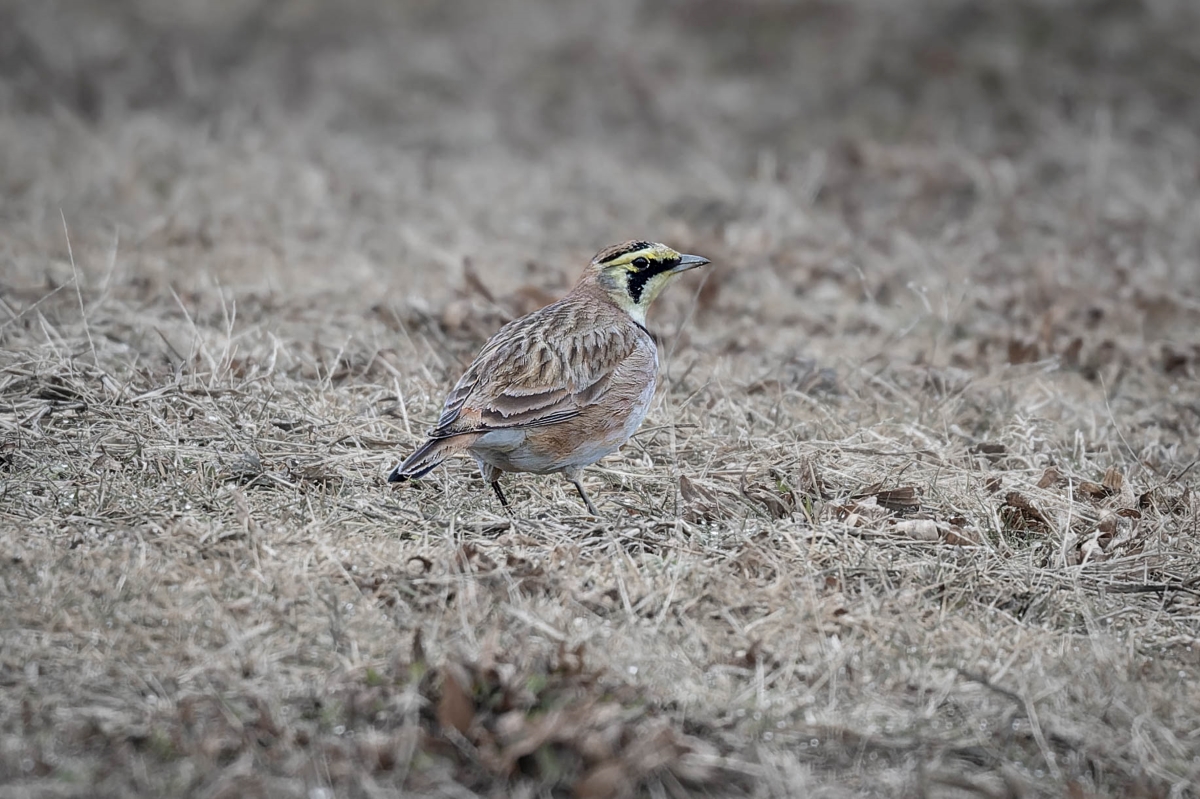
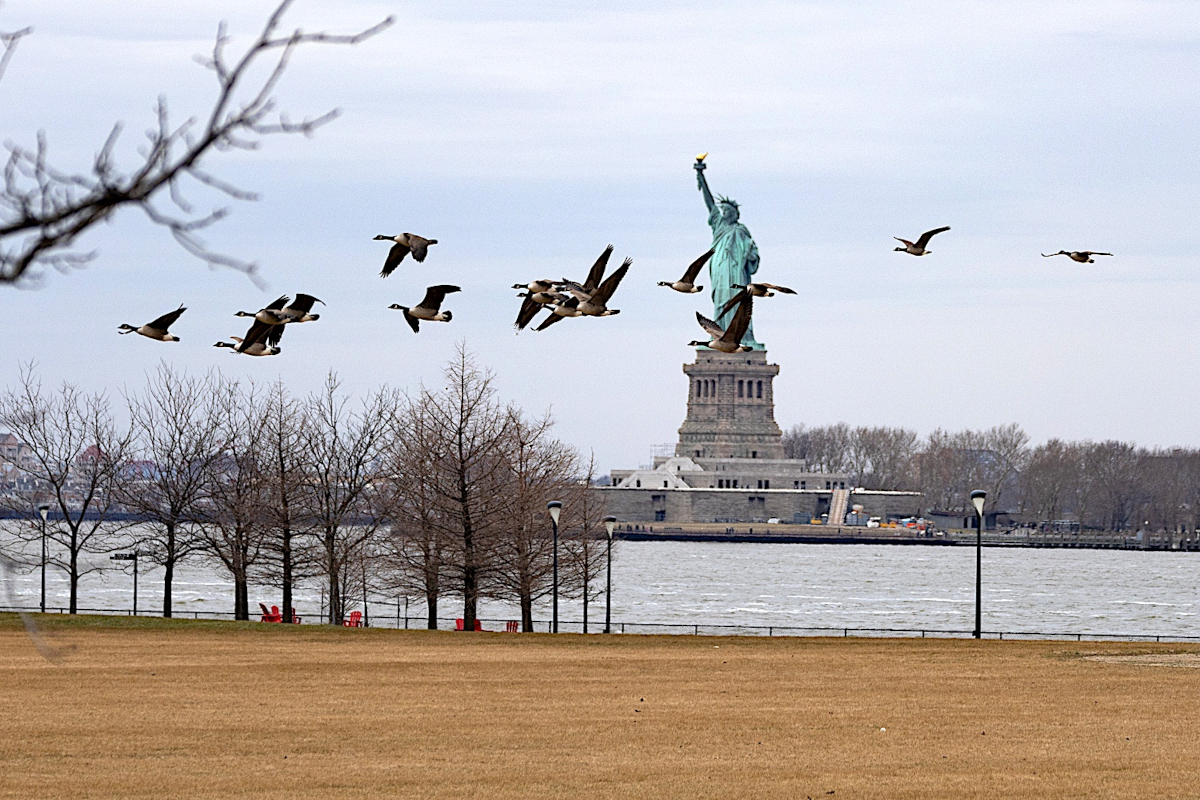
We then started car birding along the Hudson River in Saratoga County, where we saw numerous Common Goldeneyes, American Black Ducks, Common Mergansers, Buffleheads, Mallards, and enormous flocks of Canada Geese. Other highlights included a Northern Flicker, Black-capped Chickadees, a Tufted Titmouse, Dark-eyed Juncos, an Eastern Bluebird, and large flocks of American Crows. We were most excited by a large flock of Horned Larks and a smaller flock of Snow Bunting found along Grange Hall Road in Northumberland.
Fort Miller Road and Riverside Cemetery – Washington County
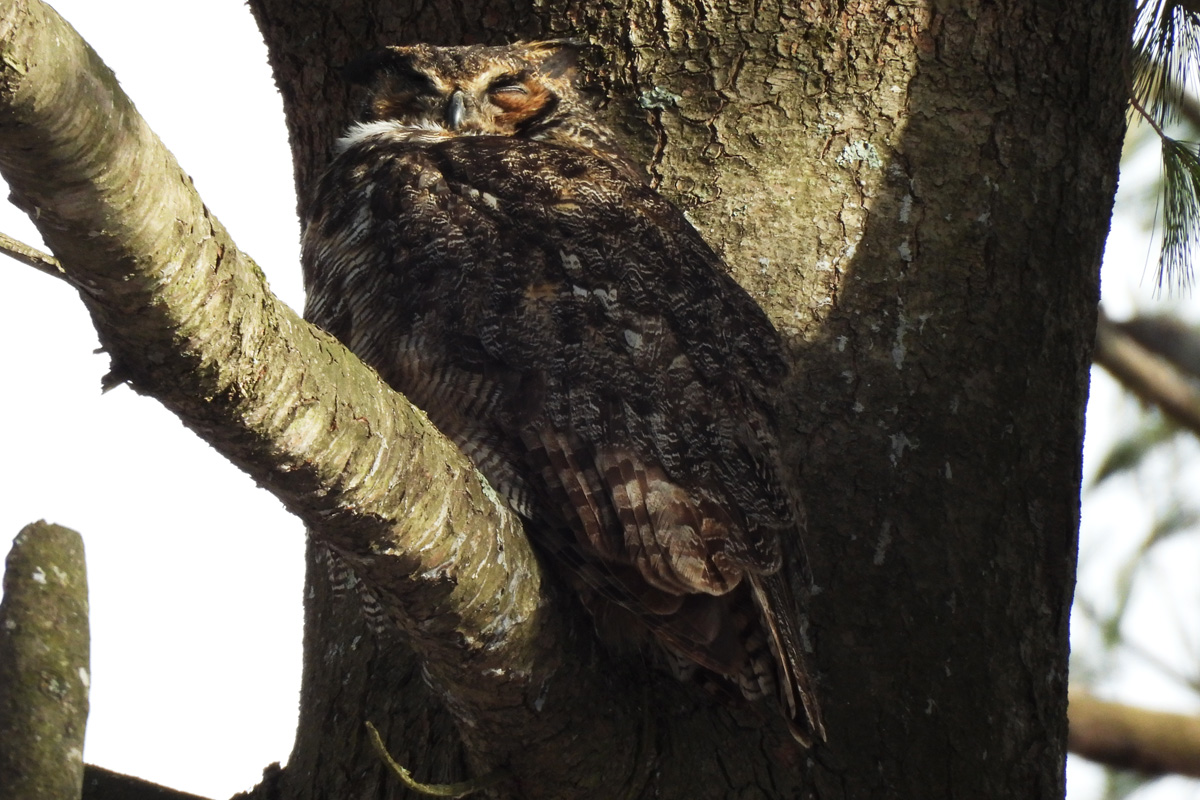
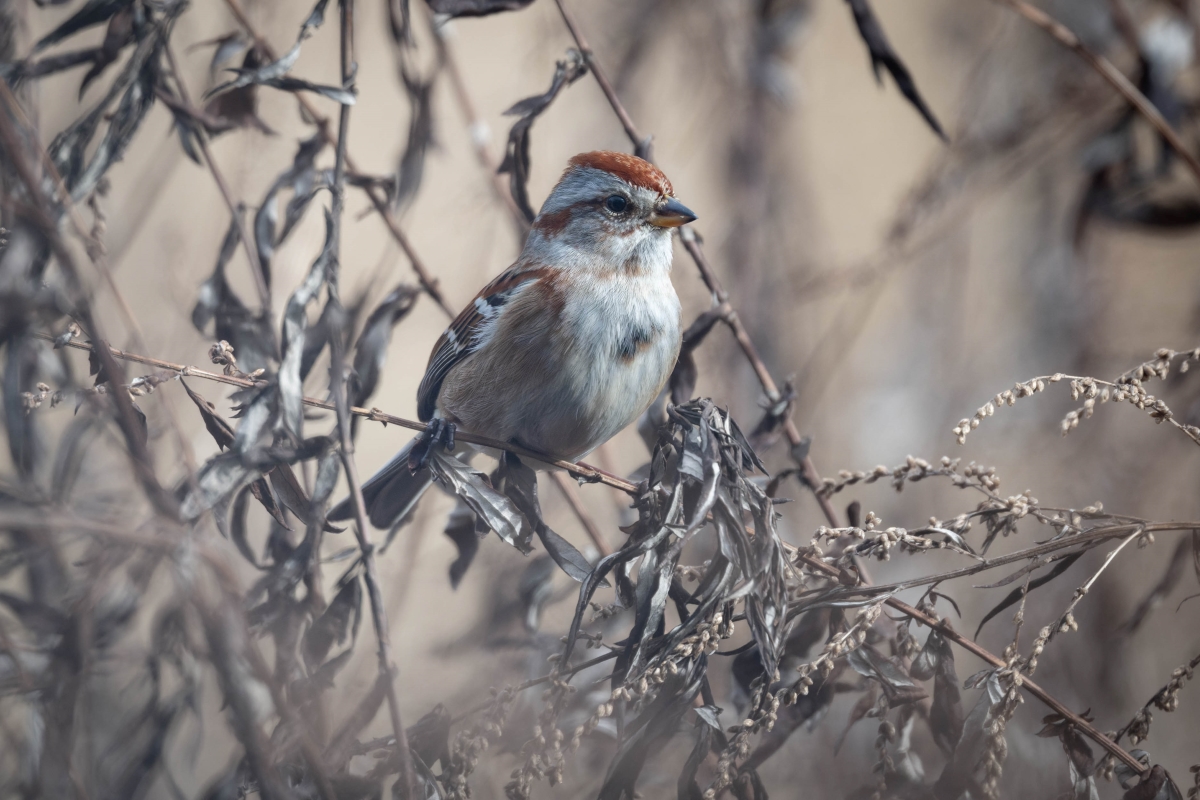
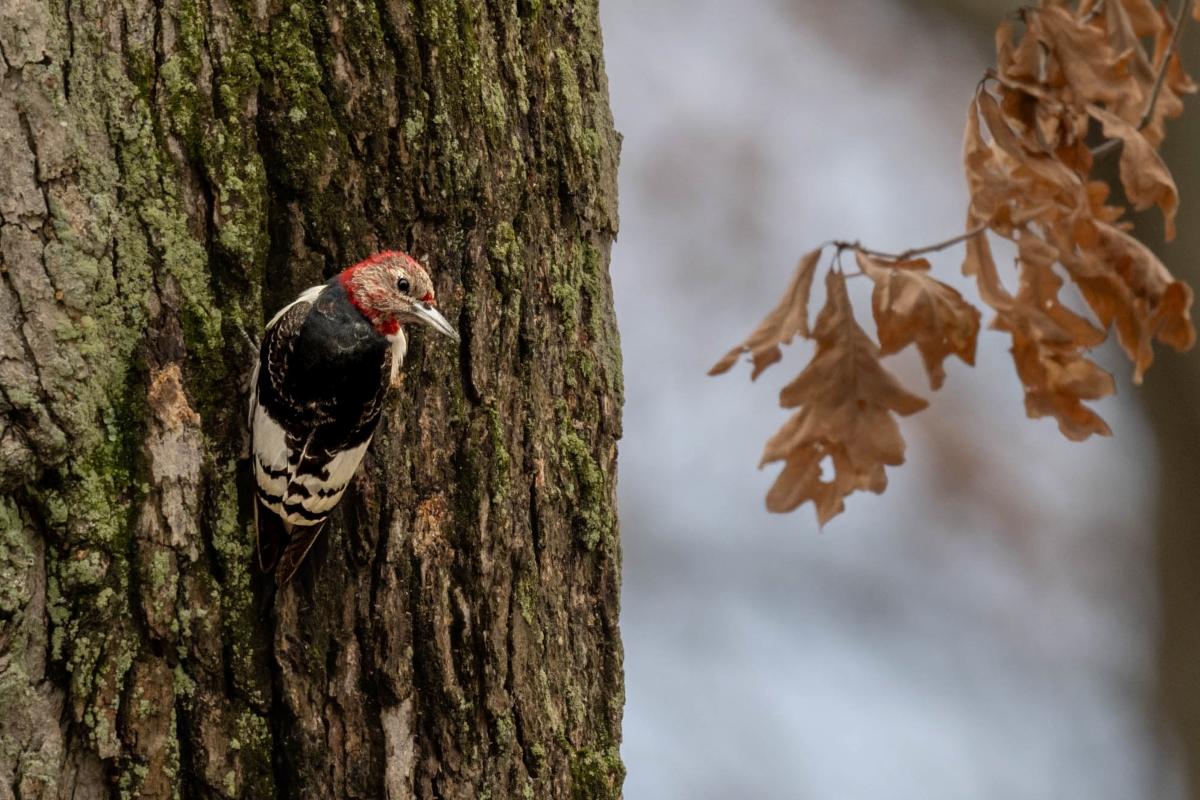
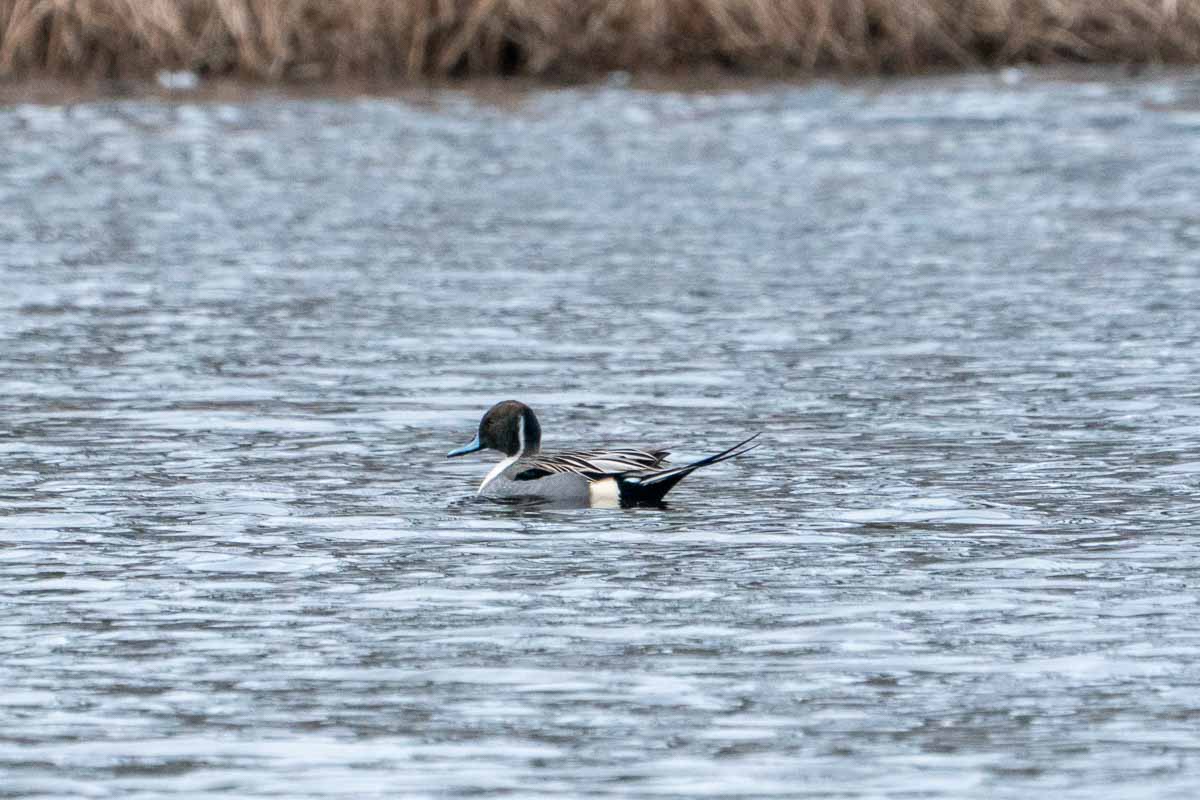
After a delicious and warming lunch, we drove along Fort Miller Road, where we saw our first Northern Pintail of the day and more Common Mergansers, Common Goldeneyes, and American Black Ducks. Along the road, we were lucky to view a Great Horned Owl in our scopes while standing far away to avoid bothering this sensitive species. Just past the Riverside Cemetery were feeders hosting House Finches, American Tree Sparrows, White-breasted Nuthatches, and a Red-winged Blackbird. We were also treated to a trifecta of the Red-bellied Woodpecker, a Downy Woodpecker, and a Pileated Woodpecker.
Washington County Grasslands – Washington County
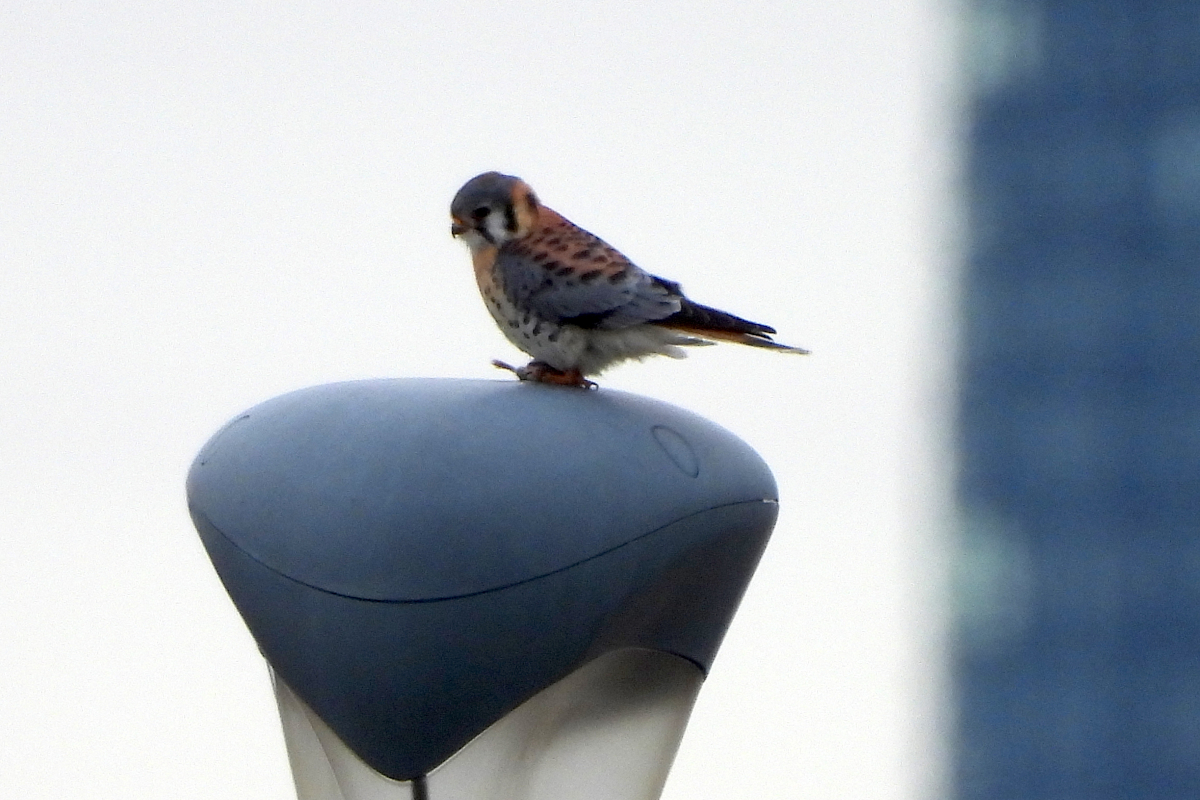
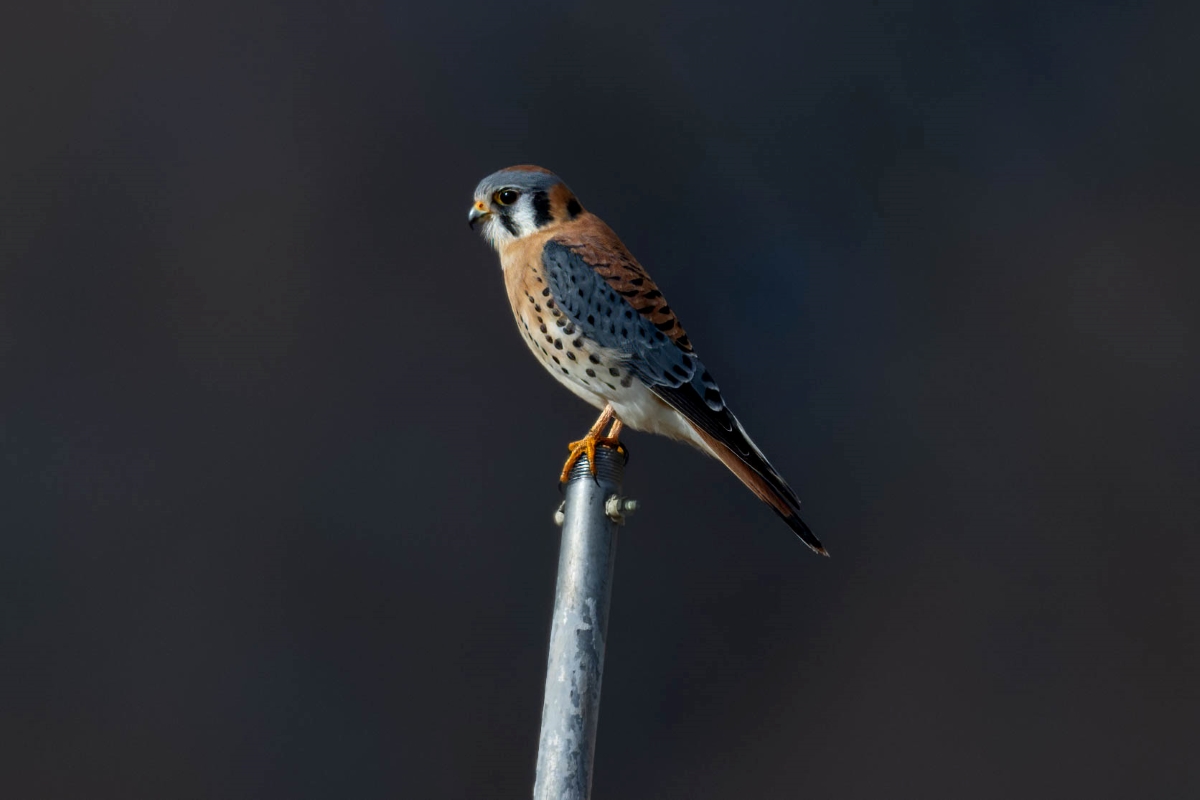
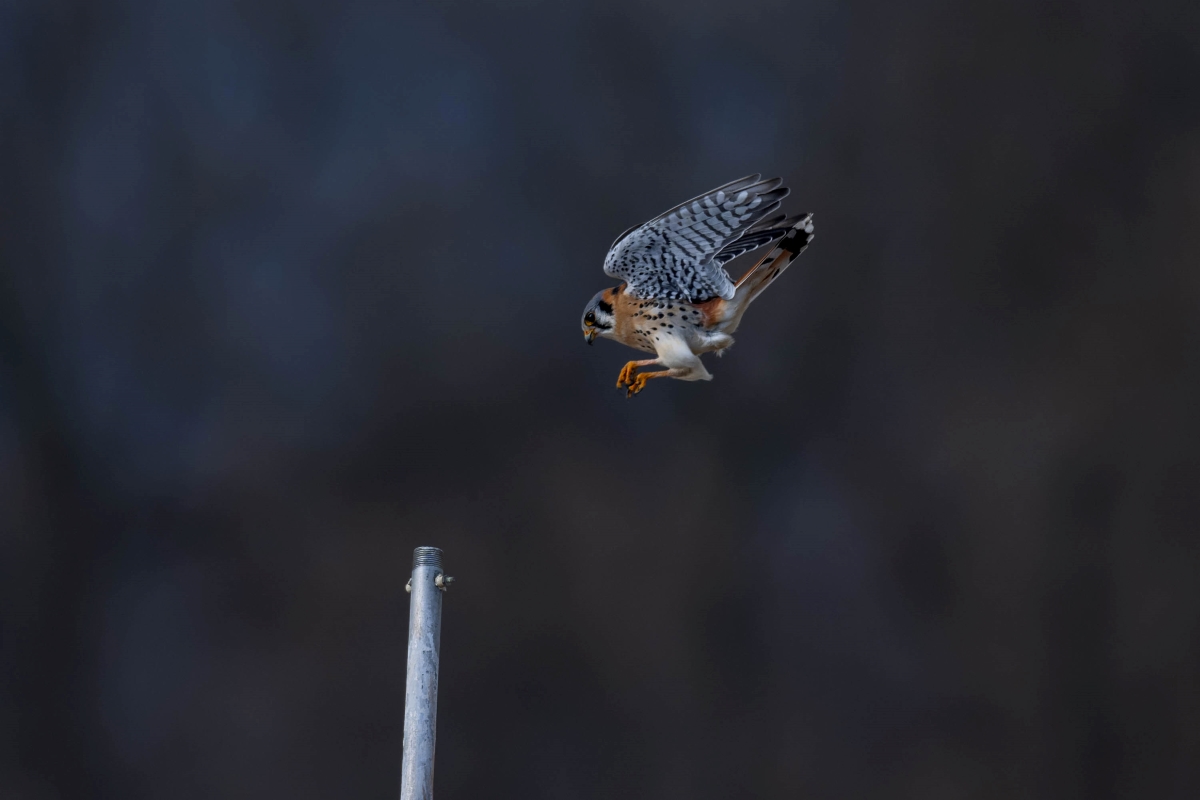
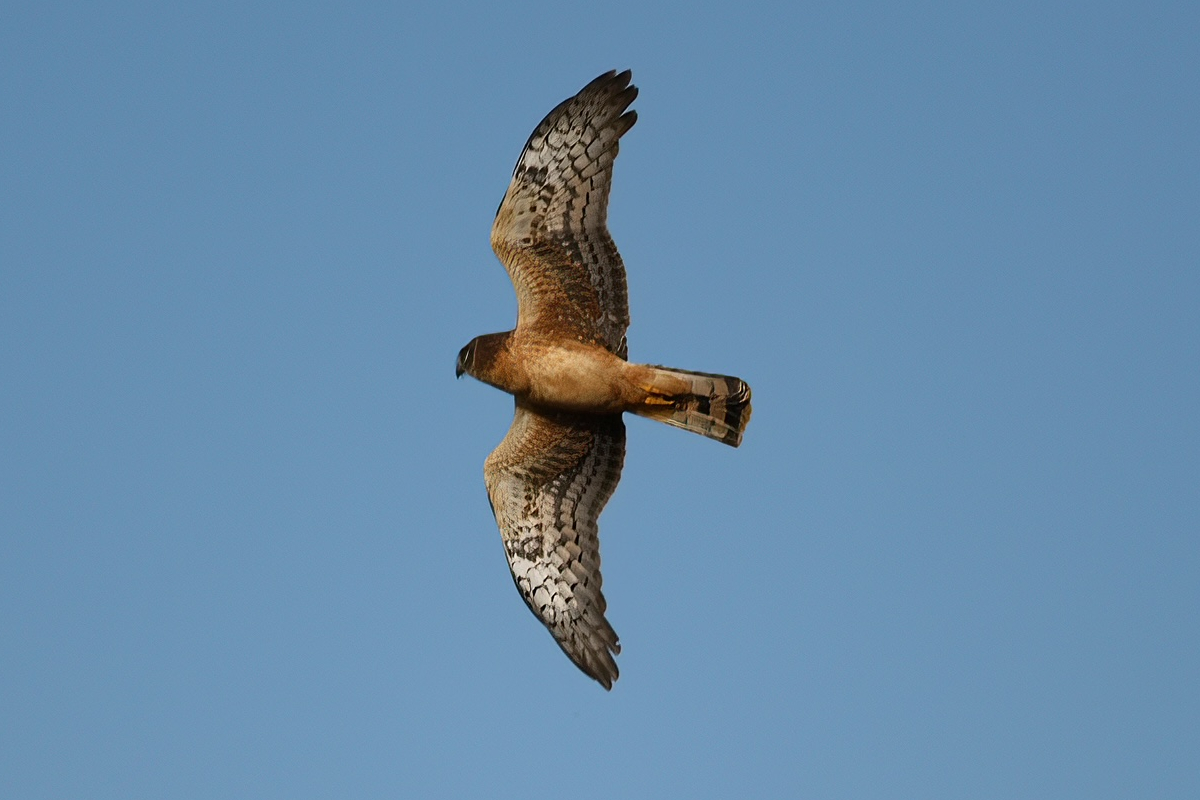
Our next destination was the Washington County Grasslands, where we stopped at numerous locations along Blackhouse Road, Carry Road, and Plumb Road. We saw an American Kestrel, a male Northern Harrier, and enormous flocks of thousands of American Crows. We hoped to see the Short-eared Owls, but decided to head west to our home base at the Adirondacks Hotel on Long Lake before we lost the sun.
Day 2: Saturday, February 17
Adirondacks: Searching for the Boreal Trio and Winter Migrants
Excited to meet up with Joan, the participants started the day bright and early. Although it was relatively warm (in the mid-twenties), the weather was cold enough to activate birds anxious to replenish their energy stores. As the day grew longer, the sun came out, and the temperature reached an unseasonably warm high thirties. We had to work hard to find the twenty species we saw throughout the long day and were reminded that birding can be as much about luck as it is about knowledge.
Newcomb – Essex County
Our first stop was at the neighborhood feeders in Newcomb, where we saw Dark-eyed Juncos, Black-capped Chickadees, American Goldfinches, and Blue Jays. A bit more exciting were three American Tree Sparrows and a surprise sighting of a White-throated Sparrow, unusual in this area at this time of year.
Route 28N: Hyslop Marsh, Minerva Railbed, Boreas River – Essex County
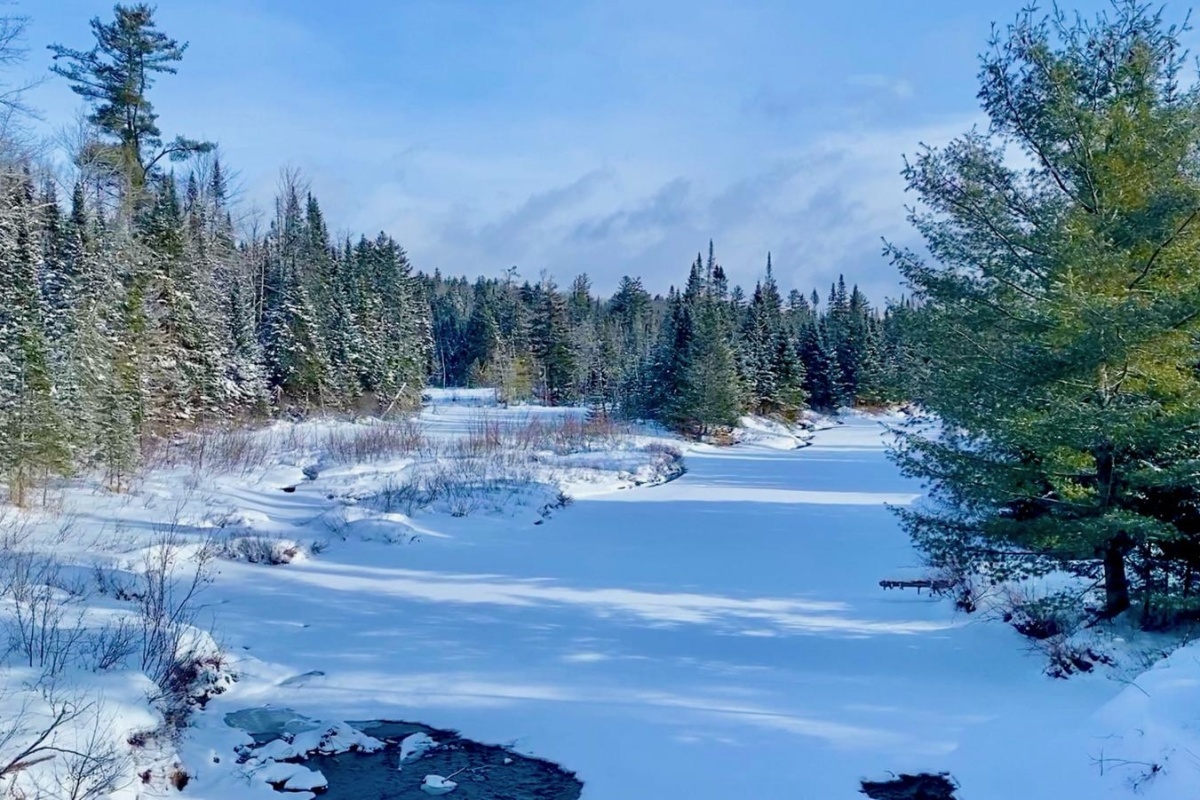
Route 28N is an important stretch of road with great hiding spots for the Boreal trio (the Boreal Chickadee, the Black-backed Woodpecker, and the Canada Jay) and many other wintering birds. At Hyslop Marsh in Newcomb, we heard the unmistakable drumming of two Black-backed Woodpeckers and a Pileated Woodpecker. We were also delighted by two Red-breasted Nuthatches, a Purple Finch, and several Pine Siskins. However, no Boreal Chickadees were to be found. The Minerva Railbed provided our first call of the Red Crossbill. However, after much searching, we could not visually locate the bird. The next stop was the Boreas River Loop Trailhead in Minerva, where we enjoyed bright sunshine, sparkling snow, and a gorgeous ice-covered river. We heard another Pileated Woodpecker drilling and more Pine Siskins. After much searching, we heard a Red Crossbill singing while perched high in a pine tree. With the entire group looking and listening, we eventually located three Red Crossbills flying high overhead. What a thrill to finally see one of our primary target birds, a life bird for several participants.
Tahawus Road, in Newcomb – Essex County
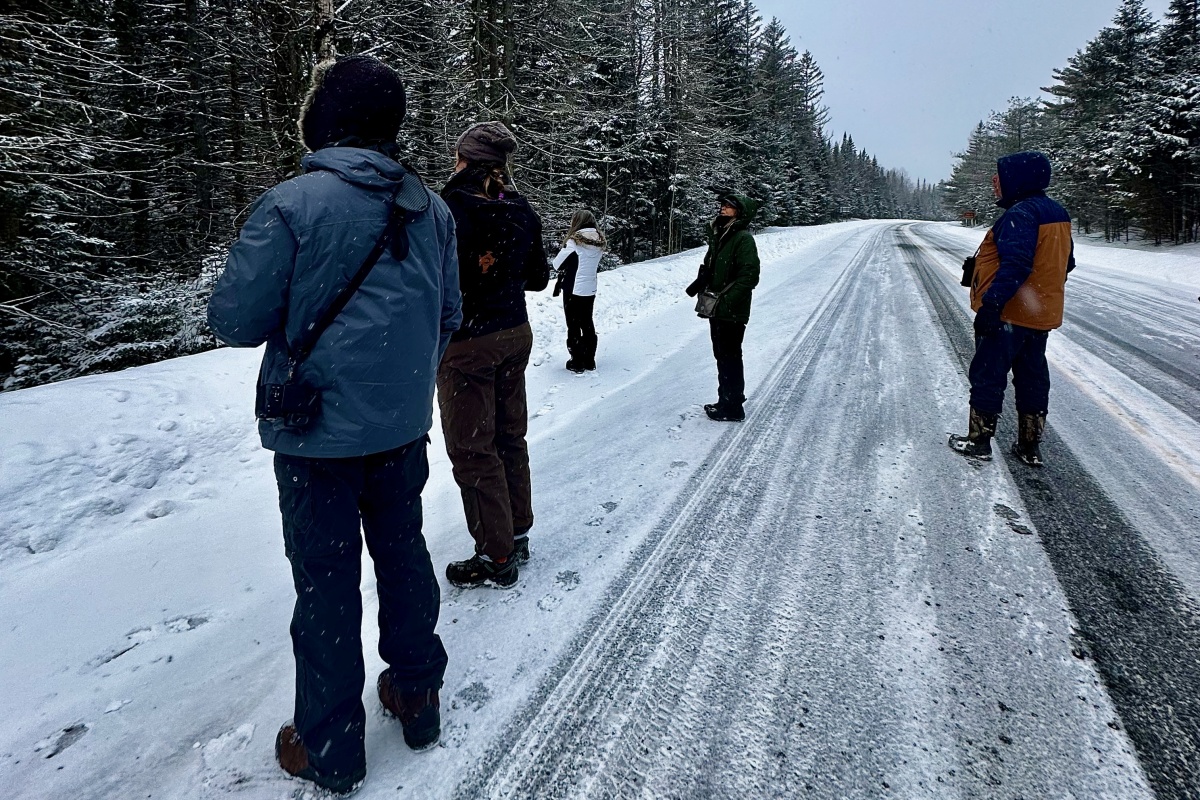
The Tahawus Road parallels the Hudson River, eventually leading to an abandoned mining town. It is primarily used by large logging trucks but is otherwise fairly quiet. Along this crystalline snow-covered stretch of road, we searched again for Boreal Chickadees and were rewarded with over sixteen birds singing in the trees. We also found Red-breasted Nuthatches, Pine Siskins, and several Black-capped Chickadees high up in the evergreens.
Blue Ridge Road in North Hudson – Essex County
Our first species at this location was the Black-backed Woodpecker. We heard two calling and rattling, and the female eventually appeared in our sightline, deep in the trees. Finally, we heard the call of the elusive White-winged Crossbill along Blue Ridge Road, near the Sand Pond Marsh in North Hudson. Not everyone could hear the song, and a bit of frustration began creeping in, as this was a life bird for quite a few participants. The chase for a visual sighting of a White-winged Crossbill was on!
Sabattis Bog – Hamilton County
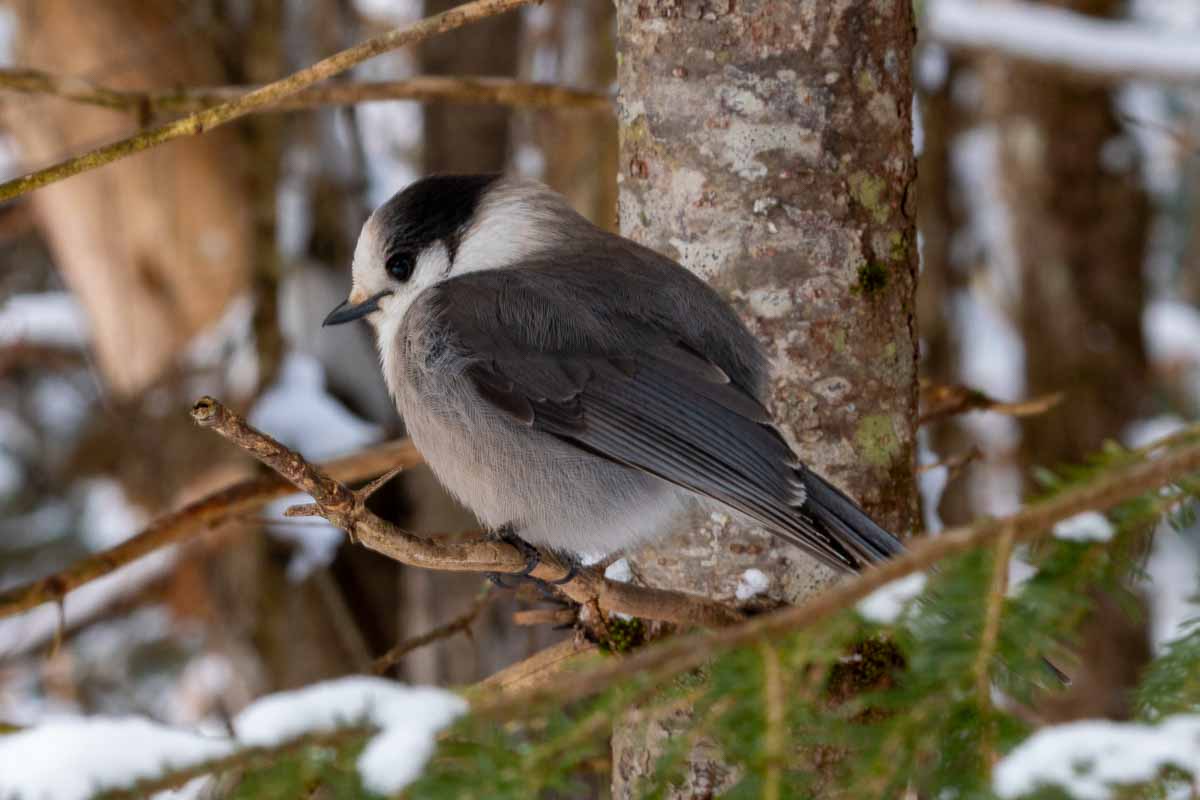
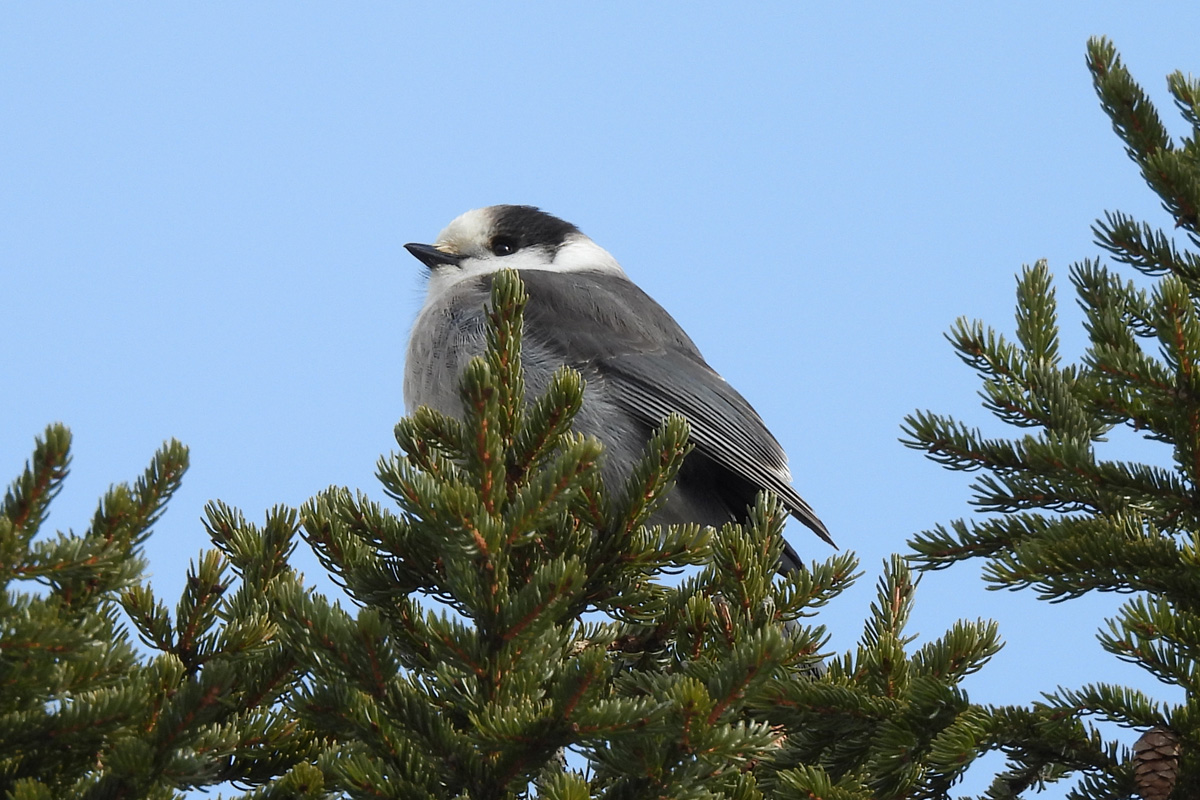
The loop along Circle Road to the Round Lake Trailhead provides the opportunity to interact with small groups of Canada Jays that Joan feeds throughout the winter. Due to warmer winters, the more aggressive Blue Jays have encroached on their winter territory, raiding their food stashes and leaving them hungry. The participants were thrilled to feed the birds berries while Joan restocked their food supplies. With this sighting, we had completed our goal of seeing the Boreal trio and were happy to start winding our way to the hotel.
Route 30 and Tupper Lake – Franklin County
The drive along Route 30 offered us several Common Ravens and the sole Snow Bunting we saw in the Adirondacks.
Day 3: Sunday, February 18
Adirondacks: Searching for Bohemian Waxwings
Determined to find Bohemian Waxwings, Joan led the participants on an extensive search for untouched berry trees that might attract the hungry birds. Knowing there were flocks of over five hundred birds as recently as a few weeks ago, our expectations were high. Along the way, we also looked for crossbills and Boreal Chickadees and listed 26 species in the course of the day.
Blue Ridge Road in North Hudson – Essex County
As dawn broke, we stopped along Blue Ridge Road to search for Boreal Chickadees and were finally rewarded with singing and good views in the tall pines of six of these birds. We were also delighted to see more Black-backed Woodpeckers, Pine Siskins, Black-capped Chickadees, and a Red-breasted Nuthatch. We were on high alert for berry trees with Cedar Waxwings as we drove.
Keene Valley and Cemetery Road Wetlands – Essex County
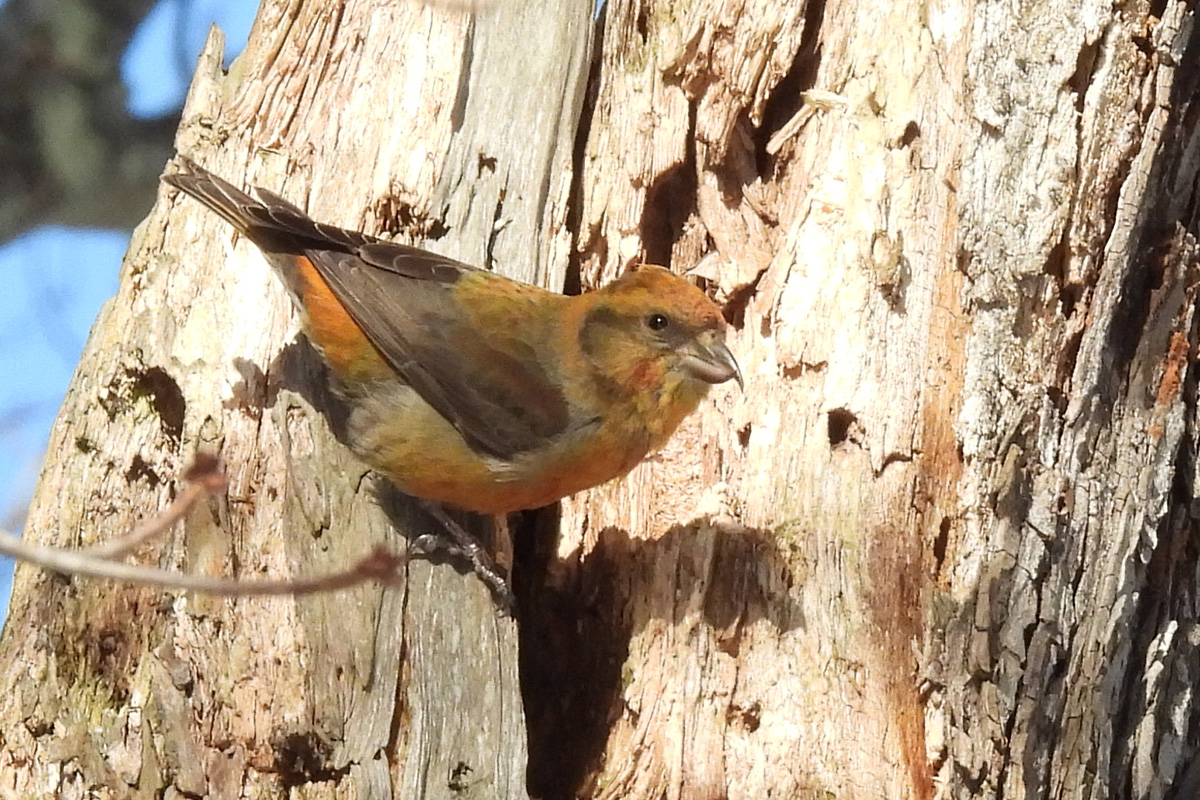
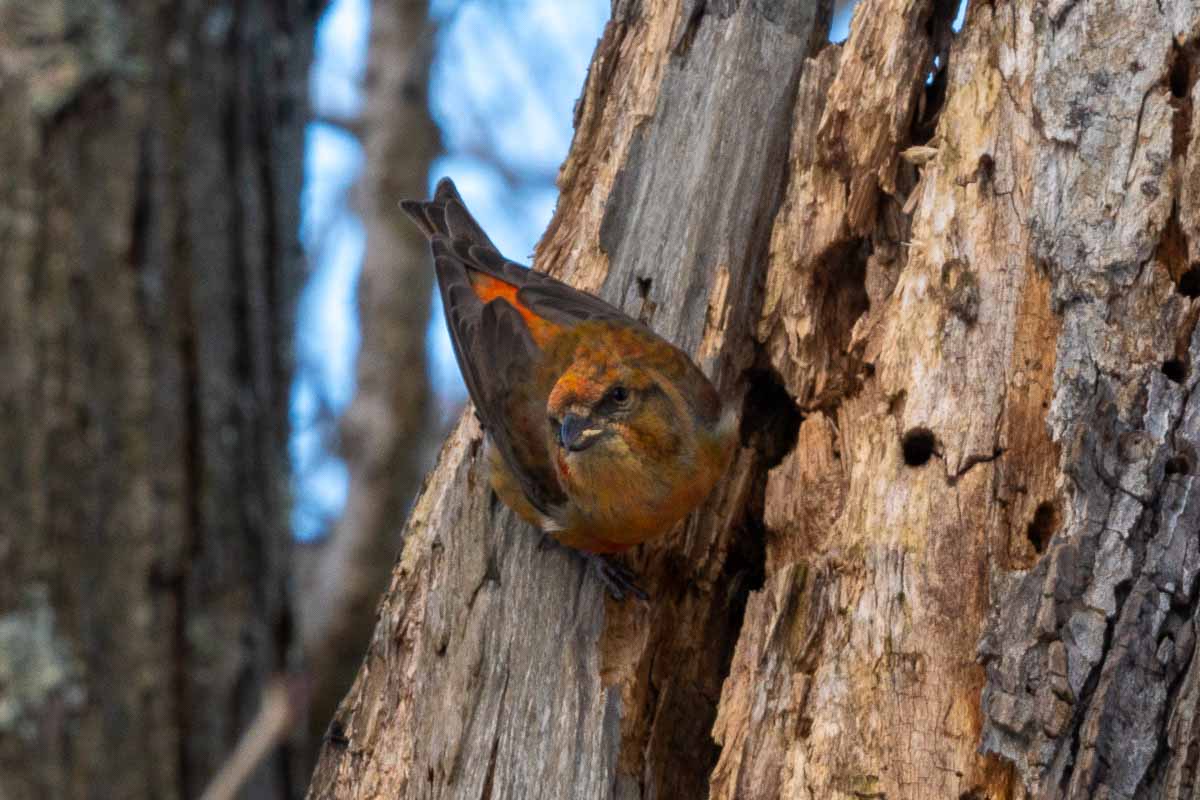
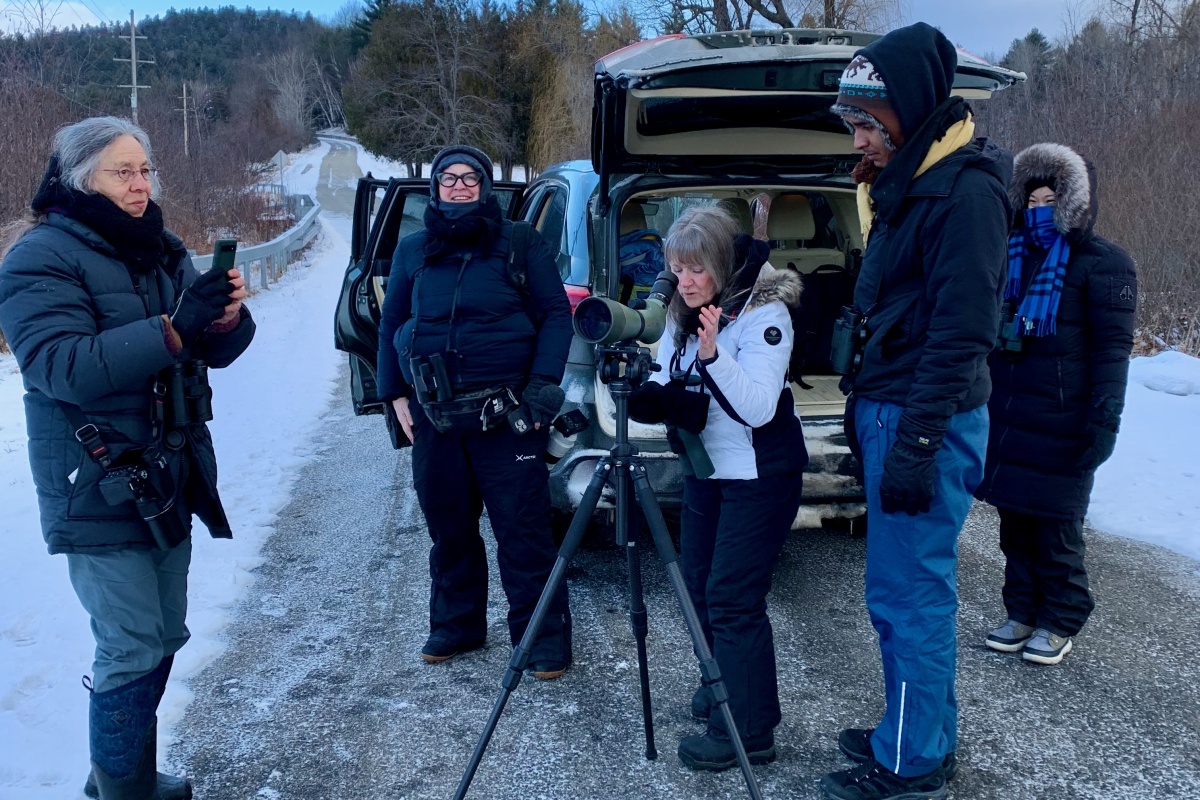
As we drove through the main thoroughfare of Keene Valley, we were thrilled when Joan quickly pulled over because she heard the song of the Red Crossbills. We collectively jumped out of our cars, causing quite a stir, to be graced with an incredibly close and lengthy viewing of the birds perched in the main trunk of a large tree. Joan noted that they were likely cleaning their bills on the tree bark, which was why they were so docile and easy to see. We next stopped by the roadside at the Cemetery Road Wetlands to look for a Northern Shrike that was recently reported in the area. Joan set up her scope at a stop off Cemetery Road at the Route 73 and Route 9N intersection and quickly found the bird on a distant tree. Luckily for us, the bird flew closer when we drove across the street, allowing us even better looks at this bird—a lifer for several participants.
Keene – Essex County
The Church Street feeders in Keene were a major destination in our search for Bohemian Waxwings. Sadly, we did not find them among the Mourning Doves, Blue Jays, Dark-eyed Juncos, Northern Cardinals, European Starlings, and Brown-headed Cowbirds.
Saranac Lake Roads – Essex County
The search for Bohemian Waxwings continued along the roads surrounding Saranac Lake. In the lovely downtown area, we spied a large flock of Rock Pigeons, several Common Ravens, a Purple Finch, and our constant friends, the Pine Siskins. Ultimately, we found lots of berry trees but no waxwings.
Bloomingdale Village, Bloomingdale Bog, and Oregon Plains Road – Essex County
As we approached Bloomingdale Bog with our windows down, we heard the songs of hundreds of Pine Siskins. At least five flocks were singing loudly and flying across the road. At this time of year, birds such as Pine Siskins, American Goldfinches, Snow Buntings, and Tree Sparrows eat roadside grit to help their system grind up the seeds they eat for food. Roadside gritting creates a life-threatening situation for these birds, as they are often run over by cars and trucks before they can fly away. We had to hit the brakes and swerve our vehicles several times to avoid hitting the gritting birds. While enjoying the glorious cacophony of Pine Siskins singing, we heard one White-wing Crossbill, saw two Hairy Woodpeckers, two Canada Jays, and several Black-capped Chickadees, Red-breasted Nuthatches, and American Goldfinches. Along the roadside were three American Tree Sparrows and a flock of Purple Finches.
Route 55 in Bloomingdale – Franklin County
After leaving Bloomingdale, a few of us in the lead car briefly saw an American Goshawk flying low over Route 55. The large gray bird glided over the road, likely in pursuit of prey, and quickly disappeared into the forest. Joan was able to ID the bird based on the behavior, the size, and the overall color, but it was not a clear sighting.
Route 30 and Tupper Lake – Franklin County
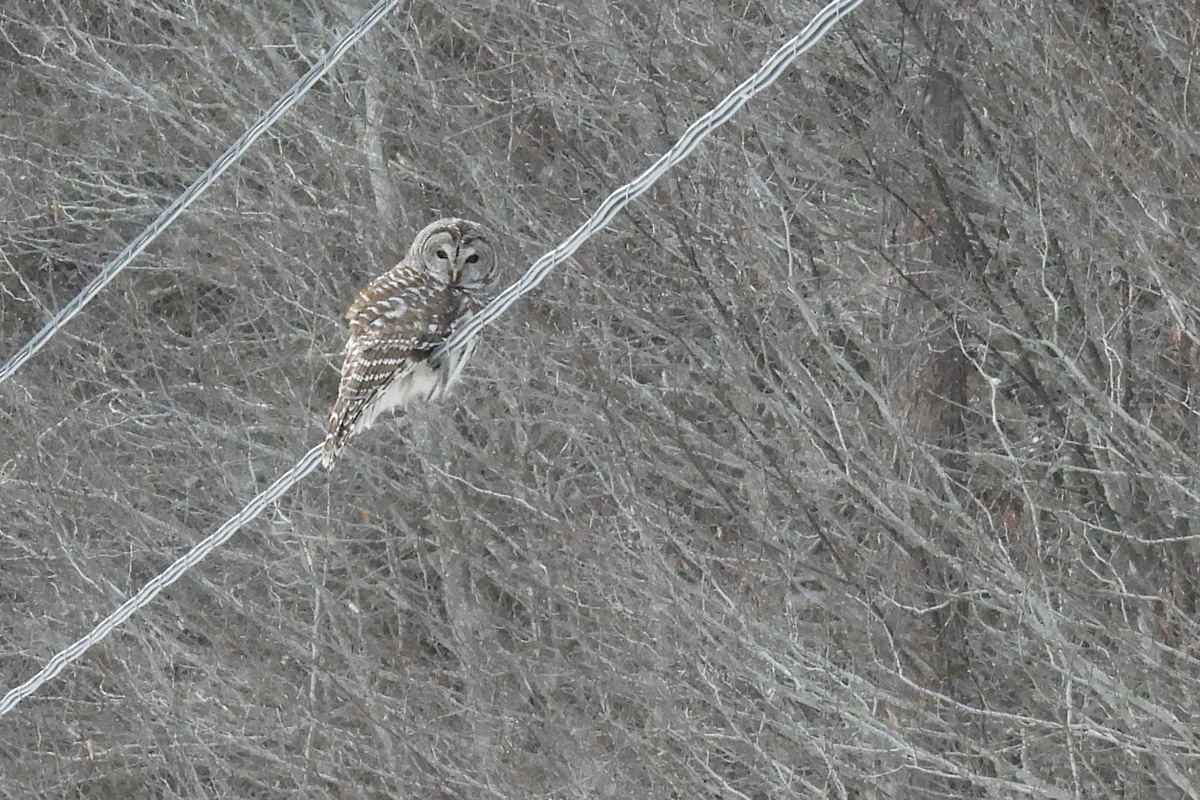
Returning to the hotel, we spotted a lone Barred Owl on a wire along Route 30 near Santa Clara. Joan explained that the subnivean zone between the snow and the ground is not currently sustaining enough of the small mammals necessary for the Barred Owls’ winter diet due to warmer winters. Unfortunately, this means many of these owls are starving, and seeing one so close to the road during the day is a sign that he is struggling to find food.
We ended the evening with a lovely dinner, reminiscing about the highlights and excitement of our two days with Joan. We were so thrilled with the birds we had seen we decided to retain Joan for another day rather than heading downstate early.
Day 4: Monday, February 19
Adirondacks: Searching for White-winged Crossbills
Monday started clear and cold, with temperatures hovering near zero for much of the morning. Our Adirondacks daily bird count was seventeen species, and we added two more at the Shawangunk Grasslands.
Bloomingdale Bog Trail Route 55 to Bigelow Road – Franklin County
The morning’s first stop was a beautiful scenic overlook on Route 55. We saw Black-capped Chickadees, a Golden-crowned Kinglet, Pine Siskins, and two Purple Finches at the feeders. We also saw a Blue Jay and a Common Raven in flight along the road.
Oregon Plains Road and Bigelow Road – Franklin County
As we approached, we again heard the glorious chorus of several hundred Pine Siskins in large flocks along the road. Two more Red Crossbills were singing in the trees. The distinct sound of two Black-backed Woodpeckers drumming back and forth almost made it so we could not hear the White-winged Crossbills foraging in the thick forest. After standing absolutely still for quite some time, most of us finally heard them. However, we still had not visually located these birds at any of the spots where we heard them. Thankfully, an undaunted Joan moved us to where she was sure we would see them.
Bloomingdale Bog Trail – Franklin County
The Bloomingdale Bog Trail is one of the best locations on the Adirondack tour. The feeders there sustain many birds and allowed us close looks at Canada Jays, Black-capped Chickadees, Purple Finches, American Goldfinches, Dark-eyed Juncos, a Hairy Woodpecker, and even a Brown Creeper. After much searching, we hit the White-winged Crossbill jackpot! Joan kept hearing the birds along the trail, so we walked through the snow with our ears open and our eyes peeled. Finally, we saw two likely candidates from a far distance. Several of us tracked the bird as it flew directly towards us, across the trail, and off in the distance on the other side of the bog. It was a triumph to see a male White-winged Crossbill in all its glory. After that exciting viewing, we packed up our cars and headed south.
Shawangunk Grasslands NWR
Shawangunk Grasslands – Ulster County
After a long ride, we arrived at the Shawagunk Grasslands National Wildlife Reserve just after sunset. Most of the other viewers had already left, so we commandeered the viewing platform. There in the distance were at least five Short-eared Owls, playing and hunting for their dinner. We also heard a Great Horned Owl in the distance and saw the planets and stars shining in the clear night sky.
What a fantastic trip! We created 32 checklists and tallied an impressive 57 birds over four days. Most of us were happy to finally arrive home with stories to tell of life birds, below-zero temperatures, brilliant snow, and more Pine Siskin than one could count.
Species List:
Hudson River: Saratoga and Washington County Birds
Canada Goose
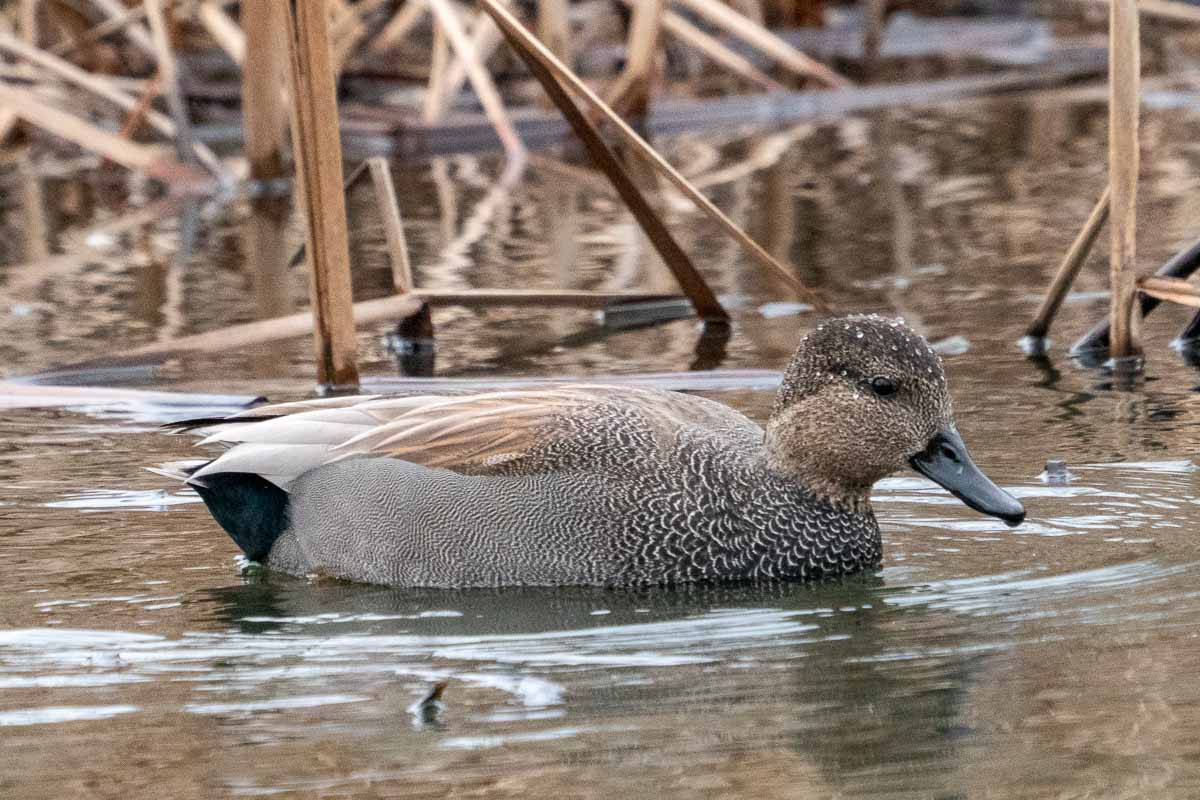
Mallard
American Black Duck
Northern Pintail
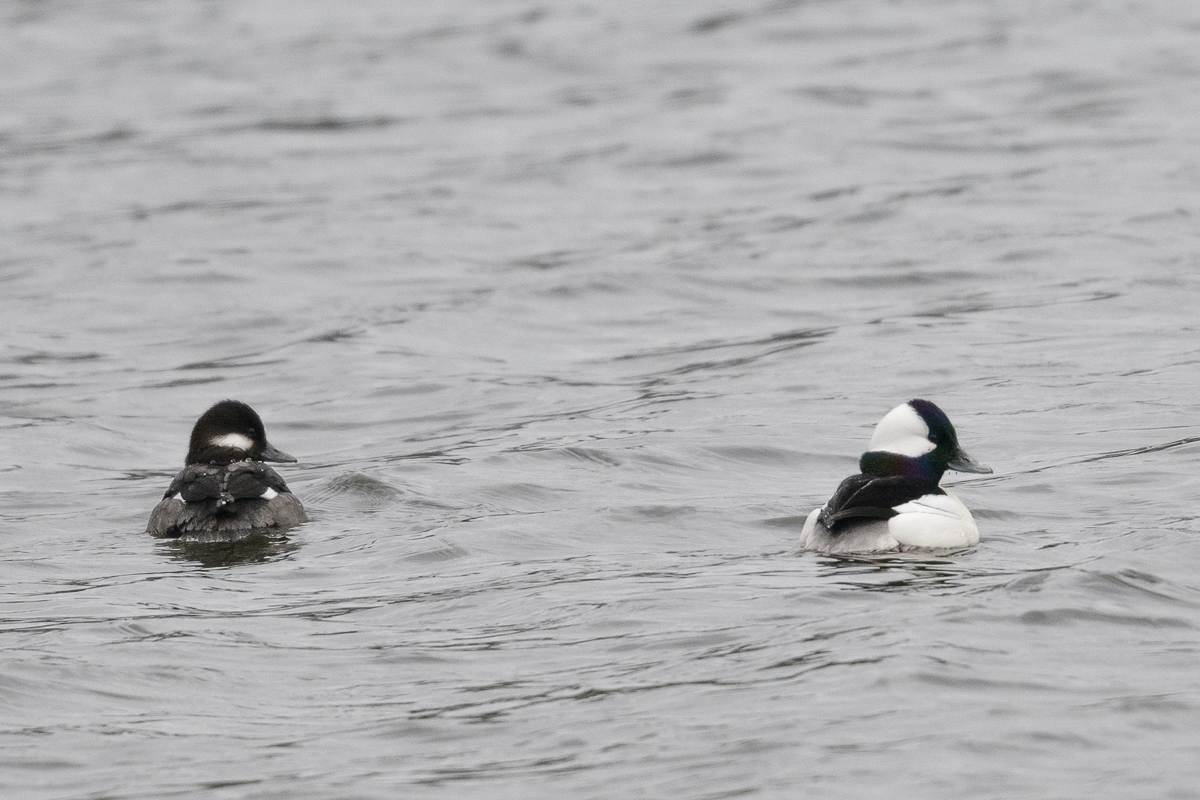
Bufflehead
Common Goldeneye
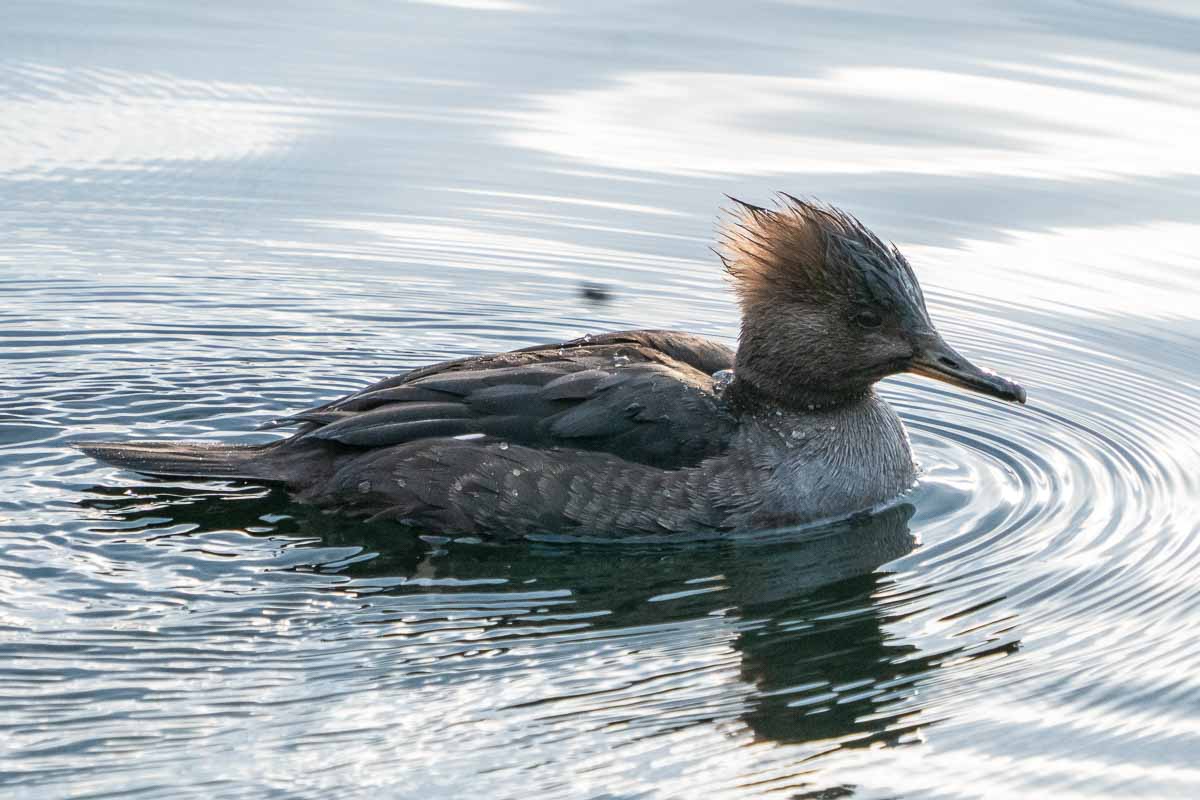
Hooded Merganser
Common Merganser
Rock Pigeon
Mourning Dove
Turkey Vulture
Northern Harrier
Bald Eagle
Red-tailed Hawk
Great Horned Owl
Red-bellied Woodpecker
Downy Woodpecker
Pileated Woodpecker
Northern Flicker
American Kestrel
Blue Jay
American Crow
Common Raven
Black-capped Chickadee
Tufted Titmouse
Horned Lark
White-breasted Nuthatch
Carolina Wren
European Starling
Northern Mockingbird
Eastern Bluebird
American Robin
House Sparrow
House Finch
Snow Bunting
American Tree Sparrow
Dark-eyed Junco
Red-winged Blackbird
Northern Cardinal
Adirondacks: Essex, Franklin, and Hamilton County Birds
Rock Pigeon
Mourning Dove
American Goshawk
Barred Owl
Black-backed Woodpecker
Hairy Woodpecker
Pileated Woodpecker
Northern Shrike
Canada Jay
Blue Jay
American Crow
Common Raven
Black-capped Chickadee
Boreal Chickadee
Golden-crowned Kinglet
Red-breasted Nuthatch
Brown Creeper
European Starling
American Robin
Purple Finch
Red Crossbill
White-winged Crossbill
Pine Siskin
American Goldfinch
Snow Bunting
American Tree Sparrow
Dark-eyed Junco
White-throated Sparrow
Brown-headed Cowbird
Northern Cardinal
Other Species
Gray Fox
Eastern Coyote
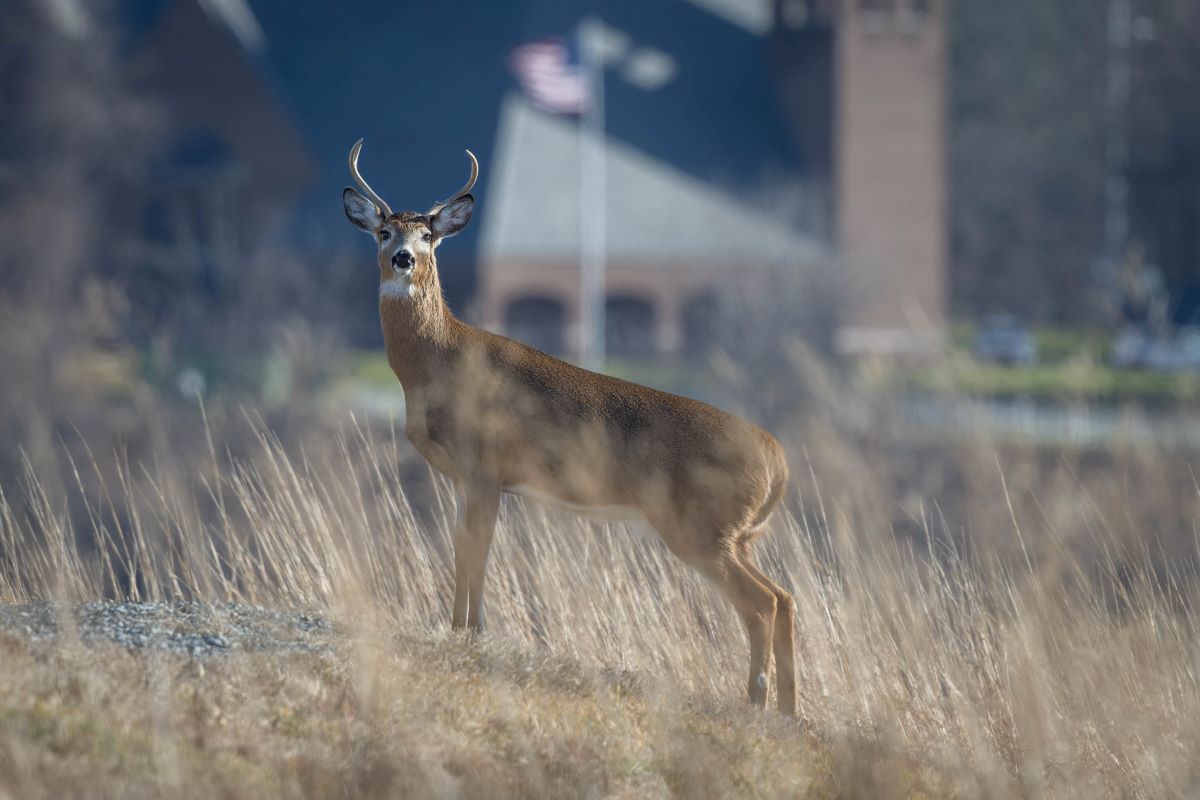
White-tailed Deer
Red Squirrel
Shawangunk Grasslands NWR: Ulster County Birds
Great Horned Owl
Short-eared Owl