Registrar: Suzanne Zywicki Participants: 6 Weather: Initial light rain, with temperatures in the 70’s. Rain briefly turned heavy and then gradually stopped Bird Species: 22
After a delayed start due to expected rain, the group met at St. Nicholas Park, a new birding location for Linnaean Society trips and a local “patch” for our trip leader and a few participants. Soon after we began our walk, the light rain turned heavy and we took shelter under sidewalk scaffolding until conditions improved.
Once back in the park we saw the first of over fifteen American Redstarts we encountered. While getting a little frustrated that every warbler we observed seemed to be a Redstart, we were soon rewarded with great views of a Prairie Warbler, a lifer for at least one person in our group.
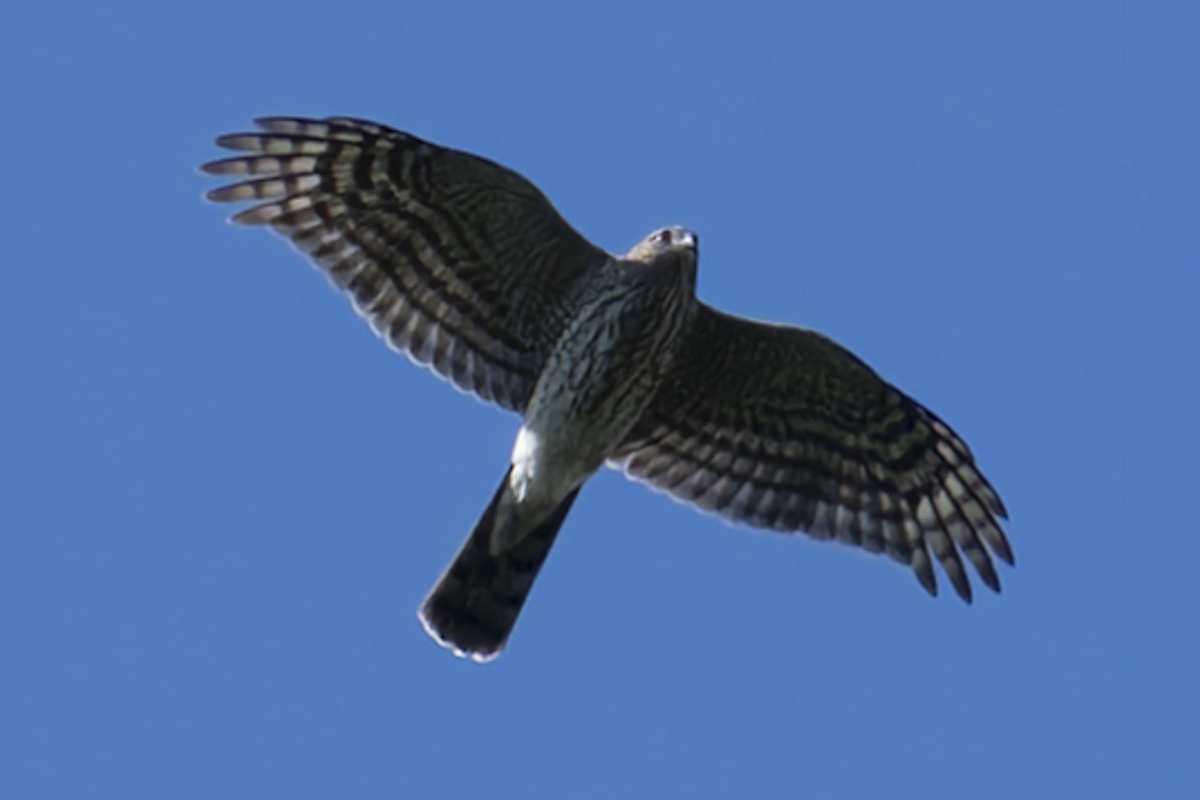
We later saw several Black-and-white Warblers, a Northern Parula and an intriguing but elusive warbler we were unable to definitively identify. Another highlight was a Cooper’s Hawk seen at relatively close range.
We then walked several blocks north to Jackie Robinson Park, another largely under-birded location. While we did not see any new species, we appreciated becoming familiar with a park that was new to most of us.
While the less-than-ideal weather prevented us from seeing as many birds as we had hoped, we all agreed that we’d like to do another group walk here in the Spring.
Species List
Rock Pigeon (Feral Pigeon) Mourning Dove Cooper’s Hawk Red-bellied Woodpecker Downy Woodpecker Northern Flicker Great Crested Flycatcher Blue Jay Common Raven European Starling Gray Catbird Northern Mockingbird Veery American Robin House Sparrow House Finch Common Grackle Black-and-white Warbler American Redstart Northern Parula Prairie Warbler Northern Cardinal
Registrar: Sheila Epstein Participants: 37 Weather: Mid 60’s to low 70’s; clear with calm winds from the northwest Bird Species: 56
With beautiful weather and helpful winds from the northwest the night before, there was a substantial migration and judging from the number of species sighted, there was a good diversity of new arrivals in Central Park. The groups spent a lot of time in Strawberry Fields looking for birds very high in the tree canopy and then traveled along the Lake to Hernshead Rock and into the Ramble, Belvedere Castle and along Turtle Pond.
Species Lists
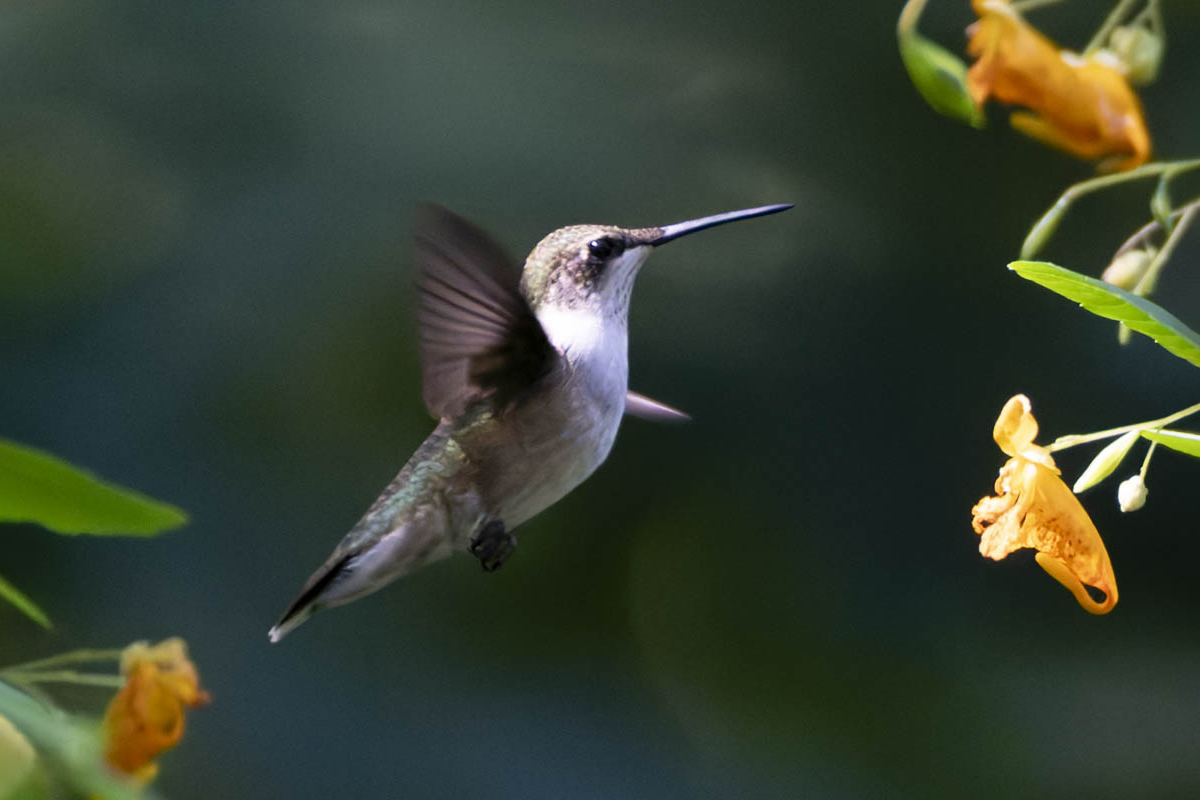
Canada Goose Mallard Rock Pigeon (Feral Pigeon) Mourning Dove Chimney Swift Ruby-throated Hummingbird Ring-billed Gull American Herring Gull Black-crowned Night Heron Green Heron Osprey Sharp-shinned Hawk Cooper’s Hawk Bald Eagle Red-shouldered Hawk Broad-winged Hawk Red-tailed Hawk Red-bellied Woodpecker Downy Woodpecker Northern Flicker American Kestrel Eastern Wood-Pewee Eastern Phoebe Great Crested Flycatcher Eastern Warbling Vireo Red-eyed Vireo Blue Jay Common Raven White-breasted Nuthatch Blue-gray Gnatcatcher Northern House Wren European Starling Gray Catbird Veery Swainson’s Thrush Wood Thrush American Robin Cedar Waxwing House Sparrow Song Sparrow House Finch American Goldfinch Red-winged Blackbird Common Grackle Ovenbird Northern Waterthrush Black-and-white Warbler Common Yellowthroat American Redstart Magnolia Warbler Chestnut-sided Warbler Black-throated Blue Warbler Black-throated Green Warbler Wilson’s Warbler Northern Cardinal Rose-breasted Grosbeak
Registrar: Frederica Miller Participants: 5 Weather: Warm, humid, cloudy, rain showers, rainbow, then sunny with temperatures ranging from 72 – 82 degrees
We met on the western tip of Staten Island at Conference House Park at 11 a.m. and walked to a DEP/Blue belt bridge, where we saw Fragile Forktails (damsel flies), and two species of dragonflies, Slaty Skimmers and Blue Dashers. We circled back through the forest and saw five or six American Bullfrogs and Green Frogs sitting motionless on stones in a small stream. The path was sprinkled with tiny white-capped mushrooms called Trooping Crumble Cap, Coprinellus disseminatus. We were caught in a brief downpour, but the rain stopped by the time we walked back to Conference House Park.
Our next stop was Mt. Loretto Unique Area (unique because it contains five different habitats, including grasslands, maritime forests, freshwater wetlands, tidal wetlands and a marine shoreline). At Mt. Loretto pond, we saw more dragonflies, including Needham’s Skimmer, Eastern Amberwing, Common Whitetail, Blue Dasher and Eastern Pondhawk. We also saw several Monarchs and Clouded Sulphurs.
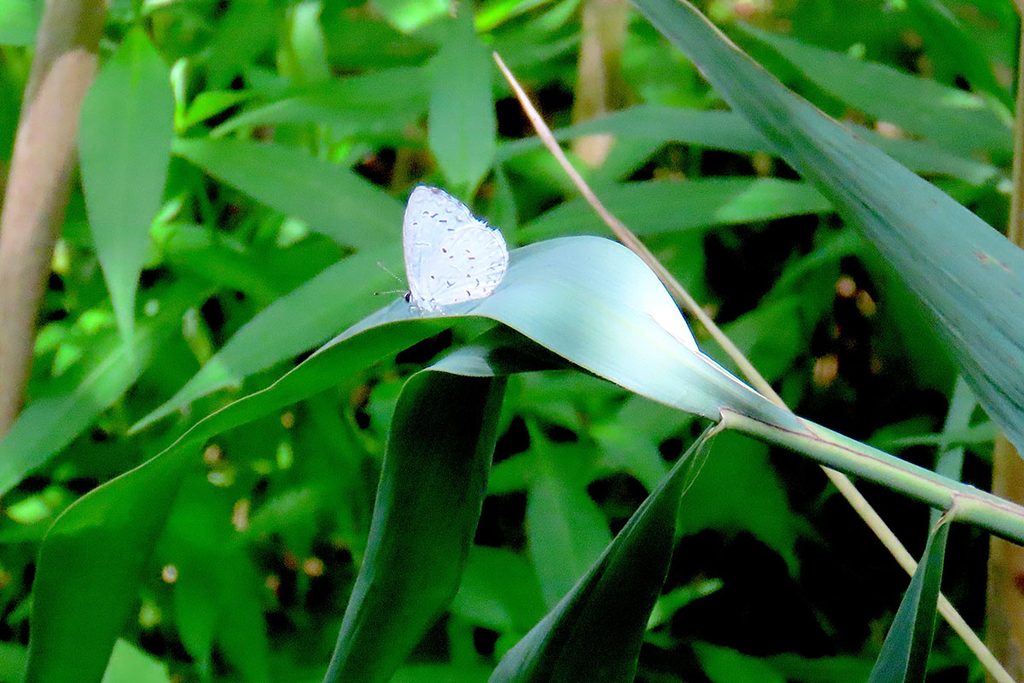
Our last stop was Blue Heron Park where we had lunch and enjoyed seeing Eastern Pondhawks and Black Saddlebags. We finished the trip with sightings of Silver Spotted Skippers, Eastern Tiger Swallowtails, Spicebush Swallowtail, Juvenal’s Duskywing, Peck’s Skipper, Summer Azures and a Red Banded Hairstreak. It was another great adventure on Staten Island!
Species List:
Odonates Eastern Pondhawk Blue Dasher Green Darner Slaty Skimmer Needham’s Skimmer Eastern Amberwing Common Whitetail Black Saddlebags Fragile Forktail
Insects Eastern Bumblebee Carpenter Bee Honeybee Sweat Bee Blue Winged Wasp Tiger Bee Fly Stink Bug Large Milkweed Bug Milkweed Weevil Juvenile Grasshopper Two Striped Plant Hoppers Small Robber Fly Daddy Long Legs Keeled Tree Hopper Lantern Fly
Birds Chimney Swift Great Blue Heron Osprey American Crow Carolina Wren European Starling Grey Catbird American Robin American Goldfinch Red-winged Blackbird Common Yellowthroat Northern Cardinal Indigo Bunting
Registrar: Richard Davis Participants: 22 Weather: Early morning at Plumb 74-78°F and sunny with WSW Wind 5 mph, low tide: 4:30 am, high tide: 10:30 am; mid morning to afternoon at JBWR 78-81° F and mostly sunny with WSW Wind 8 mph, high tide: 10:41 am Bird Species: 63
The planned Linnaean Society trip to Jamaica Bay trip is expanded to include Plumb Beach due to high water levels in the East Pond at Jamaica Bay, recent downpours, and the timing of tide levels. Many participants are eager to experience Plumb Beach as a new birding territory to explore. We gather early morning in the parking lot under a fading full moon that becomes a backdrop to a family of Boat-tailed Grackles. Soon a Northern Yellow Warbler offers a distraction while awaiting the arrival of the final carload of participants.
We walk single file along the bike path and enter the marsh to be greeted by a Northern Mockingbird imitating several neighboring species including Purple Martins, Semipalmated Plovers, Common Terns and crickets. We proceed to examine every Willet closely to distinguish the Eastern from the Western subspecies. Our leader, Casey, points out juvenile American Oystercatchers by the dusky coloration at the tip of their beaks.
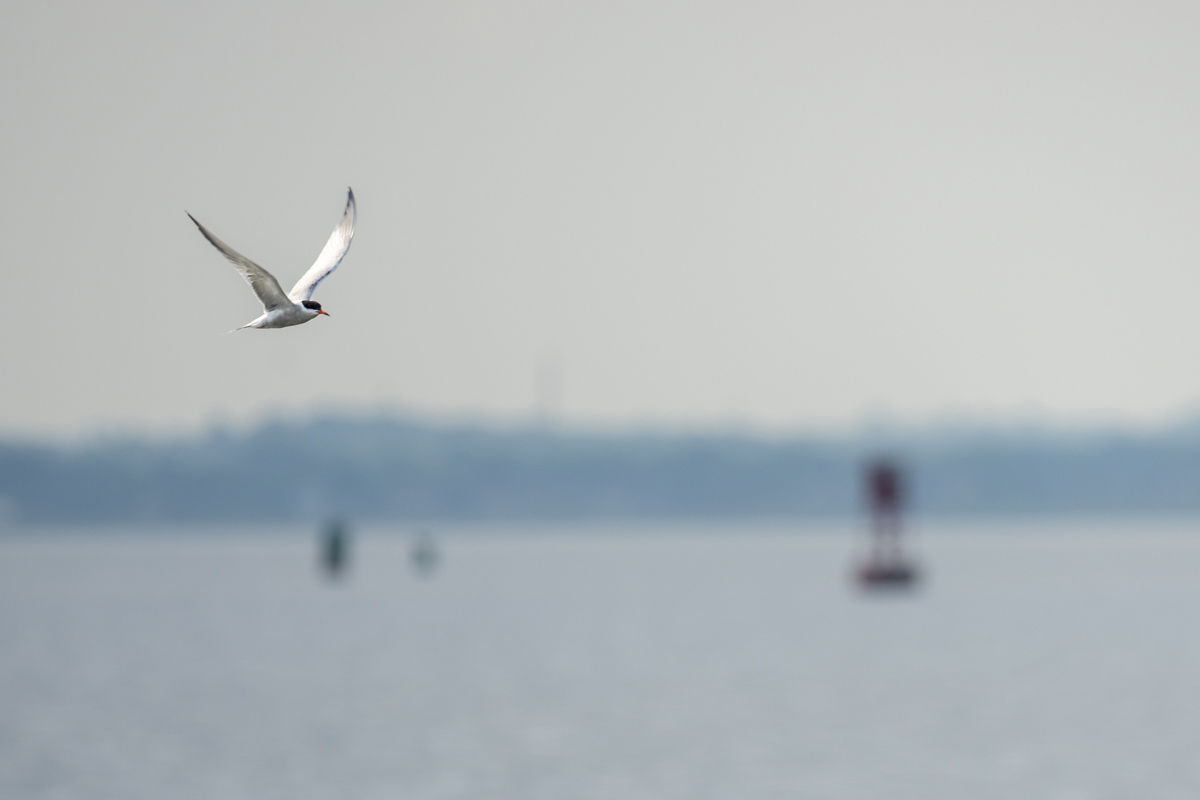
Making our way out to a view of the mudflats, we delight in Casey’s passion for terns and begin to examine more closely the many passing Forster’s Terns, whiter and frostier than the Common Terns that will fly by a short while later. Several Least Terns eventually appear and even set down along the beach and then a Royal Tern flies over, which is happily a life bird for some in the group. A probable hendorsoni subspecies of Short-billed Dowitcher is picked out and examined on the mudflat. Casey’s first-of-season juvenile Great Black-backed Gulls are spotted, one very fresh and crisp, eventually three will be observed along the beach and waterline. As the tide continues to rise, we decide to move on to Jamaica Bay.
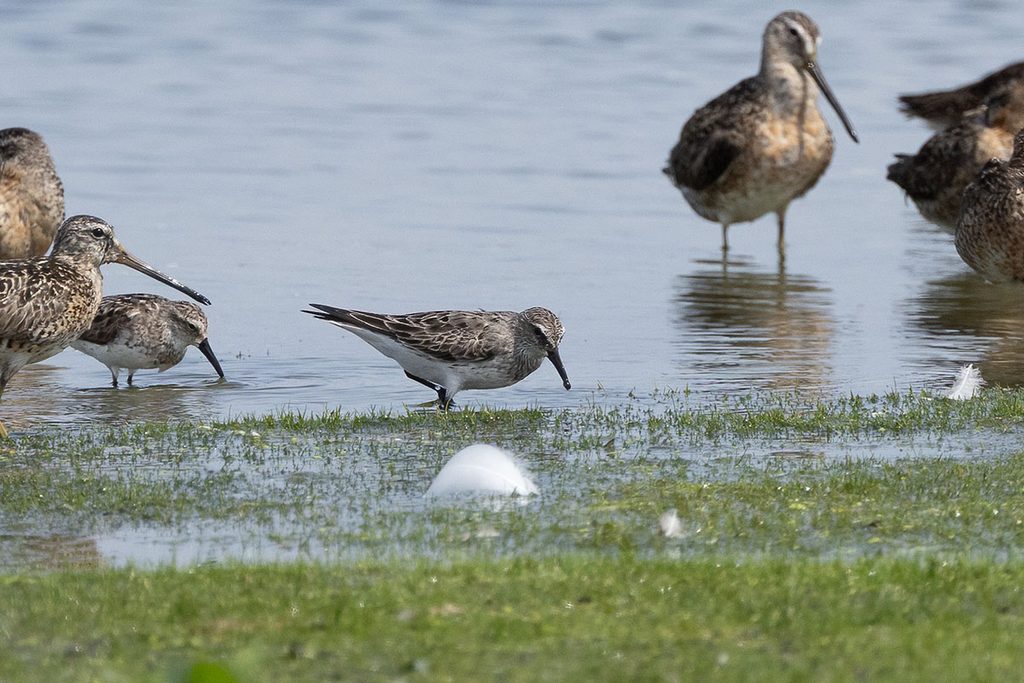
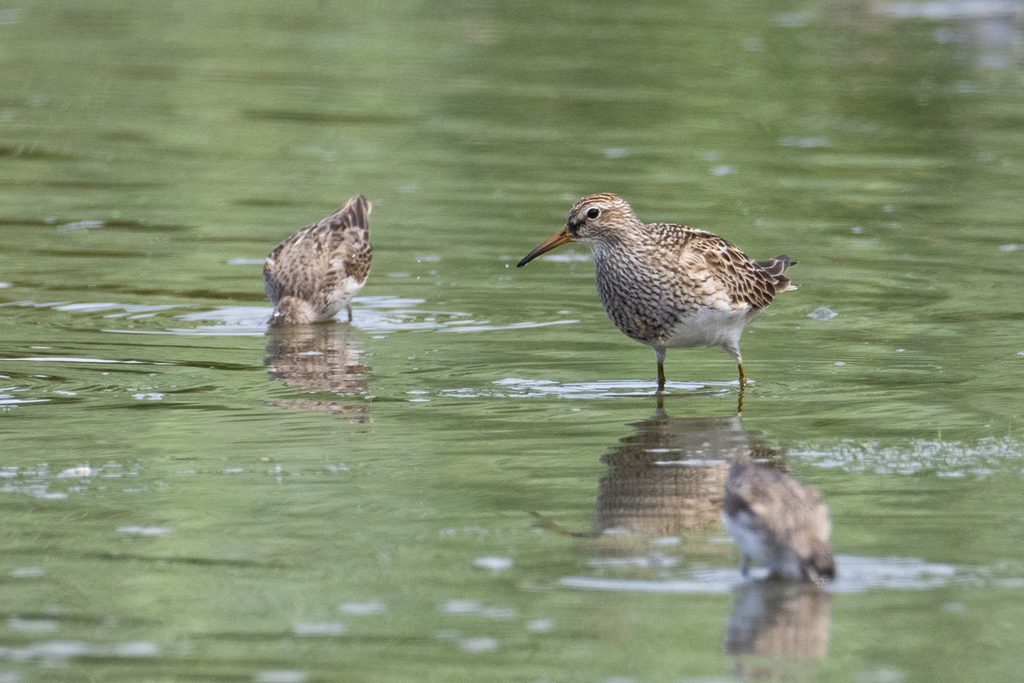
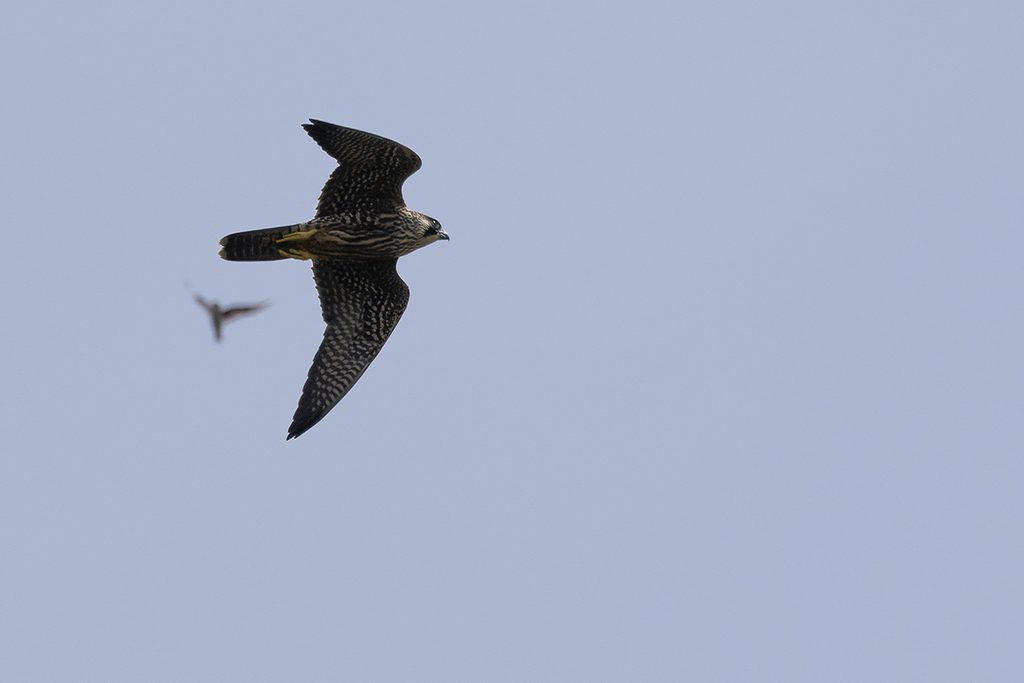
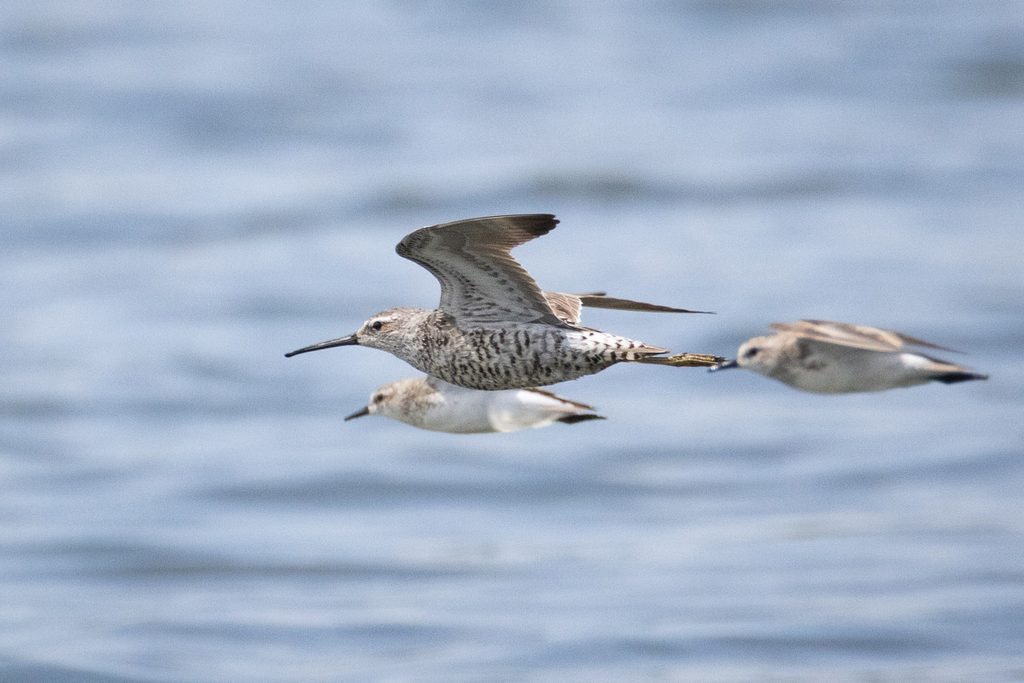
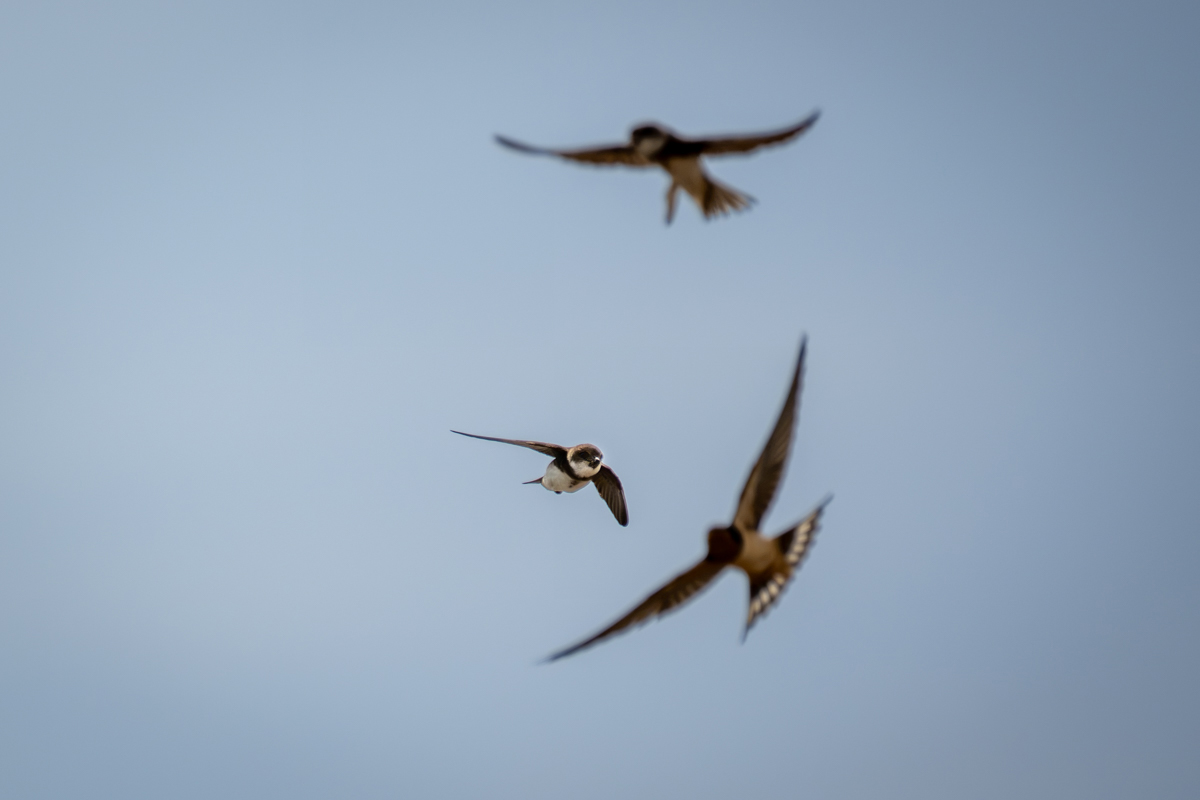
At Jamaica Bay Wildlife Refuge, the water levels are indeed very high on the East Pond. We end up staying at the south end to observe the birds that forage or rest on the flats nearby, or fly over, including numerous swallows, mostly Tree and a few Barn. Almost immediately a couple of White-rumped Sandpiper are observed on a nearby flat directly in front of the group. Eventually a few Pectoral Sandpipers and several Stilt Sandpipers are seen. A Red Knot flies by! Several groups of Short-billed Dowitchers are seen near and further away and combed through for a sought-after Long-billed Dowitcher observation. One potential subject is identified, but before every person in the group can get a solid view, the shorebirds are suddenly flushed.
After lunch some in the group decide to check the breach at the West Pond and are treated to another Royal Tern flying by, but no nearby shorebirds. The trip wraps up by early afternoon, and the group is satisfied with an excellent start to shorebird migration season. While this was Casey’s first experience leading a trip, the group would not have known as Casey is a wealth of naturalist information on insects, fish, crabs and other shore and marsh species that we encountered. We hope it is the start of many more trips to come.
Species Lists
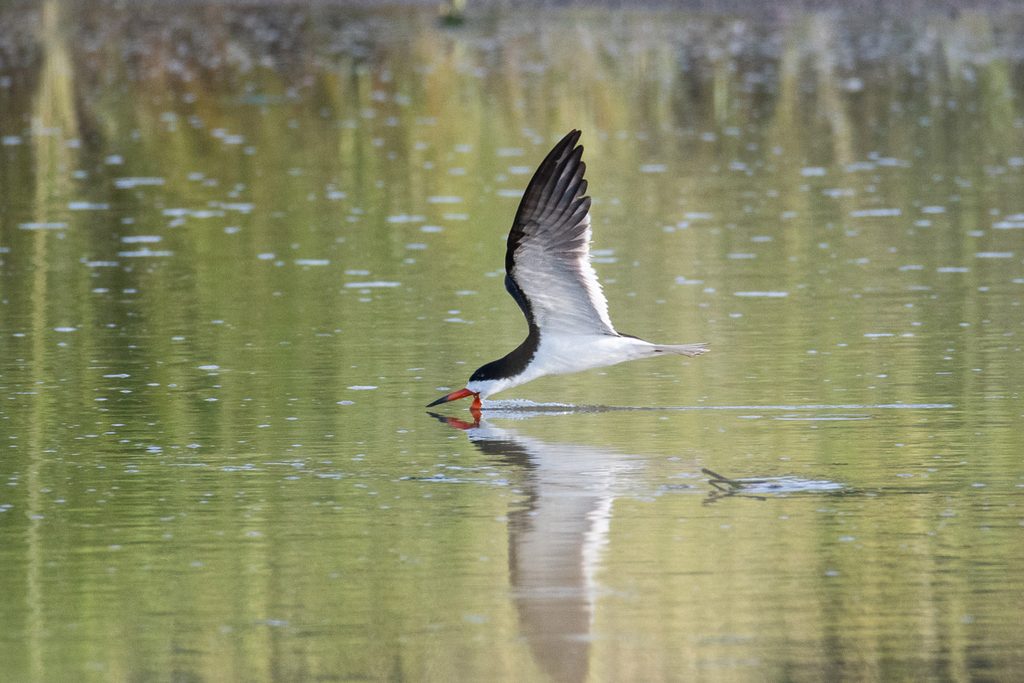
Birds Canada Goose Mute Swan Gadwall Mallard Bufflehead Rock Pigeon (Feral Pigeon) Mourning Dove American Oystercatcher Black-bellied Plover Killdeer Semipalmated Plover Short-billed Dowitcher (griseus) Short-billed Dowitcher (hendersoni) Long-billed Dowitcher Spotted Sandpiper Solitary Sandpiper (solitaria) Lesser Yellowlegs Willet Willet (Eastern) Greater Yellowlegs Ruddy Turnstone Red Knot Stilt Sandpiper Sanderling White-rumped Sandpiper Least Sandpiper Pectoral Sandpiper Semipalmated Sandpiper Laughing Gull Ring-billed Gull American Herring Gull Great Black-backed Gull Black Skimmer Least Tern Forster’s Tern Common Tern Royal Tern Double-crested Cormorant Glossy Ibis Yellow-crowned Night Heron Black-crowned Night Heron Snowy Egret Great Egret Great Blue Heron (Great Blue) Osprey (American) Peregrine Falcon Willow Flycatcher Bank Swallow Tree Swallow Purple Martin Barn Swallow (American) European Starling Gray Catbird Northern Mockingbird American Robin Cedar Waxwing House Sparrow House Finch Song Sparrow (melodia/atlantica) Red-winged Blackbird (Red-winged) Brown-headed Cowbird Boat-tailed Grackle Northern Waterthrush Northern Yellow Warbler Northern Cardinal
Butterflies Summer Azure Broad-winged Skipper Monarch Cabbage White
Registrar: Lisa Kroop Participants: 8 Weather: 76–84°F; humid, hazy, high cloud cover; calm, 0–3mph Bird Species: 55
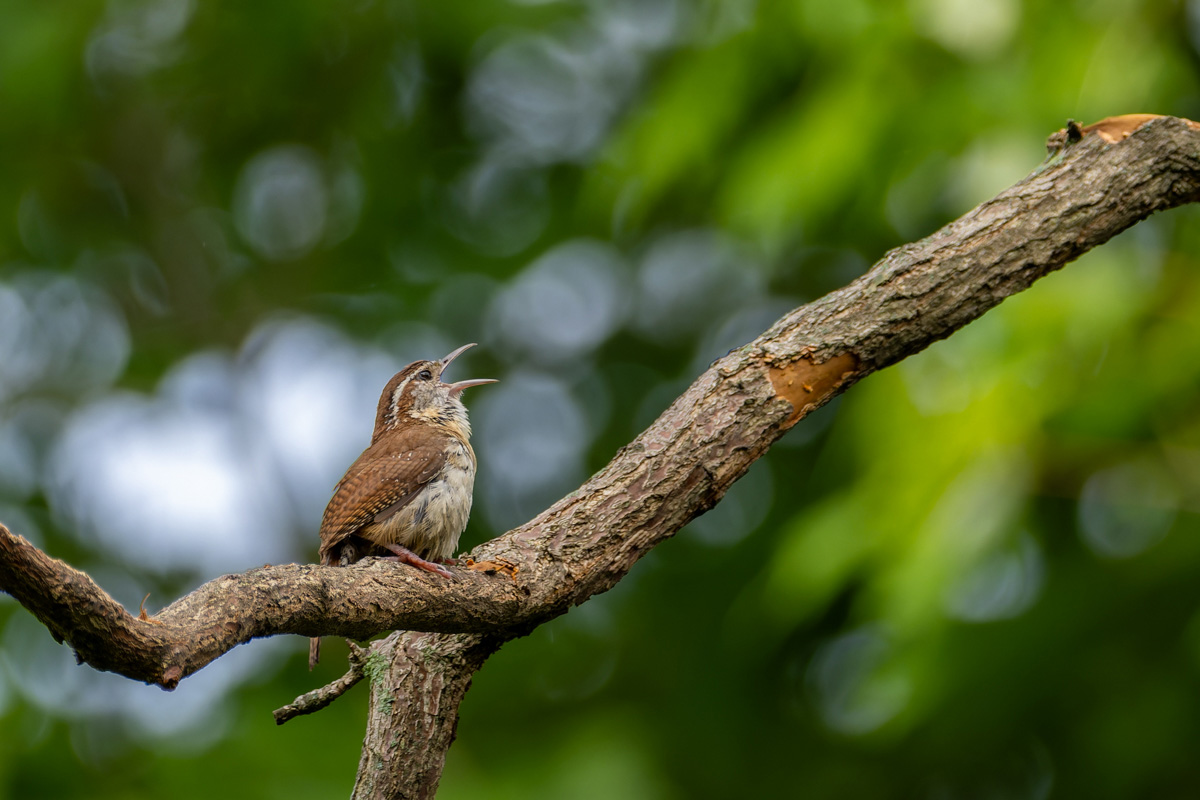
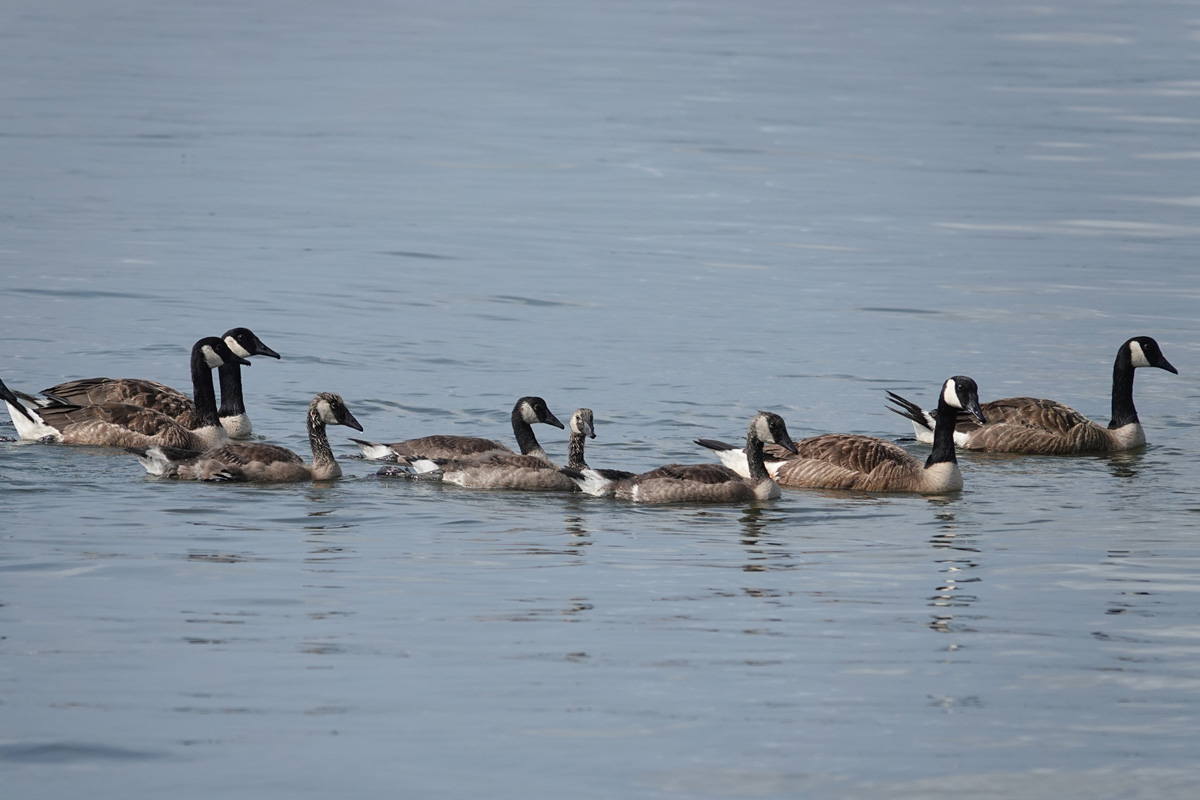
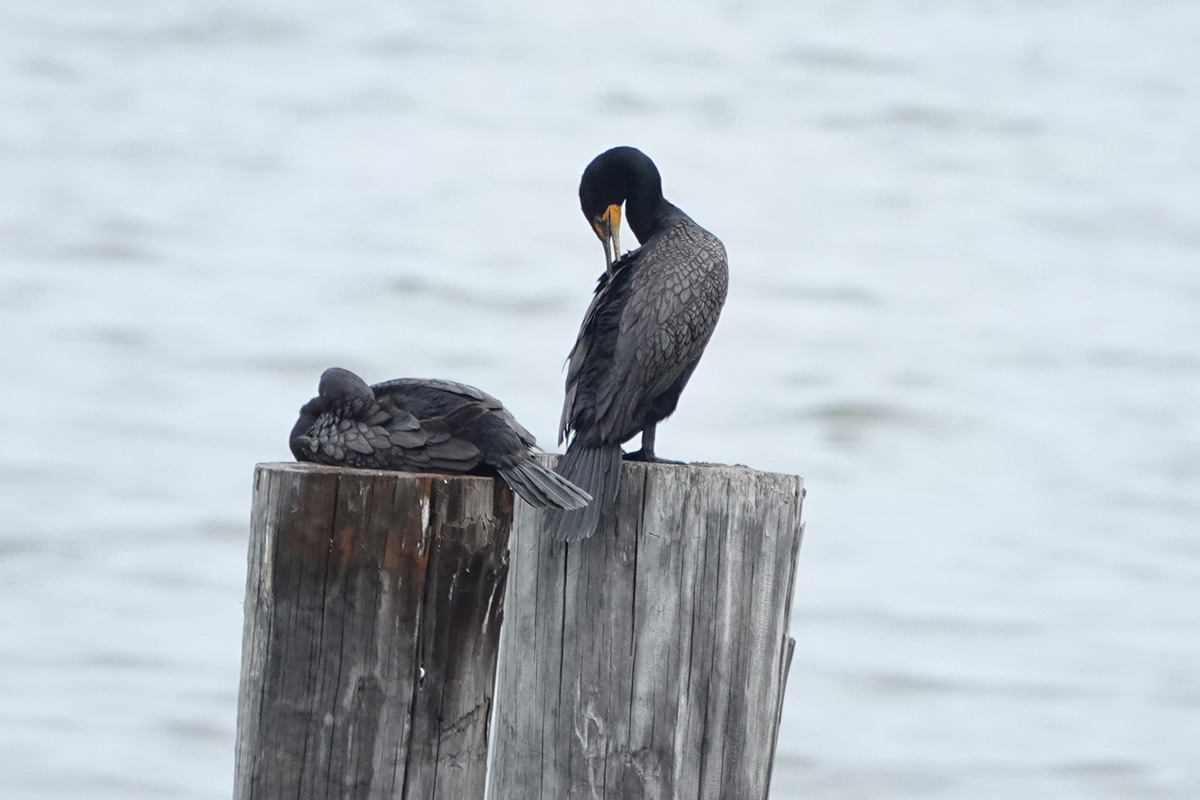
We began our day at the southernmost point of New York State, at Conference House Park. There, we walked a loop through woods, with a couple of detours onto the beaches overlooking Arthur Kill and Raritan Bay. In the woods, we listened and looked for White-eyed Vireo—a known nester at this location and found in previous years on Linnaean trips—but this year we were unsuccessful. Instead, the quiet was broken by the emphatic song of a nearby Carolina Wren that perched out in the open for all to see. Catbirds were singing as we walked along the path, and a red mulberry tree—covered in ripe fruit—was filled with bird activity, especially young robins going after the berries. From the beach, we saw a Double-crested Cormorant nesting colony on a channel marker, a flock of Canada Geese serenely swimming by with a few goslings in close-to-adult plumage among the adults, and a Red-winged Blackbird vehemently protecting its territory from an Eastern Kingbird that had just alighted on the same tree.
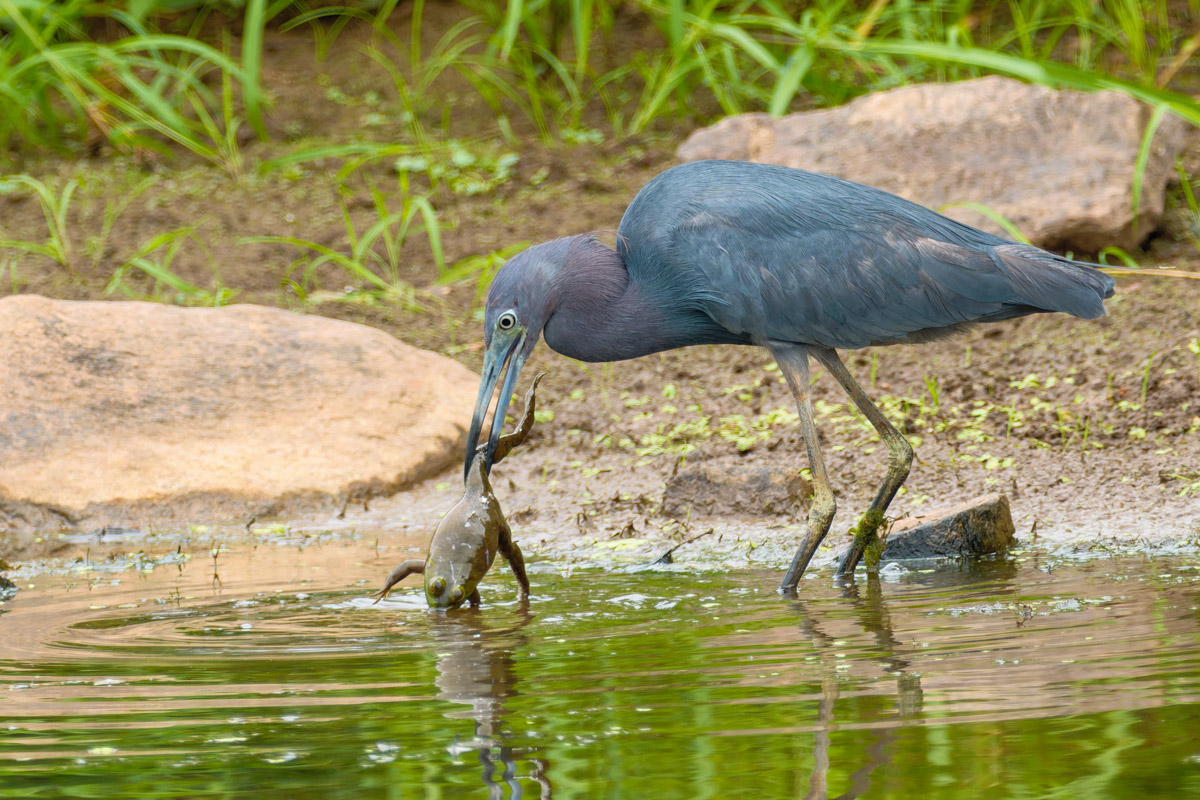
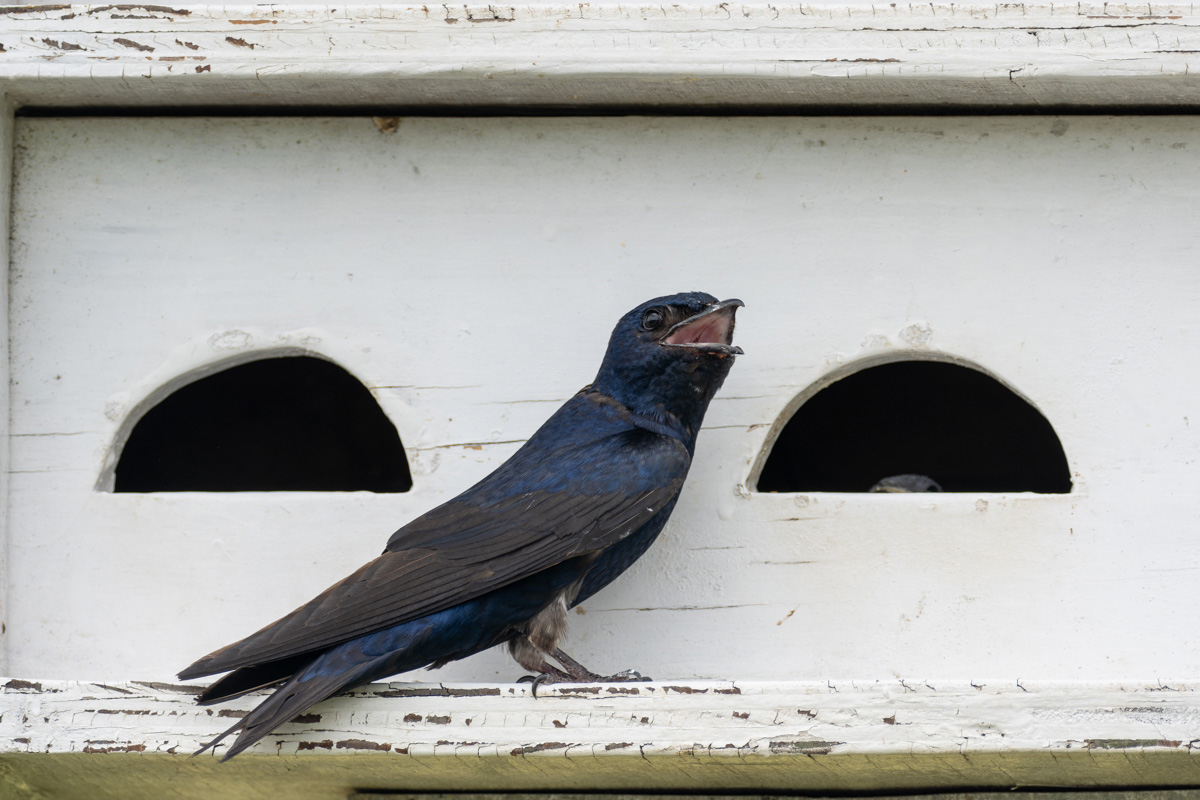
As the day started to noticeably warm up, we headed to our next stops. At Mount Loretto Unique Area, Warbling Vireos and Indigo Buntings were singing, Great Egrets and a Great Blue Heron were perched along the edges of the pond, and a few swallows and Chimney Swifts were flying overhead. Next, we headed to the Cemetery of the Resurrection to see the Little Blue Heron that had been reported, and it was still there. Then we made a quick stop at Lemon Creek Park to observe the long-established colony of Purple Martins and the terns flying over Lemon Creek. We moved on to Wolfe’s Pond Park for a lunch break and a short survey of the birds around there. While we ate, a very loud Fish Crow vocalized its unique caw.
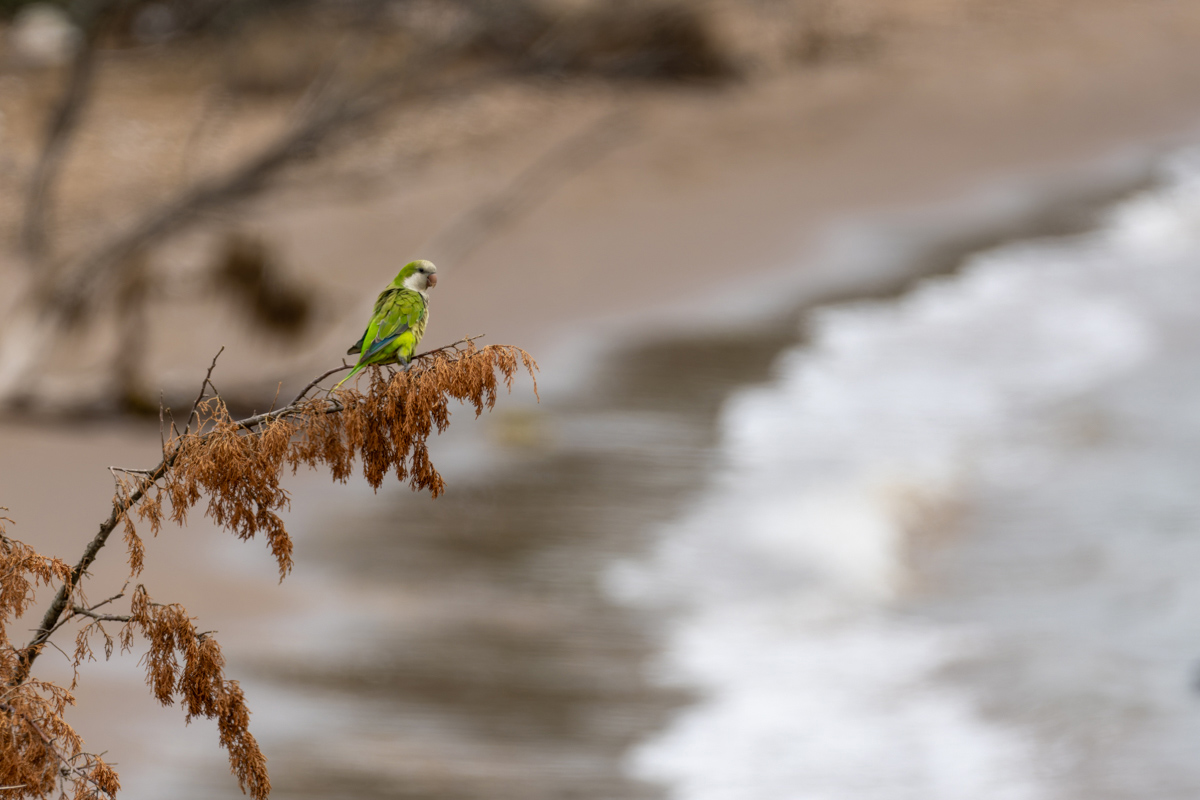
Our final destination, a highlight for this trip, was the nesting colony of Bank Swallows at Great Kills Park. The Bank Swallows were there in abundance, constantly flying, but eventually three landed and perched on a dead branch overlooking the cliff. A few of our group climbed down to the beach and had an unexpected sighting—a Monk Parakeet perched in a tree at the top of the cliff. Our trip concluded with the last species of the day, a female Boat-tailed Grackle that flew onto the grass nearby and began foraging.
Many thanks to Seth for leading us on this bird walk to some of the summer birding hotspots of Staten Island. And thanks to Dave Eib for the lists of butterflies, odonates, and other invertebrates.
Species Lists
Birds Canada Goose Mallard Rock Pigeon Mourning Dove Chimney Swift American Oystercatcher Killdeer Laughing Gull Ring-billed Gull American Herring Gull Great Black-backed Gull Least Tern Caspian Tern Forster’s Tern Common Tern Double-crested Cormorant Little Blue Heron Great Egret Great Blue Heron Osprey Cooper’s Hawk Red-bellied Woodpecker Downy Woodpecker Northern Flicker Monk Parakeet Great Crested Flycatcher Eastern Kingbird Eastern Warbling Vireo Blue Jay Fish Crow Bank Swallow Tree Swallow Purple Martin Barn Swallow White-breasted Nuthatch Northern House Wren Carolina Wren European Starling Gray Catbird Northern Mockingbird Wood Thrush American Robin House Sparrow American Goldfinch Eastern Towhee Baltimore Oriole Red-winged Blackbird Brown-headed Cowbird Common Grackle Boat-tailed Grackle Common Yellowthroat American Redstart Northern Yellow Warbler Northern Cardinal Indigo Bunting
Butterflies Cabbage White Common Wood-Nymph Silver-spotted Skipper Least Skipper
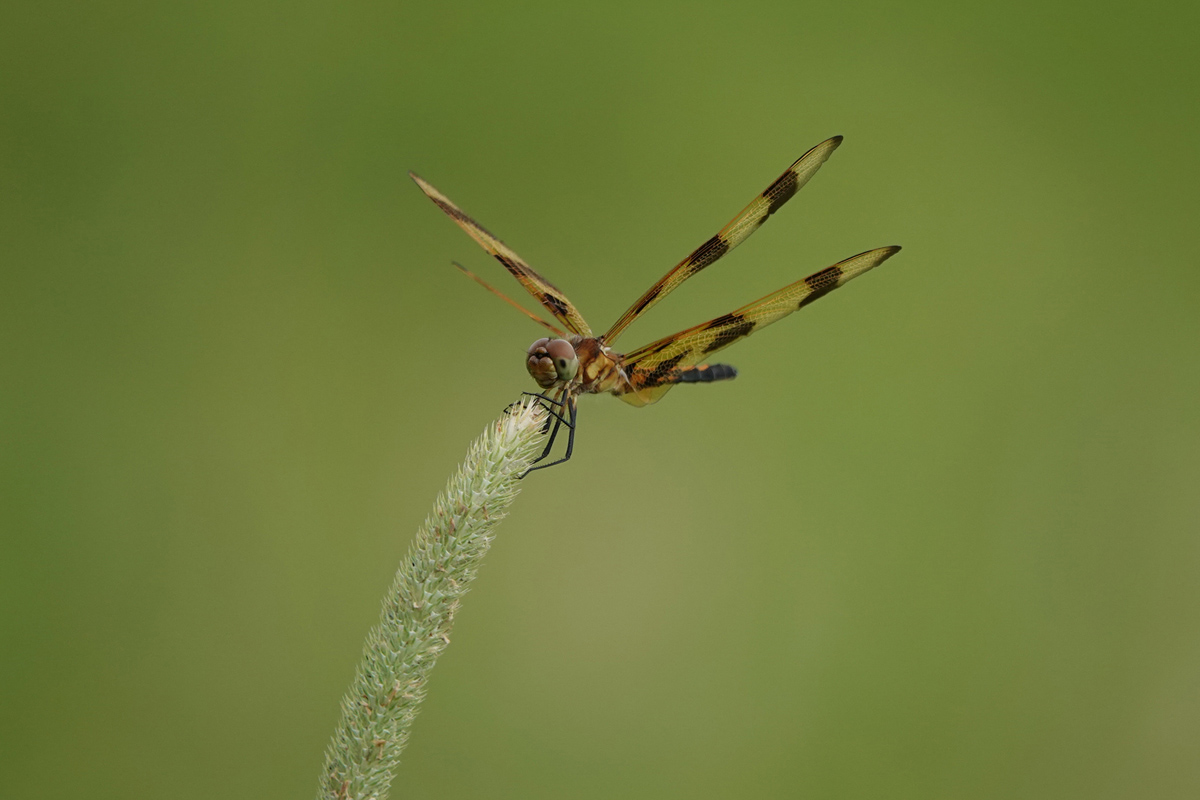
Odonates Common Green Darner Eastern Amberwing Slaty Skimmer Needham’s Skimmer Spot-winged Glider Common Whitetail Halloween Pennant Black Saddlebags Familiar Bluet Fragile Forktail
Other Invertebrates Marsh Flies (Euthycera flavescens) Common Micropanther Cicada Killer Dusky Stink Bug Little Black Ants (Complex Monomorium) Modest Katydid Sculptured Resin Bee Eastern Carpenter Bee Western Honey Bee Syrphid Flies Orchard Orbweaver Spider Buffalo Treehopper Red Milkweed Beetle Dogbane Leaf Beetle Variegated Lady Beetle Spur-throated Grasshoppers (Melanoplus sp.) Green-striped Grasshopper Rugged Flower Weevil Hackberry Star Gall Psyllid Spicebush Swallowtail (Caterpillar) Cuban Laurel Thrip Sand Hammertail Milkweed Stem Weevil Oriental Beetle Chrysanthemum Lace Bug Shore Flies (Tribe Discocerinini sp.) Common Hentz Jumping Spider Banded Bee Flies (Villa lateralis)
Herps American Bullfrog North American Snapping Turtle
Registrar: Christina Black Participants: 10 Weather: Sunny, warm, breezy, 75-85 degrees Bird Species: 40
For five delightful hours, Paul Sweet led our group through the marshland, beaches and small forest areas of the Fire Island National Seashore in Watch Hill, NY. Joining and guiding us as well was Deborah Swambeck, a Queens County Bird Club member and volunteer, and a Watch Hill part-time resident and birder.
We began our day along the small bayside beach next to the ferry channel. This area at low tide yielded Ruddy Turnstones, Semipalmated Sandpipers, American Oystercatchers and a Willet – a very cheerful way to begin the walk. Next, the group headed to the newly restored boardwalk over the saltmarsh, a significant area of cordgrass with narrow tidal streams.
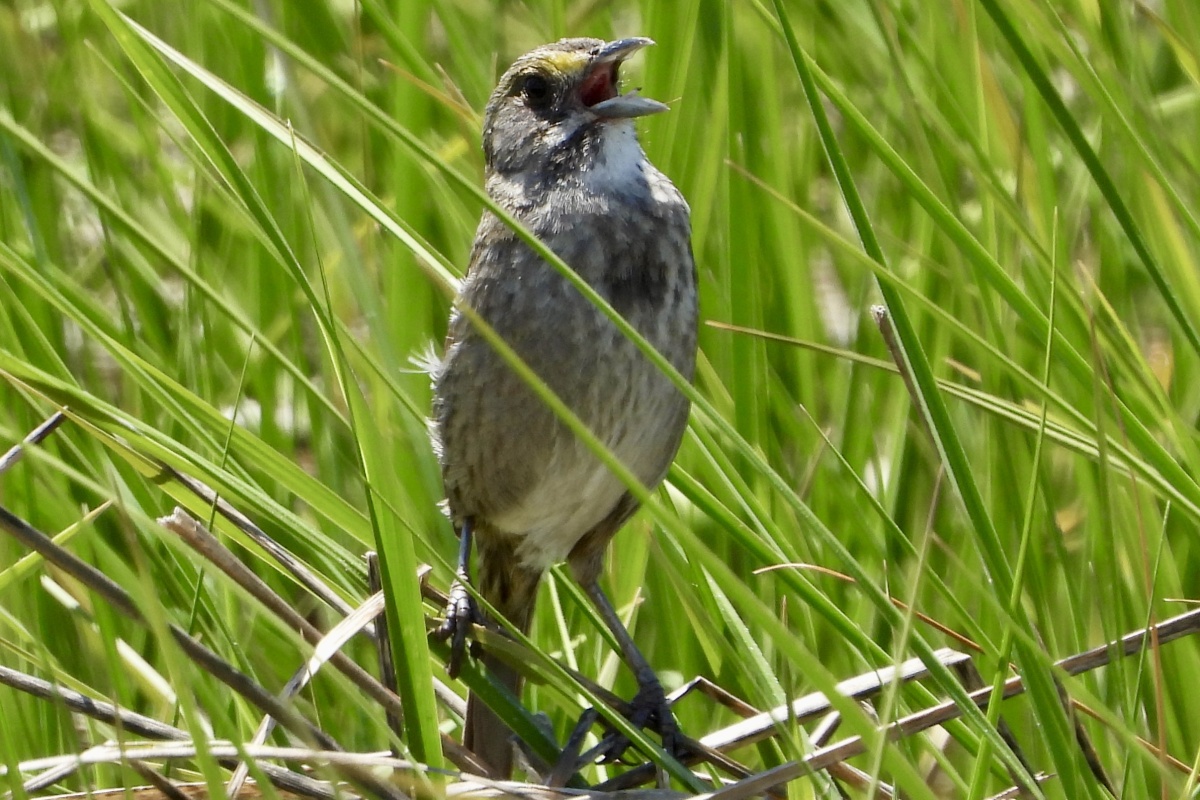
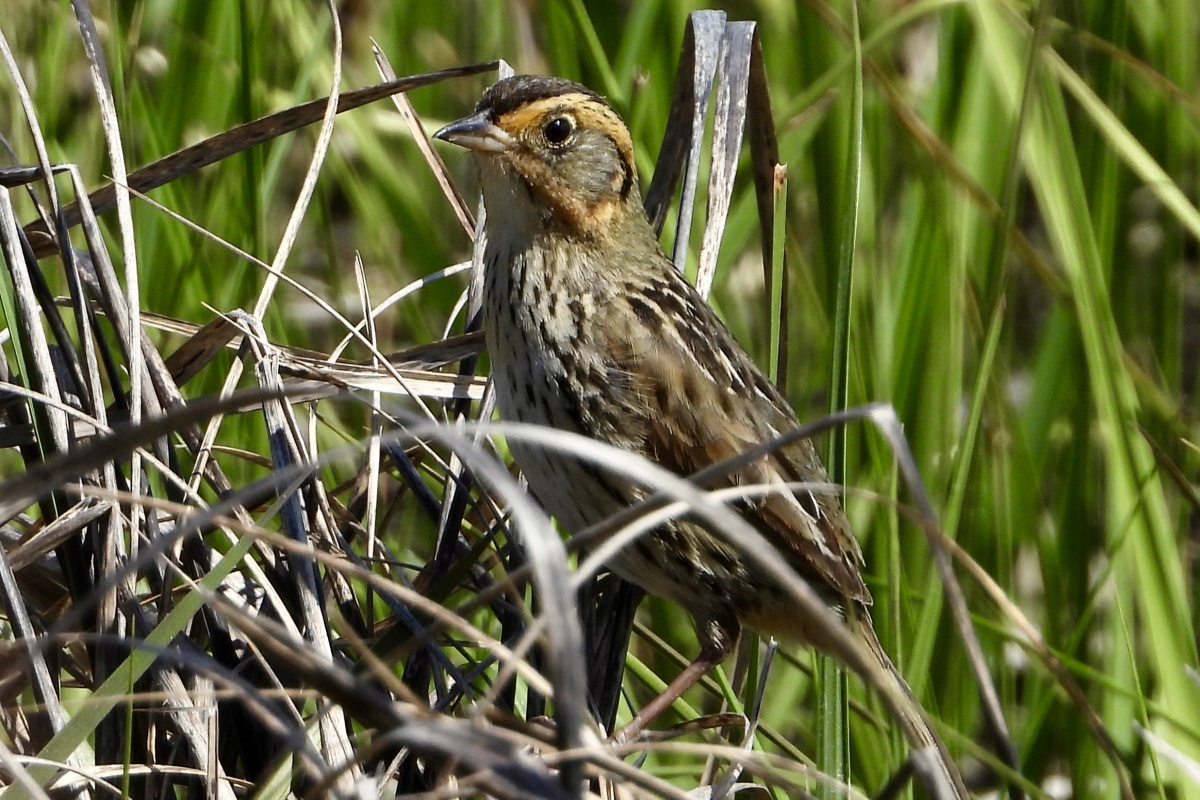
Two target species were immediately visible, if for brief moments during flight until they dropped into the grass – the Seaside and Saltmarsh Sparrows. Eventually, both species momentarily perched on clumps of dead grass which allowed for great views and photos.
Continuing along the boardwalk, the group was treated to small flocks of Willets, flashing their black-and-white wing stripes and white rumps as they repeatedly took off and landed in the marsh. In addition, a Willow Flycatcher, was first heard and then was visible in the scrubby trees along the edge of the marsh; while Glossy Ibis, four gull species, and an Osprey passed overhead.
After about 90 minutes, we left the marsh and headed back toward the small forest area between the ocean and the bay, characterized by low tree and shrub cover. Here we found numerous Northern Yellow Warblers darting about, along with scolding Gray Catbirds. Emerging into a lunch spot brought many swooping Tree and some Barn Swallows.
After lunch, we headed to the ocean beach in search of nesting Piping Plovers. After much walking and scanning, the group did spot one, standing alertly near the area they prefer for nesting – success!
We then headed back towards the marsh, finding an Eastern Kingbird and Eastern Towhee in the trees along the way, ending with more views of the special sparrows and a thunderstorm way out at sea. We were treated as well to more Glossy Ibis, Egrets and Osprey flying by. An amazing day was capped off with some ice cream and a pleasant ferry ride back to our LIRR train.
Species List
Canada Goose Mute Swan Gadwall Mallard Mourning Dove American Oystercatcher Piping Plover Willet Ruddy Turnstone Semipalmated Sandpiper Laughing Gull Ring-billed Gull American Herring Gull Great Black-backed Gull Common Tern Double-crested Cormorant Glossy Ibis Snowy Egret Great Egret Osprey Willow Flycatcher Eastern Kingbird Fish Crow Common Raven Tree Swallow Barn Swallow Purple Martin European Starling Gray Catbird Carolina Wren Northern Mockingbird American Goldfinch Seaside Sparrow Saltmarsh Sparrow Eastern Towhee Red-winged Blackbird Common Grackle Common Yellowthroat American Redstart Northern Yellow Warbler
Seaside Sparrow @ 2026 Christina BlackSaltmarsh Sparrow @ 2026 Christina Black
Registrar: Joyce Wright Participants: 8 Weather: Sunny morning with a light breeze Bird Species: 41
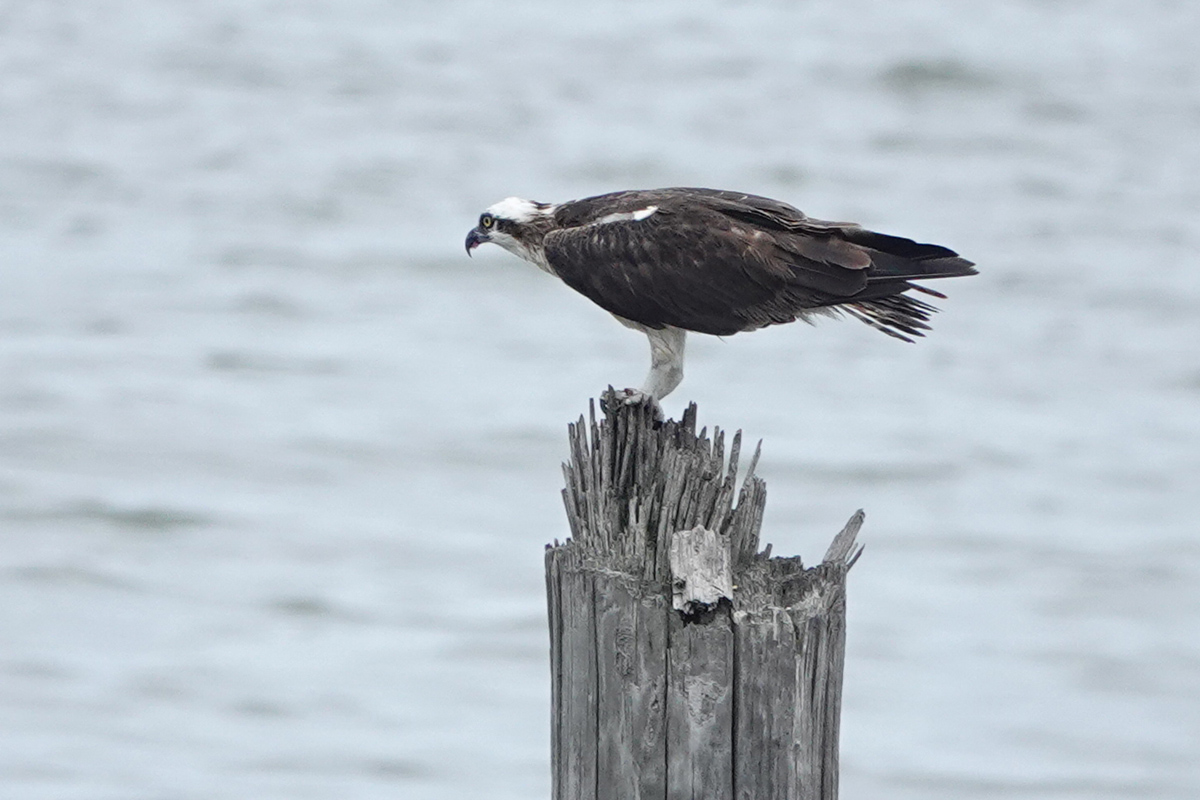
On arrival at 7:30 am we were already observing bird activity in the parking lot. As we waited on the dock overlooking the Hackensack River, we were looking forward to getting out onto the river, where there is an average tidal change of six feet. On the boat was Donna from New Jersey Sports and Exposition Authority (NJSEA), the captain, a trainee and a few birders from a NJ Audubon chapter. We saw many osprey nests – so many it was hard to keep count. We were informed that in New Jersey this species isn’t doing as well because of the scarcity of fish.
The Meadowlands District includes parts of 14 municipalities in Bergen and Hudson counties. Created in 1969, NJSEA has fought to end dumping and has developed or contributed to the design of parks throughout the Meadowlands.
Leaving the Barge at 10 am it was a 13-minute drive to Richard Dekorte Park, which is at the center of nature activities in the Meadowlands District. The park, set against the backdrop of the Manhattan skyline, is built atop a former landfill. We walked along the Saw Mill Creek Mudflats. Some construction work taking place to upgrade part of the boardwalk limited our ability to walk the full loop, but we were aware of this before the trip.
We walked along the edge of the water in the shade since by that time it was feeling warmer than it had previously on the water. The water level was low as we walked the path lined with trees and greenery. Chris pointed out the area that had been seriously affected by Superstorm Sandy and the impact on the trees there.
Dekorte Park like the entire Meadowlands District, is located along the Atlantic Flyway, a major route for migratory birds. Chris pointed out Kingsland Overlook, a hilltop trail over a former landfill, which runs through a variety of habitats including an open meadow. Some common plant life is Red Cedar, Milkweed and Phragmites.
Species List
Canada Goose Mute Swan Blue-winged Teal Gadwall Mallard Rock Pigeon Mourning Dove Common Gallinule Black-bellied Plover Killdeer Greater Yellowlegs Laughing Gull Ring-billed Gull American Herring Gull Least Tern Double-crested Cormorant Yellow-crowned Night Heron Black-crowned Night Heron Snowy Egret Great Egret Great Blue Heron Turkey Vulture Osprey Belted Kingfisher Peregrine Falcon Eastern Kingbird Blue Jay Tree Swallow Barn Swallow Marsh Wren European Starling Gray Catbird Northern Mockingbird American Robin Cedar Waxwing American Goldfinch Song Sparrow Baltimore Oriole Red-winged Blackbird Common Grackle Northern Cardinal
Registrar: Lisa Kroop Participants: 10 Weather: 55–75 °F; blue skies, sunny with scattered clouds; gentle breeze Bird Species: 54
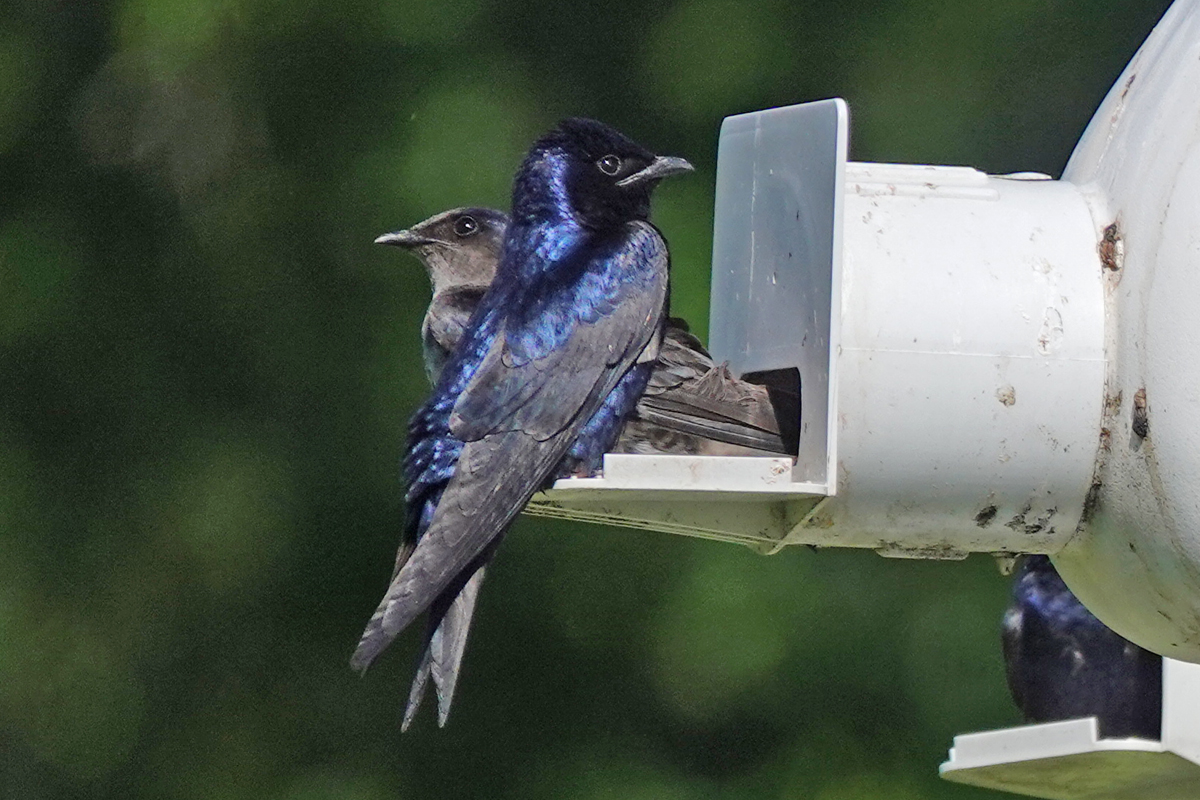
It was a beautiful day for a bird walk in the Great Swamp. The humidity was low and the temperatures were comfortable. We began our birding from the Fenske Visitor Center parking lot, especially observing the skies where Purple Martins and Tree Swallows were swooping and hawks were circling the thermals.
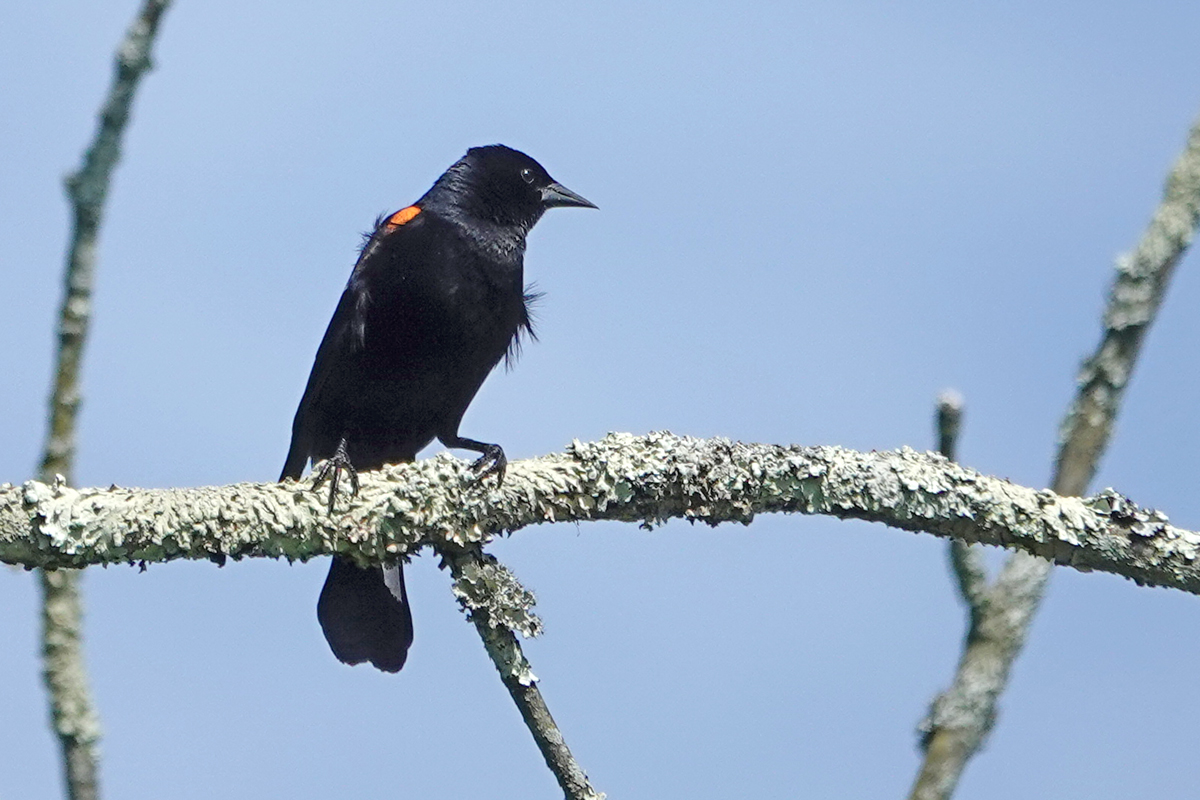
We then walked along trails through meadows and woods, listening and watching for birds. Among them was an Indigo Bunting, first heard, then seen—a small, vibrant blue spot in a sea of green leaves along a wooded edge. Through a window of sky from the woods, we caught sight of an adult Red-shouldered Hawk being mobbed by a Red-winged Blackbird. The action went on long enough (with frequent passes through the window) for all of the group to see.
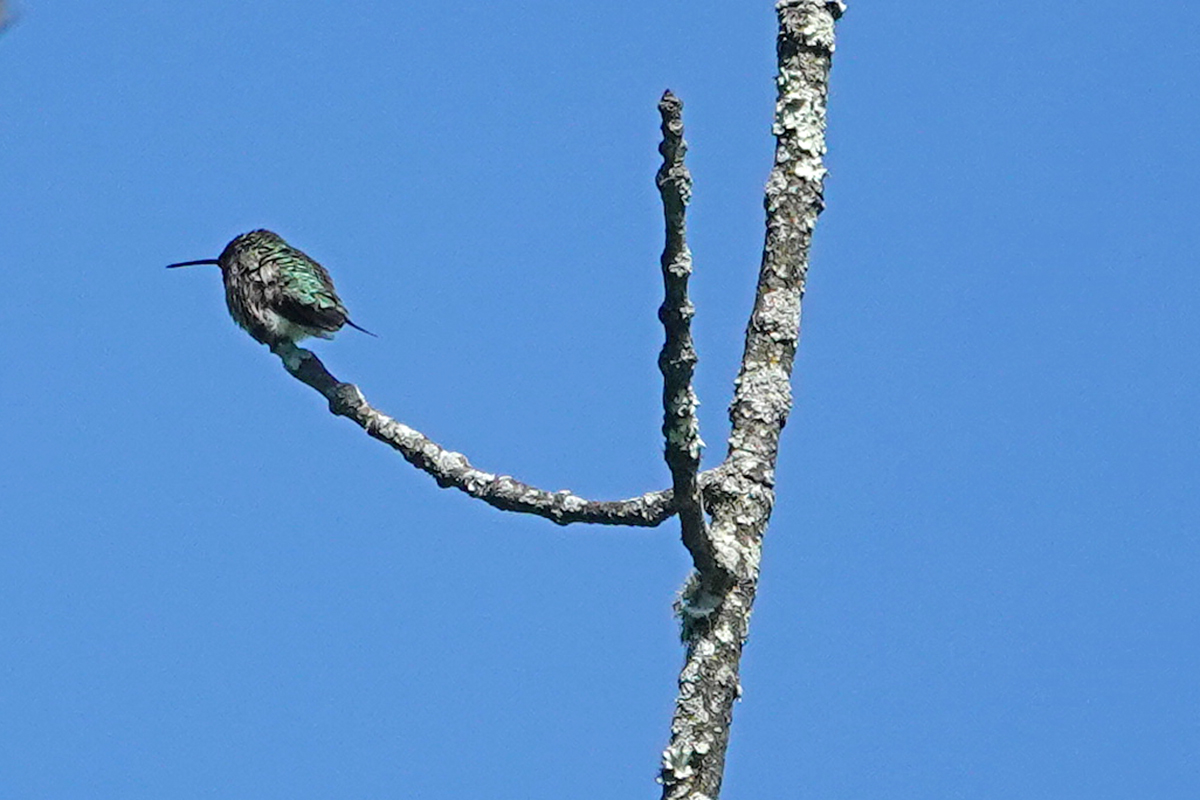
At the Overlook on Pleasant Plains Road, we watched a Great Egret and a Great Blue Heron fly across the expanse of open swamp; a Double-crested Cormorant perched atop a snag; and a Ruby-throated Hummingbird (one of five for the day) perched on a small, bare branch, a tiny speck against the sky.
We ended our trip with a visit to Lord Stirling Park, a wildlife preserve bordering the Great Swamp NWR along the west bank of the Passaic River, and the top eBird hotspot in Somerset County. We walked along a wooded trail following the Passaic River upstream and made our way to the East Observation Tower. It was midday, and it was cool and still in the woods. Nevertheless, birds were singing, and we heard Ovenbirds, Great Crested Flycatchers, Eastern Wood-Pewees, American Robins, vireos (Yellow-throated, Eastern Warbling, and Red-eyed), Red-bellied Woodpeckers, Swamp Sparrows, Tree Swallows over the river, and a new species that we hadn’t heard or seen before at the Great Swamp: Northern House Wren. There were two of them commandeering a nesting box in Lenape Meadow.
After spending some time admiring the vista from the Eastern Observation Tower, looking in the direction of where we had birded that morning, we returned to the cars in time to catch the 3:42 p.m. train in Summit, NJ.
Many thanks to Richard for leading us and sharing stories and information about the birds we were seeing.
Species Lists
Birds Mourning Dove Chimney Swift Ruby-throated Hummingbird Double-crested Cormorant Great Egret Great Blue Heron Turkey Vulture Cooper’s Hawk Broad-winged Hawk Red-shouldered Hawk Red-tailed Hawk Red-bellied Woodpecker Downy Woodpecker Hairy Woodpecker Northern Flicker Eastern Wood-Pewee Willow Flycatcher Great Crested Flycatcher Eastern Kingbird Yellow-throated Vireo Eastern Warbling Vireo Red-eyed Vireo Blue Jay Tufted Titmouse Tree Swallow Purple Martin Barn Swallow White-breasted Nuthatch Blue-gray Gnatcatcher Northern House Wren European Starling Gray Catbird Northern Mockingbird Eastern Bluebird Wood Thrush American Robin House Finch American Goldfinch Field Sparrow Song Sparrow Swamp Sparrow Eastern Towhee Baltimore Oriole Red-winged Blackbird Brown-headed Cowbird Common Grackle Ovenbird Northern Waterthrush Blue-winged Warbler