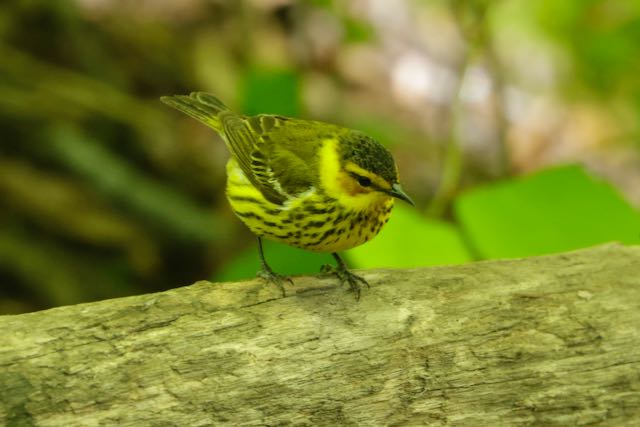
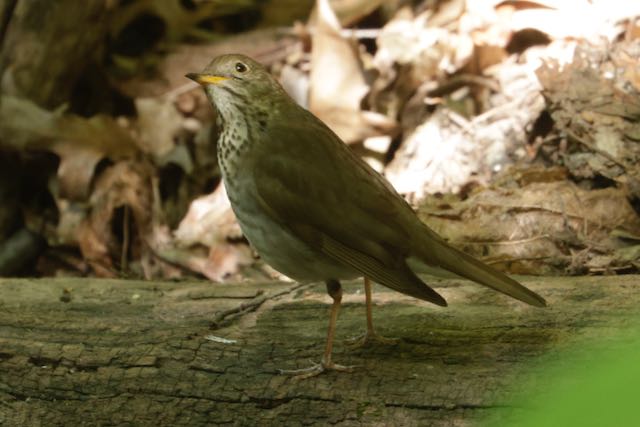
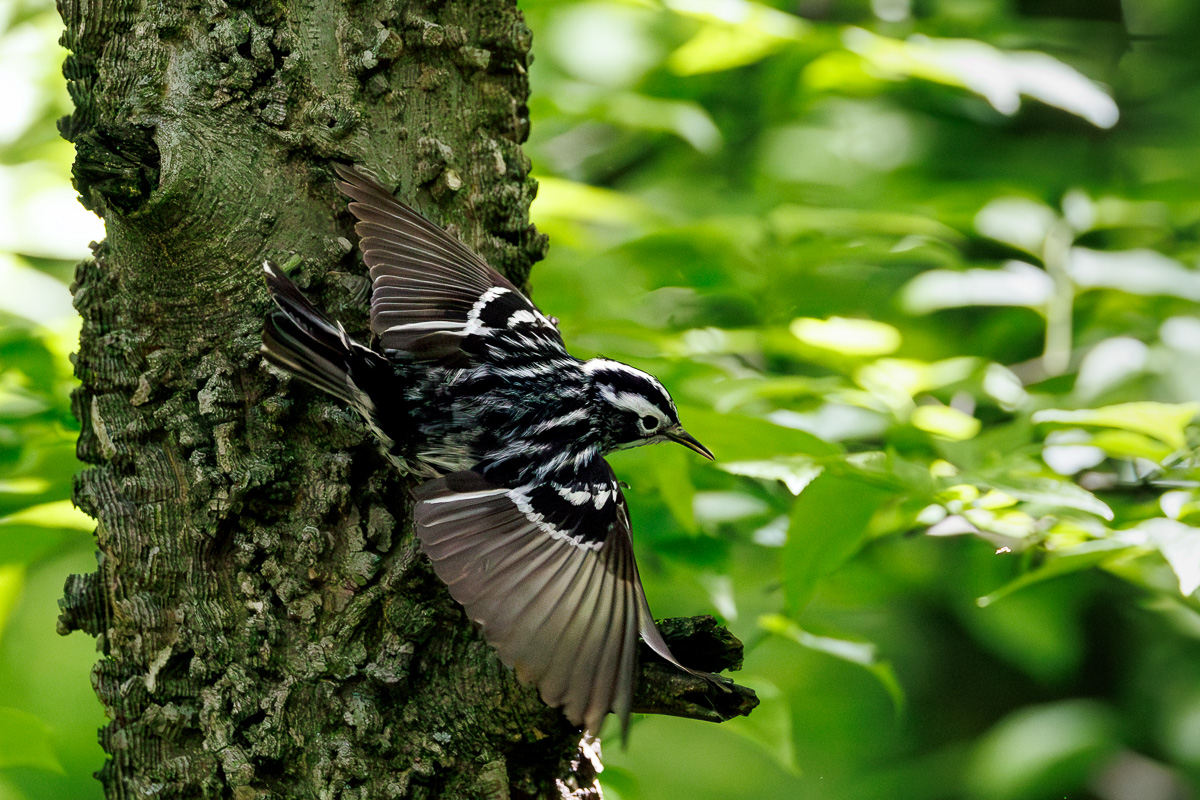
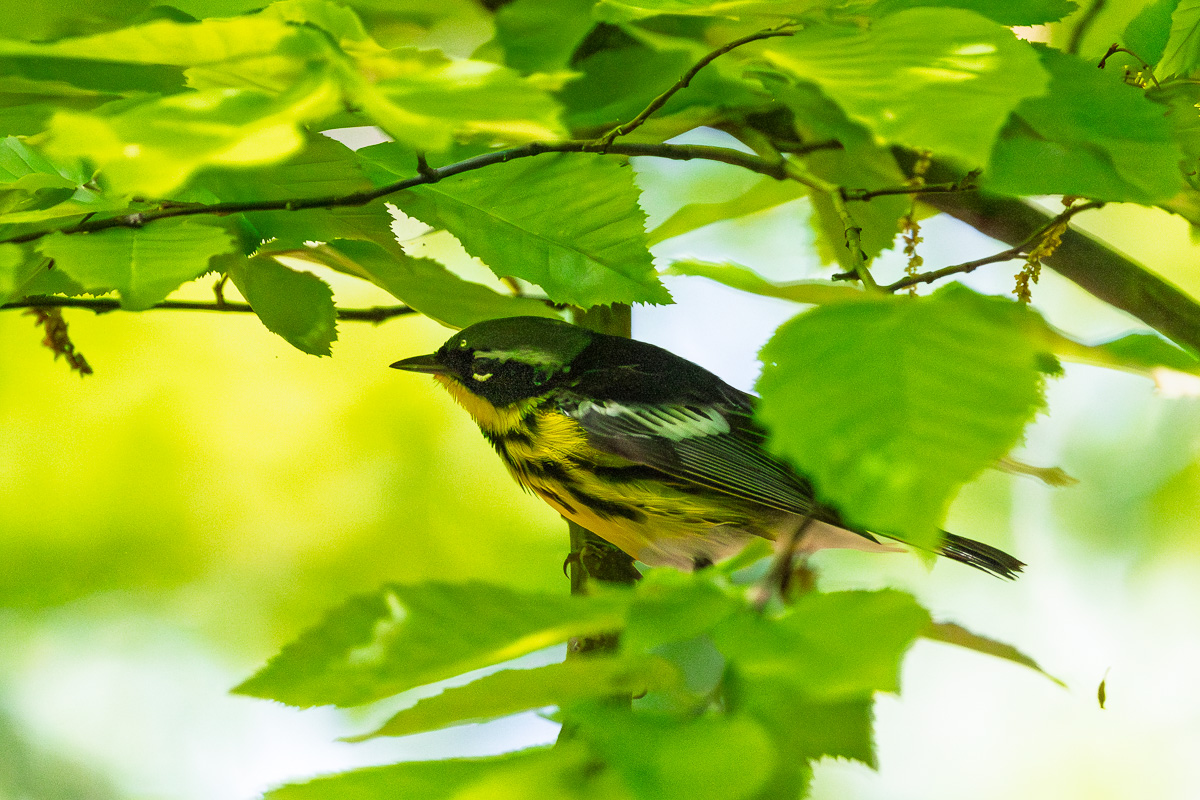
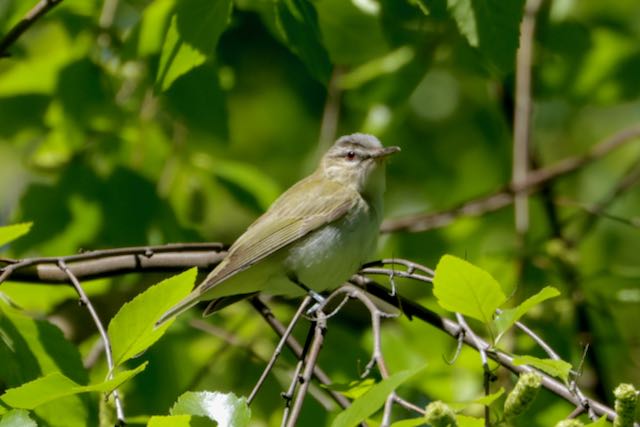
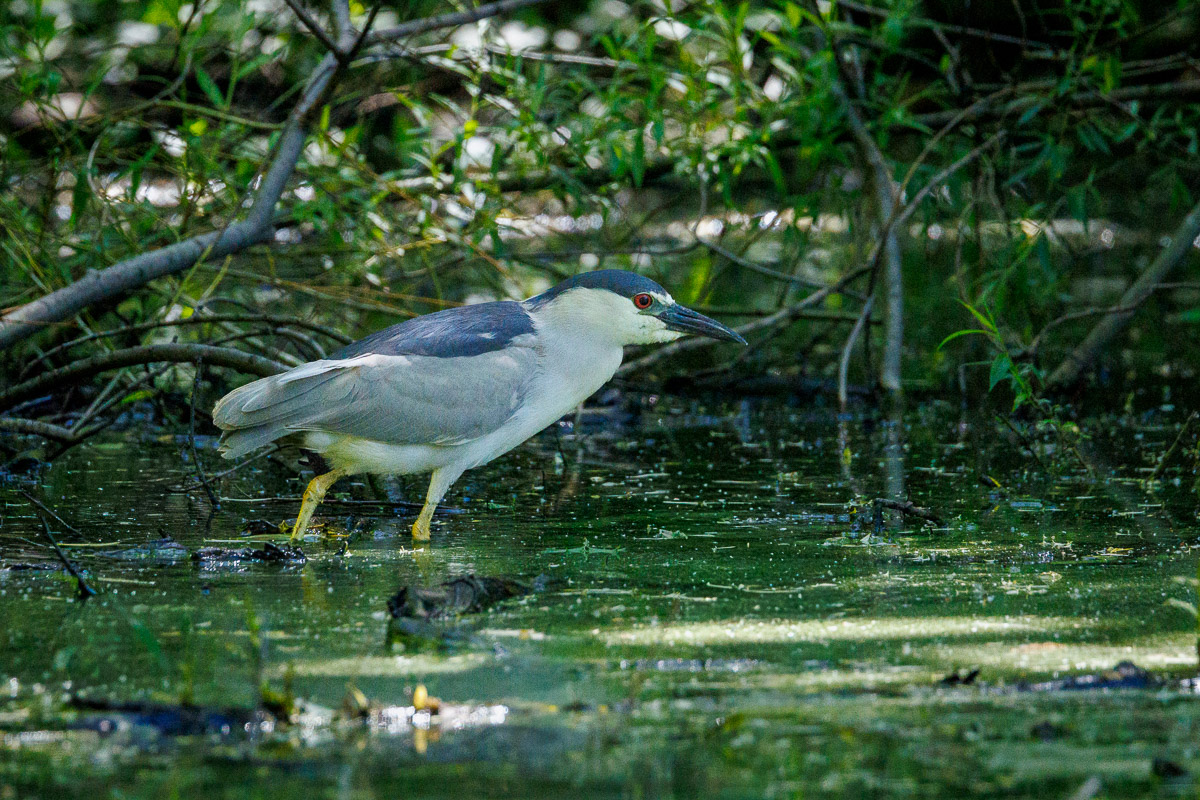
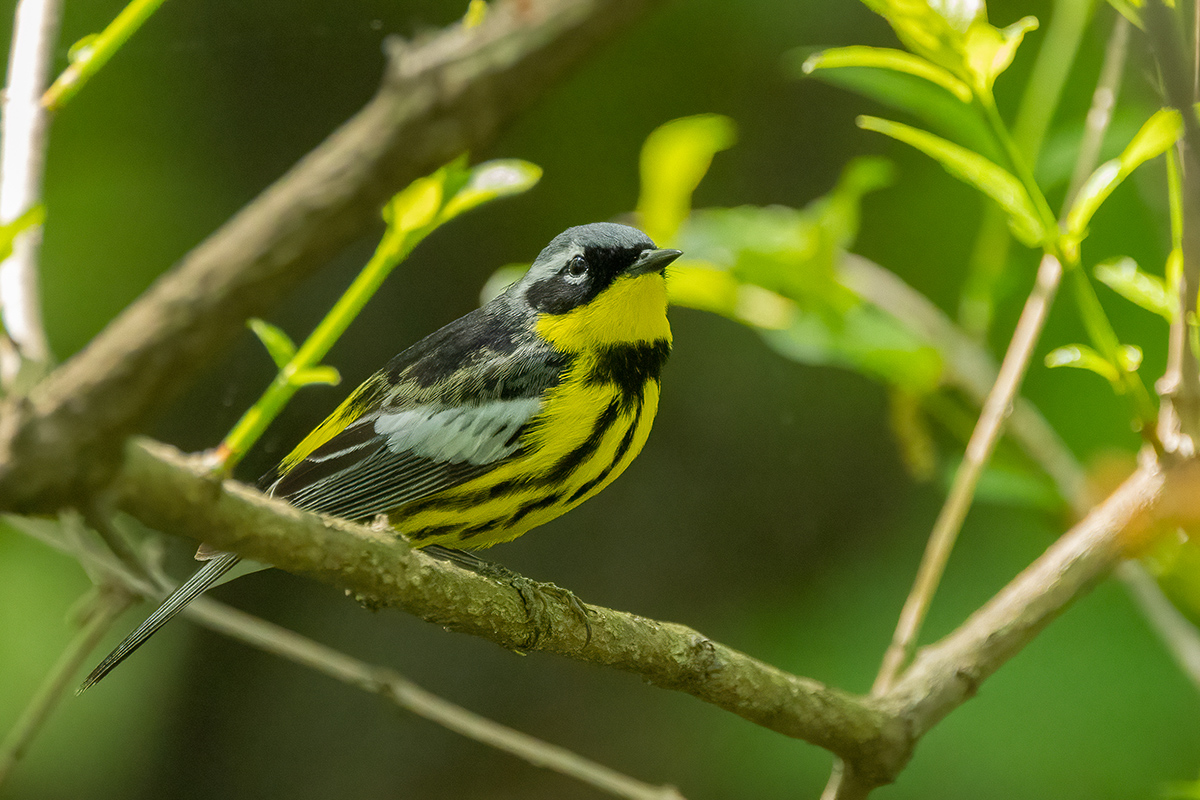
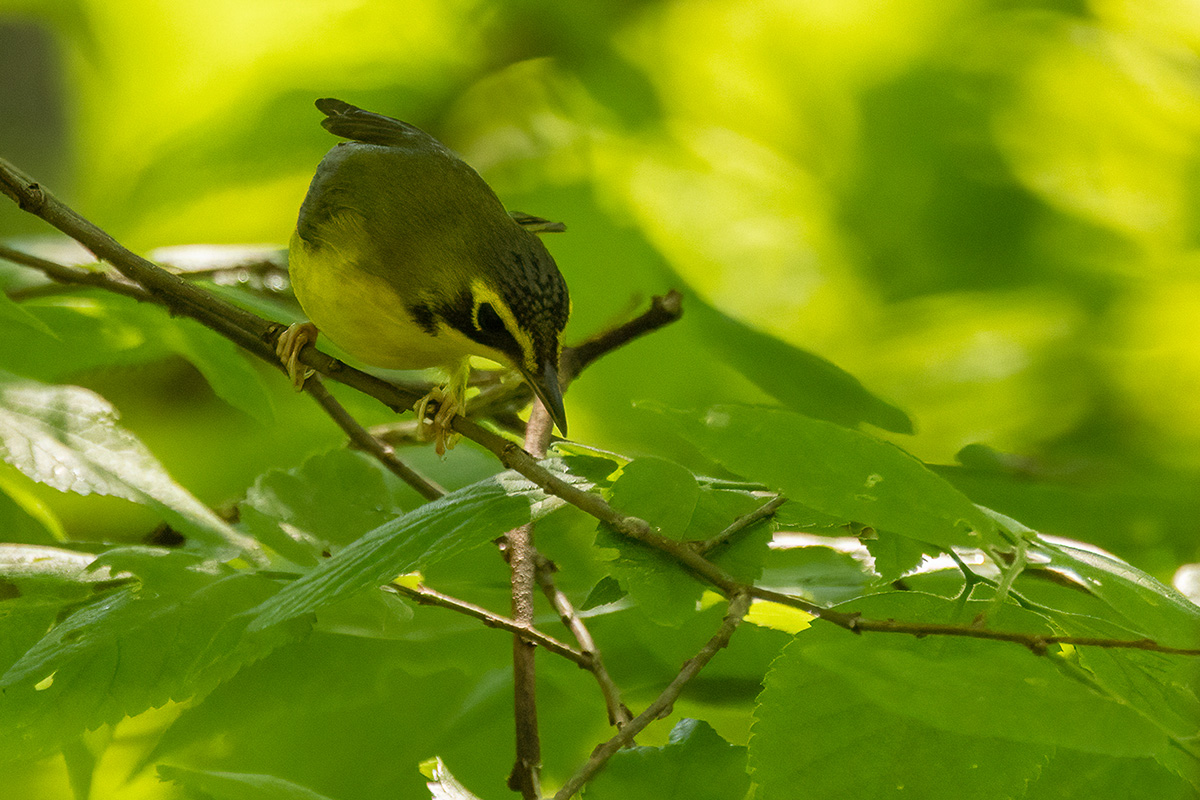
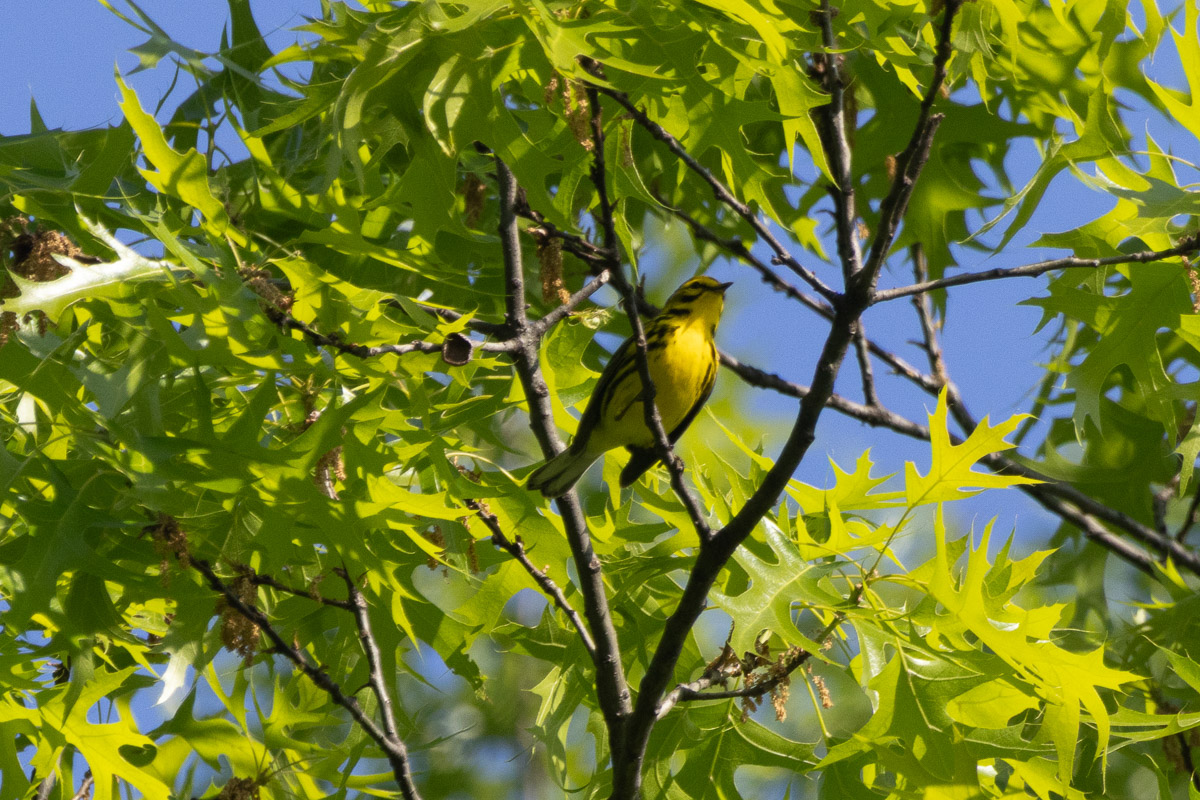
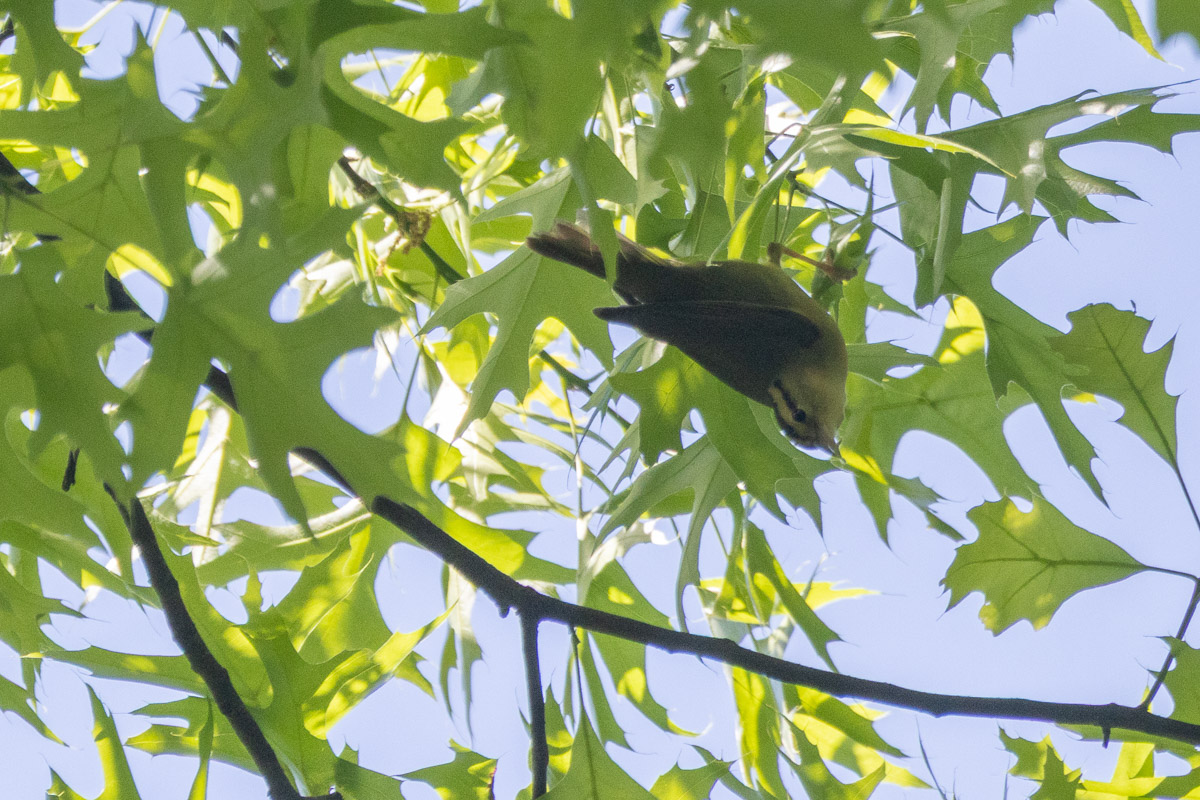
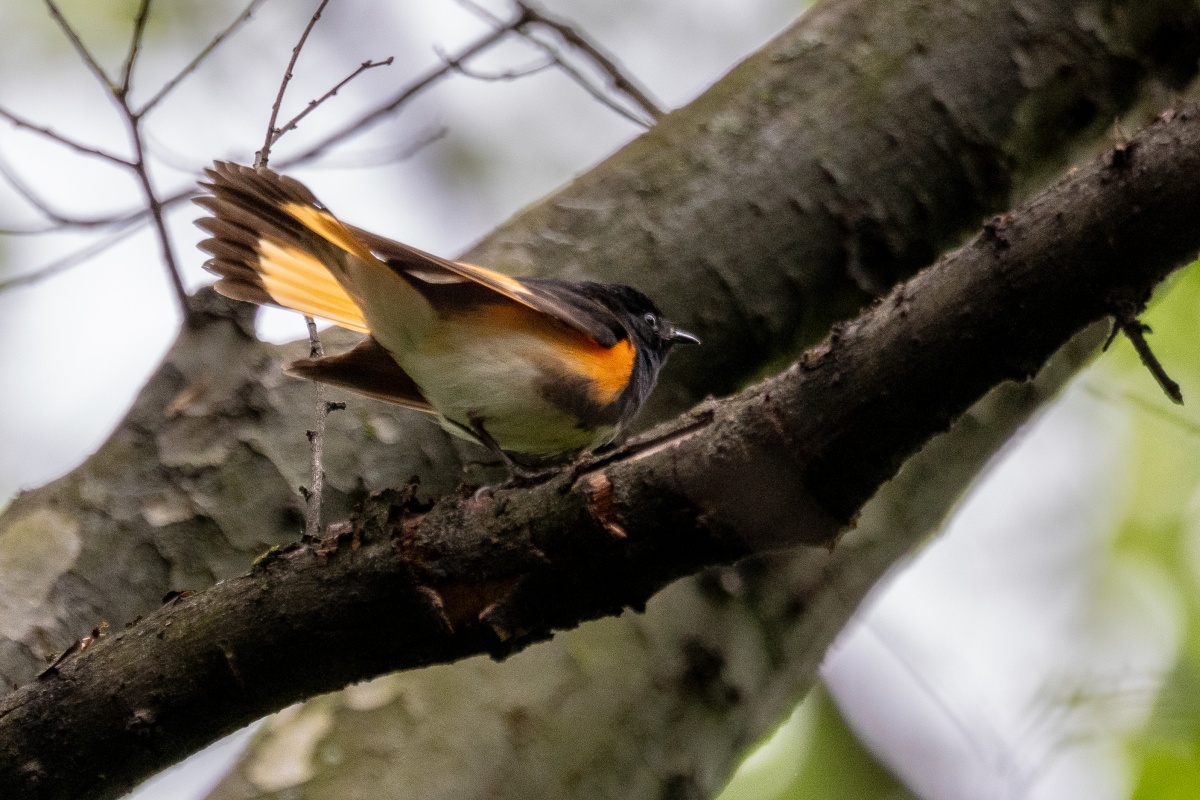
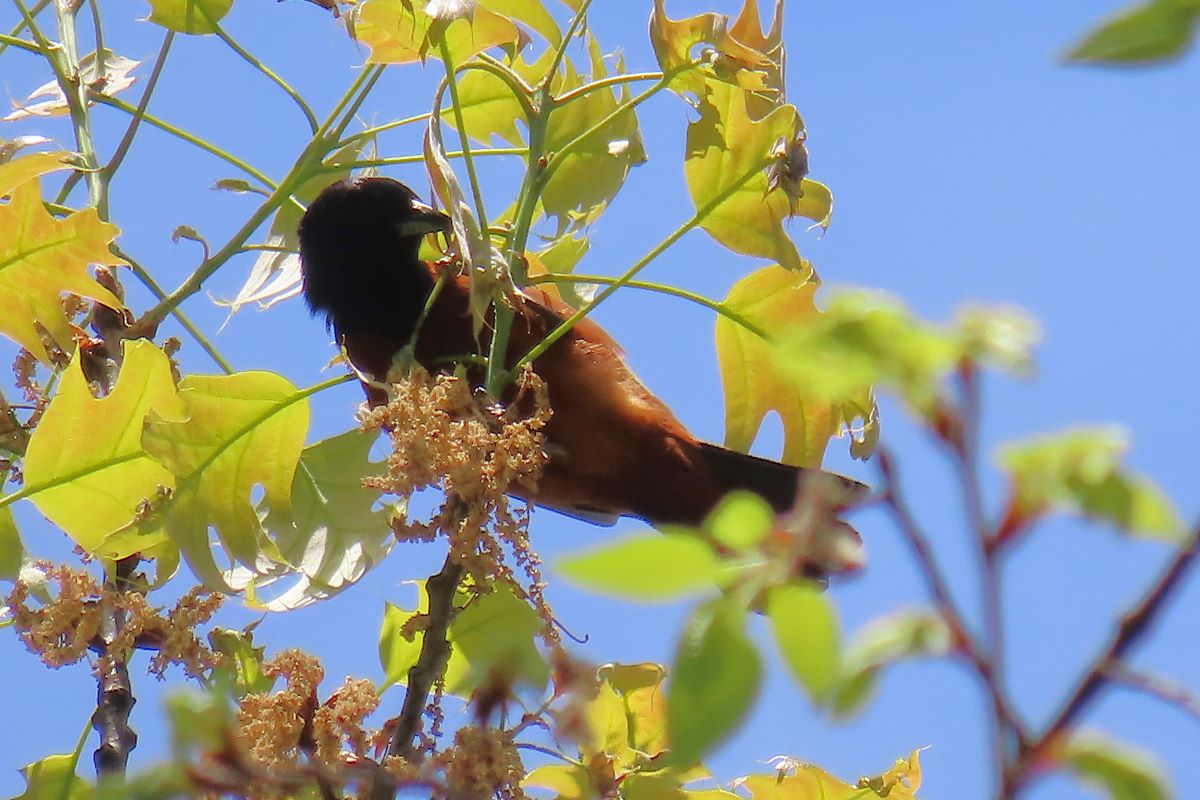
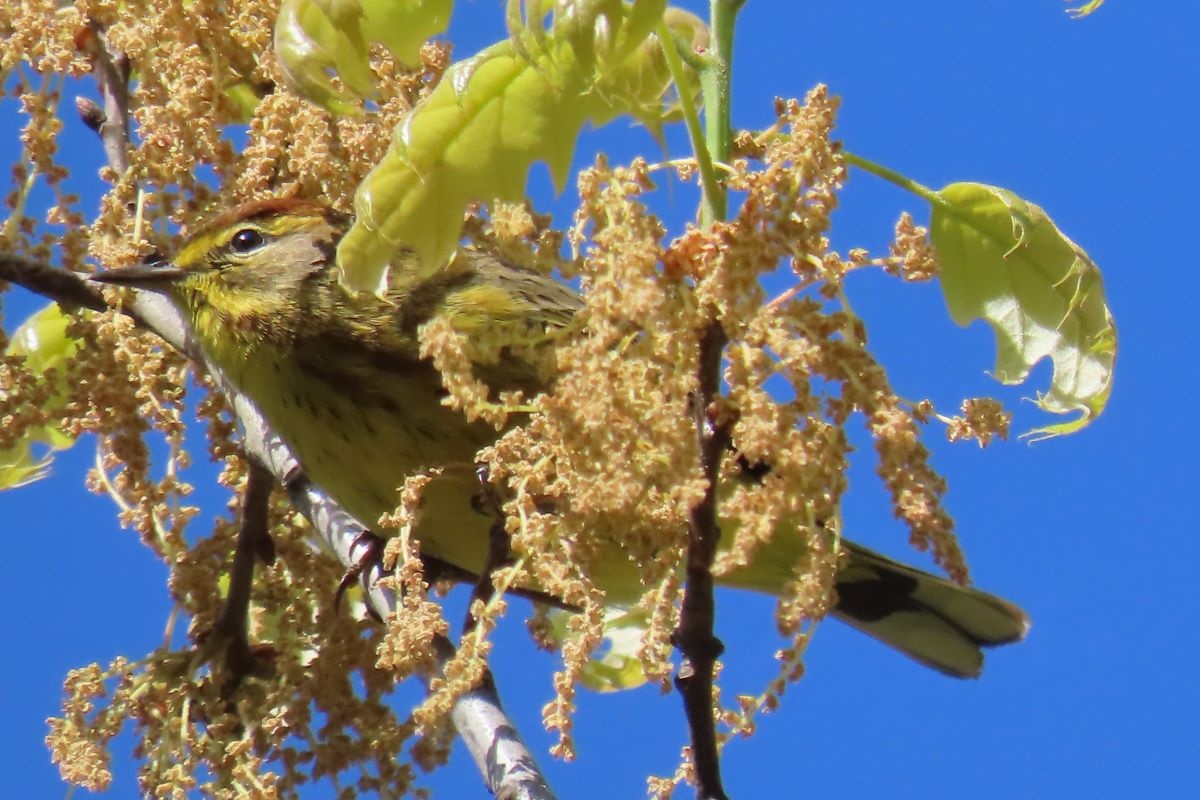
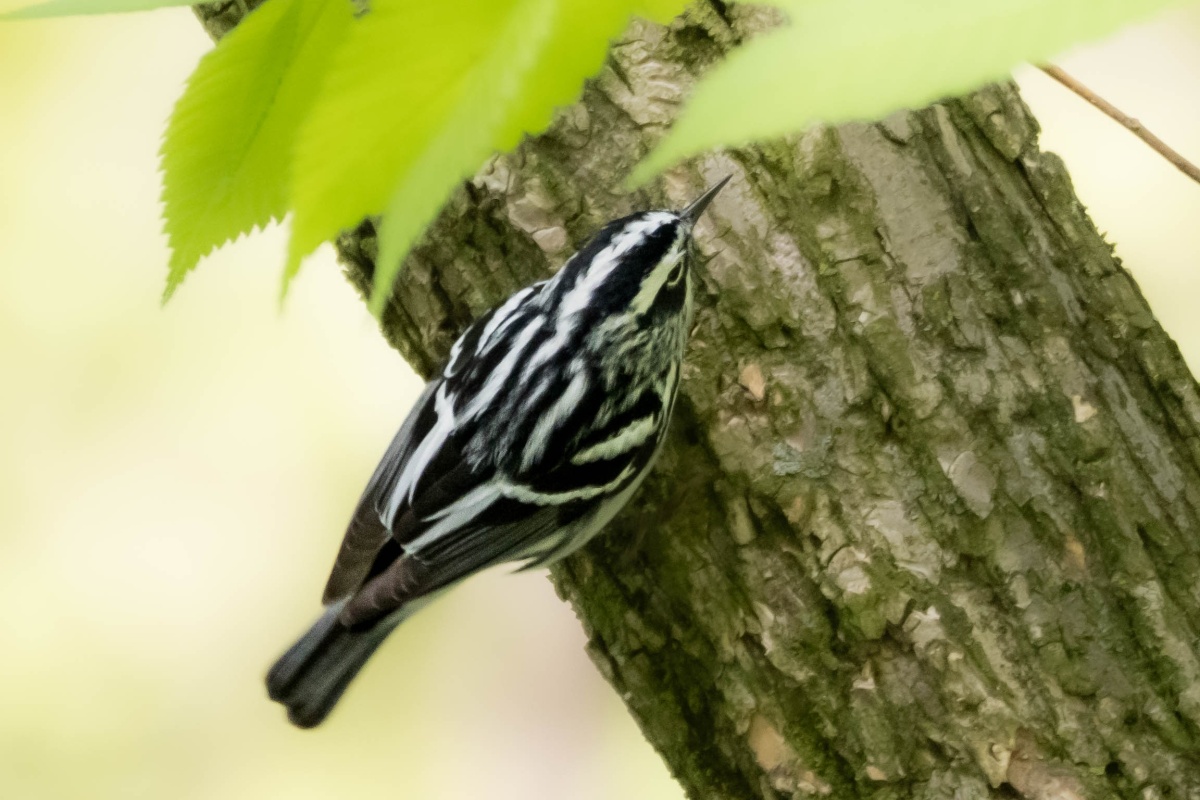
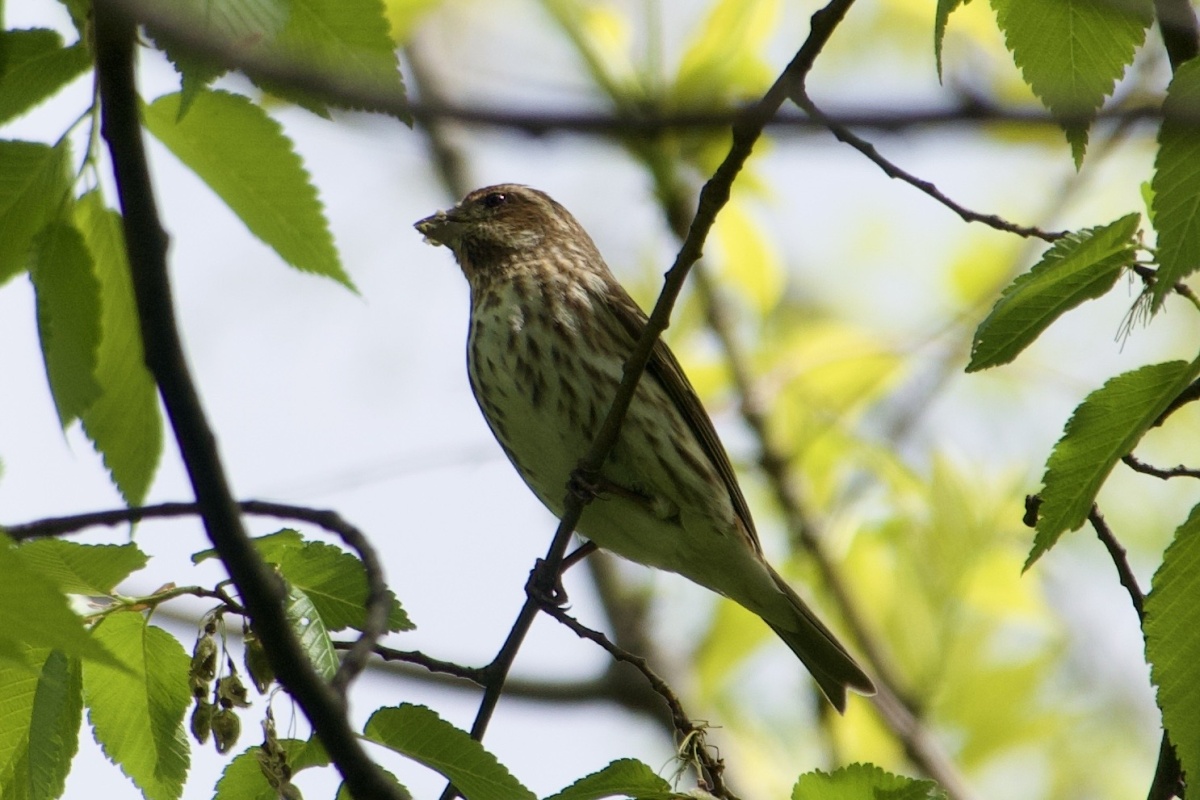
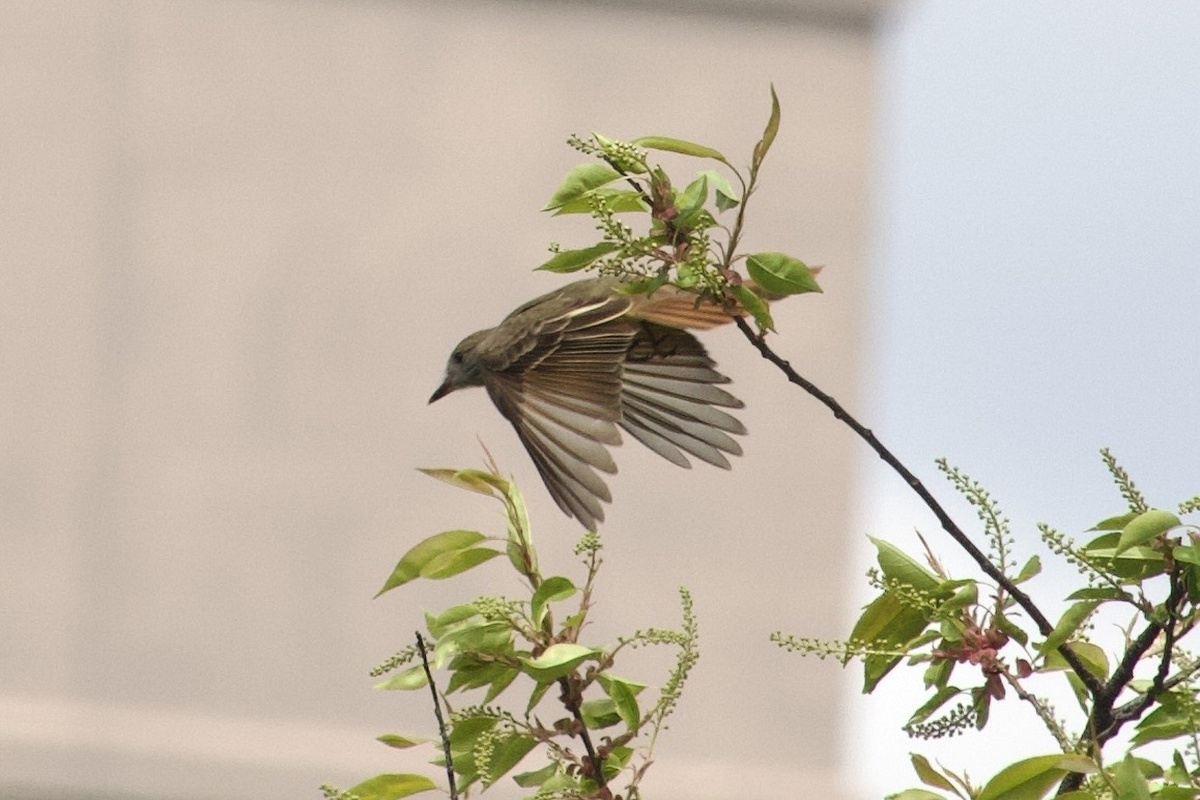
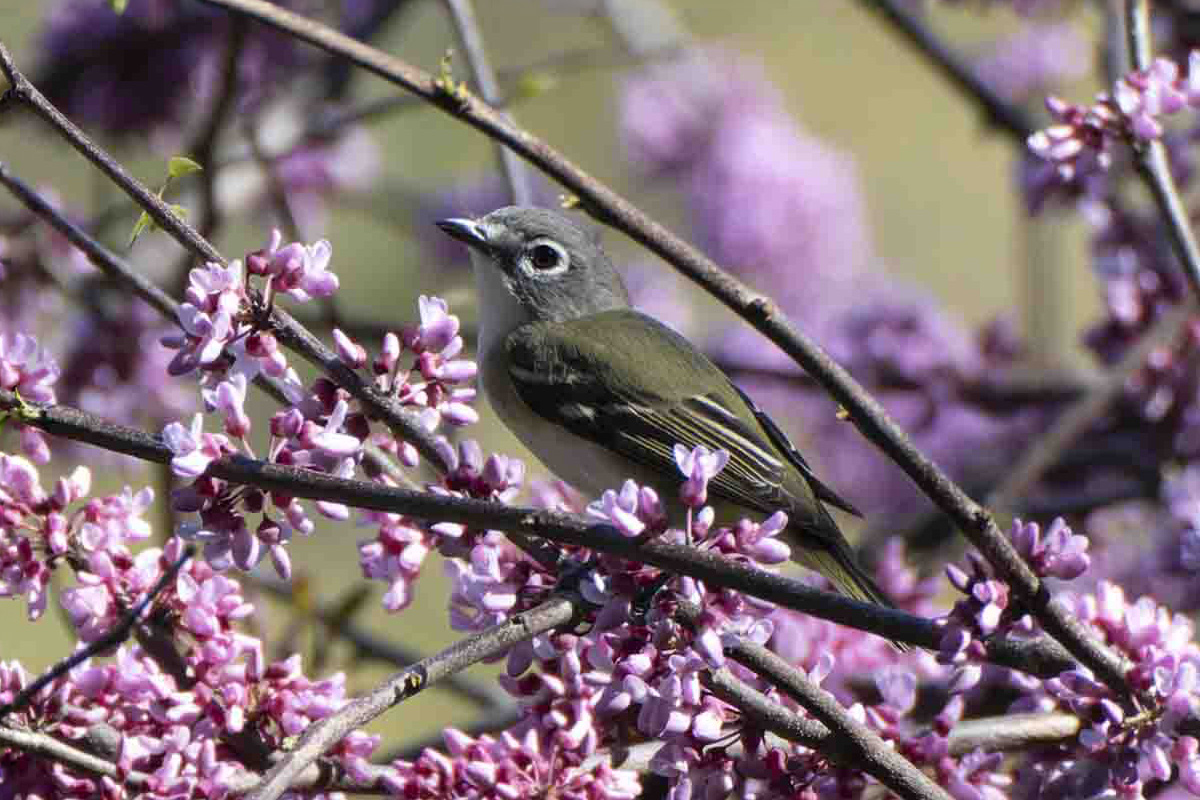
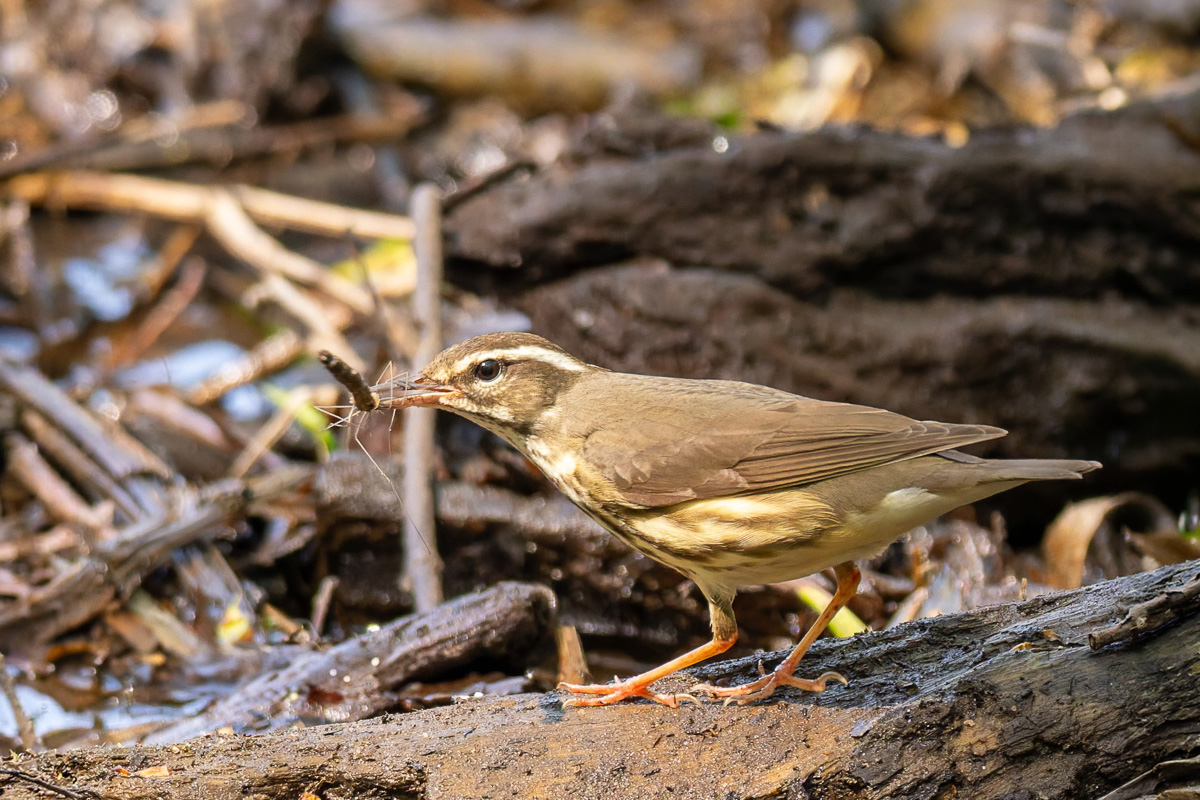
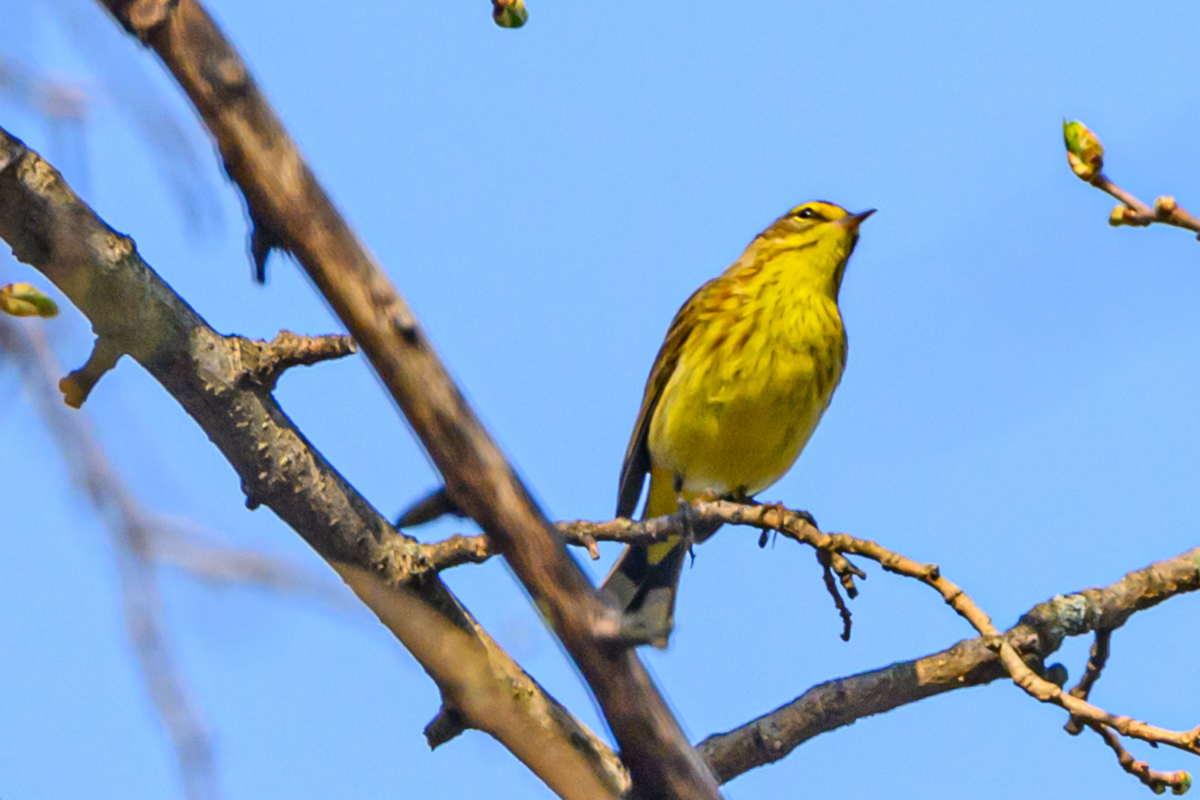
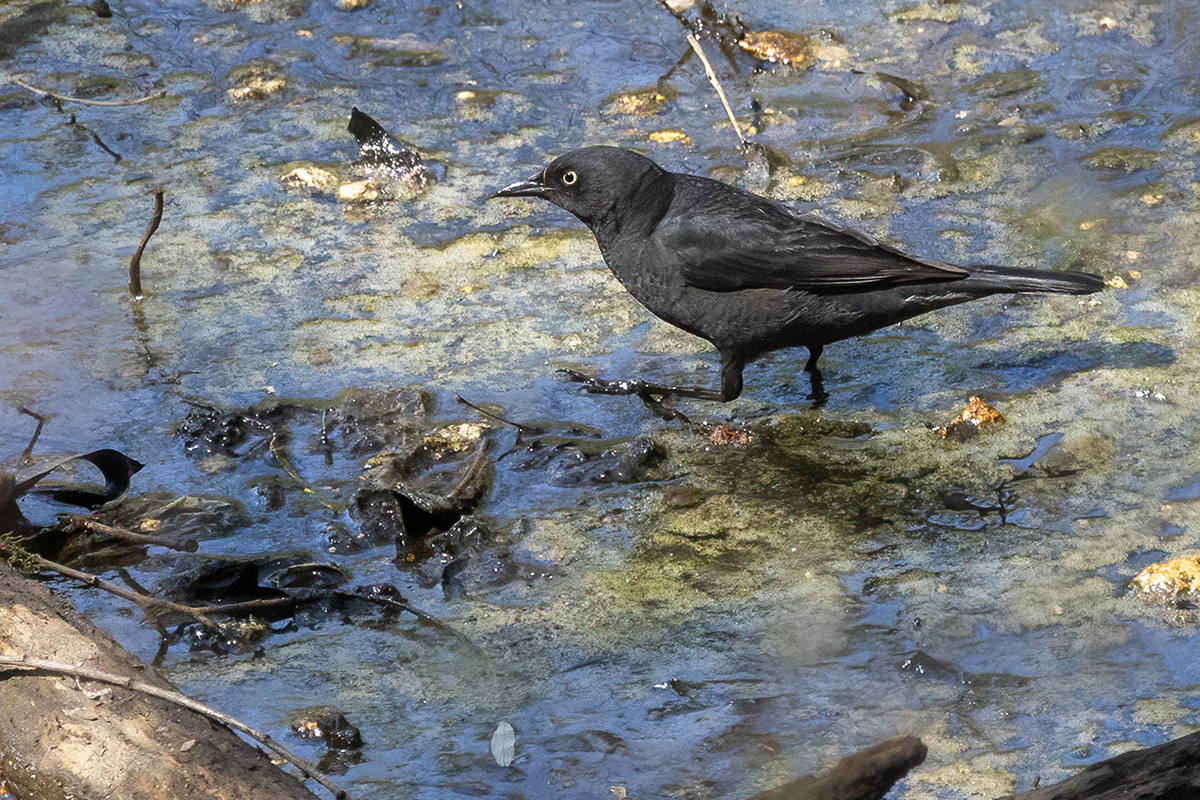
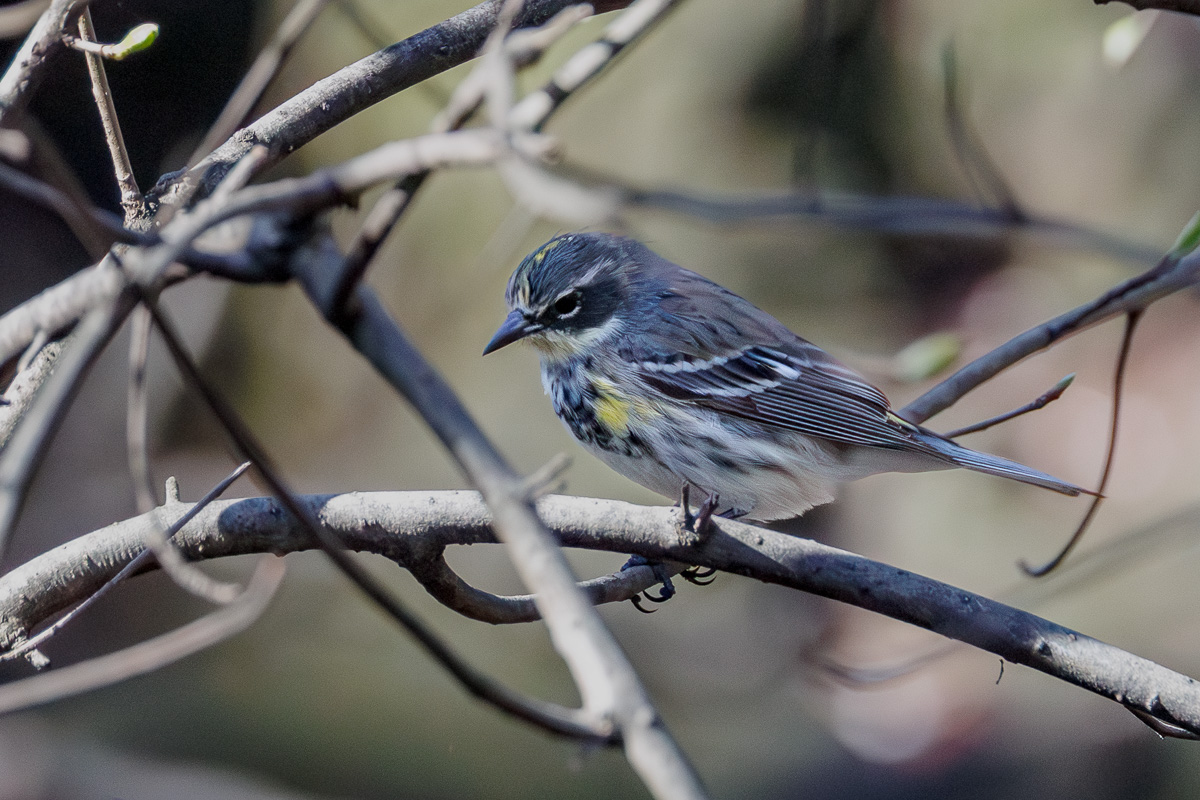
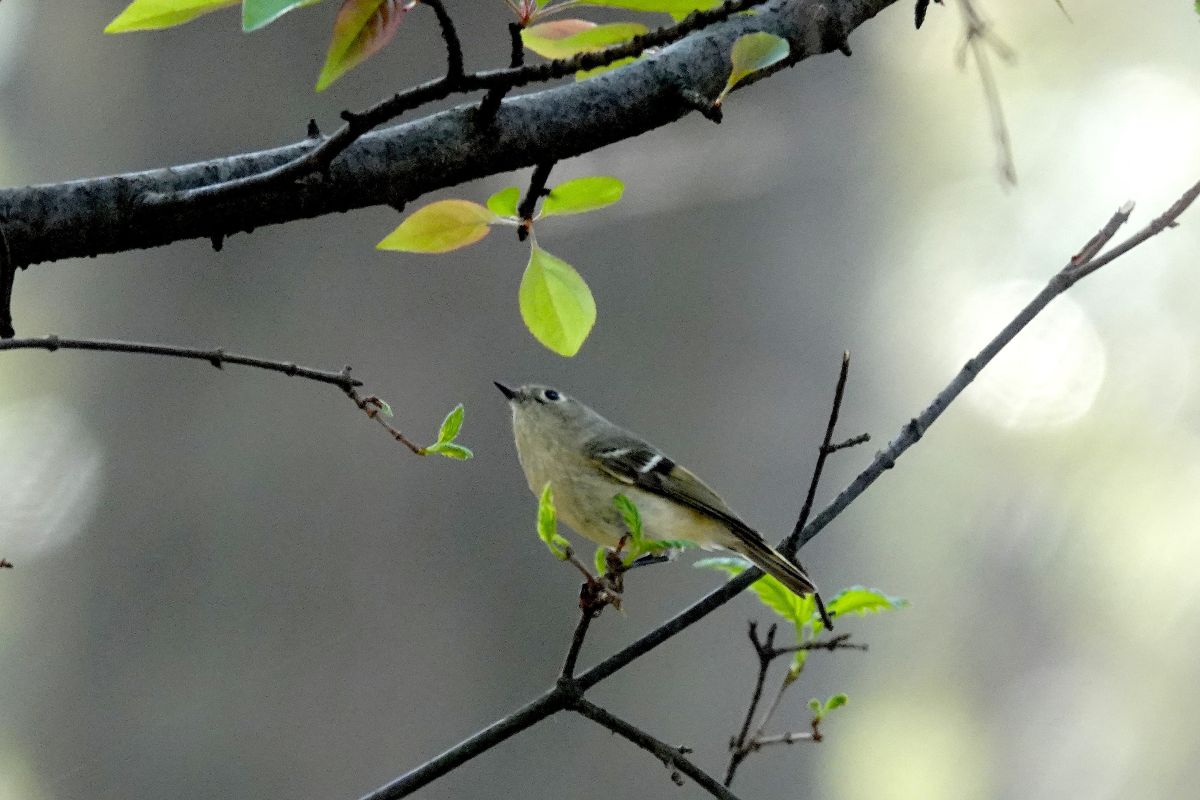
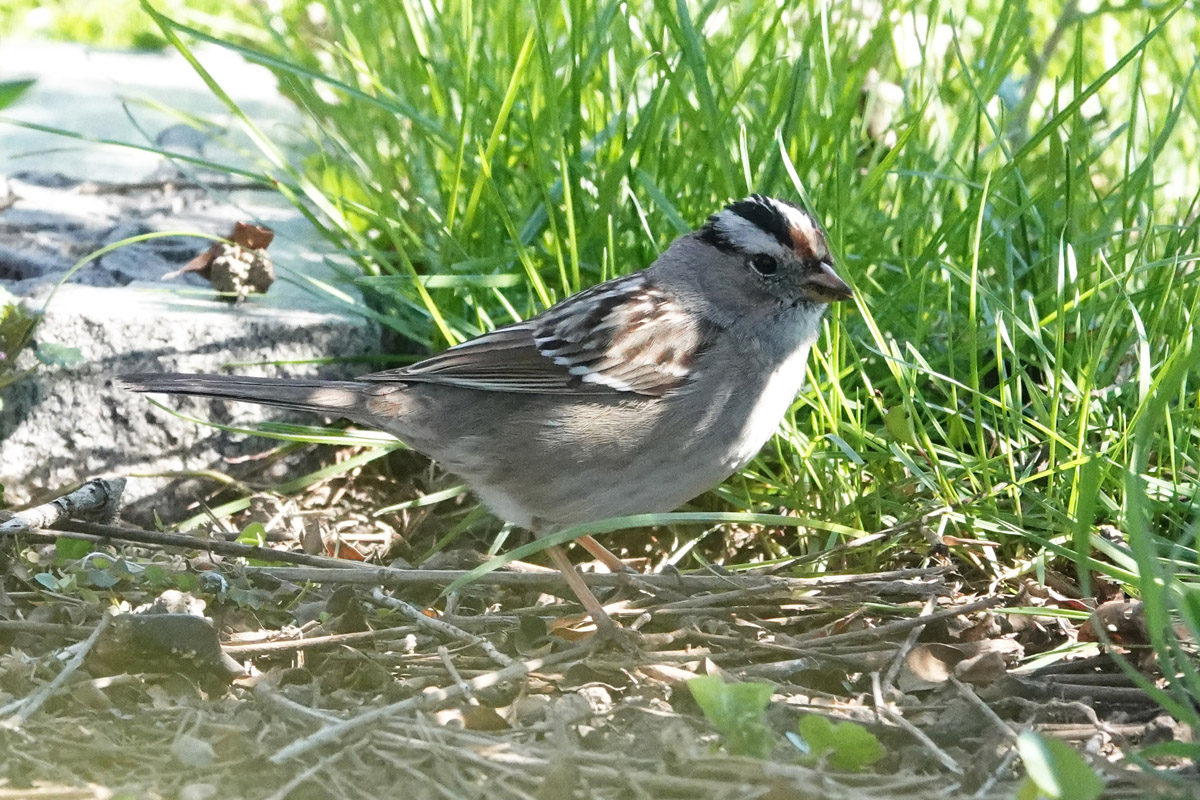
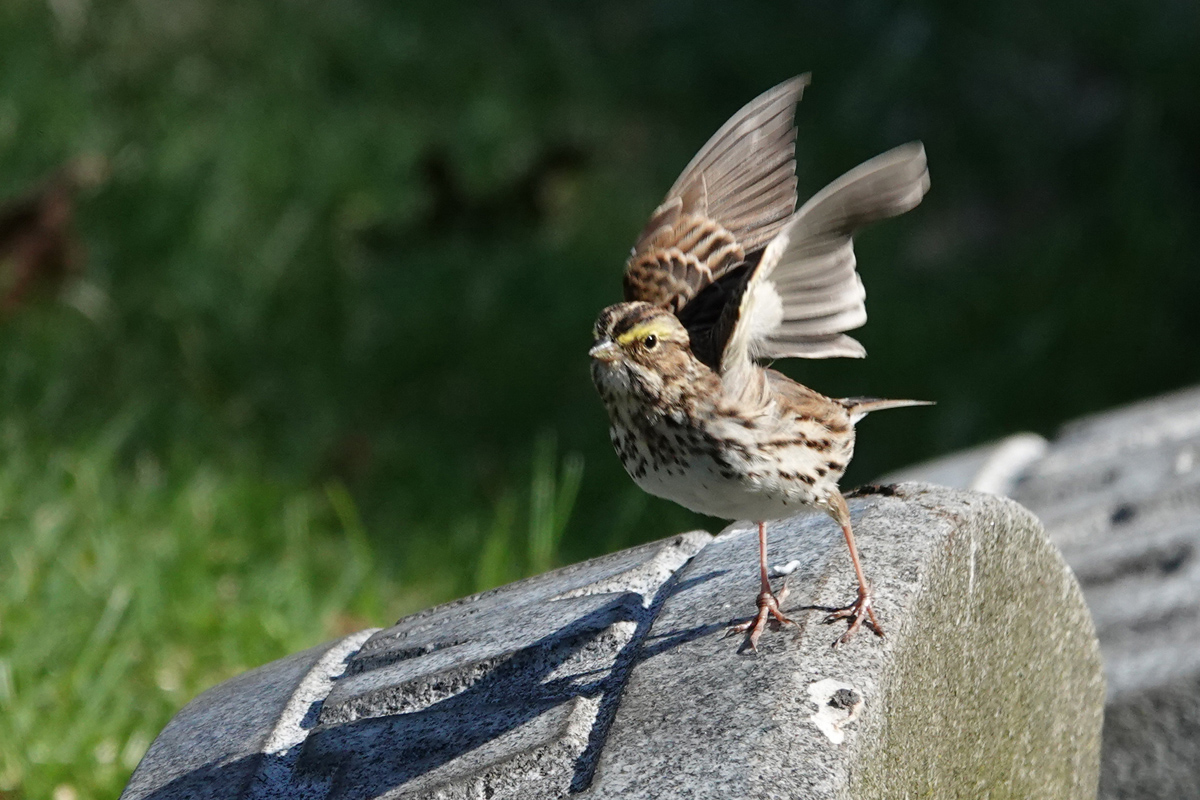
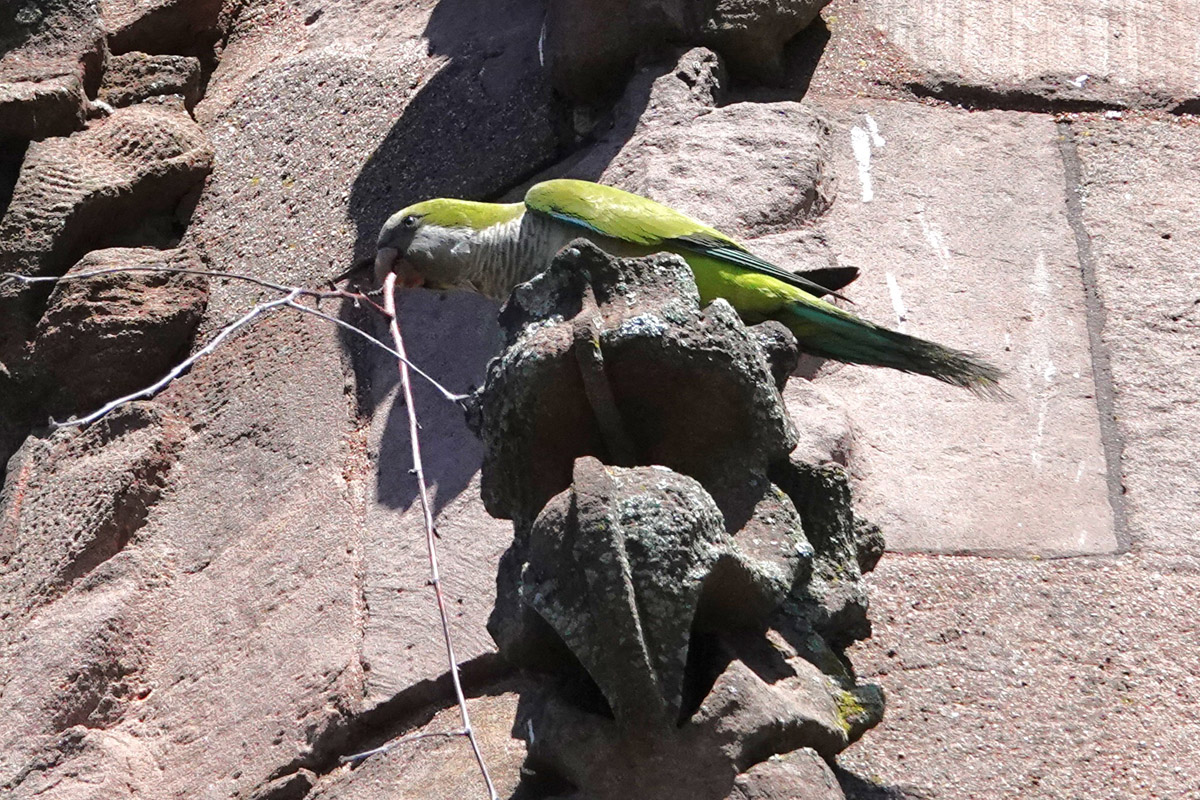
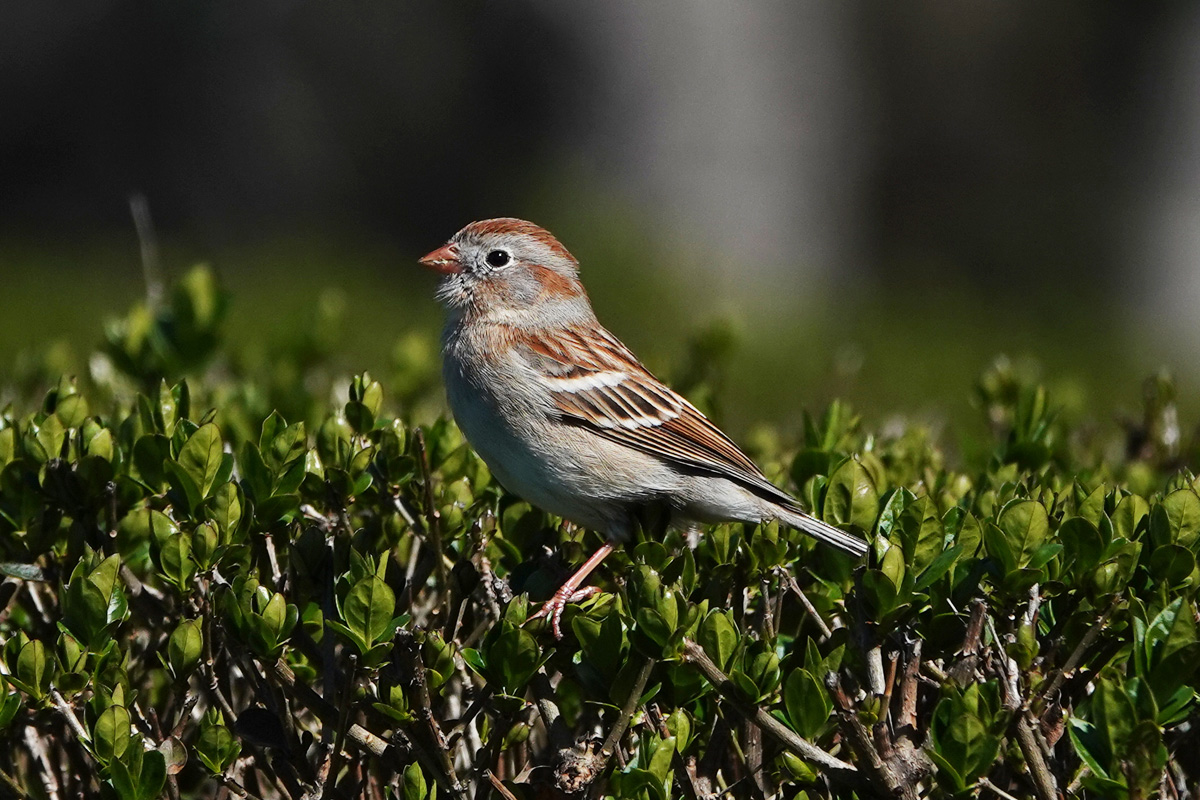
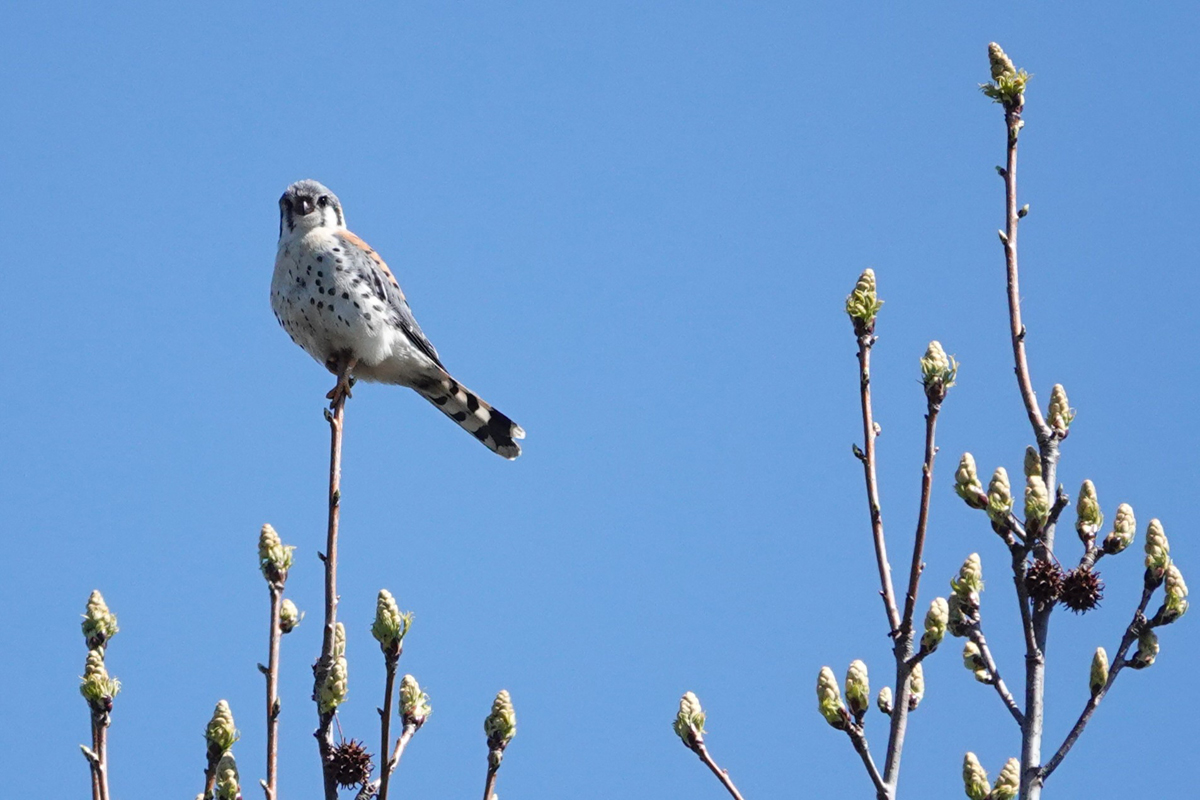
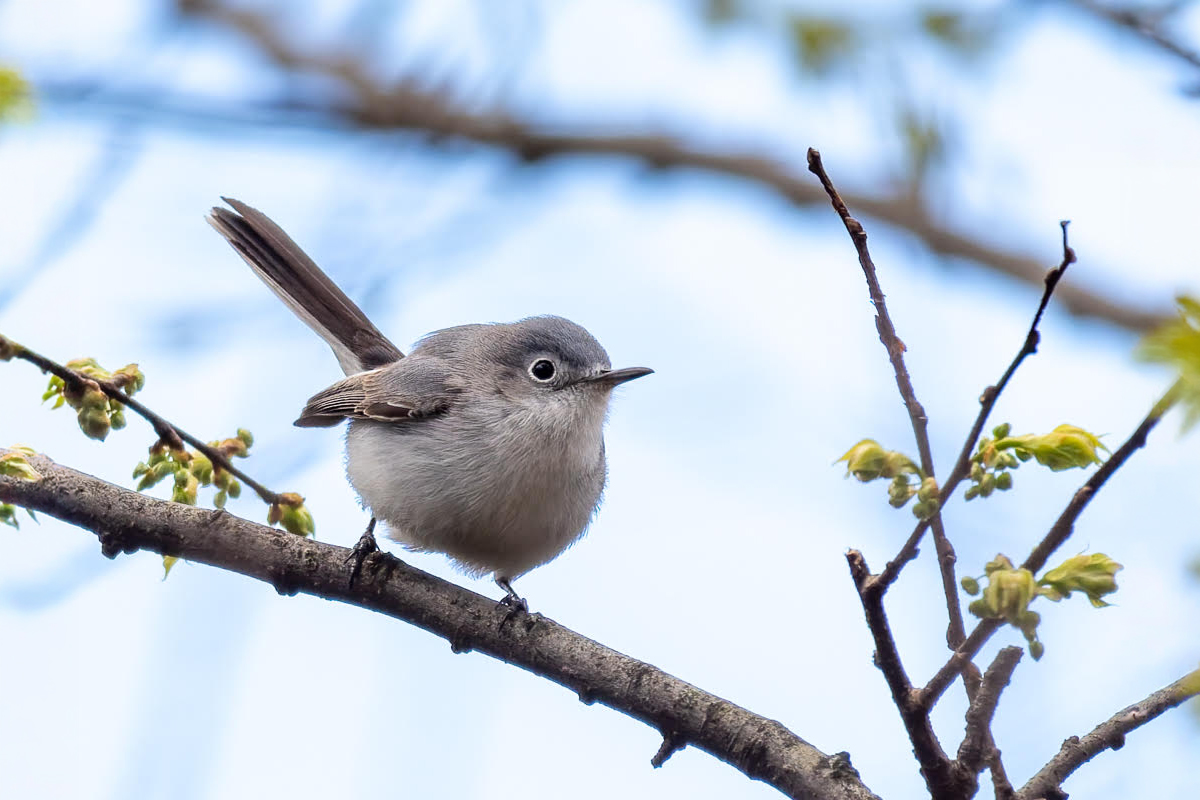
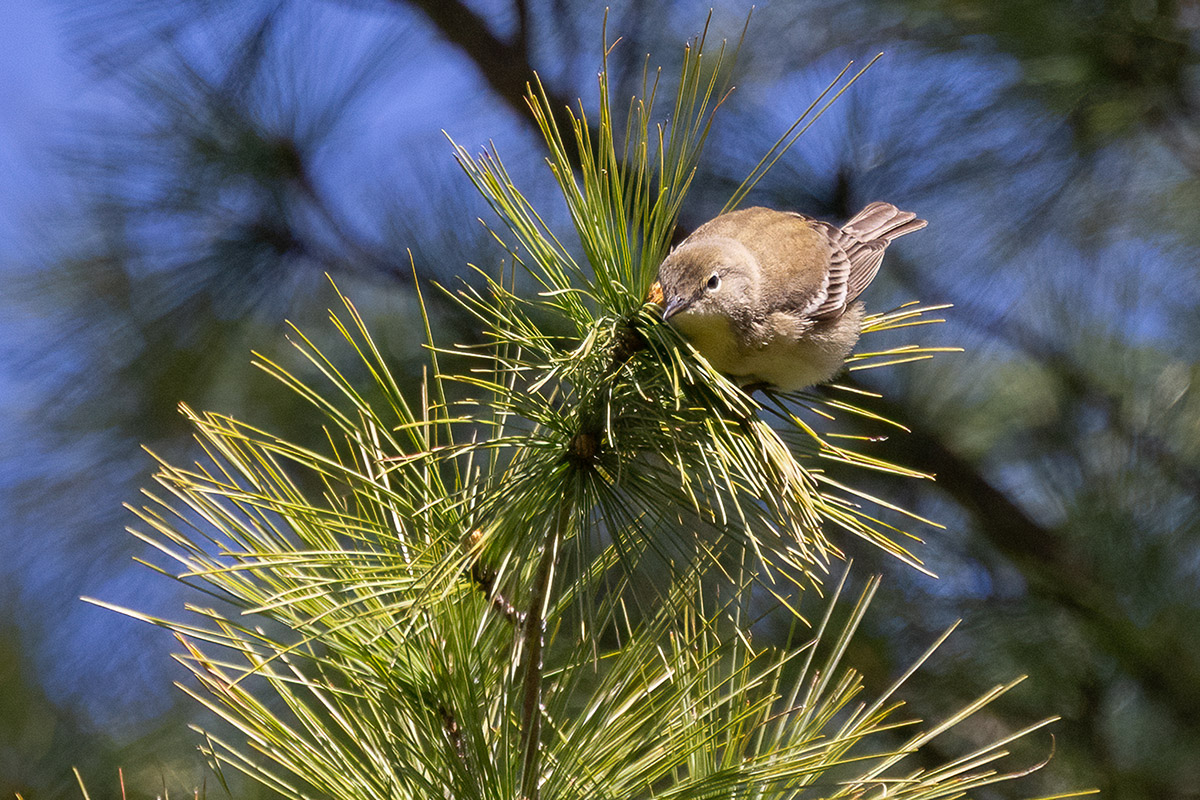
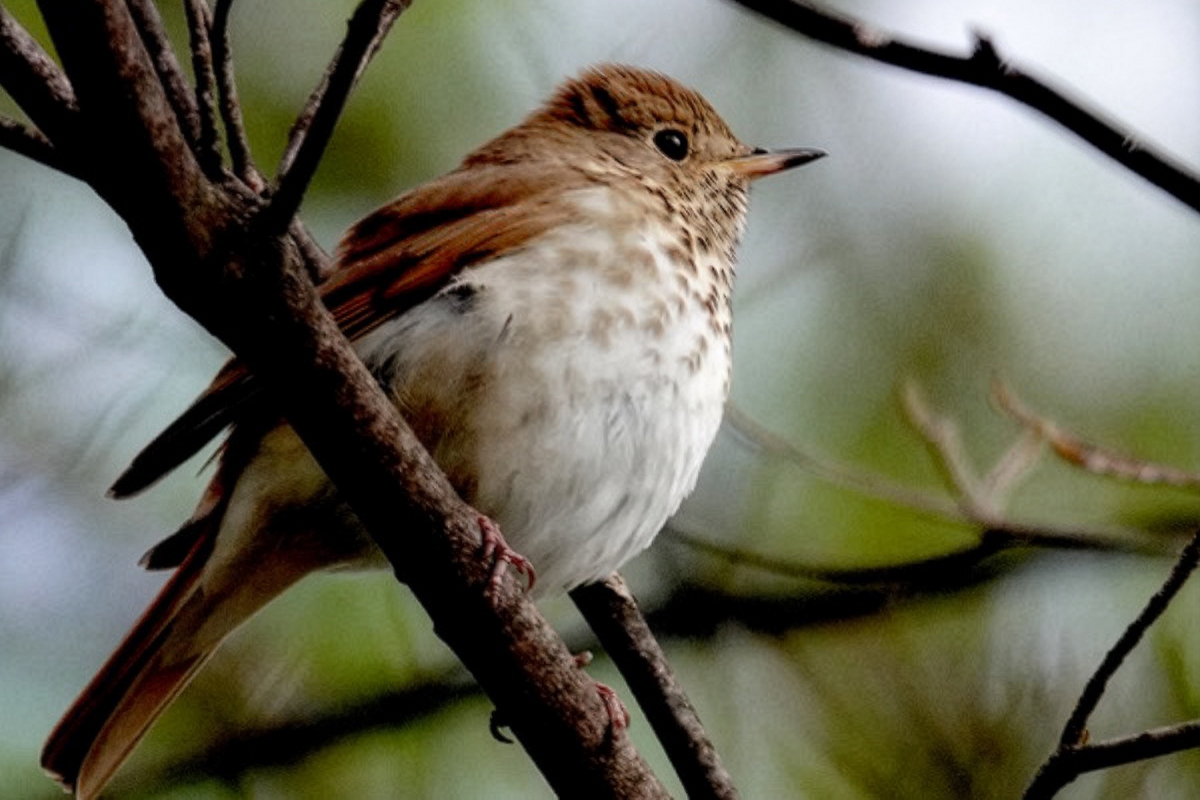
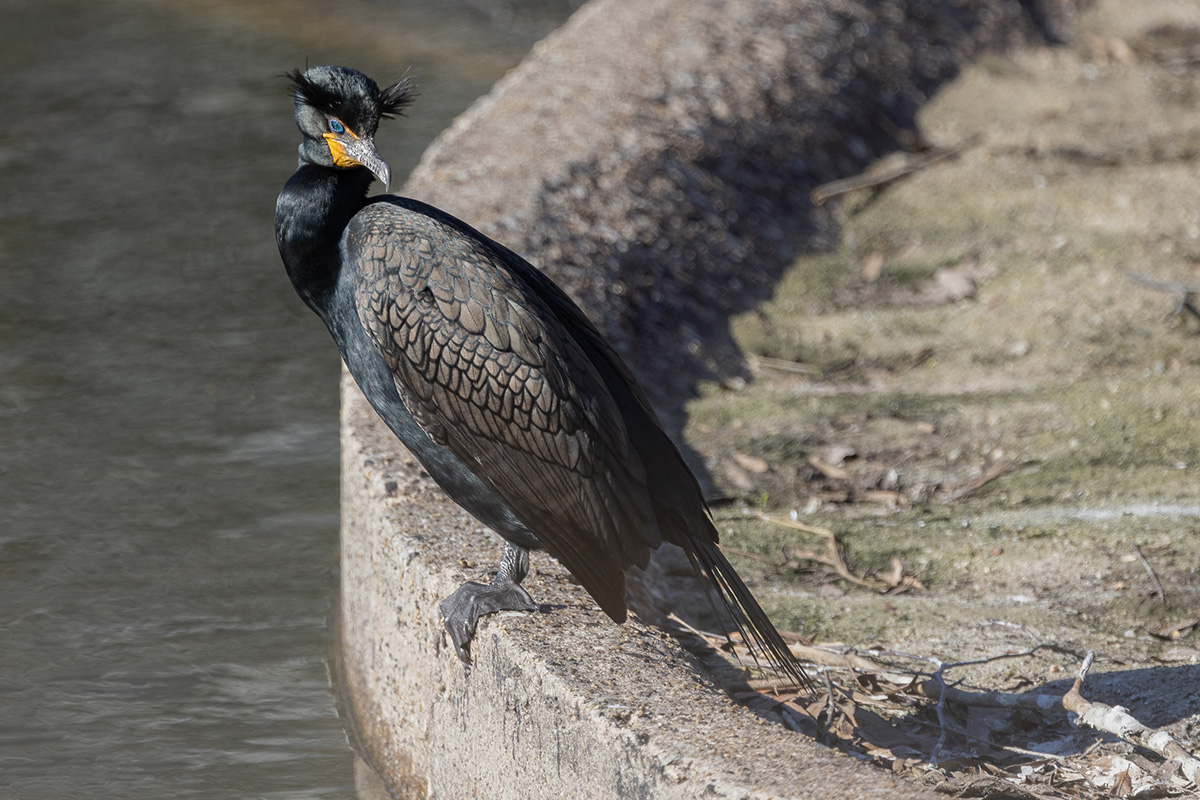
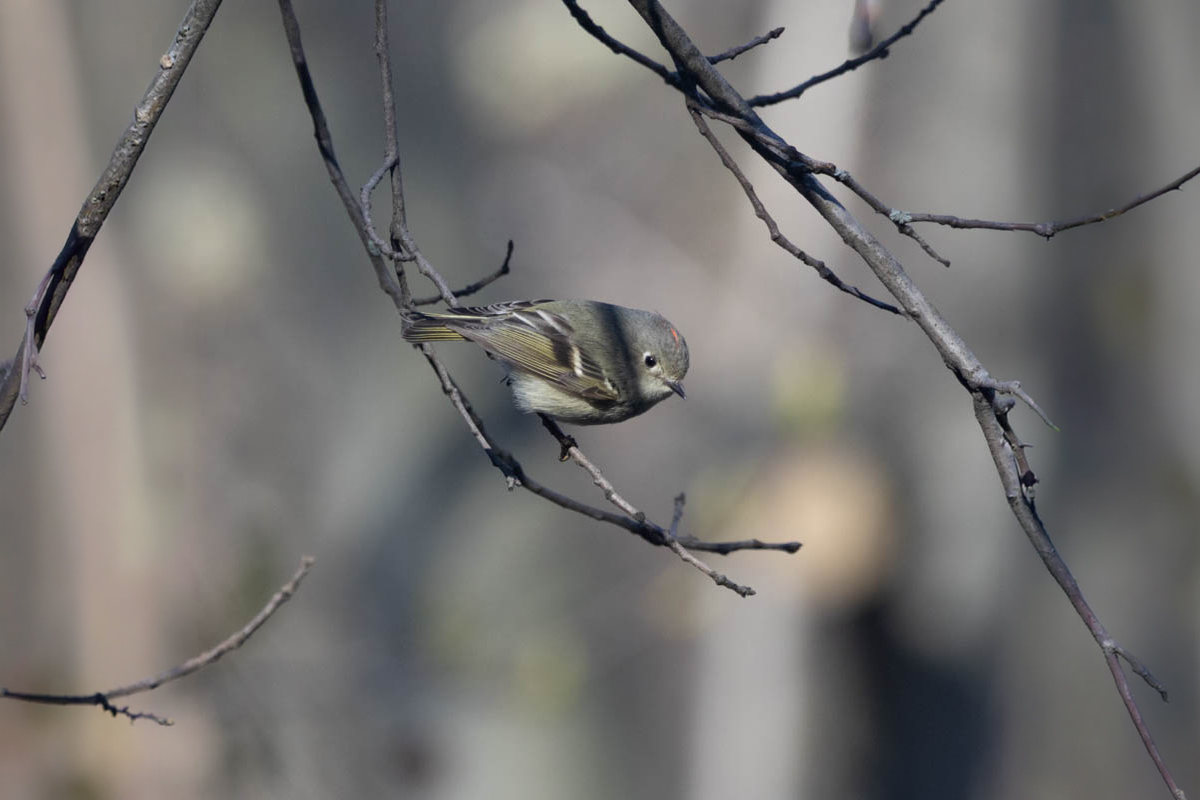
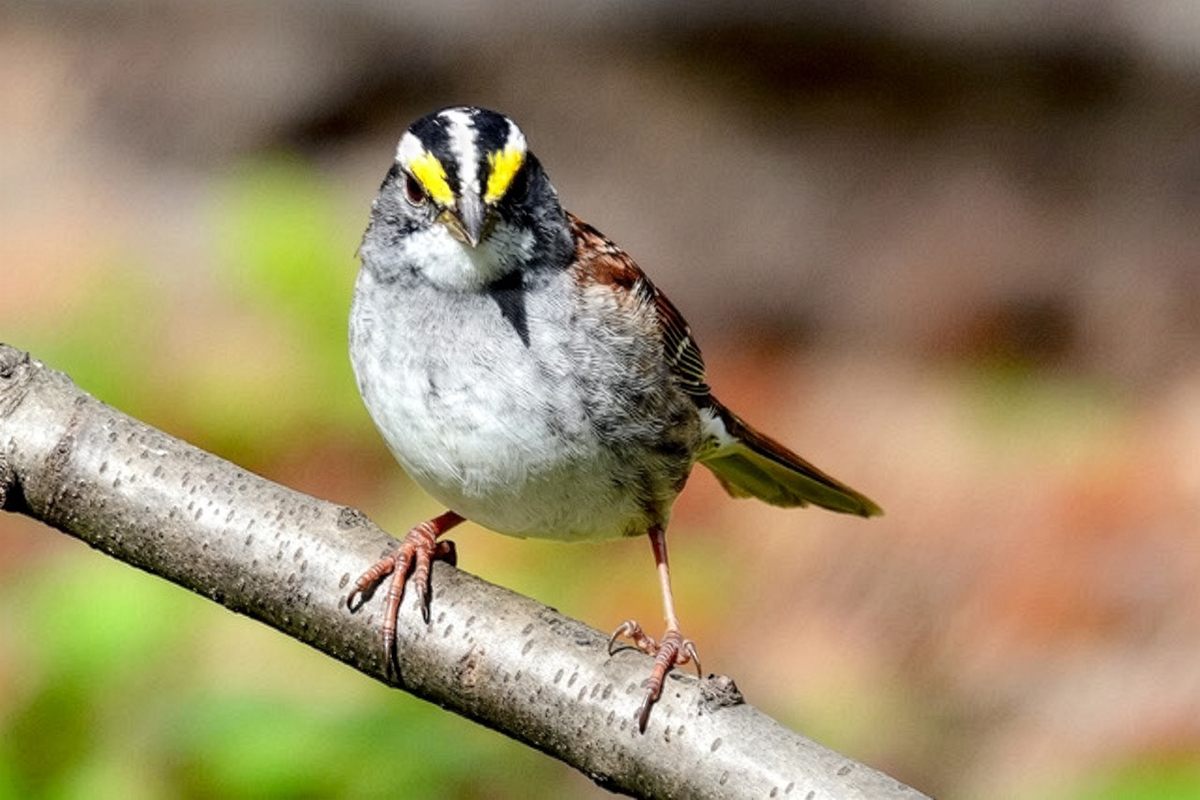
The day started at the Conference House Park with a chill and steady wind. The Eastern Phoebe was the bird of the day, seen at all three locations. Our first Pine Warbler of the season was also observed here.
Some trees with blackened bark were noted, and Seth explained this was damage caused over the years by Spotted Lanternflies. Five deer were observed as we walked the paths.
At Wolfe’s Pond Park, Seth pointed out a woodchuck on the hill across from the stream, near where a Belted Kingfisher was seen. Introduced in the 1990s, wild woodchucks are now common in Staten Island’s green spaces, including Conference House and Mount Loretto Unique Area.
Walking along the pond toward the ocean, Seth referred to the “pond” that no longer exists following Superstorm Sandy. He described the former “fingers” that opened and closed to the ocean in cycles, a process that has not occurred in years; as a result, there is no longer a true pond.
Species Lists
Birds Wood Duck Mallard Bufflehead Common Loon Horned Grebe Double-crested Cormorant Osprey Belted Kingfisher Red-bellied Woodpecker Downy Woodpecker Hairy Woodpecker Northern Flicker Eastern Phoebe Blue Jay American Crow Fish Crow Golden-crowned Kinglet White-breasted Nuthatch Brown Creeper Carolina Wren European Starling Northern Mockingbird Hermit Thrush American Robin House Finch American Goldfinch Field Sparrow Dark-eyed Junco White-throated Sparrow Song Sparrow Red-winged Blackbird Common Grackle Pine Warbler Northern Cardinal
Registrar: Amanda Bielskas Participants: 13 Weather: Indoor activity but there was a thunderstorm during the event Bird Species: 11
We joined Linnaean member and saxophonist Elijah Shiffer and his City Of Birds quartet for an evening of music inspired by birds at Silvana in Harlem. Elijah’s project City Of Birds is a collection of instrumental jazz songs dedicated to all the birds he’s seen in New York City. Some of these compositions are directly influenced by specific birds’ songs or calls, while others are more abstract musical portraits of a species’ behavior, habitat, or even the circumstances of a specific sighting. Both styles delighted the audience this evening. For this show, the audience was encouraged to request songs for particular species. Elijah handed out lists of available species to choose from, represented on the three albums he has recorded so far ( https://linktr.ee/elijahshiffer) as well as his forthcoming works. The evening was a wonderful treat for all who attended, we were entertained by two sets featuring songs by the birds listed below. A “1” or a “2” listed after the bird reflects which set the song was played in. Thank you to Elijah and his City of Birds quartet for a wonderful evening full of great music.
Registrar: Suzanne Zywicki Participants: 9 Weather: Cloudy, wind gusts up to ten miles per hour, temperatures in the high 40s Bird Species: 38
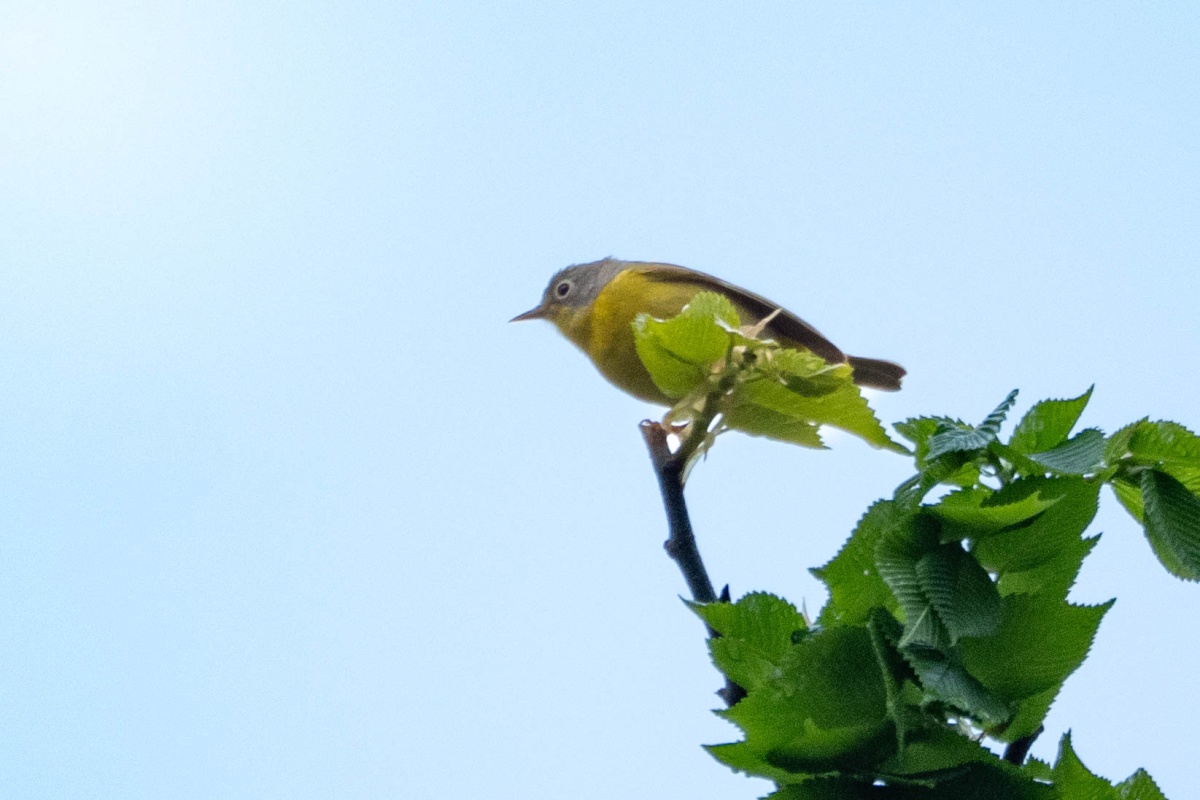
Our group took the train from Grand Central Station to Croton Harmon and met our leader, Ethan Goodman, at the station around noon. After a quick walk to the park entrance, our trip began by counting mallards and a few other birds in a flooded field. As we continued, we saw several male Red-winged Blackbirds perched above us, as well as a Red-tailed Hawk. Some of us were surprised to encounter Eastern Bluebirds along the path that parallels the Croton River. A bit later, as we made our way on the trail heading toward the Point, we began to see the first of at least eighteen Bald Eagles that were either in flight, perched high in the trees, or sitting on pieces of ice in the river. As we continued our walk, we saw a variety of other expected birds, including both White and Red-breasted Nuthatches, Black-capped Chickadees, and Dark-eyed Juncos.
However, the real treats, and the reason for our early afternoon start time, were seen as dusk fell. We first went to see if the resident Eastern Screech-Owl was in its usual spot, but were left disappointed. We scanned the Hudson from above and saw a variety of ducks, gulls, and mergansers. On our walk back to the Mound, one sharp-eyed participant spotted a Great Horned Owl perched above close to the road, giving great views. Not long after, he also found what he thought was an American Pipit – a lifer that was confirmed by Ethan. As it got darker, we began our walk up the mound where Ethan almost immediately began to hear the “peent” call of the American Woodcock. We could hear them making courtship sounds but were unable to observe their unique aerial displays in the dark. After listening for a bit, we continued walking and soon saw a Short-eared Owl hunting above the grasses. After several pass-bys, it perched on a post, allowing us all excellent looks and giving us a memorable end to our day.
Species List
Brant Canada Goose Gadwall Mallard Common Merganser Red-breasted Merganser Mourning Dove Killdeer American Woodcock Ring-billed Gull American Herring Gull Great Black-backed Gull Cooper’s Hawk Bald Eagle Red-tailed Hawk Great Horned Owl Short-eared Owl Red-bellied Woodpecker Downy Woodpecker Blue Jay Fish Crow Common Raven Black-capped Chickadee White-breasted Nuthatch Red-breasted Nuthatch European Starling Northern Mockingbird Eastern Bluebird American Robin American Pipit American Goldfinch American Tree Sparrow Dark-eyed Junco White-throated Sparrow Song Sparrow Red-winged Blackbird Common Grackle Northern Cardinal
Registrar: Dom Ricci Participants: 8 Weather: 36-38 °F, sunny with a few clouds, light breeze Bird Species: 30
The Linnaean Society of New York’s February outing to the Brooklyn waterfront was originally planned as a carpool trip, but a week before it was scheduled to take place, a blizzard dropped more than nineteen inches of snow on New York City. Although temperatures later warmed, trip leader Peter Dorosh wisely recognized that the large amounts of residual snow would complicate travel and revised the plan to rely on public transit. This change not only avoided a potential logistical challenge but also introduced attendees to new, accessible birding locations.
Beginning at Ceasar’s Bay, the Linnaean birders observed large numbers of winter waterfowl, including sizable rafts of Greater Scaup, Surf Scoter, and Black Scoter. The highlight at this location was extended views of not one, not two, but three immature Iceland Gulls along the rocky shore. A short walk along the waterfront toward BJ’s Wholesale Club produced a variety of ducks, including close views of several Long-tailed Ducks and two Common Goldeneye. After a short bus ride, the group explored Coney Island Creek Park and then continued down the Coney Island Boardwalk, where they found more waterfowl and gulls, along with Purple Sandpipers on the rocky jetties and a Peregrine Falcon chasing pigeons, before dispersing homeward via subway.
Species List
Brant Canada Goose Gadwall American Wigeon Mallard American Black Duck Greater Scaup Lesser Scaup Surf Scoter Black Scoter Long-tailed Duck Bufflehead Common Goldeneye Hooded Merganser Red-breasted Merganser Ruddy Duck Rock Pigeon Mourning Dove Purple Sandpiper Ring-billed Gull American Herring Gull Great Black-backed Gull Iceland Gull Horned Grebe Red-throated Loon Common Loon Turkey Vulture Peregrine Falcon American Crow European Starling
Registrar: Ursula Mitra Participants: 10 Weather: Temps 33–39 F, mostly cloudy, almost no wind Bird Species: 38
It was a cold, overcast day, but exceptionally calm, thankfully. Richard met us at the Colonnade Diner to make sure we could all have a nice coffee and a bathroom break.
We got our first surprise as we were driving past the Staten Island Hospital, where five Wild Turkeys decided to dance in the middle of the intersection, holding up traffic.
But slowly, throughout the day, we learned that Richard had more surprises in store for us. The most remarkable feature of our first stop–the Franklin D. Roosevelt Boardwalk and Ocean Breeze Fishing Peer–was the incredible sound made by 300 Black Scoters at the end of the pier. Also surprising was the lack of any waves and the mirror-like ocean surrounding us. We saw some Common Goldeneye and Common Loon here as well.
Following this, all of us were eagerly awaiting Richard’s next surprise, which turned out to be a male Northern Pintail at the Moravian Cemetery, where Hooded Mergansers and Buffleheads were also present. Sadly, this was the first time we saw what many of us had already heard about: numerous dead Canada Geese in the water along the shores of the cemetery’s pond, presumably stricken with bird flu.
On we went to Miller Field, where the beach was the location of Richard’s next surprise: five Purple Sandpipers, close enough to give us good looks.
Our last stop, at Great Kills, produced five Surf Scoters at considerable distance, as well as many deer and feral cats (some, admittedly, gorgeous.) We concluded the trip at around 2:30, happy that we’d had such a good day. Thank you again, Richard!
Species Lists
Birds Brant Canada Goose Mallard Northern Pintail Greater Scaup Surf Scoter White-winged Scoter Black Scoter Long-tailed Duck Bufflehead Common Goldeneye Hooded Merganser Wild Turke Rock Pigeon Mourning Dove Sanderling Purple Sandpiper Ring-billed Gull American Herring Gull Great Black-backed Gull Horned Grebe Common Loon Turkey Vulture Sharp-shinned Hawk Cooper’s Hawk Red-bellied Woodpecker Blue Jay American Crow Fish Crow Black-capped Chickadee European Starling Northern Mockingbird House Sparrow Dark-eyed Junco White-throated Sparrow Song Sparrow Yellow-rumped Warbler Northern Cardinal
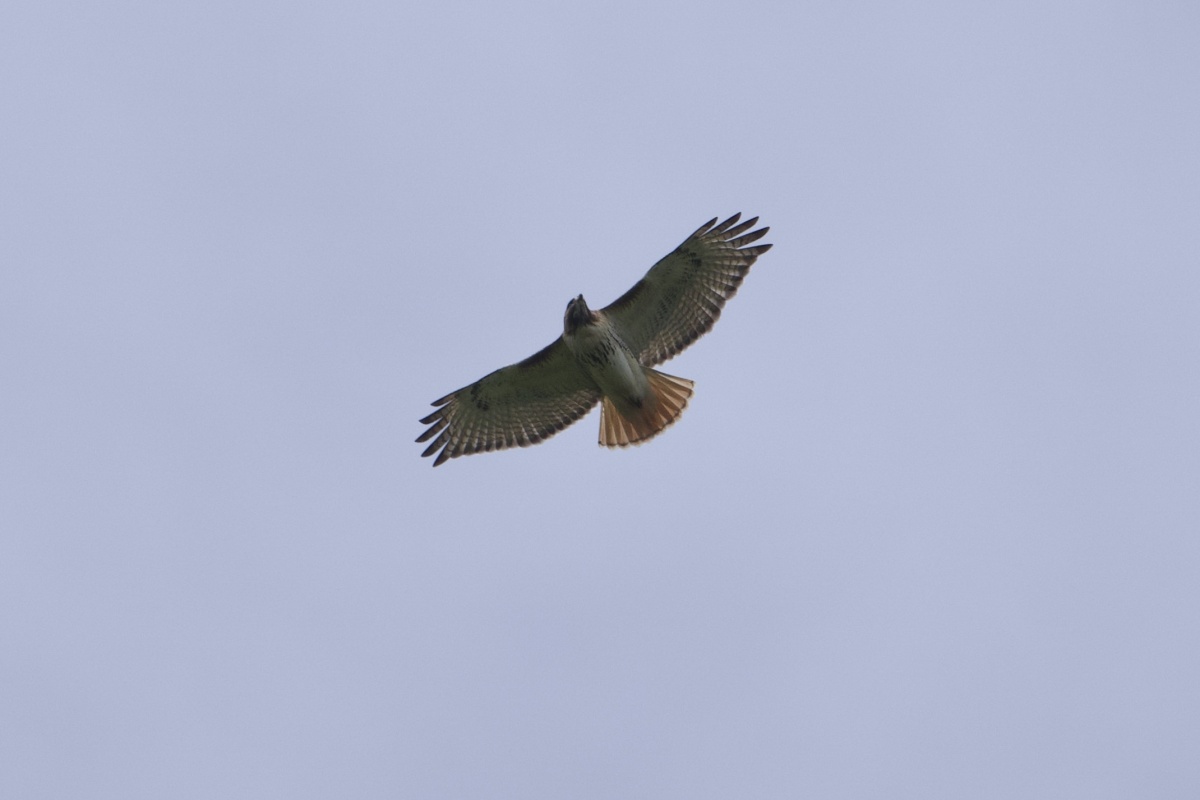
The Linnaean Society was proud to host world-renowned Gull expert and author of the definitive The Gull Guide, Amar Ayyash, on this Gull Walk. We waited until a week before the event to set the location, taking weather conditions into account and ensuring we had a large number of gulls. The Coney Island Beach and Boardwalk did not disappoint. Although the beach was largely covered with snow and ice, there were walkable paths to the water and plenty of gulls. We did not see any rare gulls, but had a great time as Amar shared his expertise with us, and we were able to age the gulls that were present. In addition to the gulls, we also had fun watching the waterfowl and shorebirds, including the whistling Black Scoters, plentiful Purple Sandpipers, and a lone Ruddy Turnstone.
Species List
Brant Canada Goose American Wigeon American Black Duck Greater Scaup Surf Scoter White-winged Scoter Black Scoter Long-tailed Duck Bufflehead Red-breasted Merganser Rock Pigeon Ruddy Turnstone Sanderling Purple Sandpiper Ring-billed Gull American Herring Gull Great Black-backed Gull Horned Grebe Common Loon Double-crested Cormorant American Crow Fish CrowEuropean Starling American Robin House Sparrow
Registrars: Amanda Bielskas & Kristin Ellington Participants: 18 Weather: Very cold (well below freezing), cloudy, and windy with 5” snow out east on Saturday, even colder on Sunday (low single digits), sunny, and still quite windy Bird Species: 50
We had a very cold weekend birding our way from Jones Beach to Montauk. There was much discussion about postponing for a warmer forecast. In the end, the intrepid members of the Linnaean Society pressed on, layering up in wool and down to face the elements head-on.
JONES BEACH COAST GUARD STATION Some of us arrived early at Jones Beach, scanning the medians for our first birds of the day. Yellow-rumped Warblers flitted through the shrubs alongside Song and Fox Sparrows, and a cooperative Cooper’s Hawk kept watch nearby.
At 8:30 am, we gathered at the Coast Guard station and huddled behind the pavilion for a bit of wind protection. The cold was intense, but the birds delivered: three American Oystercatchers, many Common Eiders, Bufflehead, Greater Scaup, and a flyby Great Cormorant. Raptors added excitement with a Peregrine Falcon, and for some, a Merlin and a Bald Eagle. A flock of roughly 100 Snow Buntings and Horned Larks swirled near a tight cluster of Canada Geese huddled on the frozen lawn while a flock of Sanderlings flew above the sandbar.
JONES BEACH ENVIRONMENTAL CENTER We made a quick stop at the Environmental Center for warm bathrooms and a briefing on the weekend’s plan. No Snowy Owls in sight, but spirits remained high.
CAPTREE BOAT BASIN At Captree, we had excellent looks at Red-breasted Mergansers, American Black Ducks, and Long-tailed Ducks. There were large numbers of Herring Gulls and Great Black-backed Gulls on the nearby shore. A House Finch near the docks provided a splash of unexpected color.
ROBERT MOSES STATE PARK Seeking shelter beneath a pavilion, we attempted a sea watch. The wind and waves were dramatic; the birds, less so. A few Scoters passed through before we decided to push farther east.
EASTPORT POND, DUNE ROAD Along the drive, several Northern Harriers cruised low over the marsh, putting on a show. Eastport Pond was largely frozen. We continued to Dune Road and Shinnecock Inlet, where we paused for lunch.
SHINNECOCK INLET PART ONE Here the weather intensified. Wind and snow picked up rapidly, visibility dropped, and car doors nearly wrenched from our hands. Only the bravest stepped out into the gale. Though birding was nearly impossible, the sheer force of the elements felt oddly exhilarating.
After lunch, we completed the final leg to Montauk, checked into our hotels, and gathered for dinner as snow continued to fall.
MONTAUK POINT & CAMP HERO We awoke to bright sun — and even colder temperatures, hovering in the single digits with a biting wind. After fortifying ourselves with coffee, we headed to Montauk Point for another sea watch near the lighthouse pavilion.
Three scoter species (Black, Surf, and White-winged) powered past, along with Long-tailed Ducks and more Common Eiders. Joe briefly spotted a Horned Grebe, but it vanished before most could get on it. Several searched for the long-staying Cassin’s Sparrow, but with snow blanketing the area and no recent reports, it remained elusive.
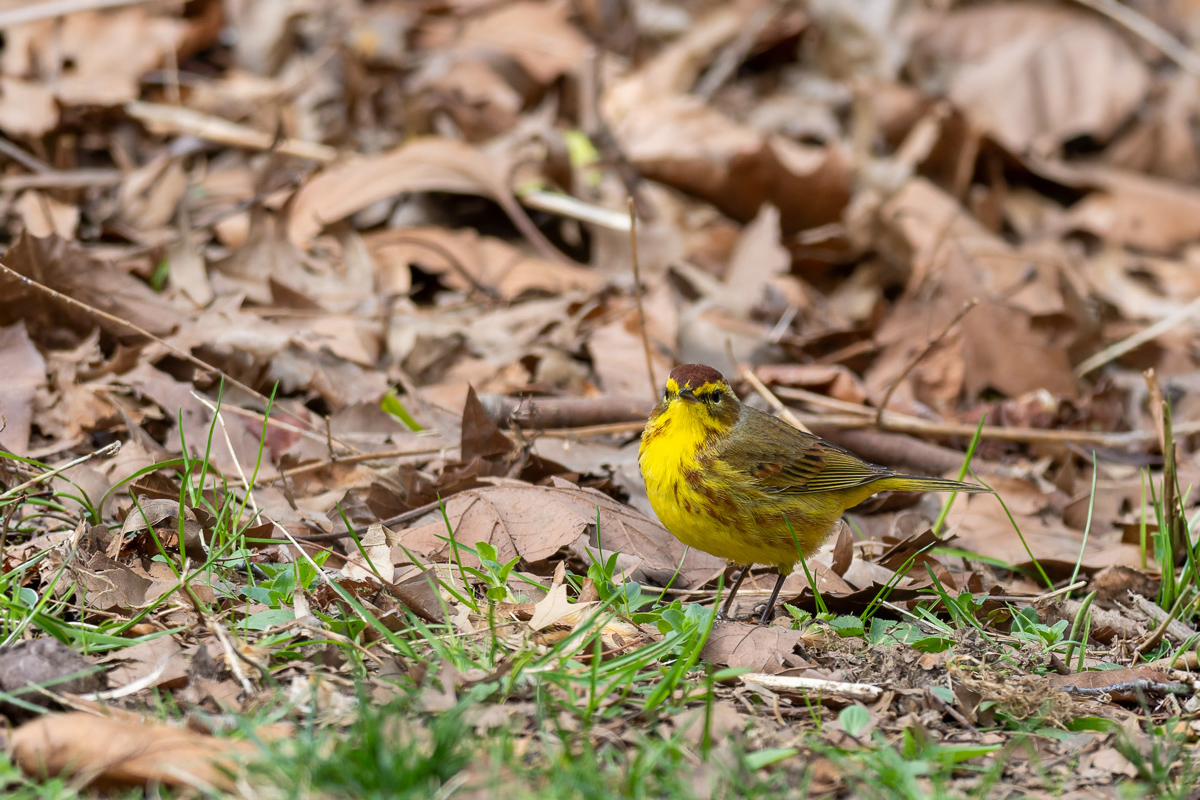
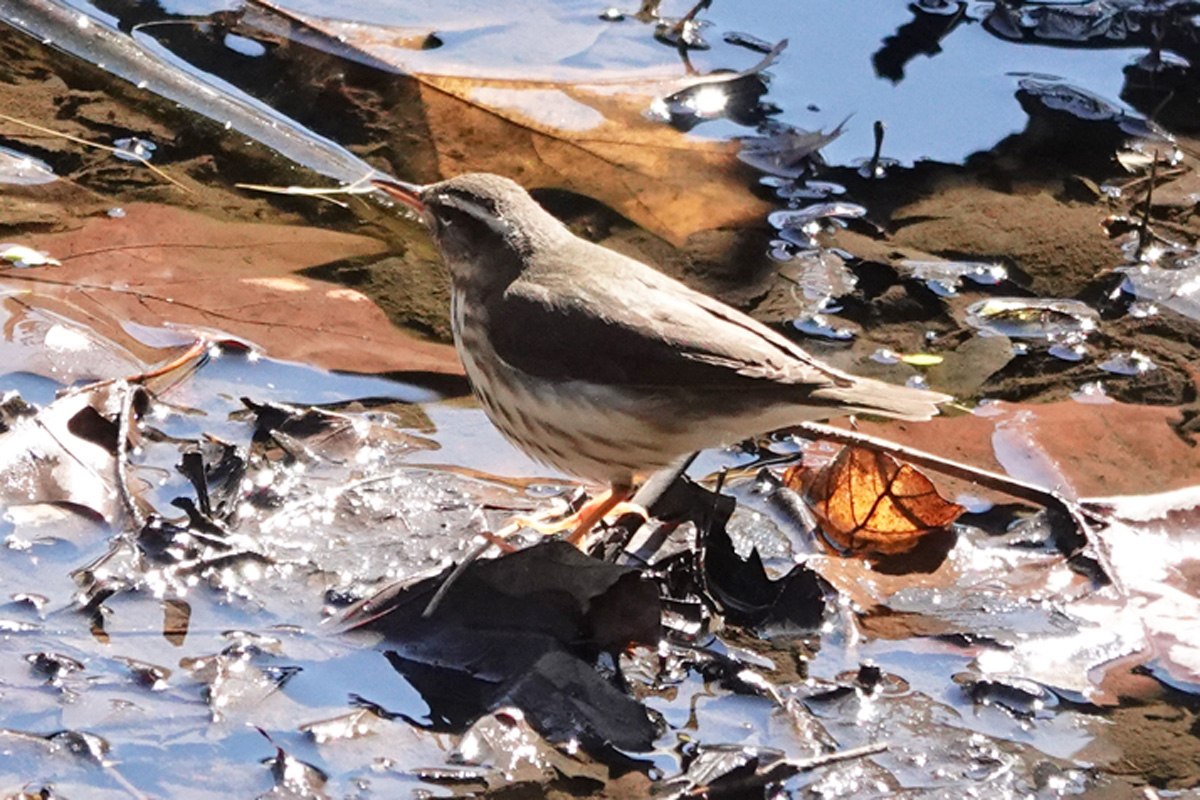
On the south side at Camp Hero, different cars turned up Brown Thrasher, Gray Catbirds, and a Hermit Thrush. We then adjourned to John’s Pancake House, where hot beverages and hearty breakfasts were greeted with deep gratitude.
After checking out, we began the drive west. Along the way we tallied roadside Canada Geese, a Sharp-shinned Hawk, woodpeckers, and a couple of Red-tailed Hawks.
AGAWAM LAKE In Southampton, we stopped at Agawam Lake, where a Eurasian Wigeon had been reported among the remaining patch of open water. We found the cooperative bird, which posed beautifully for close-up photos — a rewarding addition to the weekend list.
Others gathered in the lake were a pair of Mute Swans, Red-breasted Mergansers, Ring-billed Gulls, and two dozen Canada Goose. Along the lake side were European Starlings, White-throated and Song Sparrows.
SHINNECOCK INLET PART TWO In hopes of a better experience than the day before, we stopped again at Shinnecock Inlet. While it was still cold and windy, we had full sun and many birds. Because the wind was less gusty, we were able to walk down to the beach and hide behind the jetty to observe the ducks at close range. There were plenty of excellent looks of Common Eiders, and other ducks. We were thrilled to also see several seals (Gray and Horbor) who were popping their heads out of the water. Overall, a much better experience from the day before.
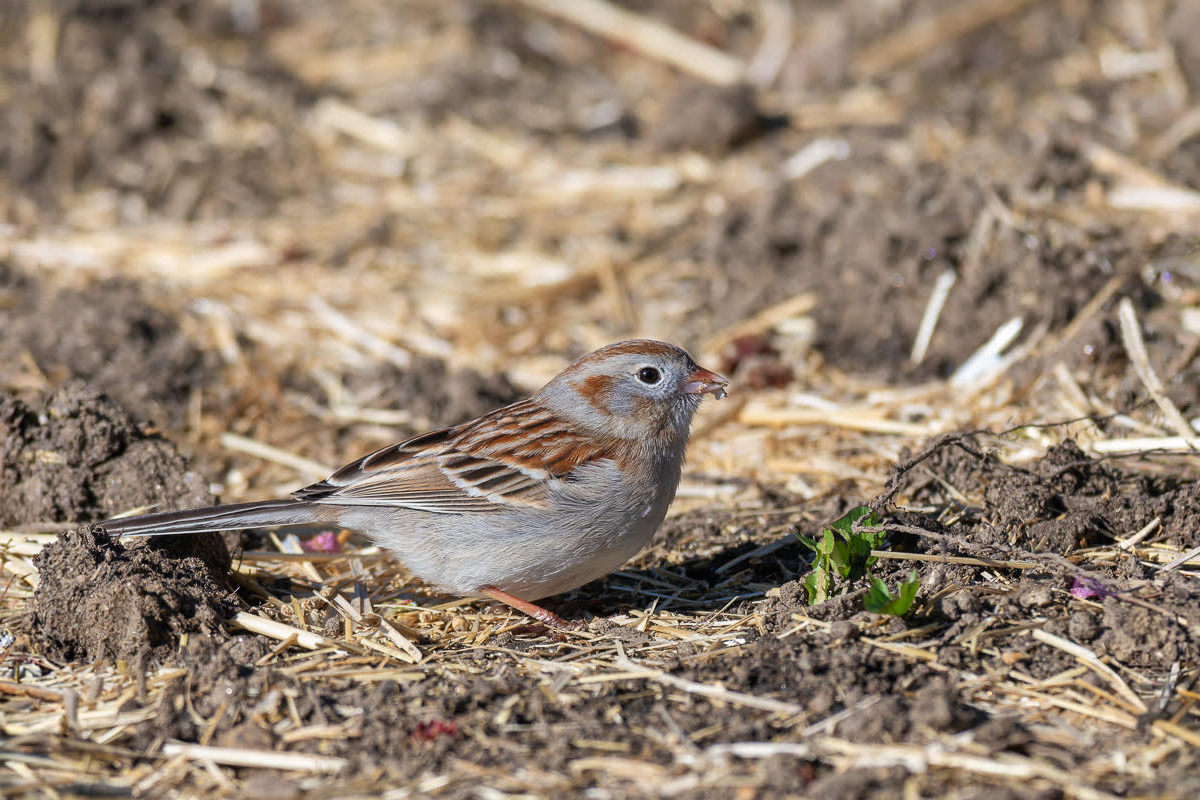
PONQUOGUE BRIDGE & DUNE ROAD After some great looks at the Inlet, we drove over to Ponquogue Bridge and had awesome views of hundreds of Common Eiders that were getting chased up into the air out around the bridge. We also had close looks at a seemingly out-of-place Dunlin hanging out on a patch of snow. A couple of the group members were lucky to see a Purple Sandpiper.
Once again, we got back into our cars for another drive down Dune Road. Pretty snow-covered vistas abounded from the tundra-like landscape, but we didn’t see many birds. Not long after, we parted ways to head home to watch the Super Bowl or the Olympics.
Species Lists Birds
Brant Canada Goose Mute Swan Eurasian Wigeon Mallard American Black Duck Greater Scaup Common Eider Surf Scoter White-winged Scoter Black Scoter Long-tailed Duck Bufflehead Hooded Merganser Red-breasted Merganser American Oystercatcher Sanderling Dunlin Purple Sandpiper Ring-billed Gull American Herring Gull Great Black-backed Gull Horned Grebe Common Loon Great Cormorant Sharp-shinned Hawk Cooper’s Hawk Northern Harrier Bald Eagle Red-tailed Hawk Red-bellied Woodpecker Merlin Peregrine Falcon Fish Crow Common Raven Horned Lark European Starling Gray Catbird Brown Thrasher Northern Mockingbird Hermit Thrush American Robin House Finch Snow Bunting Fox Sparrow Dark-eyed Junco White-throated Sparrow Savannah Sparrow Song Sparrow Yellow-rumped Warbler Domestic goose sp. (Domestic type)
Registrar: Savannah Conheady Participants: 9 Bird Species: 30 Weather: Outside: high 33 degrees, Inside: Warm room temperature
Our field trip began in the Egyptian rooms, where we spotted ducks, quail chicks, owls, falcons, vultures, ibis, and fish eagles. We then journeyed to the Etruscan rooms to spy some glorious eagles on a chariot through Rome, where we saw doves and peacocks. We then made our way to the arts of Africa, the Ancient Americas, and Oceania, and saw King vultures, sea eagles, condors, a Huia bird, and pelicans.
We then had a quick visit to Europe, where we saw some parrots and viewed beautiful merlins and peacocks at the Arab wing. We traveled to Japan to see incredible cranes woven into kimonos and herons painted on bowls, and found our way to the American wing to see delightful chickadees. It was a magnificent day to bird at The Met, and huge thanks to Linda LaBella for such a wonderful and informative tour.