Linnaean Society of New York Regular Meeting Minutes—October 8, 2024

This meeting and presentation took place entirely online via Zoom.

At 7:00 pm, President Debbie Mullins welcomed the attendees and called the Society meeting to order.

President Mullins made the following announcements:
Membership dues fund the Society’s programs and activities and are the Society’s largest source of income. President Mullins thanked those who have already paid and explained to those who haven’t how they can pay online, or by mailing a check.
New York City Council legislation, Intro 896, (Lights Out bill) is pending. The proposed bill would require privately owned commercial and industrial buildings to turn off nonessential nighttime illumination during peak bird migration. President Mullins encouraged the members of the audience to write or call their city council member to urge sponsorship of this bill. Artificial light is responsible for attracting and disorienting migrating birds, resulting in high mortality from window collisions.

Society members had been asked to vote online on two motions in advance of this meeting:  

Motion 1: Request to approve the minutes of the September, 2024, regular meeting. The minutes were approved by a vote of 128 in favor, four abstaining, and none opposed.

Motion 2: Request to approve the membership applications of ten new members. The new memberships were approved with 131 in favor, one abstaining, and none opposed. President Mullins warmly welcomed the following new members:

  • David Berger
  • Alison Dundy
  • Ann Goodwin
  • Stevan Hubbard
  • Peggy Maslow
  • Joseph Navarro
  • Lindsay Drogin
  • Nancy Rosenberg
  • Susan Klingelhoefer
  • Joan Cade

President Mullins again welcomed all the new members to the Linnaean Society, said that she was happy they had joined, and looked forward to meeting them soon. She also invited the non-member attendees to join the Society, explaining that the Society is open to everyone who has an interest in birds or other areas of natural science and that the membership application is on the Society’s website.

At 7:03 pm, President Mullins turned to the lecture program and introduced the speaker, Dr. Andrew Farnsworth, a visiting scientist in the Center for Avian Population Studies at the Cornell Lab of Ornithology and director of BirdCast—a massive collaborative research and development project working to model the dynamics of bird migration.

Lecture: “Bird Migration in the Era of Big Data: BirdCast Perspectives on the Future of Monitoring Migrating Birds,” presented by Dr. Andrew Farnsworth

This evening’s lecture, like that of last month’s, once again addressed the tragic population loss of nearly three billion birds in North America over the past fifty years.  This time the focus was on the development of quantitative tools—BirdCast, its predecessors, and other methods under development—and their power to better understand bird migration and promote solutions to reverse population declines, particularly in migrating bird species.

Dr. Farnsworth began by giving a historical perspective demonstrating how far we have come in the evaluation of bird migration data. Thanks to technological developments, especially those evolving in the digital age, the amount of bird data has exploded along with analytical abilities to identify patterns, trends, and relationships from enormous quantities of data. He described the first coordinated scientific effort to quantify nocturnal bird migration across the continental United States. During four October nights in the early 1950s, hundreds of observers trained telescopes on the moon and counted the silhouettes of birds. It took almost fifteen years to analyze and publish the results. In addition, early in the development of radar technology it was recognized that birds were being detected on radar scans. Weather radar scans from this period were recorded on 16 mm and 35 mm film. Correlating the moon-watching data with weather surveillance radar data became one of the foundational approaches to the development of the BirdCast bird migration quantification model. Today, computer power, big data analysis techniques, and machine learning are being harnessed to interpret and manage the enormous quantities of data and to present information in close to real-time on the BirdCast platform.

Moving on to BirdCast itself, Dr. Farnsworth presented a map of the United States showing all the weather surveillance radar locations, with weather superimposed and blue blotches (which are the birds) around many of the radar locations. Next he showed an example of a BirdCast live bird migration map recorded on October 6, 2023, at 22:20 ET, and described many of its features. He noted that this particular night marked the largest migration night ever recorded on BirdCast; he hopes that conservation work will cause this number to increase. The migration map he showed was on a continental scale, but BirdCast also provides information at state and county levels; to illustrate, he showed New York County examples from 2021, 2022, 2023, and 2024. The 2024 panel was particularly notable. It was from three nights before, on October 5th, when the largest number of birds yet recorded in the BirdCast/dashboard era occurred in Manhattan, with over one million crossing over the county—an estimated 1,028,300 birds.

From the perspective of bird conservation, one of the powerful outcomes of the BirdCast project has been the ability to reliably forecast bird migration—both the numbers and the locations of where the birds are going to be. This has big implications for reducing bird collisions with buildings and windows—a major cause of the decline in populations of migrating birds. Dr. Farnsworth talked about how lights attract and disorient birds, pointing out that untreated glass can be deadly, but when lights are turned off, typical migration behavior resumes.

BirdCast migration forecasting, in tandem with initiatives for turning out lights on high migration nights, can substantially reduce the number of bird collisions and fatalities, as can bird-safe window designs and retrofits. Dr. Farnsworth cited the example of McCormick Place, an enormous, glass-faced convention center in Chicago along the shoreline of Lake Michigan that is directly on the Mississippi Flyway. For decades, it has been the site of large numbers of bird collisions and resulting deaths, especially during bird migration. A particularly high number of bird fatalities on the night of October 4-5, 2023, received a lot of press. McCormick Place installed bird-safe window film in September, 2024, and now participates in the Lights Out Chicago program, closing drapes at night, and reducing lighting during peak migration periods. Dr. Farnsworth has heard that since these changes were made, the number of collisions has dropped dramatically for the first time in forty years. He cited other examples of successful Lights Outs programs and bird-safe design, and hopes that they will bring an awareness and motivation for bird conservation around the world.

Dr. Farnsworth’s final topic was evolving technologies for using big data in the study of bird migration. He talked about the identification of birds by sound, and collecting and analyzing flight calls of nocturnal migrating birds. He also discussed the potential to use today’s technology to analyze the pre-digital migration radar data from the 1950s and 60s in order to gain more understanding of historical migration: the intensity of migration, where it was occurring, its relationship to weather, and how it has changed. He talked about remote sensing, and how it might be used to understand bird biology and behavior interacting in the atmosphere—for example, when unusual events occur, like hurricane Milton. He also mentioned thermal photography as a way to identify bird migration at night.

And why go to all this effort, gathering all this data, pooling community input, analyzing it all?  The bottom line is that understanding the science allows us to make changes that will reverse this “horrible curve” and thereby increase bird populations.

At 8:00 pm, Vice President Doug Futuyma thanked Dr. Farnsworth for a fantastic talk, saying that it had been amazing. He then hosted the Q&A session.

At the conclusion of the Q&A, Vice President Futuyma thanked Dr. Farnsworth again for a really, really interesting talk, and at 8:32 pm the meeting was adjourned.

A recording of this meeting in its entirety can be found on the Linnaean Society of New York website.

Respectfully submitted by Lisa Kroop, Recording Secretary
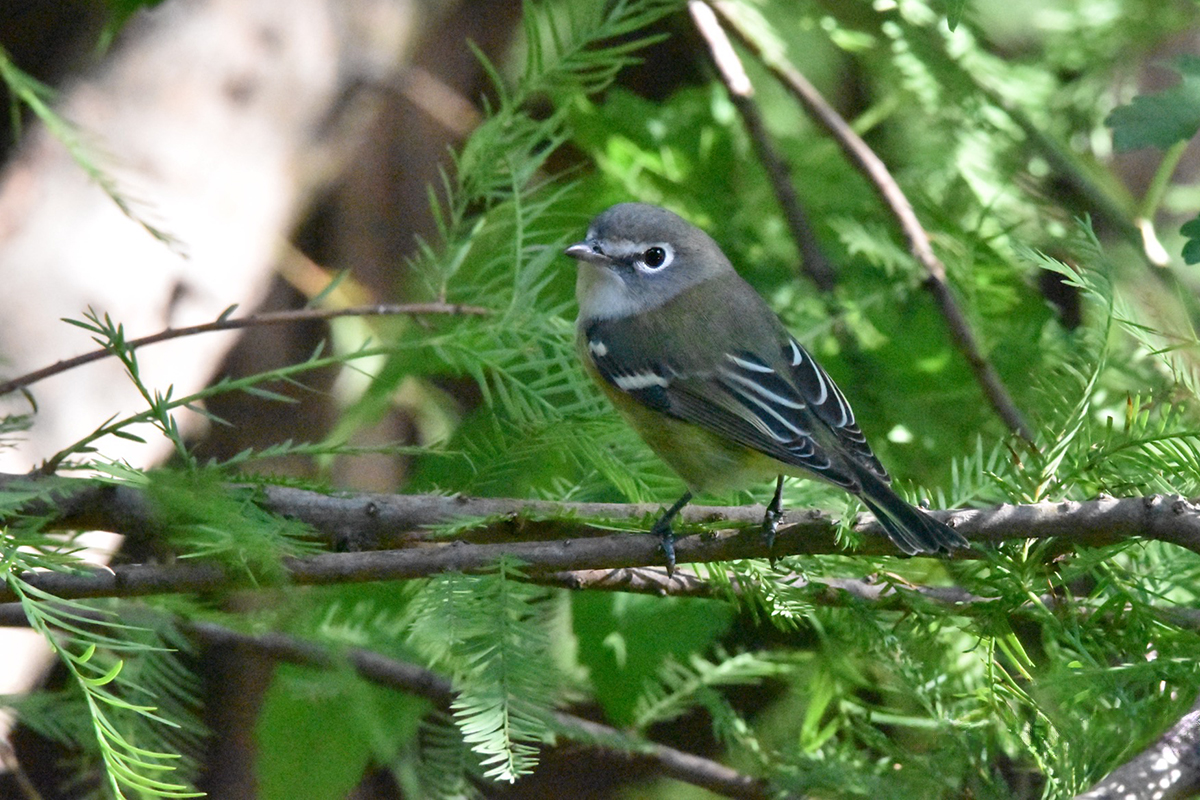
Better Bird Photography Workshop with Richard Davis, 10/20/2024

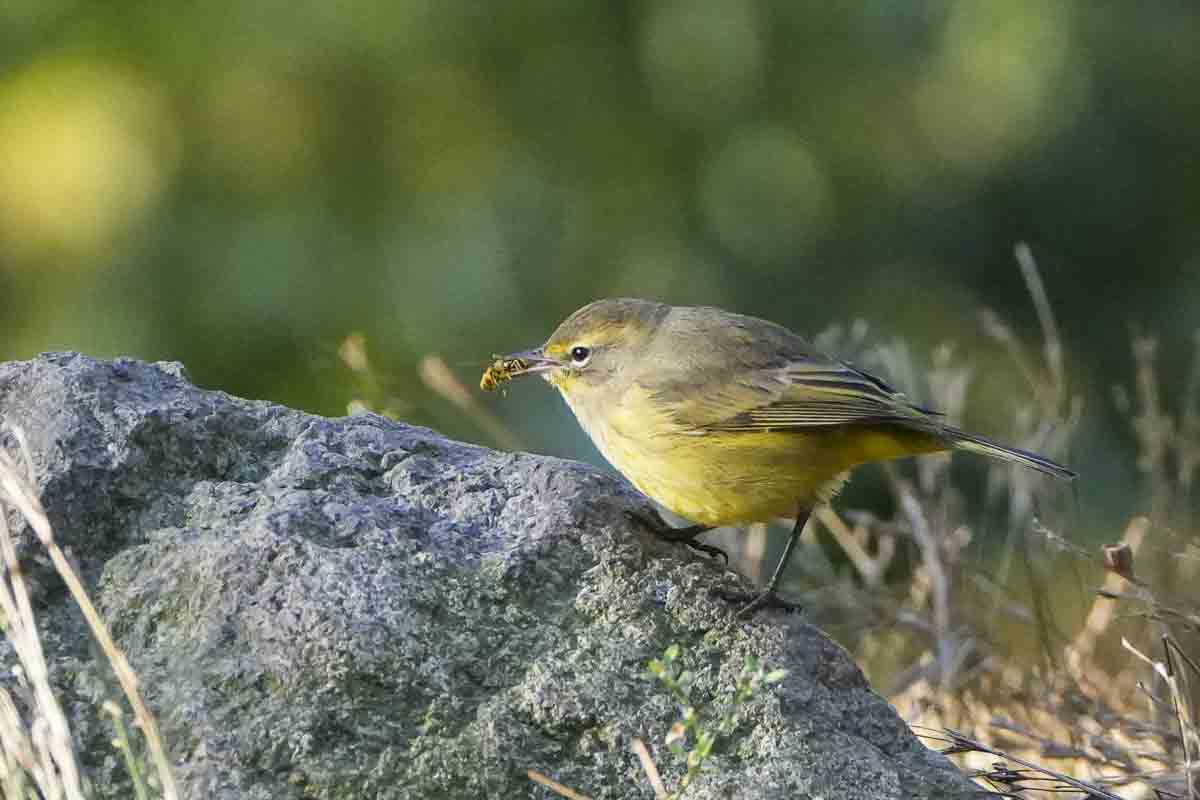
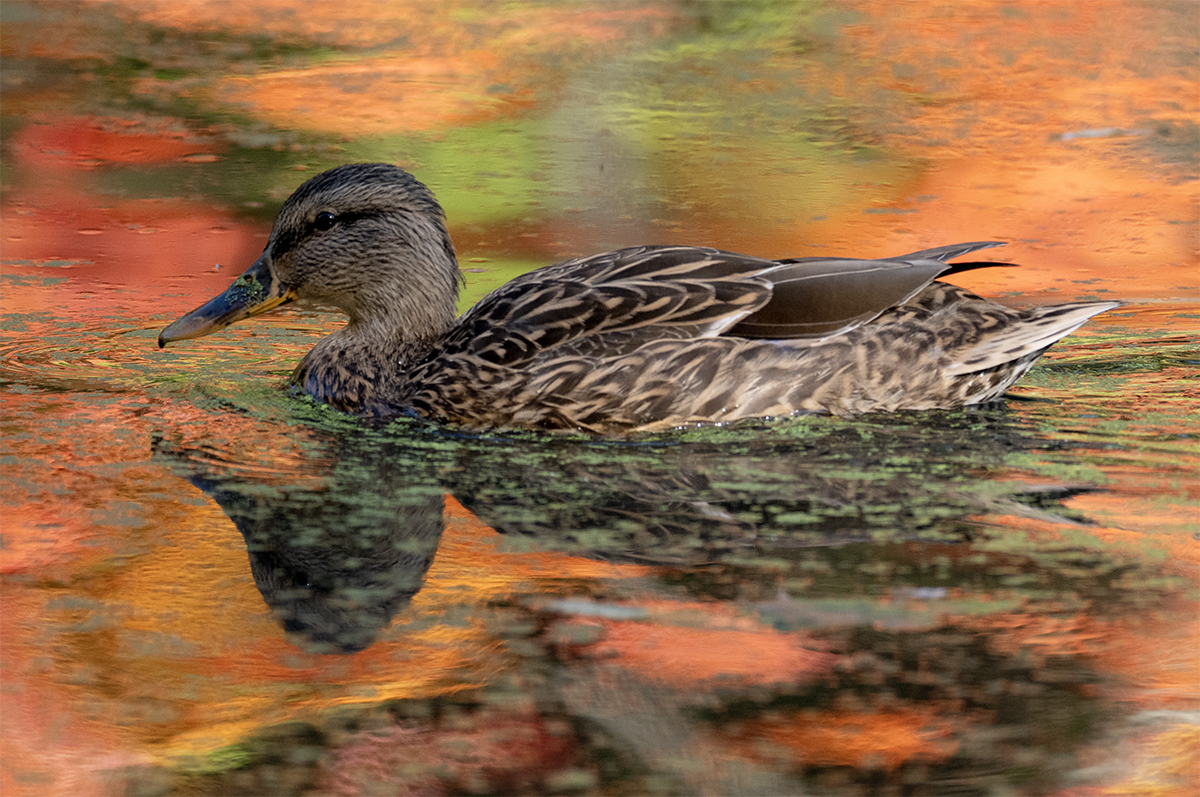
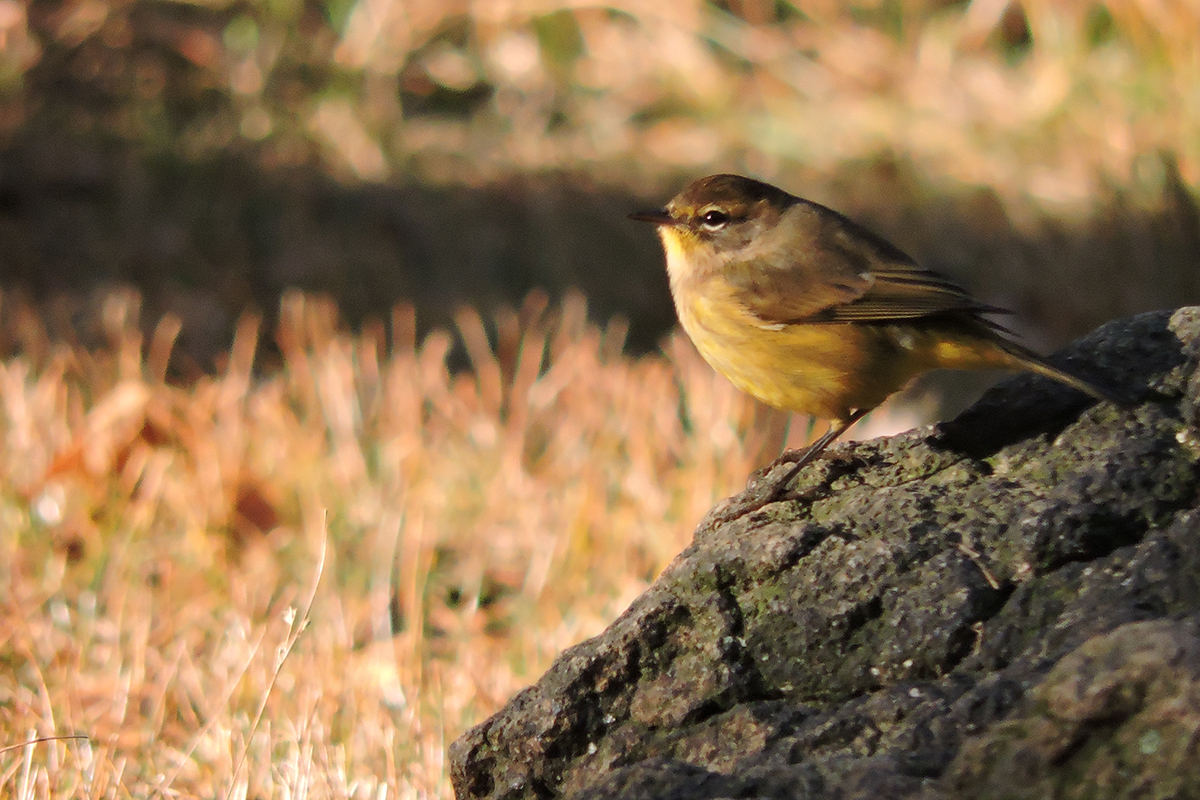
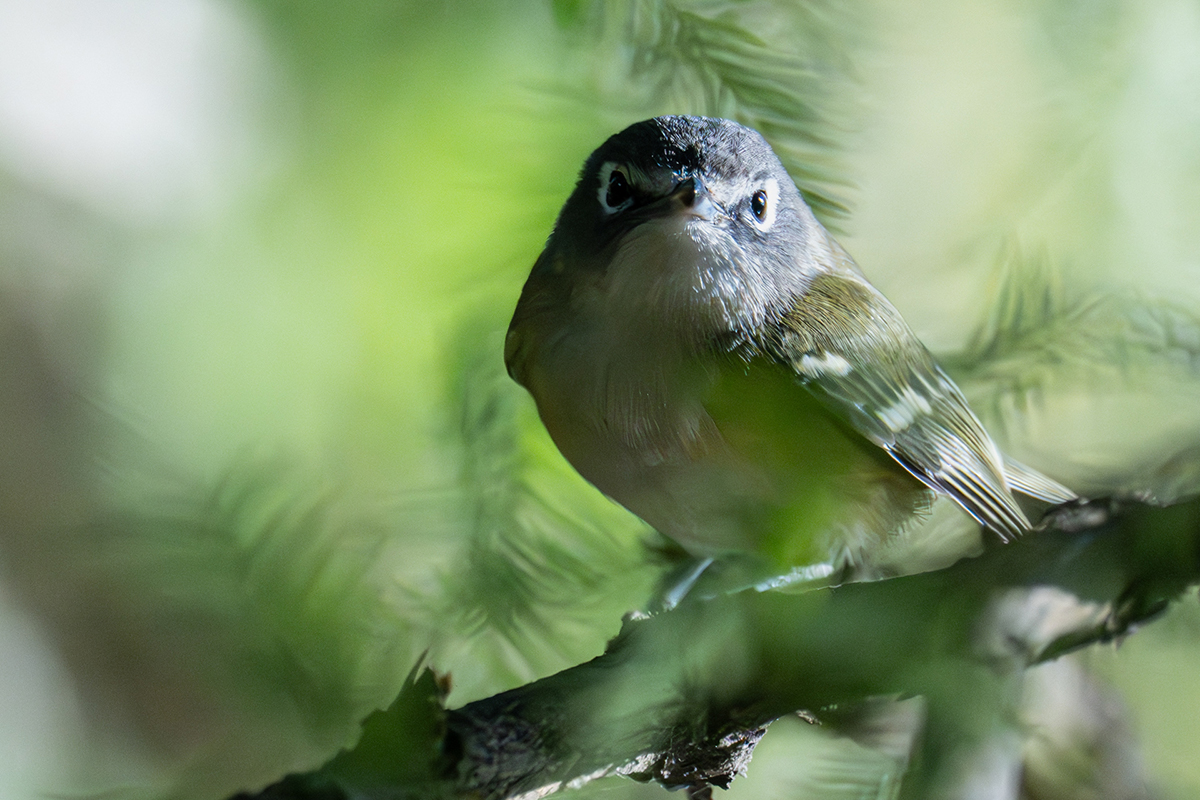
A small group of enthusiastic bird photographers met at the north end of Central Park to practice bird photography techniques. We had beautiful light, mild fall weather, and a lovely backdrop of foliage to bring out our creativity. Almost immediately a cooperative Palm Warbler hopped out and offered looks for several minutes at the edge of the pool. A Blue-headed Vireo near the boardwalk offered more of a challenge, but also granted several opportunities to try for a shot. Everyone came away with some camera tips as well as inspiration for their next outing.

Species List

Canada Goose
Wood Duck
Northern Shoveler
Gadwall
Mallard
Green-winged Teal
Mourning Dove
American Woodcock
Red-tailed Hawk
Red-bellied Woodpecker
Downy Woodpecker
Northern Flicker
Eastern Phoebe
Blue-headed Vireo
Blue Jay
Tufted Titmouse
Ruby-crowned Kinglet
Golden-crowned Kinglet
White-breasted Nuthatch
Gray Catbird
Northern Mockingbird
Hermit Thrush
American Robin
House Sparrow
Dark-eyed Junco
White-throated Sparrow
Song Sparrow
Swamp Sparrow
Brown-headed Cowbird
Northern Waterthrush
Black-throated Blue Warbler
Palm Warbler
Yellow-rumped Warbler

Birds & Brews: Nighthawk edition with Alan Drogin, 9/12/2024

Registrar: Amanda Bielskas
Weather: Beautiful early fall day, 62–73 degrees F, winds 15 mph
Participants: 26
Bird species: 29

This was the first LSNY Birds & Brews walk of the fall. Fall evening walks are challenging to organize, because we start losing light fairly early.

The walk started at 81st Street and Central Park West. We began by birding along the paths of the park to give late arrivals time to catch up. Several raptors flew over, including an Osprey, a Red-tailed Hawk, and an American Kestrel. We spotted both White and Red-breasted Nuthatches in the pine trees and also found a good spot to view a Chimney Swift roost. We were targeting Common Nighthawks on this trip, but we had about an hour to bird before losing too much light, when we had to head to Belvedere Castle to observe Nighthawks.

Once at the castle’s overlook, we observed a few more species, including a Great Blue Heron and at least 200 Chimney Swifts going to roost in the 80s and along Central Park West. The stars of the night—the nighthawks—did not disappoint; a pair flying over Belvedere Castle circled several times just after sunset. There were perhaps more than two nighthawks, but it was hard to tell since they were circling behind the castle and nearly always appeared together.

In addition to the nighthawks circling the castle, we also had several Eastern Red Bats. After the sun had set fully, we headed off to a bar on the West Side for libations and some great conversation. We totaled 29 species for the evening and fun was had by all.

Species List

Birds
Canada Goose
Mallard
Rock Pigeon (Feral Pigeon)
Mourning Dove
Common Nighthawk
Chimney Swift
American Herring Gull
Double-crested Cormorant
Great Blue Heron
Osprey
Red-tailed Hawk
Red-bellied Woodpecker
Northern Flicker
American Kestrel
Blue Jay
American Crow
White-breasted Nuthatch
Red-breasted Nuthatch
Carolina Wren
European Starling
Gray Catbird
Northern Mockingbird
American Robin
House Sparrow
Common Grackle
Black-and-white Warbler
American Redstart
Northern Parula
Northern Cardinal

Mammals
Eastern Red Bat
Norway Rat
Raccoons
Squirrel

Lenore Swenson, 1946-2024: A Remembrance

Lenore Swenson, an active member of New York’s bird-, butterfly-, and dragonfly-watching communities, passed away on June 18, 2024, a few days short of her 78th birthday, after a lengthy battle with cancer.

Lenore grew up on Long Island and attended Valley Stream Central High School. She received an undergraduate degree from SUNY Stony Brook and a master’s from the New School for Social Research. She was a social worker for New York City for many years until she retired.

Lenore first joined the Linnaean Society in 1994. She served as council member from 2011–2013 and again from 2014–2016. She was also chairperson of the field trips committee in 2011, 2012, 2013, and 2014. She initiated and then led the Starr Saphir Spring Migration and Fall Migration Memorial Walks, beginning in 2014 up until the present. She was elected a Fellow of the Linnaean Society in 2013.

I first met Lenore in 2001, when I began attending Starr Saphir’s walks. She was Starr’s scribe, keeping detailed records about each walk as well as consulting with Starr about what we saw and heard. She was also an avid butterfly and dragonfly student, and freely shared her expertise with others around her. Her other interests included archaeology; before she was a birder, she travelled to Egypt and the Middle East to see ancient ruins. 

Lenore supported many nature organizations. She donated to the Long Island Nature Conservancy, which purchases key properties for conserving habitats, and was a member of New York City Audubon, New Jersey Audubon, National Audubon, Massachusetts Audubon, the Northeast Chapter of the American Littoral Society, the NYC Butterfly Club, the Appalachian Club, the American Museum of Natural History, the Brooklyn Bird Club, and the Queens Bird Club.

She also traveled throughout the U.S. to see birds. As Kathleen Howley recalls, “Once she could afford a car, I remember she made a trip to Michigan specifically to see the Kirtland’s Warbler. Later, she laughed about it because the following year or so, a Kirtland’s was found in Central Park.” She also participated for many years in New York City Audubon’s Christmas Bird Count (CBC) as well as the Massachusetts CBC on Cape Cod.

Perhaps I can best describe Lenore from the numerous comments made by her friends and colleagues on social media:

            She was a veteran birder and a dedicated naturalist.

            She was a gentle person and a wonderful birder. 

            She had a passion for ornithology. 

            She was a patient source of bird wisdom. 

            I have good memories of observing nature with her. 

            Her passing is a huge loss for the nature community.

I miss her. Over the years Lenore became one of my closest birding buddies. She shared so much of her knowledge about birds—she was always my authority. I treasure her memory.

— Alice Deutsch, Past President

NYC Area Rare Bird Alert, 6/21/2024

– RBA
* New York
* New York City, Long Island, Westchester County
* Jun. 21, 2024
* NYNY2406.21

– Birds mentioned
BLACK-BELLIED WHISTLING-DUCK+
AMERICAN FLAMINGO+
WHITE-FACED IBIS+
SWALLOW-TAILED KITE+
(+ Details requested by NYSARC)

Common Eider
WILSON’S PHALAROPE
Lesser Black-backed Gull
Gull-billed Tern
Caspian Tern
Black Tern
BROWN PELICAN
Least Bittern
Red-headed Woodpecker
Acadian Flycatcher
PROTHONOTARY WARBLER
Mourning Warbler
YELLOW-THROATED WARBLER
BLUE GROSBEAK

– Transcript

If followed by (+) please submit documentation of your report
electronically and use the NYSARC online submission form found at
http://www.nybirds.org/NYSARC/goodreport.htm

You can also send reports and digital image files via email to nysarc44
(at)nybirds{dot}org.

If electronic submission is not possible, hardcopy reports and photos or
sketches are welcome. Hardcopy documentation should be mailed to:

       Gary Chapin – Secretary
       NYS Avian Records Committee (NYSARC)
       125 Pine Springs Drive
       Ticonderoga, NY 12883

Hotline: New York City Area Rare Bird Alert
Number: (212) 979-3070

Compiler: Tom Burke
Coverage: New York City, Long Island, Westchester County

Transcriber: Ben Cacace

BEGIN TAPE

Greetings. This is the New York Rare Bird Alert for *Friday, June 21st 2024*
at 11pm. The highlights of today’s tape are AMERICAN FLAMINGO,
SWALLOW-TAILED KITE, BLACK-BELLIED WHISTLING-DUCK, WHITE-FACED IBIS, BROWN
PELICAN, WILSON’S PHALAROPE, PROTHONOTARY and YELLOW-THROATED WARBLERS,
BLUE GROSBEAK and more.

The AMERICAN FLAMINGO seems to have settled in at Georgica Pond in
Wainscott, present there all week despite potentially disturbing incidents
and hopefully it will continue at least for the short term. The best
approach to seeing the FLAMINGO on Georgica Pond stills seems to be to park
in the small lot at the end of Beach Lane west of the pond and walk east
along the beach to the overview of the pond. For those without local
parking permits, plan your visit for early in the morning because expensive
tickets are being issued once the beach activity picks up usually around 10
am.

The SWALLOW-TAILED KITE provided a nice but brief view Sunday morning as it
cruised over the beach at Fort Wadsworth on Staten Island just south of the
Verrazzano-Narrows Bridge.

Two BLACK-BELLIED WHISTLING-DUCKS moving from the East Pond to the West
Pond last Friday at Jamaica Bay Wildlife Refuge continued on the West Pond
for Saturday but then moved on. An adult WHITE-FACED IBIS occasionally seen
as it visits the south end of the East Pond was reported there again on
Wednesday and a WILSON’S PHALAROPE also appeared around the south end on
Wednesday and Thursday. A LEAST BITTERN has been in the same area as the
East Pond but has been seen best as it feeds around Big John’s Pond, nicely
viewed from the bird-blind on the way to the Raunt overlook. One or two
GULL-BILLED TERNS also continue to visit the south ends of both the East
and West Ponds and a female COMMON EIDER was still on the West Pond last
Saturday.

Possibly the same BROWN PELICAN was seen Monday evening near the ferry
terminal at Davis Park on central Fire Island and then briefly on the
mudflats off Oak Beach in Fire Island Inlet Tuesday morning.

A young male COMMON EIDER was still in the Fort Tilden to Breezy Point
stretch of coastline at least to Wednesday.

A nice count of 18 LESSER BLACK-BACKED GULLS and a BLACK TERN were out at
Breezy Point Tuesday with another BLACK TERN also at Nickerson Beach Monday
while a CASPIAN TERN visited Georgica Pond last Saturday.

A RED-HEADED WOODPECKER at Connetquot River State Park Wednesday has
continued in the same location and may be nesting there.

Single ACADIAN FLYCATCHERS recently in Brooklyn were seen at Calvert Vaux
Park Saturday and at Green-wood Cemetery Sunday.

A PROTHONOTARY WARBLER was spotted Sunday at Blydenburgh County Park in
Hauppauge east of Stump Pond. YELLOW-THROATED WARBLER continues at the
Bayard Cutting Arboretum in Great River and a late MOURNING WARBLER
appeared in Brooklyn Bridge Park last Monday.

BLUE GROSBEAKS continue out in the Calverton area concluding around the
Preston Ponds complex.

To phone in reports, call Tom Burke at (914) 967-4922.

This service is sponsored by the Linnaean Society of New York and the
National Audubon Society. Thank you for calling.

– End transcript

Sterling Forest State Park and Environs with David Spawn and Tod Winston, 5/18/2024

Registrar: Lisa Kroop
Participants: 18
Weather: Cloudy with sun later in the morning, with temperatures ranging from 60 to 70 degrees
Bird Species: 73
Trip Report Written by: Tod Winston and David Spawn


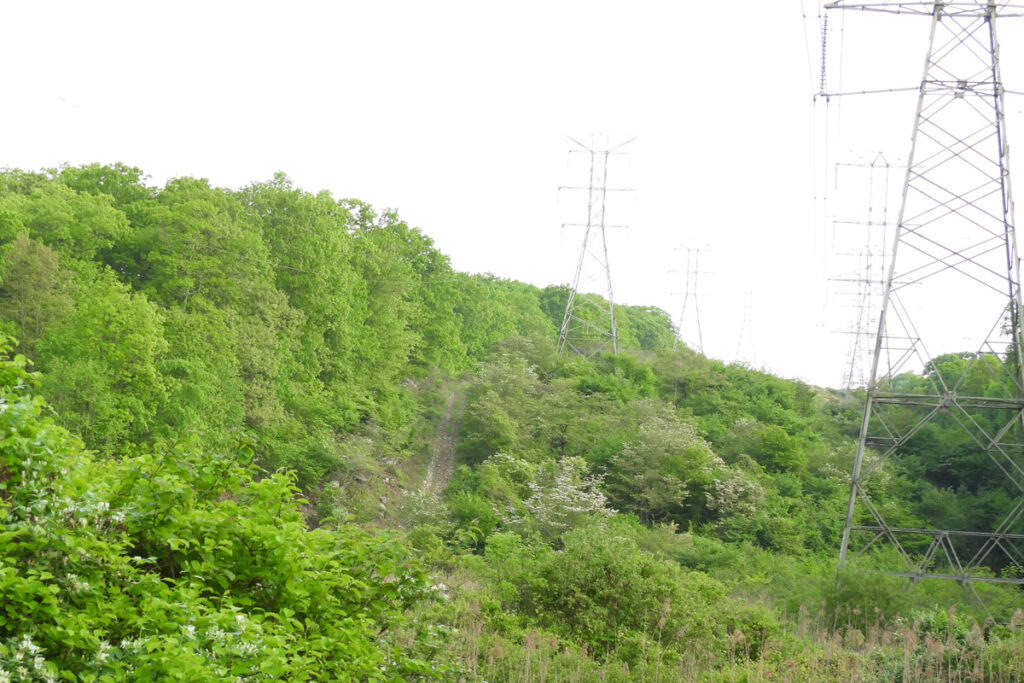
Our May 18 field trip to Sterling Forest State Park included birding in four distinct areas: the powerline cut at the end of Ironwood Drive, the thick woodlands along Ironwood Drive itself, the area surrounding the Sterling Forest State Park Visitor Center, and several swamps along Warwick Brook Road (outside of the state park). In all, we identified 73 bird species by sight or sound during the trip, including 20 warbler species.

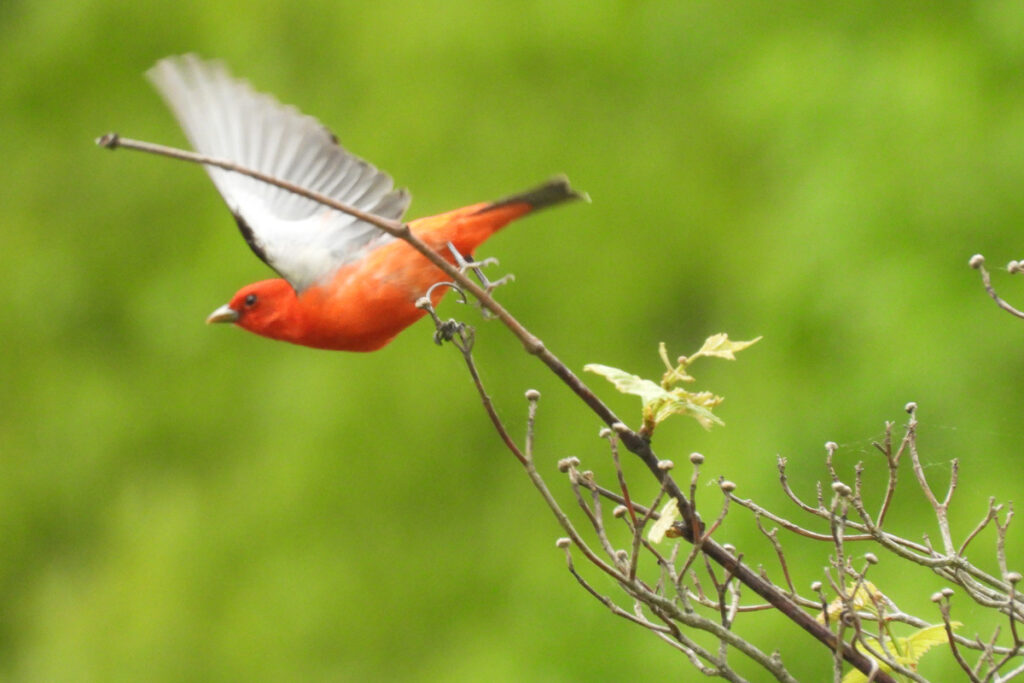
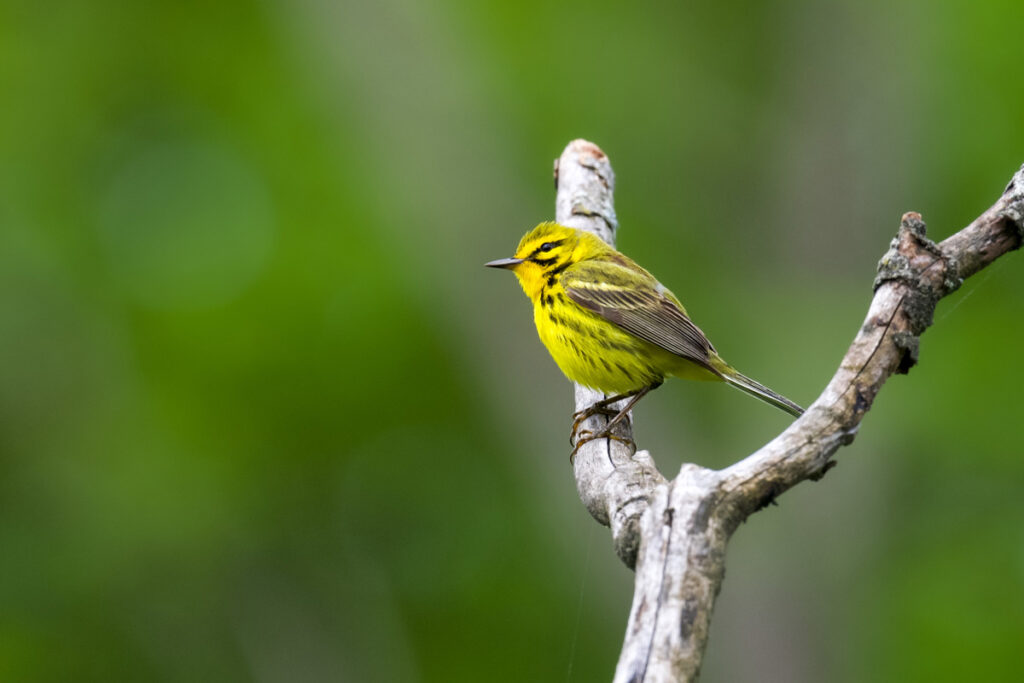
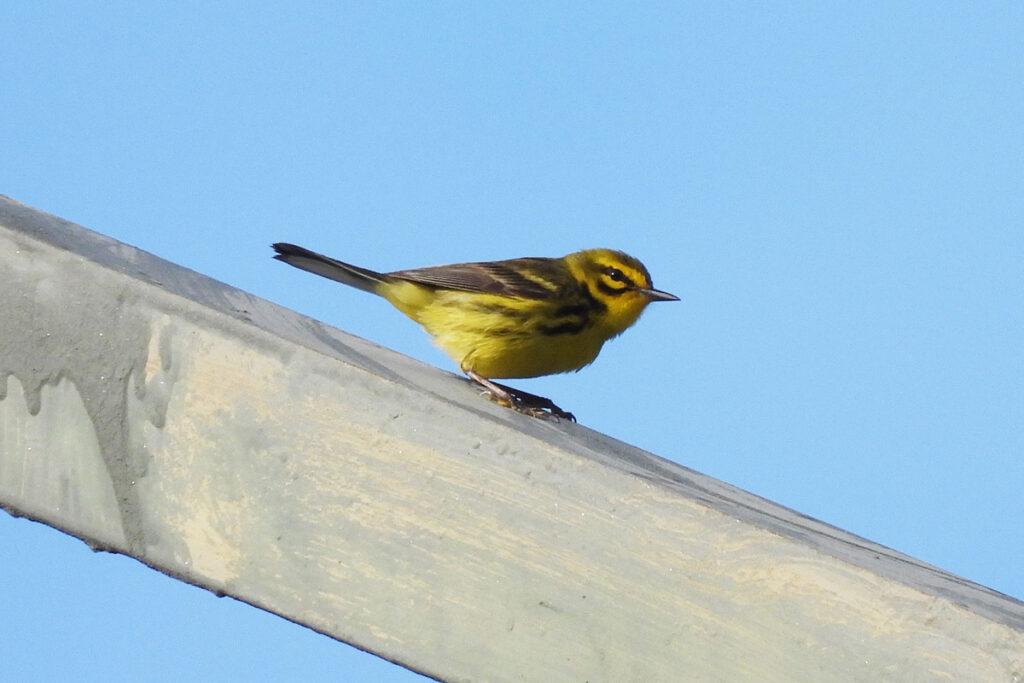
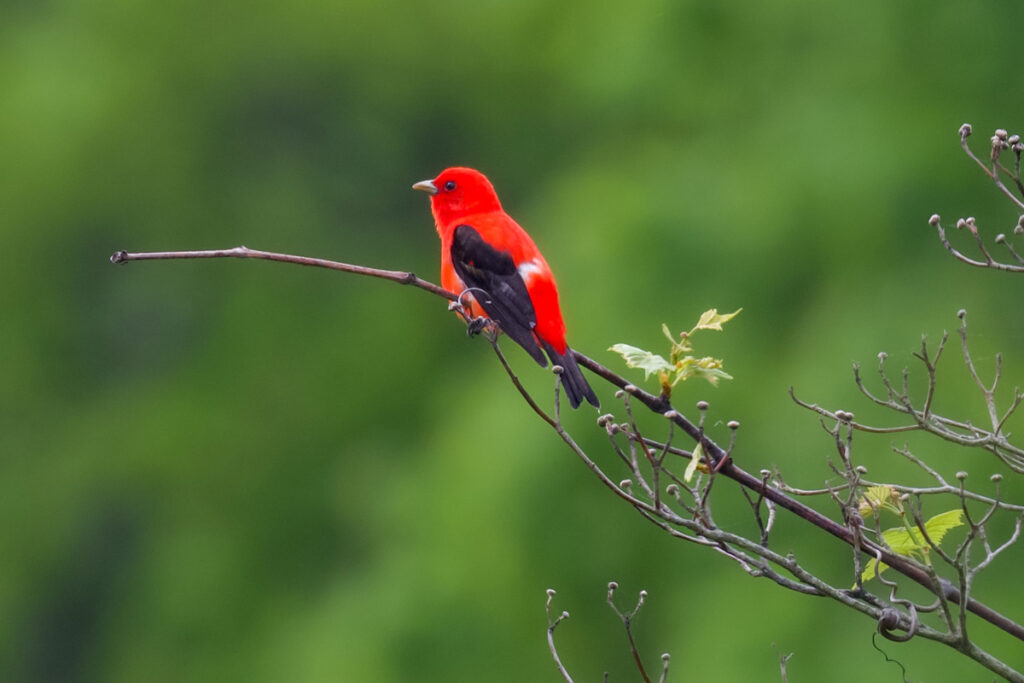
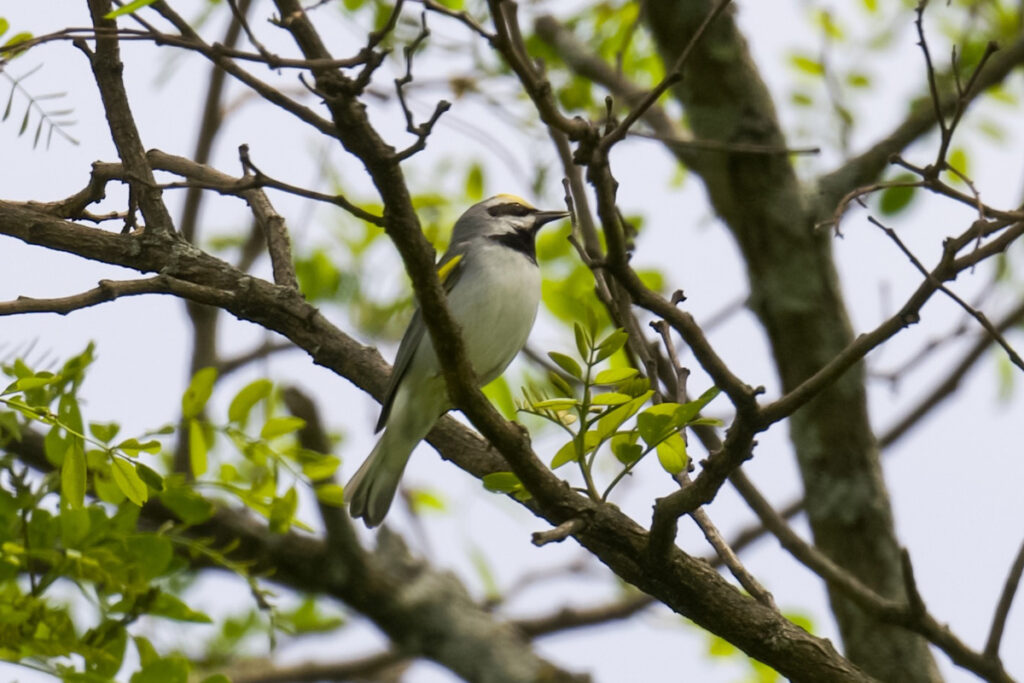
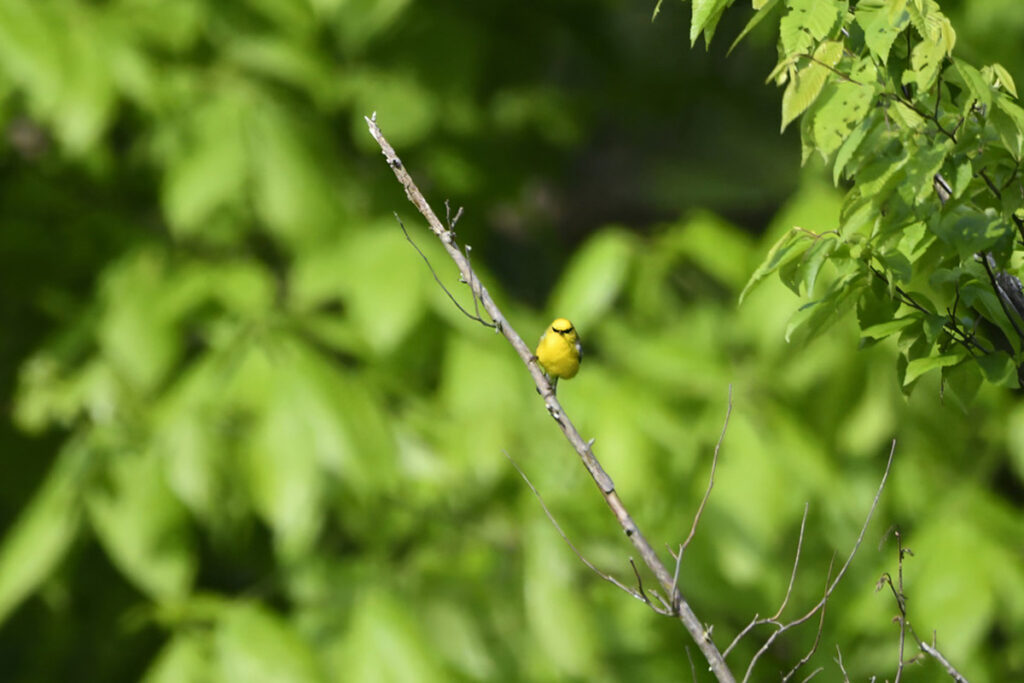
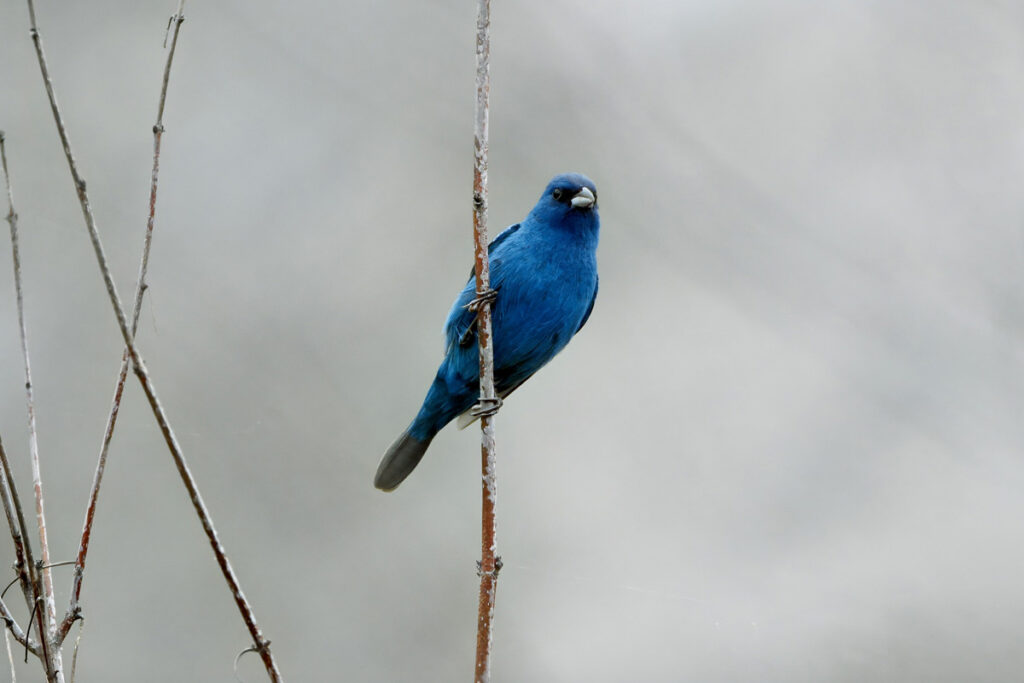
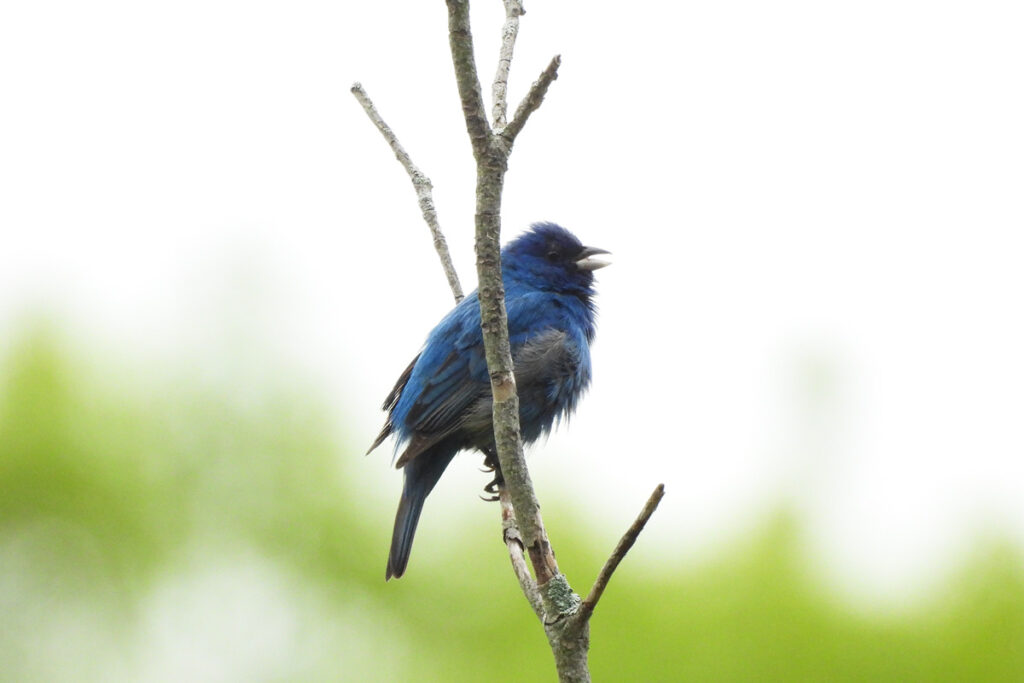
Our morning began at 7:30am at the end of Ironwood Drive, our principal stop. Right away we heard the song of the Golden-winged Warbler, a top target for many in the group, as two male Wood Ducks flew overhead and Prairie Warblers, Blue-winged Warblers, and Indigo Buntings sang around us. A good view of the “Golden-wing” eluded most, however. After some fruitless listening and searching, we set off north up the powerline cut in hopes of finding more Golden-wings, fording a stream along the way. Highlights of this up-and-down portion of the trip included even more singing buntings, Prairie Warblers, and Blue-winged Warblers, along with several Field Sparrows. We also got nice views of Great Crested Flycatcher, Scarlet Tanager, and a pair of Yellow-throated Vireos feasting on Tent Caterpillars. We did not hear any more Golden-wings, however.

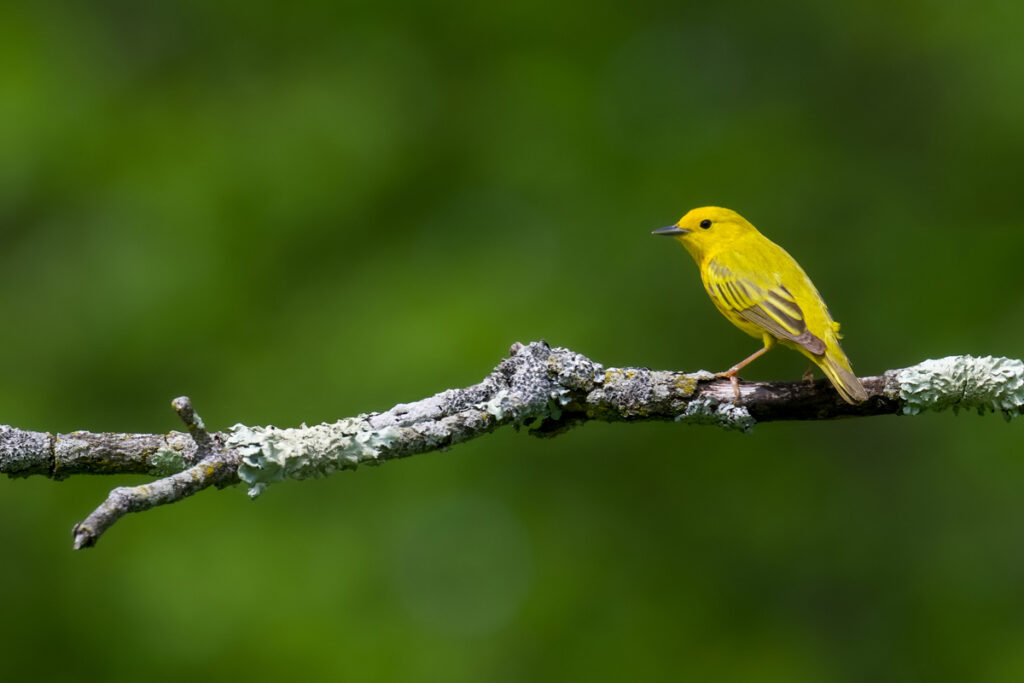
Determined to find this coveted species, we returned to the parking lot, where we again heard the Golden-wing’s typical four-beat, buzzy song. After much determined searching, all members of the group eventually succeeded in getting a view of the singing male Golden-winged Warbler, along with a cooperative Yellow-billed Cuckoo. Other species seen or heard as we birded along the powerline cut included Great Blue Heron, Green Heron, Wild Turkey, Eastern Kingbird, Baltimore Oriole, Yellow Warbler, American Redstart, Worm-eating Warbler, and Tennessee Warbler.

Perhaps the second-most sought-after species of the trip, the Cerulean Warbler, was heard by the pumphouse just west of the powerline cut, and seen by some—but a slow caravan up Ironwood Drive was needed to find and see several more singing Ceruleans. Here we also heard a calling Red-shouldered Hawk and were granted a quick view of a Pileated Woodpecker in flight.

We stopped at the Sterling Forest State Park Visitor Center to enjoy a rest, lunch, and scones à la David—and also added two more warbler species for the day–singing but skulky Pine and Hooded Warblers. A perched Turkey Vulture and a nesting pair of Barn Swallows were lunchtime bonuses.

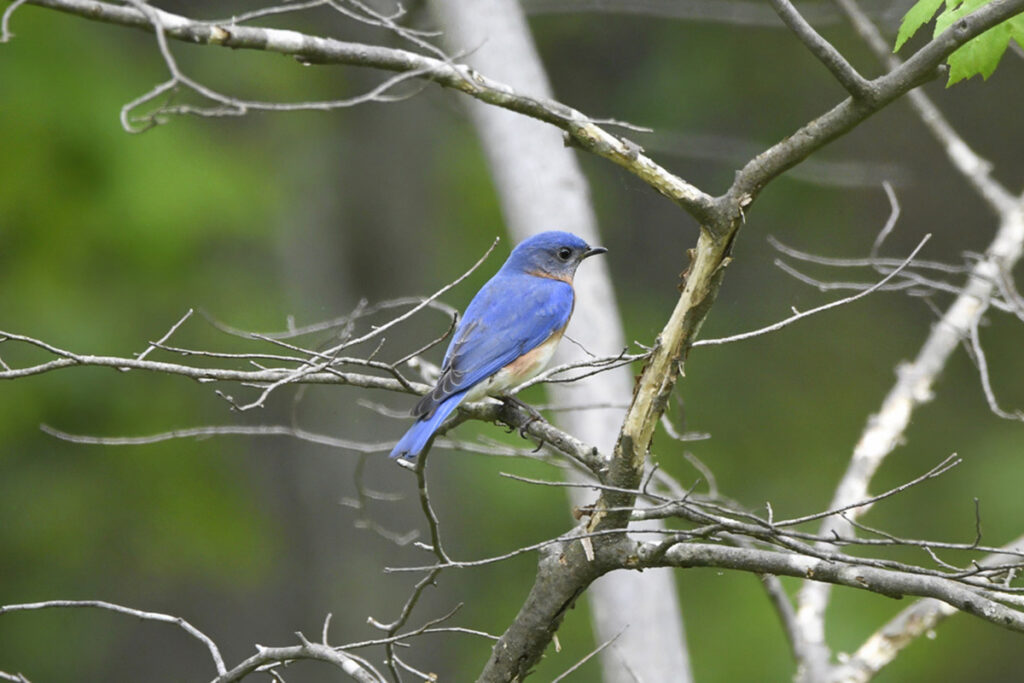
The fourth and final leg of our birding journey included two stops overlooking swamps along Warwick Brook Road. In this distinctive and very birdy habitat, we were treated to views of a pair of Eastern Bluebirds, a nesting Northern Flicker, and a Red-tailed Hawk being harassed by a Red-winged Blackbird, while a Warbling Vireo and a Wood Thrush sang in the background.

Species Lists

Birds
Canada Goose
Wood Duck
Wild Turkey
Mourning Dove
Yellow-billed Cuckoo
Ruby-throated Hummingbird
Green Heron
Great Blue Heron
Turkey Vulture
Osprey
Red-shouldered Hawk
Red-tailed Hawk
Red-bellied Woodpecker
Downy Woodpecker
Pileated Woodpecker
Northern Flicker
Eastern Wood-Pewee
Eastern Phoebe
Great Crested Flycatcher
Eastern Kingbird
Yellow-throated Vireo
Warbling Vireo
Red-eyed Vireo
Blue Jay
Common Raven
Black-capped Chickadee
Tufted Titmouse
Tree Swallow
Barn Swallow
White-breasted Nuthatch
Blue-gray Gnatcatcher
House Wren
Carolina Wren
European Starling
Gray Catbird
Northern Mockingbird
Eastern Bluebird
Veery
Wood Thrush
American Robin
Cedar Waxwing
American Goldfinch
Chipping Sparrow
Field Sparrow
Eastern Towhee
Song Sparrow
Baltimore Oriole
Red-winged Blackbird
Brown-headed Cowbird
Common Grackle
Ovenbird
Worm-eating Warbler
Louisiana Waterthrush
Northern Waterthrush
Golden-winged Warbler
Blue-winged Warbler
Black-and-white Warbler
Tennessee Warbler
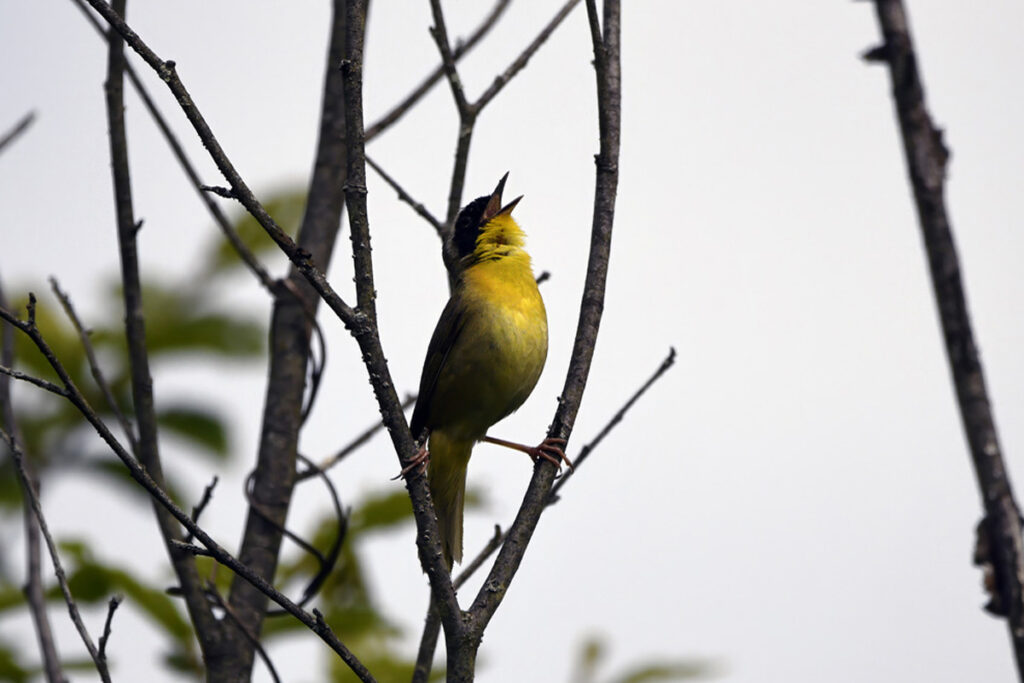
Common Yellowthroat
Hooded Warbler
American Redstart
Cerulean Warbler
Northern Parula
Magnolia Warbler
Yellow Warbler
Chestnut-sided Warbler
Blackpoll Warbler
Pine Warbler
Prairie Warbler
Black-throated Green Warbler
Scarlet Tanager
Northern Cardinal
Indigo Bunting