Central Park Spring Migration Walk with Ken Chaya, Richard Davis, Elijah Shiffer and Kevin Sisco, 4/28/2026

Registrar: Michelle Zorzi
Participants: 72
Weather: 48 F – 63 F and partly sunny, with a light breeze.
Bird Species: 59

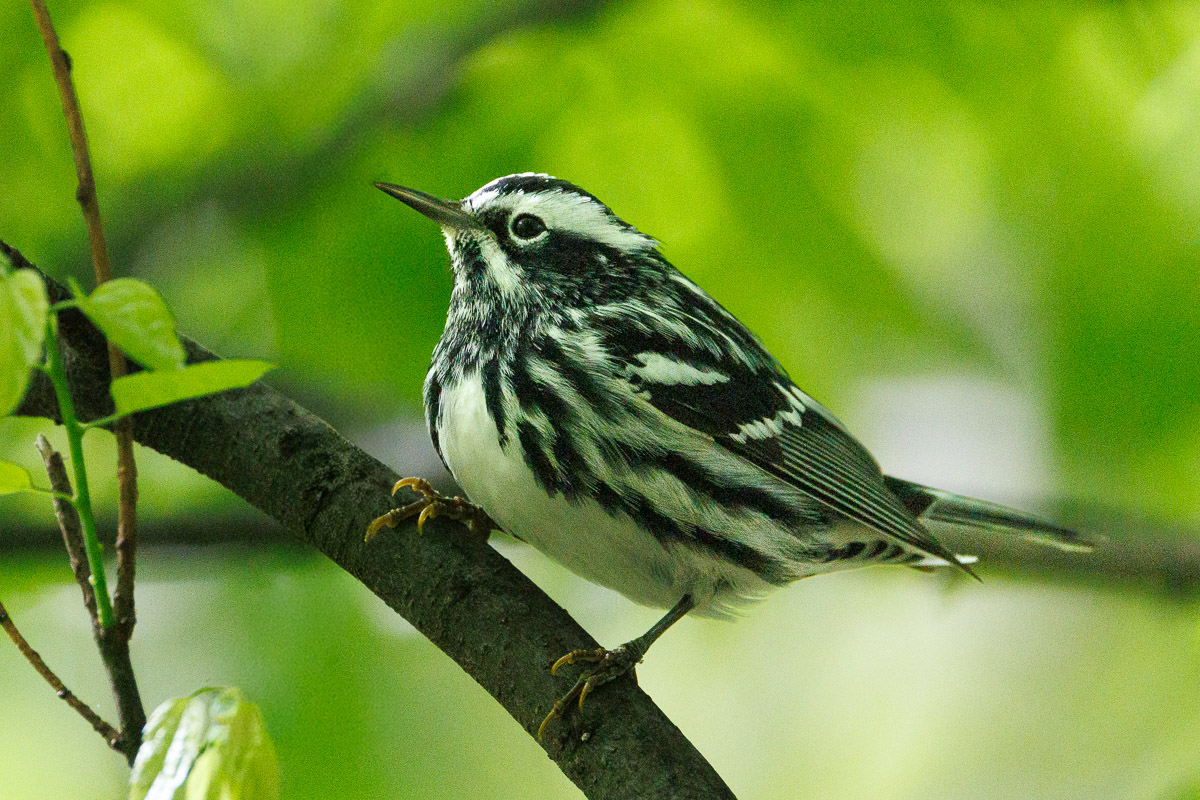
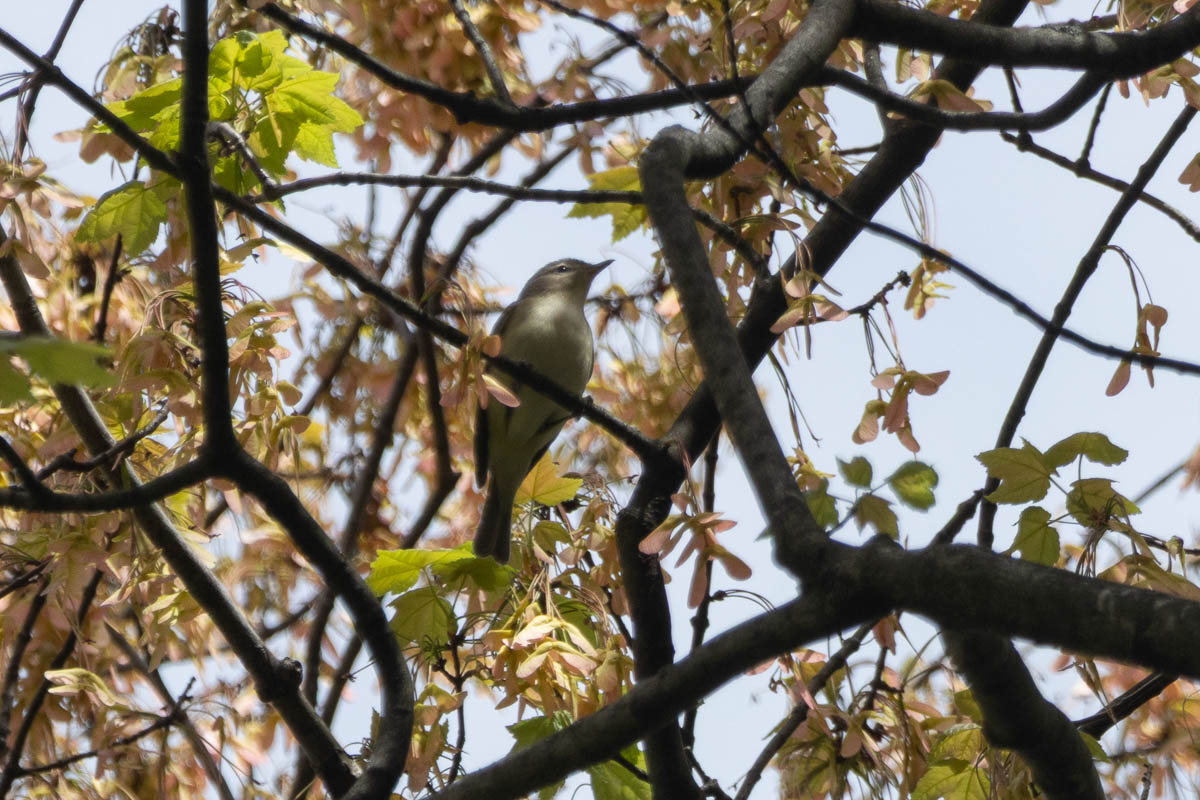
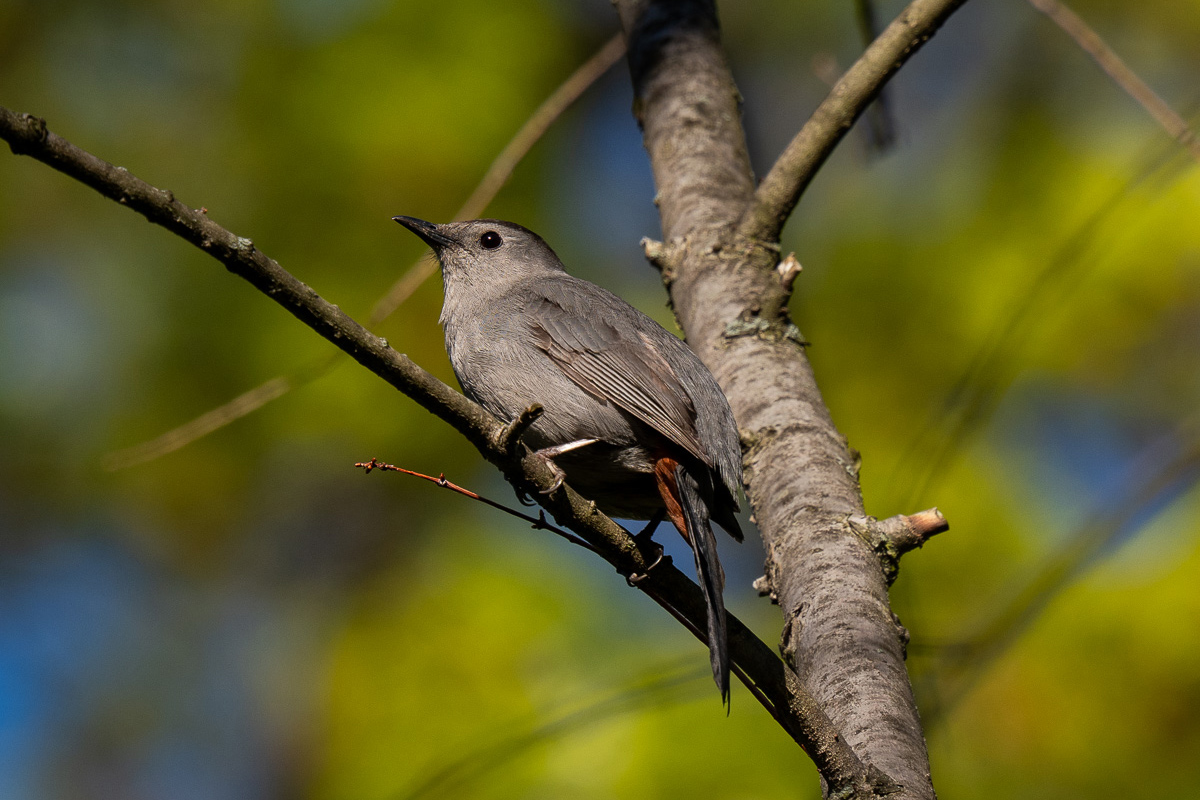
It was a beautiful spring day and 72 birders gathered at 7:30 am to see what migration might bring. The walk began a bit slowly, but things picked up in the Ramble, where pockets of activity produced several first-of-season warblers for many participants.

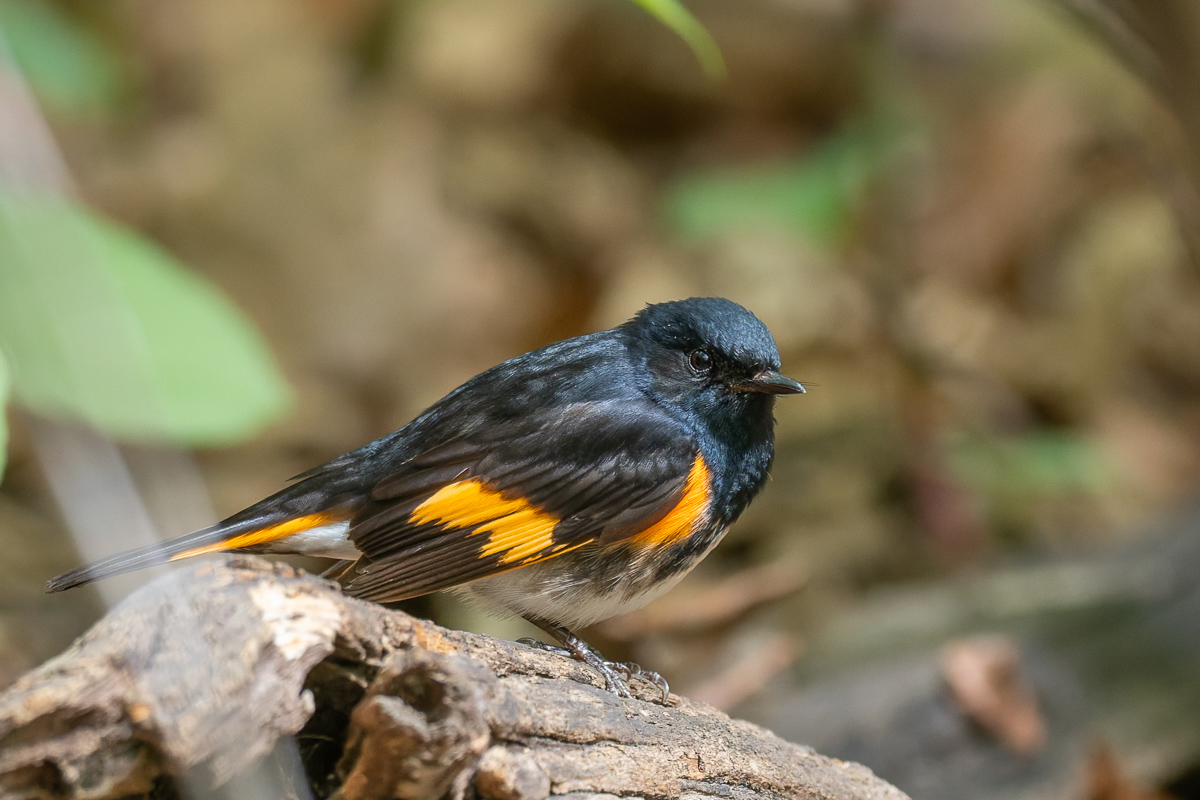
Two of the groups converged at a hatch out between Laupot and a rustic shelter, attracting an American Redstart, Hermit Thrush, and a variety of sparrows, keeping everyone engaged.

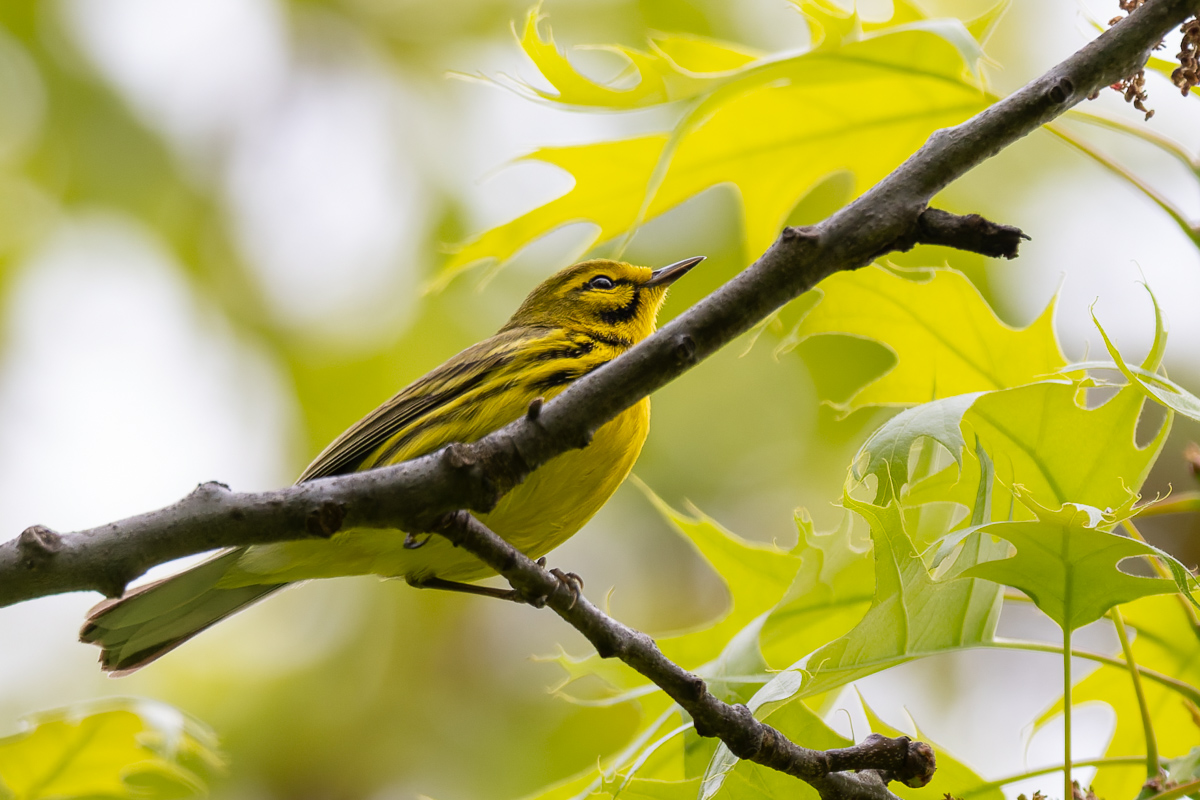
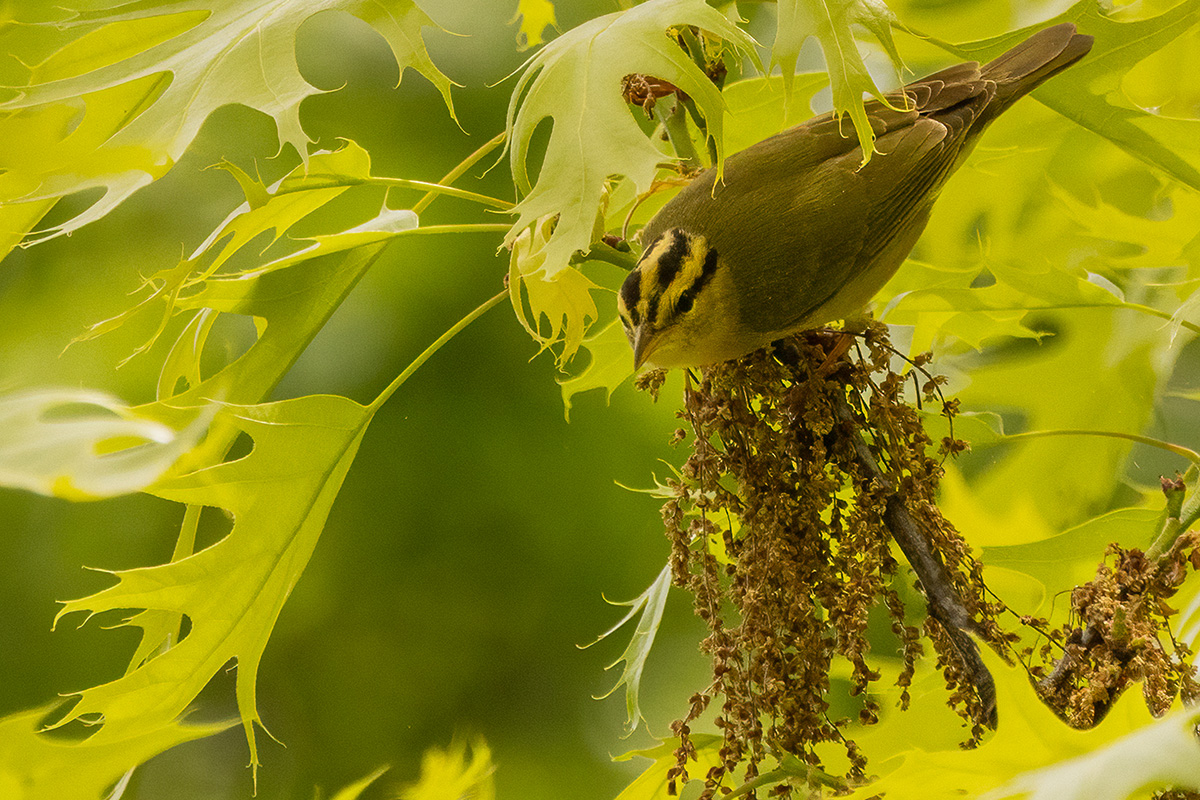
One of the highlights came toward the end of the walk, when a lucky group was treated to close views of a low-foraging Worm-eating Warbler along with a Prairie Warbler, providing an exciting finale to an enjoyable walk.

Species List

Canada Goose
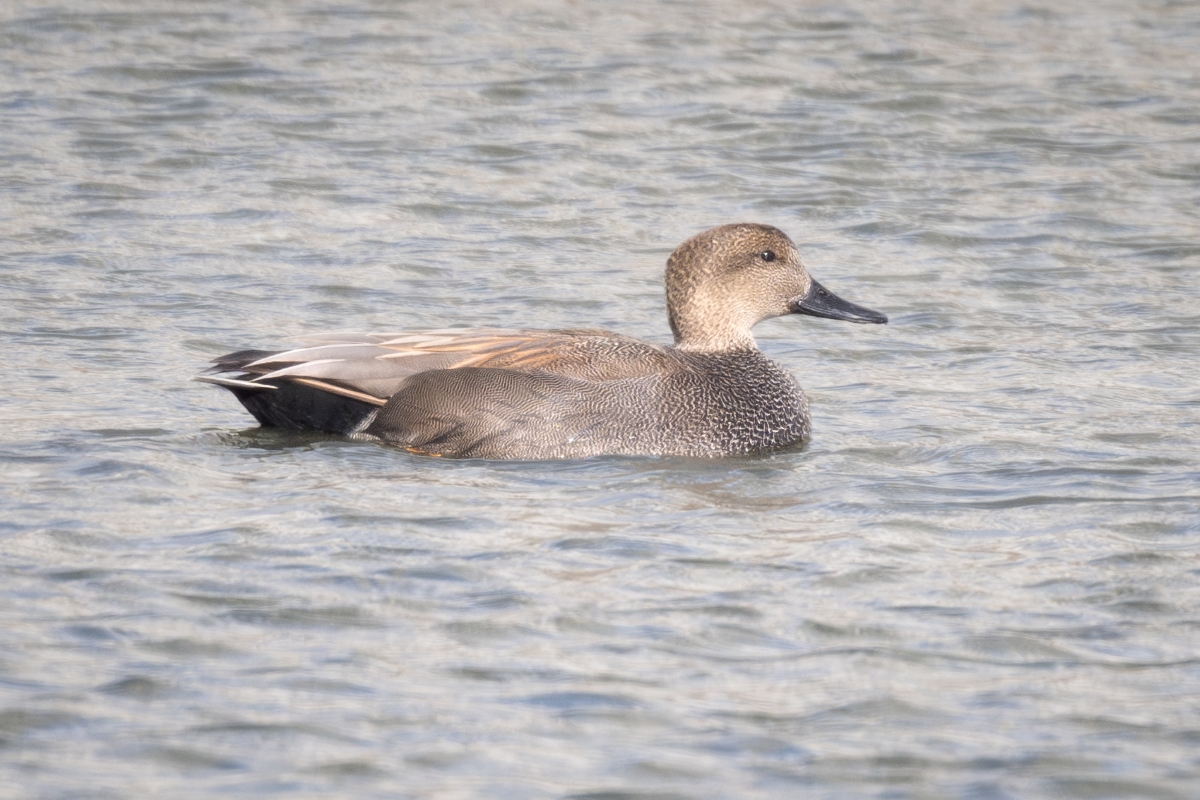
Mallard
Rock Pigeon (Feral Pigeon)
Mourning Dove
Chimney Swift
Ruby-throated Hummingbird
American Herring Gull
Double-crested Cormorant
Black-crowned Night Heron
Great Blue Heron
Red-tailed Hawk
Red-bellied Woodpecker
Downy Woodpecker
Northern Flicker
Yellow-throated Vireo
Blue-headed Vireo
Eastern Warbling Vireo
Red-eyed Vireo
Blue Jay
American Crow
Tufted Titmouse
Northern Rough-winged Swallow
Barn Swallow
Ruby-crowned Kinglet
Red-breasted Nuthatch
Carolina Wren
European Starling
Gray Catbird
Hermit Thrush
Wood Thrush
American Robin
Cedar Waxwing
House Sparrow
House Finch
Purple Finch
American Goldfinch
Chipping Sparrow
White-throated Sparrow
Song Sparrow
Swamp Sparrow
Eastern Towhee
Baltimore Oriole
Red-winged Blackbird
Brown-headed Cowbird
Common Grackle
Ovenbird
Worm-eating Warbler
Northern Waterthrush
Blue-winged Warbler
Black-and-white Warbler
Nashville Warbler
Common Yellowthroat
American Redstart
Northern Parula
Northern Yellow Warbler
Palm Warbler
Yellow-rumped Warbler
Prairie Warbler
Northern Cardinal
NYC Area Rare Bird Alert, 3/20/2026

– RBA
* New York
* New York City, Long Island, Westchester County
* Mar. 20, 2026
* NYNY2603.20

– Birds mentioned
TRUMPETER SWAN+
(+ Details requested by NYSARC)

TUNDRA SWAN
EURASIAN WIGEON
KING EIDER
BARROW’S GOLDENEYE
Red-necked Grebe
Piping Plover
BLACK-HEADED GULL
GLAUCOUS GULL
Lesser Black-backed Gull
Iceland Gull
Snowy Egret
RED-HEADED WOODPECKER
Chipping Sparrow
WHITE-CROWNED SPARROW (western subspecies “Gambel’s” form)
Palm Warbler

– Transcript

If followed by (+) please submit documentation of your report electronically and use the NYSARC online submission form found at http://www.nybirds.org/NYSARC/goodreport.htm

You can also send reports and digital image files via email to nysarc44 (at)nybirds{dot}org.

If electronic submission is not possible, hardcopy reports and photos or sketches are welcome. Hardcopy documentation should be mailed to:

       Gary Chapin – Secretary
       NYS Avian Records Committee (NYSARC)
       125 Pine Springs Drive
       Ticonderoga, NY 12883

Hotline: New York City Area Rare Bird Alert
Number: (212) 979-3070

Compiler: Tom Burke
Coverage: New York City, Long Island, Westchester County

Transcriber: Ben Cacace

BEGIN TAPE

Greetings. This is the New York Rare Bird Alert for Friday, March 20th 2026 at 11pm. The highlights of today’s tape are TRUMPETER and TUNDRA SWANS, EURASIAN WIGEON, KING EIDER, BARROW’S GOLDENEYE, BLACK-HEADED and GLAUCOUS GULLS, RED-HEADED WOODPECKER, Gambel’s WHITE-CROWNED SPARROW, and more.

The New York City TRUMPETER SWAN continues along the Brooklyn shore of the East River. Today, it was present with its accompanying Mute Swan for much of the day around the North 5th Street Pier and Park. These birds have frequented this section of the East River north of the Williamsburg Bridge for much of the week and seem to be comfortable there.

An adult TUNDRA SWAN was present today on the East Pond in Moravian Cemetery in central Staten Island. This likely the same swan spotted on Tuesday at High Rock Park.

Two male EURASIAN WIGEON were reported Saturday around The Raunt on the East Pond at Jamaica Bay Wildlife Refuge, and one was noted again Monday on Agawam Lake in Southampton. An immature male KING EIDER was spotted this morning in a Common Eider flock just north of Shinnecock Inlet, and a female type BARROW’S GOLDENEYE was seen again with Common Goldeneye Tuesday in Gravesend Bay as viewed from the middle parking lot off the Belt Parkway.

A BLACK-HEADED GULL acquiring full breeding plumage was present at Plumb Beach at least through Thursday, with another adult still at Terrell River County Park at least through last weekend. A GLAUCOUS GULL visited Sammy’s Beach in East Hampton last Saturday, while scattered ICELAND GULLS included one all week at Bush Terminal Piers Park, one at Calvert Vaux Park in Brooklyn today, and one still at Old Field Point Wednesday. A few LESSER BLACK-BACKED GULLS also continue along the coast.

A RED-NECKED GREBE spent all week around the Mill Basin at Floyd Bennett Field, with another off Pelham Bay Park on Saturday.

An adult RED-HEADED WOODPECKER continued through the week at Marshlands Conservancy in Rye.

A nice find was an immature Gambel’s type WHITE-CROWNED SPARROW present in Green-wood Cemetery from Tuesday through today.

A notable gathering of 37 PIPING PLOVERS were counted last Sunday at Fire Island’s Old Inlet in Bellport Bay, and other arrivals have featured YELLOW-CROWNED NIGHT-HERON, SNOWY EGRET, CHIPPING SPARROW, and PALM WARBLER.

To phone in reports, call Tom Burke at (914) 967-4922.

This service is sponsored by the Linnaean Society of New York and the National Audubon Society. Thank you for calling.

– End transcript

NYC Area Rare Bird Alert, 3/13/2024

– RBA
* New York
* New York City, Long Island, Westchester County
* Mar. 13, 2026
* NYNY2603.13

– Birds mentioned
TRUMPETER SWAN+
COMMON MURRE+
SWAINSON’S HAWK+
(+ Details requested by NYSARC)

TUNDRA SWAN
EURASIAN WIGEON
Red-necked Grebe
Piping Plover
Lesser Yellowlegs
THICK-BILLED MURRE
BLACK-HEADED GULL
Laughing Gull
GLAUCOUS GULL
Iceland Gull
PACIFIC LOON
Great Egret
Osprey
AMERICAN GOSHAWK
Rough-legged Hawk
RED-HEADED WOODPECKER
Tree Swallow
Pine Warbler

– Transcript

If followed by (+) please submit documentation of your report
electronically and use the NYSARC online submission form found at
http://www.nybirds.org/NYSARC/goodreport.htm

You can also send reports and digital image files via email to nysarc44
(at)nybirds{dot}org.

If electronic submission is not possible, hardcopy reports and photos or
sketches are welcome. Hardcopy documentation should be mailed to:

       Gary Chapin – Secretary
       NYS Avian Records Committee (NYSARC)
       125 Pine Springs Drive
       Ticonderoga, NY 12883

Hotline: New York City Area Rare Bird Alert
Number: (212) 979-3070

Compiler: Tom Burke
Coverage: New York City, Long Island, Westchester County

Transcriber: Ben Cacace

BEGIN TAPE

Greetings. This is the New York Rare Bird Alert for *Friday, March 13th
2026* at 11pm. The highlights of today’s tape are SWAINSON’S HAWK, PACIFIC
LOON, TRUMPETER SWAN, COMMON and THICK-BILLED MURRES, AMERICAN GOSHAWK,
TUNDRA SWAN, EURASIAN WIGEON, BLACK-HEADED and GLAUCOUS GULLS, RED-HEADED
WOODPECKER, Spring migrants and more.

A brief warm spell brought in a few early migrants this week but our only
reports of the adult SWAINSON’S HAWK in Brooklyn came from last Monday with
the bird seen both at the Sim’s Municipal Recycling Center and flying over
nearby Green-wood Cemetery. The recycling center is a restricted access
property but can be viewed from outside the surrounding fencing but time
will tell if the hawk moved on during this weather break.

A PACIFIC LOON recently lingering around Jones Inlet was reported again
last weekend out in the boat channel off Jones Beach West End but not
since, though possibly still present.

The TRUMPETER SWAN recently visiting the East River with an accompanying
Mute Swan has been seen the last several days off or near Brooklyn’s Marsha
P. Johnson State Park or just to the south at the North 5th Street Pier and
Park in the Bushwick section of Brooklyn.

Both MURRES were reported locally last Saturday with a THICK-BILLED
photographed first off Plumb Beach and then almost 2 hours later farther
west off Brighton Beach while a COMMON MURRE was spotted well outside
Shinnecock Inlet drifting to the east.

The immature AMERICAN GOSHAWK at Jones Beach West End was seen a few times
this week as it stealthily hunts around the dunes near the boardwalk also
appropriately used as a hawkwatch site with sightings often rather brief
and somewhat obstructed.

Two TUNDRA SWANS were spotted moving north over Croton Point Park in
Westchester Monday morning. A drake EURASIAN WIGEON was reported from the
East Pond at Jamaica Bay Wildlife Refuge Tuesday and Wednesday and another
was noted today in a waterfowl gathering in Bellport Bay off Shirley Beach
on the west side of Shirley.

An adult BLACK-HEADED GULL was spotted Tuesday on the beach at Oldfield
Point and Lighthouse. An immature GLAUCOUS GULL was moving between Brooklyn
Army Terminal Pier 4 and Bush Terminal Piers Park early in the week at
least to Tuesday with one or two ICELAND GULLS doing the same through
Thursday. Single ICELANDS were also noted Saturday at Great Kills Park and
Shinnecock Inlet with others still hanging around Gravesend Bay through
today.

A RED-NECKED GREBE was still around Floyd Bennett Field to Tuesday with
another that day at Oldfield Point.

A ROUGH-LEGGED HAWK was spotted Monday at Pine Meadow County Park in
Eastport and an adult RED-HEADED WOODPECKER continues at Marshlands
Conservancy in Rye.

Among the few expected migrants beginning to show up recently have been
PIPING PLOVER, LESSER YELLOWLEGS, LAUGHING GULL, GREAT EGRET, OSPREY, TREE
SWALLOW and PINE WARBLER.

To phone in reports, call Tom Burke at (914) 967-4922.

This service is sponsored by the Linnaean Society of New York and the
National Audubon Society. Thank you for calling.

– End transcript

Linnaean Society of New York Regular Meeting Minutes—February 10, 2026

This meeting and presentation took place both in person at the Linder Theater in the American Museum of Natural History and concurrently online via Zoom.

At 7:02 pm, Board Member and Acting President Peter Davenport called the Society meeting to order.

Peter made the following announcements:

  • He noted that this in-person regular members meeting is a return to the Society’s original, longtime home at the American Museum of Natural History after a six-year absence.
  • The Society’s 148th annual meeting will be held on March 10, 2026, at the Liederkranz Club at 6 East 87th Street. Dr. Trevor Price of the University of Chicago will be awarded the 2026 Eisenmann Medal and will present, “A Bird’s Life in the Anthropocene.”
  • Invitations for the annual meeting have gone out by email; the Society is no longer sending them by mail. It is an in-person, members-only event and will not be broadcast and recorded via Zoom.
  • Following the annual meeting, soon after April 10, ballots will be emailed to the Society’s membership to elect the Society’s officers and directors, and to vote on changes to the Society’s bylaws.
  • Peter welcomed fifteen new members to the Linnaean Society who joined in January 2026:
    • Kitty Allen
    • Tom Besser
    • Julia Blumenthal
    • Ned Boyajian, Jr.
    • Caleb Hunt
    • Amy Hurst
    • Amanda Leath
    • Ellen Lepor
    • Herbert Lepor
    • Richard F Miller
    • Brian Moldashel
    • Jennifer Mulhearn
    • Nancy Newman
    • Brian Saville
    • Alexander Tepper
  • Peter expressed thanks to the nomination committee members for doing a fantastic job recruiting candidates for the board of directors. The committee is still seeking a member to fill the recording secretary vacancy, and he encouraged people to contact him to volunteer or offer suggestions for candidates. He can be reached at the president’s email address. (The president’s email address is on the Society’s website: https://www.linnaeannewyork.org/contacts/.)
  • He said that the Society has some fabulous trips scheduled and encouraged the audience to take a look at the calendar. An upcoming event, “Bird Jazz in Harlem,” in the Birds and Brews field trip series, is a concert being performed by Society member Elijah Shiffer and his City of Birds quartet. It is on Wednesday, March 11, the day after the annual meeting.
  • The birdathon fundraiser for Great Gull Island is coming soon: May 2 and 3.
  • The Society’s birdseed fund for the Central Park feeders is still accepting donations.
  • Peter encouraged members to consider joining a committee and to keep an eye out for emails about those opportunities.      

At 7:09 pm, Peter turned to the lecture program and welcomed the night’s speaker, Amar Ayyash, gull expert and author of The Gull Guide: North America.

Lecture: “Humans and Gulls: A Complex Relationship,” presented by Amar Ayyash

Starting with an introduction to the bird that graces the front cover of his acclaimed gull book, The Gull Guide: North America,Amar Ayyash launched into a fascinating and riveting discussion about gulls. The bird on the cover is the Black-legged Kittiwake, the most abundant gull in the world, and a favorite of his. We learned that during the breeding season they nest on cliff ledges overlooking the oceans in the far north and that they spend most of the winter over the open ocean. If we are lucky, a few are occasionally seen near us off the Atlantic Coast each winter.

Currently, gulls are grouped taxonomically into eleven genera, and only one of the eleven has not been recorded in North America. Peppering his talk with quiz questions, this was one of the first: “What is that eleventh genus?” The answer stumped the audience and ultimately was revealed in the Q&A at the end of his talk.

Much of Amar Ayyash’s presentation covered ways to approach the identification of gulls, a particularly challenging group of birds of around 50 species. While some species are distinctive, many are difficult to identify because of subtle plumage differences in color and patterns and additionally complicated by plumage changes between and within life cycles. There is also variability in bird size and plumage within species and the added confusion of hybridization, which is especially prevalent among the large white-headed gulls. Using photographs and a pointer, Amar Ayyash carefully identified features to distinguish one gull species from another and interspersed the discussion with interesting information about behavior, migration, hybridization, and personal anecdotes about the birds.

Concluding his talk, Amar Ayyash shared his enthusiasm and love for gulls, saying, “I’ll leave you with this: The next time you encounter a gull flock, I hope that it falls in favor with you.” In the Q&A session, an audience member reminded Amar Ayyash that he would reveal the one genus of gull that has yet to be documented in North America. He gave the audience one last chance to weigh in, and with no takers, he told us: Saunders’s Gull, Saundersilarus saudersi—in the monotypic genus Saundersilarus.

Following is Amar Ayyash’s abstract of his talk:

   Among the world’s “seabirds,” gulls are the most accessible to humans, invading our most immediate surroundings. Gulls are sometimes perceived as 2nd class avian creatures. This, along with the identification challenges they present and their readiness to hybridize, presents a love-hate relationship for many birders. Yet some gull species are among the most coveted birds on any birder’s list (think Ross’s, Ivory and Sabine’s Gull). This makes for an interesting juxtaposition: Do we like some gulls and look past others? Amar Ayyash will take us through an entertaining and intriguing exploration of the natural history of gulls, including their thorny taxonomy and identification.

At 8:14 pm, the Q&A session began with questions from both the in-person audience and from those on Zoom.

At the conclusion of the Q&A, Vice President for Programs Karen Becker observed how extraordinary it was that Amar had entranced both gull beginners and gull experts alike, and she thanked him for joining us and giving his talk.

At 8:37 pm the meeting was adjourned.

Amar Ayyash’s presentation and the Q&A session have been recorded in their entirety, along with Board Member and Acting President Peter Davenport’s opening meeting remarks. The recording is available for viewing on the Linnaean Society of New York website under the dropdown menu: Programs/Watch/ and on the Society’s YouTube channel, https://www.youtube.com/@linnaeanny/videos.

Respectfully submitted by Lisa Kroop, Recording Secretary

NYC Area Rare Bird Alert, 12/12/2025

– RBA
* New York
* New York City, Long Island, Westchester County
* Dec. 12, 2025
* NYNY2512.12

– Birds mentioned
TUNDRA BEAN-GOOSE+
CASSIN’S SPARROW+
(+ Details requested by NYSARC)

Snow Goose
ROSS’S GOOSE
GREATER WHITE-FRONTED GOOSE
Tundra Swan
EURASIAN WIGEON
Harlequin Duck
Red-necked Grebe
Marbled Godwit
Razorbill
THICK-BILLED MURRE
Black-legged Kittiwake
Bonaparte’s Gull
BLACK-HEADED GULL
Glaucous Gull
Lesser Black-backed Gull
Iceland Gull
Northern Gannet
BROWN PELICAN
Red-headed Woodpecker
Grasshopper Sparrow
Redpoll
CLAY-COLORED SPARROW
YELLOW-THROATED WARBLER
DICKCISSEL

– Transcript

If followed by (+) please submit documentation of your report
electronically and use the NYSARC online submission form found at
http://www.nybirds.org/NYSARC/goodreport.htm

You can also send reports and digital image files via email to nysarc44
(at)nybirds{dot}org.

If electronic submission is not possible, hardcopy reports and photos or
sketches are welcome. Hardcopy documentation should be mailed to:

       Gary Chapin – Secretary
       NYS Avian Records Committee (NYSARC)
       125 Pine Springs Drive
       Ticonderoga, NY 12883

Hotline: New York City Area Rare Bird Alert
Number: (212) 979-3070

Compiler: Tom Burke
Coverage: New York City, Long Island, Westchester County

Transcriber: Ben Cacace

BEGIN TAPE

Greetings. This is the New York Rare Bird Alert for *Friday, December 12th
2025* at 11pm. The highlights of today’s tape are CASSIN’S SPARROW, TUNDRA
BEAN-GOOSE, ROSS’S and GREATER WHITE-FRONTED GEESE, EURASIAN WIGEON, BROWN
PELICAN, pelagic trip results including THICK-BILLED MURRE, BLACK-HEADED
GULL, CLAY-COLORED SPARROW, YELLOW-THROATED WARBLER, DICKCISSEL and much
more.

Last Saturday at Montauk Point a CASSIN’S SPARROW was discovered along the
park entrance road and amazingly has remained there all week including
today providing New York with its second state record. The bird, perhaps
distressingly tame so far, is usually found in the short grass either
bordering the upper parking lot or in the adjoining short grass down along
the entrance road. The GRASSHOPPER SPARROW accompanying it for much of the
week was last reported on Wednesday.

A TUNDRA BEAN-GOOSE residing in the Oyster Bay area since November 3rd
moved a little west during the week and was spotted Tuesday on Dosoris Pond
in Glen Cove. Also joining the Canada Goose flock that the TUNDRA SWAN has
been associating with have been a ROSS’S GOOSE, two SNOW GEESE including an
immature BLUE GOOSE and a GREATER WHITE-FRONTED GOOSE. This pond can be
viewed from the Pryibil Beach parking lot at the end of East Beach Road but
the birds have also moved to the adjacent Glen Cove golf course. Please
respect the local parking rules when visiting there. Another ROSS’S GOOSE
was present all week on a pond in St. James that is off Mills Pond Road
while other single GREATER WHITE-FRONTED GEESE featured one continuing to
visit the Nassau County Stormwater Basin No. 21 west of New Hyde Park Road,
one at Miller Field on Staten Island from Monday through today, one on
Short’s Pond in Bridgehampton yesterday and one continuing in lower
Westchester seen on Playland Lake in Rye today. EURASIAN WIGEONS include
one at the south end of Hempstead Lake State Park all week at least to
Thursday, one continuing at Connetquot River State Park and one or two on
Mill Pond on the north side of Montauk Highway in Sayville during the week
while single HARLEQUIN DUCKS were reported off Montauk Point Saturday and
Wednesday.

Decent numbers of BROWN PELICANS were seen throughout the week in the
waters off southern Brooklyn over to Staten Island with 9 off Brighton
Beach Saturday and 14 off Coney Island Wednesday but the peak actually was
the 19 counted as the American Princess pelagic trip was leaving Brooklyn
Saturday morning. This 8 hour venture into ocean waters also tallied a
THICK-BILLED MURRE, 78 RAZORBILLS, a BLACK-LEGGED KITTIWAKE, one ICELAND,
10 LESSER BLACK-BACKED and 822 BONAPARTE’S GULLS and 267 NORTHERN GANNETS
plus a nice variety of cetaceans. Out at Montauk 2 BLACK-HEADED GULLS were
seen around the Lake Montauk jetties on Sunday and a GLAUCOUS GULL was
photographed off the point Wednesday and 6 RAZORBILLS counted today and a
RED-NECKED GREBE noted Tuesday. Another RED-NECKED GREBE was present in the
north end of Jamaica Bay Sunday through Tuesday.

A MARBLED GODWIT was off the Jones Beach West End Coast Guard Station
Thursday to today while continuing birds feature a RED-HEADED WOODPECKER at
Marshlands Conservancy in Rye and a YELLOW-THROATED WARBLER at Carl Schurz
Park in Manhattan.

Single REDPOLLS were reported from Napeague State Park Sunday and Jones
Beach West End Tuesday while single CLAY-COLORED SPARROWS included one
lingering in Heckscher State Park to Wednesday, one off Dune Road Tuesday
and one today at Flushing Meadows-Corona Park with a DICKCISSEL near the
Central Park Reservoir last weekend.

To phone in reports, call Tom Burke at (914) 967-4922.

This service is sponsored by the Linnaean Society of New York and the
National Audubon Society. Thank you for calling.

– End transcript

NYC Area Rare Bird Alert, 6/27/2025

RBA
* New York
* New York City, Long Island, Westchester County
* June 27, 2025
* NYNY2506.27

– Birds Mentioned

SWALLOW-TAILED KITE+
LOGGERHEAD SHRIKE+
(+ Details requested by NYSARC)

Parasitic Jaeger
Black Tern
ARCTIC TERN
Roseate Tern
SANDWICH TERN
Wilson’s Storm-Petrel
LEACH’S STORM-PETREL
BAND-RUMPED STORM-PETREL
Cory’s Shearwater
SCOPOLI’S SHEARWATER
Sooty Shearwater
Great Shearwater
MANX SHEARWATER
AMERICAN WHITE PELICAN
BROWN PELICAN
Acadian Flycatcher
PROTHONOTARY WARBLER
BLUE GROSBEAK

If followed by (+) please submit documentation of your report
electronically and use the NYSARC online submission form found at
http://www.nybirds.org/NYSARC/goodreport.htm

You can also send reports and digital image files via email to
nysarc44<at>nybirds<dot>org

If electronic submission is not possible, hardcopy reports and photos
or sketches are welcome. Hardcopy documentation should be mailed to:

Gary Chapin – Secretary
NYS Avian Records Committee (NYSARC)
125 Pine Springs Drive
Ticonderoga, NY 12883

Hotline: New York City Area Rare Bird Alert
Number: (212) 979-3070

Compiler: Tom Burke
Coverage: New York City, Long Island, Westchester County

Transcriber:  Gail Benson

[~BEGIN RBA TAPE~]

Greetings! This is the New York Rare Bird Alert for Friday, June 27,
2025 at 11:00 pm.

The highlights of today’s tape are SWALLOW-TAILED KITE, a pelagic trip
featuring BAND-RUMPED and LEACH’S STORM-PETRELS and MANX and SCOPOLI’S
SHEARWATERS, onshore SANDWICH and ARCTIC TERNS, AMERICAN WHITE and
BROWN PELICANS, LOGGERHEAD SHRIKE, PROTHONOTARY WARBLER, BLUE GROSBEAK
and more.

Last Sunday a SWALLOW-TAILED KITE was photographed mid-day as its
soared along the east side of the Hudson River over
Hastings-on-Hudson, only to once again quickly disappear.

A pelagic trip aboard the American Princess left Sheepshead Bay,
Brooklyn, Sunday evening, reaching deep water around Hudson Canyon by
dawn, and returning by Monday evening.  Species encountered included 2
BLACK TERNS off Breezy Point, 1 BAND-RUMPED, 6 LEACH’S and 2,186
WILSON’S STORM-PETRELS, and 24 CORY’S, 8 SCOPOLI’S, 555 GREAT, 7 SOOTY
and 2 MANX SHEARWATERS.  Also counted were 63 CORY’S or SCOPOLI’S
SHEARWATERS, indicating the problem both pelagic and onshore
sea-watchers now face in separating these two recently split but very
similar species.  Good photographs, especially of the underwing
pattern, will be quite instrumental in species determination.

Pelagics seen recently from shore under appropriate weather
conditions, especially off Robert Moses State Park and points East,
have included the above-mentioned SHEARWATERS, WILSON’S STORM-PETRELS,
and also PARASITIC JAEGER.

Out on the low tide flats at Cupsogue Beach County Park in Westhampton
Beach, a SANDWICH TERN was photographed on Monday and an immature
ARCTIC TERN was spotted several times from Saturday to Tuesday, while
other TERNS included. 11. ROSEATES counted Saturday and 2 BLACK TERNS
seen Sunday.

An AMERICAN WHITE PELICAN was present again at Mecox Inlet Monday,
while BROWN PELICANS along the coast included at least 3 off Robert
Moses State Park and another at Shinnecock Inlet Thursday, preceded by
1 noted off Great Gull Island back on Friday the 20th.

An ACADIAN FLYCATCHER was still in Prospect Park Monday, while
surprising were a PROTHONOTARY WARBLER at the Mount Loretto Unique
Area on Staten Island last Saturday and a LOGGERHEAD SHRIKE visiting
Croton Point Park in Westchester on the 20th but not seen thereafter .

BLUE GROSBEAKS continue in the Calverton area, including around the
Preston’s Pond complex

To phone in reports call Tom Burke at (914) 967-4922.

This service is sponsored by the Linnaean Society of New York and the
National Audubon Society.  Thank you for calling.

– End transcript

The Linnaean Society of New York Annual Meeting Minutes—March 11, 2025

This meeting and presentation took place entirely in person at the Liederkranz Club at 6 East 87th Street, New York.

    The evening began with a reception at 6 pm. This was a members-only event, and it was well-attended by the membership and invited guests. Between members, invited guests, and award winners, around one hundred people began filling the room with the sounds of conversation and laughter, which got louder as more people arrived.

    At 7:36 pm, President Debbie Mullins called the Society meeting to order.

    President Mullins welcomed the audience to this 147th annual meeting of the Linnaean Society of New York and thanked all for coming. She noted that the annual meeting gives the president the opportunity to report on the activities of the Society over the past year, and that she would be presenting those as well as the finances of the past year, the nominees for the Society’s board for the new term, 2025/2026, and the recipients of this year’s Society’s awards.

    President Mullins made the following remarks:

    In Memoriam

    • She gave tribute to all the Society members who have recently passed away and the year in which they joined.
    • Michael Bonifanti, 2016
    • Helen Hays, past president, 1958
    • Orlando H. Garrido, Honorary Member, 2010*
    • Jean Held, 1977
    • Leo Hollein, 2003
    • Anthony Lauro, 1968
    • Nina Moinester, 2007
    • Paul Meyers, 1970
    • Bernard Nathan, 1974
    • Irene Payne, 1999
    • Alison Rea, 2013
    • William Riley, 1965*
    • Ruby Senie, 2019
    • Olaf Soltau, 2016
    • Lenore Swenson, fellow, 1994
    • Constance Wiley, 2021

    *After the annual meeting, the Society’s board learned of their deaths.

    • She noted that Helen Hays, who died a few weeks ago, was a former president of the Society. She was a guiding light for the Great Gull Island project over the decades, beginning in the 1960s, and retired only a few years ago. She will be greatly missed.

    Annual Report

    • The 2024 annual report was distributed to all members in attendance. It contains the secretary’s report and reports from all the Society’s committees. The president encouraged the members to read them.
    • Thirty new members joined the Society in 2024, bringing the membership to 767—almost double the number from before the COVID-19 pandemic.
    • The requirements that new members be sponsored and approved by a vote of the membership have been discontinued.
    • The Society’s fiscal position is strong, with a current balance of $214,000. Last year’s net income was $26,000.
    • The board is looking into the logistics of returning to in-person regular member meetings as a hybrid together with remote attendance via Zoom. Numerous members have been expressing their hope for in-person meetings.
    • The president presented highlights from each of the committee’s accomplishments over the past year, and thanked the chairs, committee members, and volunteers for their dedication and hard work.
    • The president expressed her appreciation and thanks to the outgoing board members whose terms are ending.
    • The president mentioned others who have contributed to the Society’s infrastructure, operations, and growth. And she thanked those on the planning committee for arranging this annual meeting.
    • She concluded by expressing that it had been a privilege to serve as president for the past two years, and thanked the Society for its support.

    Silent Auction and Raffle

    • Gillian Henry presented the results of the silent auction, and drew the tickets for the winners of the raffle bags.

    Election of Officers, Board Members, and Motions

    • Alice Deutsch, Mary Beth Kooper, and Kevin Sisco comprised the committee for nominating officers and board members.
    • Thus far, a presidential candidate has not been found, and the search continues for a person who would be interested in filling the role. In the interim, board members and former presidents will share the responsibilities.
    • President Mullins then introduced the officers and board members who have been nominated for election.
    • Voting will be done online: following the meeting, ballots will be emailed to all members who are up-to-date with their dues. The poll will be open for two days, and close on Thursday, March 13th, at midnight.

    Awards

    • Member awards:
      • Peregrine Falcon 50-year Member Award to Paula M. Schutte, who joined the Linnaean Society in 1975.
      • Fellow to Ken Chaya, former president, vice president, board member, and trip leader, who provided a great deal of dedicated service to the Linnaean Society, including during the COVID lockdown, when he kept the Society vibrant and moving forward.
    • Linnaean Society of New York awards: The Society presents several awards each year to honor individuals who have made significant contributions to natural history, conservation, and education. President Mullins introduced each honoree and described and recognized their achievements:
      • 2025 Shelda Taylor Award to Jennifer Stalec, a teacher at Eleanor Roosevelt High School. The award honors K – 12 teachers who have made a sustained and substantial impact by educating their students on aspects of natural history.
      • 2025 Natural History Service Award to Dustin Partridge, director of conservation and science at the NYC Bird Alliance, for his research and expertise on green infrastructure in urban landscapes. This award is given to individuals who, through working with members of the public, have triggered a lasting interest in natural history.
      • 2025 Eisenmann Medal to Bryan D. Watts, the Mitchell A. Byrd Professor of Conservation Biology at the College of William & Mary. He is the founder and director of the Center for Conservation Biology, and the author of over 600 scientific publications. The Eisenmann Medal is the highest award given by the Linnaean Society of New York. It is given to an individual for excellence in ornithology and encouragement of the amateur.

    Eisenmann Lecture: “Eagles of the Chesapeake,” presented by Dr. Bryan D. Watts

    Dr. Watts began his talk with an introduction to the Center of Conservation Biology, a research unit within the College of William and Mary. Its focus is on birds of conservation concern in the Western Hemisphere. The organization has worked on thousands of projects from Argentina to the Arctic, with about 40 field projects per year, many of which are long-term, multi-decade commitments. He then moved on to present three of those projects, starting with the Bald Eagles of Chesapeake Bay.

    The Eagles of Chesapeake Bay

    In his introductory description of the Chesapeake Bay, Dr. Watts noted that it is one of the great estuaries of the world, with shallow waters and a dendritic shoreline that result in a highly productive habitat, including for fish-eating birds such as the Bald Eagle, Osprey, and Great Blue Heron. It is also an area that is becoming engulfed in the rapid development of the Boston-to-Washington corridor and the Virginia Golden Crescent; the resultant habitat loss is having an impact on these species.

    Dr. Watts next talked about the Bald Eagles: their traits as part of the sea eagle subfamily, their habitat needs and preferences, and details about their life cycle, all punctuated with photos from around the Chesapeake Bay. He then moved on to the data, which illustrated the devastating effect of DDT on Bald Eagle populations, with maps of nesting sites around the Chesapeake Bay over time together with bar charts constructed from chronological data of nesting pairs. He described the monitoring methods, which amped up to aerial surveys beginning in 1962, and his own involvement flying as part of a team for over 30 years with the famous Professor Mitchell Byrd, and Captain Fuzzzo (with three “z’s,” with the middle “z” being silent…to spontaneous audience laughter).

    With the banning of DDT and the enactment of federal legislation directed at protection of endangered species, the Bald Eagle and Osprey populations have rebounded. Dr. Watts estimates that there are now 3,000 pairs of Bald Eagles in the Chesapeake Bay, up from about 60 to 70 pairs at the height of the DDT period. Osprey pairs have increased from 1,400 to around 12,000, and Great Blue Heron pairs from fewer than 1,000 to now 15,000. Over this time, there was an exponential growth in the birds’ reproduction, reaching a maximum in the late 1990s to early 2000s. Dr. Watts explained that research suggests that since that peak, a negative behavioral feedback loop is now bringing the populations to a new stable level based on territory constraints.

    The Chaco Eagle

    Dr. Watts introduced the Chaco Eagle (Buteogallus coronatus), which he described as one of the most endangered eagles in the world and one of the least known. It lives in arid habitats in south central South America in Argentina, Paraguay, and southern Brazil. Formerly named Crowned Eagle, it has a small crest of dark, gray feathers. Fifteen years ago the Center of Conservation Biology began assisting in conservation efforts with local researchers in Argentina to protect this eagle. The center provided technology and training to local scientists to learn about the ecology of the eagle, and to understand why it is so endangered.

    Included in the information the center learned is that Chaco Eagles’ principal prey are snakes and hairy armadillos; that they seem to produce a single chick per year; that the chick has a long dependency period of 12 months or longer; and that adults are dying at a rapid rate. As to why the adults are dying prematurely, field work has provided answers: 1) electrocution by power lines: rural infrastructure has not been upgraded to raptor-safe, international standards; 2) killing by ranchers: local lore tells of Chaco Eagles preying on lambs—a fiction, as borne out by research and evidence to the contrary.

    Addressing the indiscriminate killing of Chaco Eagles, Dr. Watts told us that an outreach and education program was developed and implemented to involve ranchers in the efforts to protect the species. He showed a photograph of himself demonstrating to a rancher how to band a Chaco Eagle. And he emphasized the need for multi-generational participation in these efforts in order to ensure sustainability of the species, showing another photo of a mother introducing her young daughter to a Chaco Eagle in-hand.

    Panama City—Remarkable Wetlands, Shorebirds, and Encroaching Development

    Dr. Watts concluded his lecture with a topic that he told the audience he had particularly selected to honor Eugene Eisenmann, having to do with Panama and the ecological treasure of the habitat near the Panama Canal.

    In 1997, at the time when the United States was handing over control of the Panama Canal Zone to Panama, the State Department asked Dr. Watts to do a rigorous assessment of waterbirds as part of its conservation recommendations to the Panamanians. One location was the shoreline just east of Panama City along the Pacific coast. Dr. Watts described it as a remarkable place, an internationally important area for migratory shorebirds with especially high densities of birds—on the order of 14 birds per meter. In 2008 he returned to Panama with the Center of Conservation Biology to do another survey. He found that the coastal mangrove forests and mudflats to the east of Panama City that they had surveyed in 1997 were being cut down and filled in to build high-rise buildings on this ecologically important terrain.

    Dr. Watts honed in on his theme: conservation must be local. And while research is important, conservation requires the commitment of the people who live there. In 1997 Dr. Watts had been concerned that the Panamanian people might not know how globally important the Panamanian Pacific coastline is for migratory shorebirds. At that time he wrote a booklet describing the birds and the importance of the habitat, and printed about 10,000 copies. He handed the booklets over to the Ministry of Education. Ten years later, in a classroom at one of the field sites he was visiting, he noticed one of those booklets tacked onto a bulletin board. And he had noticed over those ten to fifteen years that a national awareness and pride was building about the efforts to support shorebirds. In the early 2000s, the Panama Audubon Society directed their focus to shorebird conservation. To that end, the Center for Conservation Biology has periodically gone down to Panama to support them with equipment and training on shorebird survey techniques, all with the goal of building the capacity for local scientists and volunteers to do the work.

    Dr. Watts concluded that conservation requires the commitment of the local area, government entities, corporations, citizens, and citizen groups. And it needs to be multi-generational. We can offer help, but it is those who have the closest, local stake who ultimately will shepherd conservation forward.

    At 9:02 pm, following the Q&A session, President Debbie Mullins thanked Professor Watts and adjourned the meeting.

    Respectfully submitted by Lisa Kroop, Recording Secretary

    Linnaean Society of New York General Meeting Minutes—February 11, 2025

    This meeting and presentation took place entirely online via Zoom.

    At 7:00 pm, President Debbie Mullins called the Society meeting to order.

    President Mullins made the following announcements:

    • She welcomed all to the February meeting of the Linnaean Society of New York.
    • She noted that the annual meeting is just four weeks away, on Tuesday, March 11, at the Liederkranz Club on East 87th Street; it starts at 7:30 pm and is free of charge.
      • The meeting is for members only (those who are up-to-date with their dues).
      • There is still time to become a member in time to join the meeting. The membership application is on the Linnaean website at linnaeannewyork.org under Members/Join.
      • Those who have forgotten to pay their fall dues can pay now in order to attend the meeting.
      • Registration is online at members.linnaeannewyork.org/events
      • There will also be a cocktail reception before the meeting, starting at 6:00 pm. Tickets to the reception are $135 per person.
      • Among the awards being presented at the annual meeting are the following:
        • The Eisenmann Medal, the Society’s highest honor, to Dr. Brian Watts. He will give the keynote address, “Eagles of the Chesapeake”.
        • The Natural History Service Award to Dr. Dustin Partridge, Director of Conservation and Science at the New York City Bird Alliance.
        • The Shelda Taylor Award to Jennifer Stalec, a teacher at Eleanor Roosevelt High School.
      • Raffle tickets are $5. There will also be a silent auction with many offerings, including original art work by Alan Messer and a private boat tour of Jamaica Bay led by Don Riepe.
      • Volunteers are still needed for the evening. If you can help, email Debbie Mullins at president@linnaeannewyork.org.
    • President Mullins welcomed the following new Linnaean Society members:
      • Joseph McManus
      • Pieter Prall
      • Julia Zichello

    At 7:03 pm, President Mullins turned to the lecture program and introduced the speaker, Dr. Wesley Hochachka, senior research associate at the Cornell Lab of Ornithology in Ithaca, NY. Dr. Hochachka is an ornithologist with a background in field studies of birds and data analysis, and is part of the eBird organization. He has been working at the Cornell Lab of Ornithology since 1998.

    Lecture: “Informing Basic Science and Conservation with Bird Watchers’ Observations (and Lots of Computers),” presented by Dr. Wesley Hochachka

    Dr. Hochachka began his talk with a contextual overview of eBird, the citizen-science tool for worldwide bird data collection of the presence, location, and abundance of individual bird species. He explained that eBird provides the platform and system management support for birders to catalog their observations, and makes those observations available (in many forms) for researchers, organizations, and the general public.

    To give a sense of the scope and the range of the data within eBird, Dr. Hochachka gave the most recent number of total checklists submitted as of a few hours before this talk: 111 million. He observed that the data are not evenly distributed around the globe, illustrating with a world map. Not surprisingly, some of the highest concentrations of observations are in North America, parts of Europe, India, and elsewhere that eBird has developed partnerships and where eBird is widely used.

    This led to the next important point about eBird data that Dr. Hochachka made: in addition to the enormous amount of eBird being gathered, it is also “noisy,” in part because of the way it is gathered. The signal-to-noise ratio is very low, and methods are needed to identify patterns and trends from the data. Hence, the eBird organization has a data analysis team that works on many aspects of managing the data including: 1) developing methods to interpret them; 2) providing resources, documentation, and software tools for others to work with the data; and 3) conducting analyses using the supercomputer resources of the National Science Foundation’s ACCESS program to provide more manageable information and products.

    Dr. Hochachka presented examples of products that eBird is currently producing; those that are in the development stage; and others that are in areas for future work. From the “Status and Trends” project, Dr. Hochachka showed an abundance map and a trends map for Wood Thrush. Both the maps and the data underlying them are available to the public. Under development are “Trajectory” data products that aim to use eBird data to model species year-to-year abundance changes much like the results obtained from breeding bird surveys. Other ongoing projects are tailored for specific studies. Some work involves data analysis collaborations with partners on stewardship projects. Future data coordination and analysis might include audio recording data.

    Dr. Hochachka concluded his talk with a set of takeaways about eBird that he wanted to convey to the audience from his perspective as a data analyst:

    1. There are lots of data, albeit noisy data.
    2. Dealing with the noisiness requires lots of computation.
    3. We aim to direct this computation toward the useful goals of partners.
    4. eBird should never be considered a universal substitute for rigorously designed surveys.

    Following is Dr. Hochachka’s abstract of his talk.

    Formal bird monitoring programs, such as the North American Breeding Bird Survey, are invaluable sources of information about where birds live and how their numbers have changed through time. However, the costs of running such programs mean that they cannot be run throughout the year or across very large numbers of locations. The large quantities of information being collected by participatory (or citizen) science projects, most notably by eBird, have the potential to fill in gaps in our knowledge of bird populations. Careful analyses are needed in order to separate changes in bird populations from changes in the behavior of the bird watchers who provide their observations. In his presentation, he will talk about some of the insights into bird populations that have been revealed from eBird’s data and the uses of these insights. Weekly maps of the distributions of birds provide information about areas of concentration and migratory movements, which has been used to design and implement conservation programs and to inform policy decisions. Estimates of local changes in population size (“trend maps”) complement the information provided by the Breeding Bird Survey. He will conclude by describing some of our ongoing and future work, and plans for making the insights from eBird’s data more widely and easily available to a variety of audiences.

    At 7:53 pm, Vice President Doug Futuyma hosted the Q&A session.

    At the conclusion of the Q&A, Vice President Futuyma thanked Dr. Hochachka for his presentation, and noted that the number of questions clearly showed a great interest by the many birders who use eBird to understand how it works and what is being done with the data that is collected.

    At 8:36 pm the meeting was adjourned.

    The presentation has been recorded in its entirety, including the Q&A session and the president’s opening remarks. The recording is available for viewing on the Linnaean Society of New York website under the dropdown menu: Programs/Watch/ and on the Society’s YouTube channel, https://www.youtube.com/@linnaeanny/videos.

    Respectfully submitted by Lisa Kroop, Recording Secretary

    Governors Island with Annie Barry, 1/20/2025

    Registrar: Dom Ricci
    Participants: 14
    Weather: Around 18-26 F, sunny, windy
    Bird Species: 29

    Governors Island, sitting in the middle of New York Harbor, possesses a mix of coastal, field,
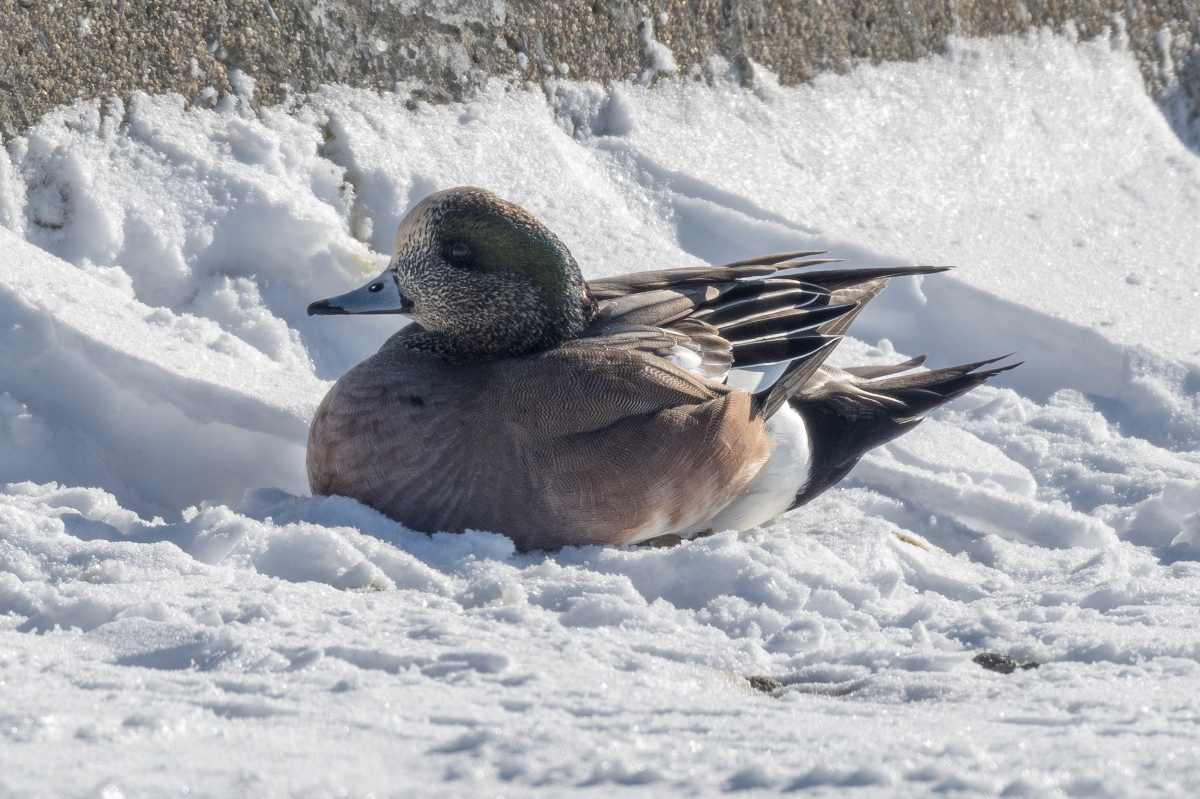
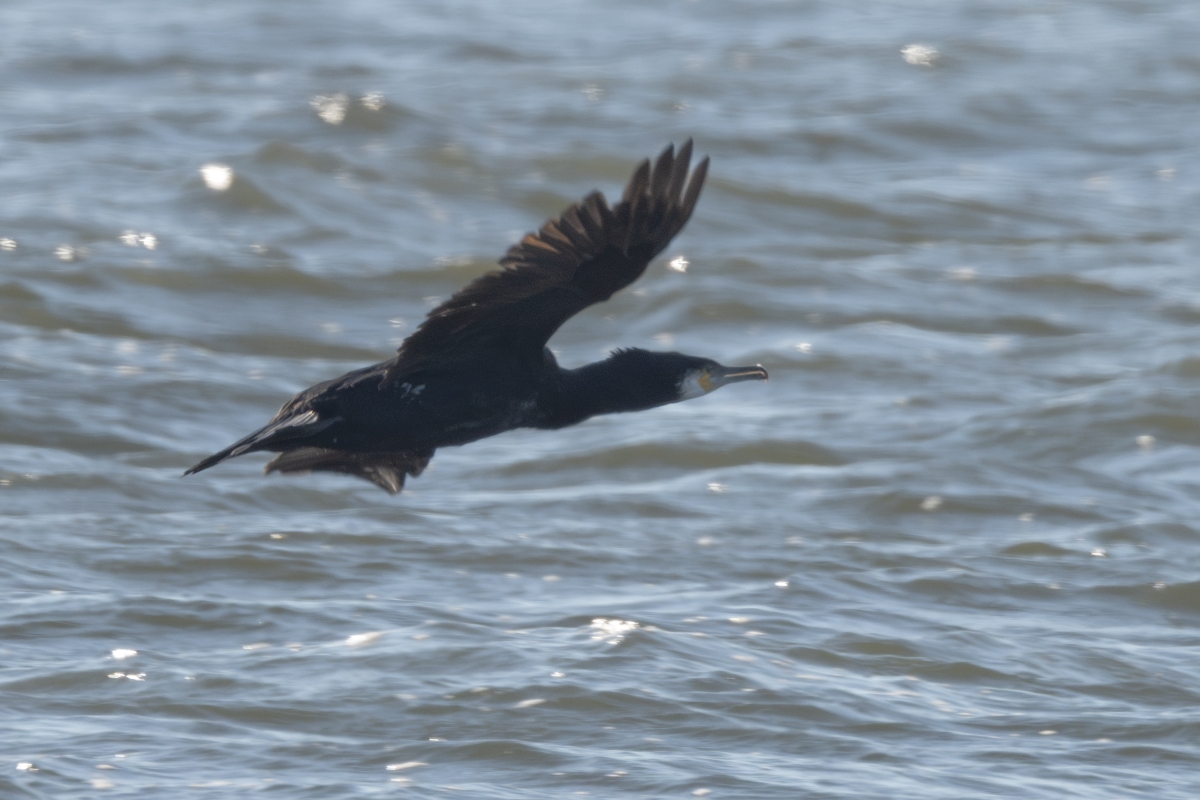
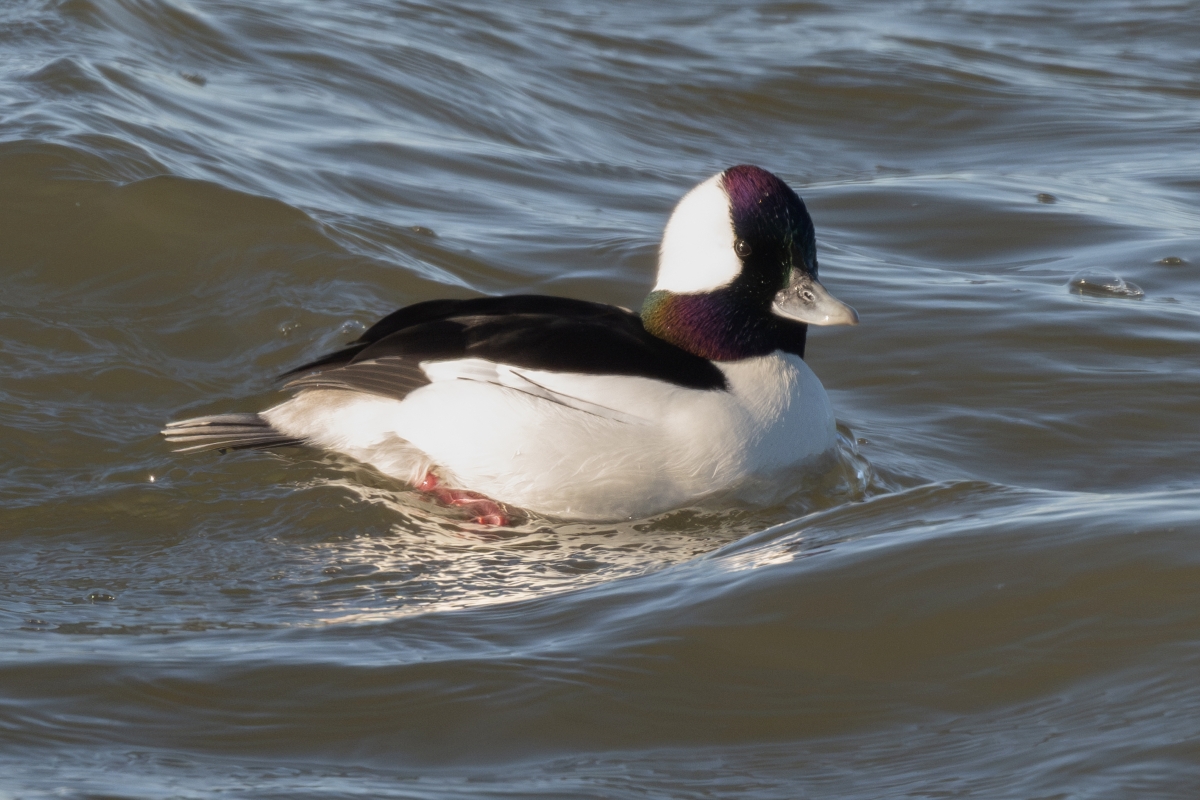
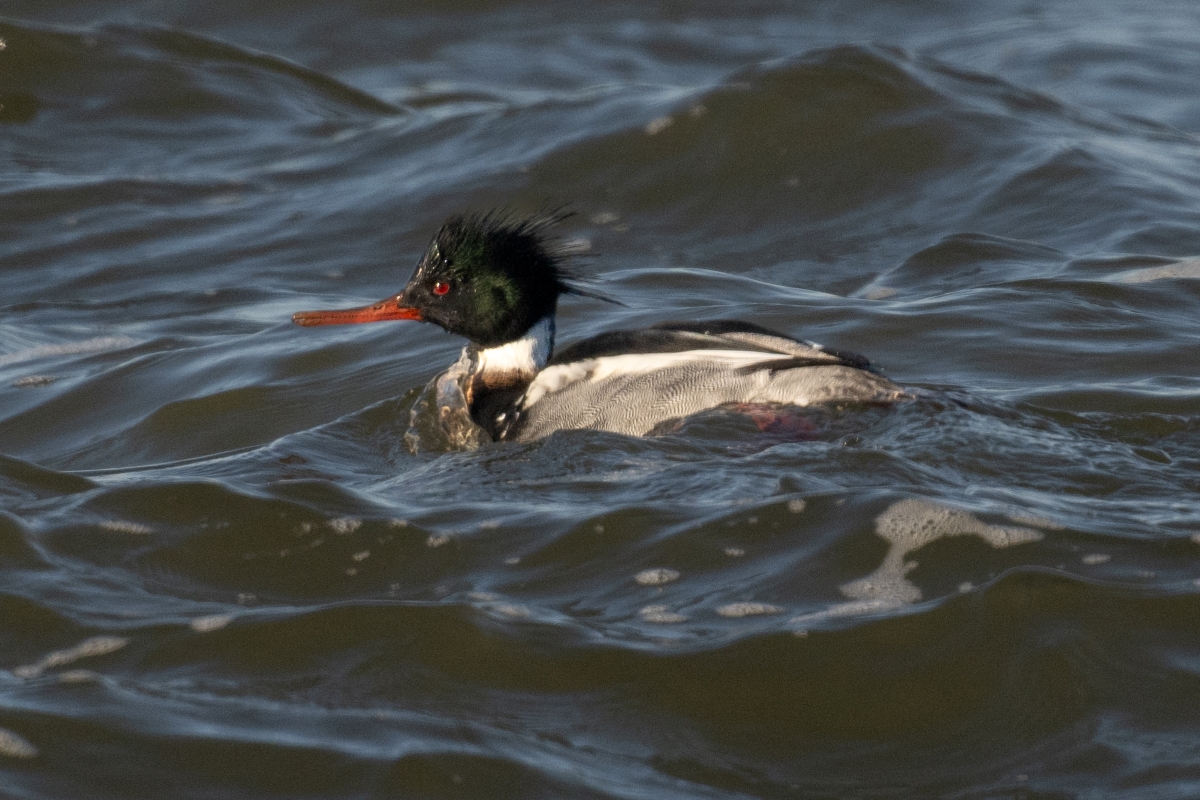
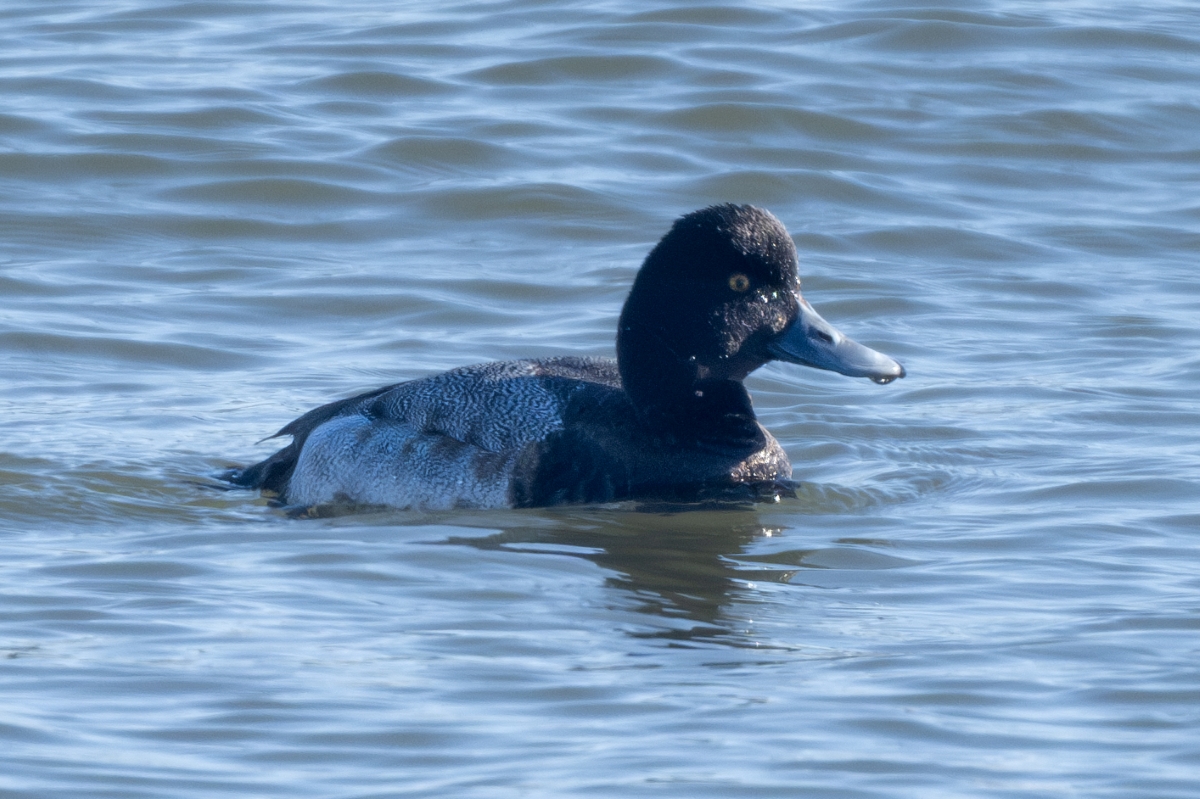
    and other environments unique in New York county. On a crisp, clear morning after an overnight snow, a group of Linnaean birders led by Annie Barry traversed the island in search of winter avian residents including Red-breasted Mergansers and Buffleheads. We encountered the usual array of gulls along the harbor coast and as well as several large flocks of Brant and Canada Geese, albeit with no sign of hidden rarities. The piers on the south side of the island held several pleasant suprises for observers: a Great Cormorant taking flight from among its Double-crested cousins; an American Wigeon napping alongside American Black Ducks on Lima Pier; and a lone Lesser Scaup swimming around Yankee Pier. Although we did not discover any storm-tossed vagrants, we were treated to the memorable image of a dozen Song Sparrows and a Swamp Sparrow feeding and staying warm atop an Earth Matter NY (https://earthmatter.org/) compost heap from which plumes of water vapor were visible rising into the sub-freezing atmosphere.

    Species List

    Brant
    Canada Goose
    Gadwall
    American Wigeon
    Mallard
    American Black Duck
    Lesser Scaup
    Bufflehead
    Red-breasted Merganser
    Rock Pigeon (Feral Pigeon)
    Ring-billed Gull
    American Herring Gull
    Great Black-backed Gull
    Great Cormorant
    Double-crested Cormorant
    Red-tailed Hawk
    Red-bellied Woodpecker
    Blue Jay
    American Crow
    Black-capped Chickadee
    Tufted Titmouse
    White-breasted Nuthatch
    European Starling
    Northern Mockingbird
    House Sparrow
    Dark-eyed Junco
    Song Sparrow
    Swamp Sparrow
    Northern Cardinal

    NYC Area Rare Bird Alert, 12/27/2024

    – RBA
    * New York
    * New York City, Long Island, Westchester County
    * Dec. 27, 2024
    * NYNY2412.27

    – Birds mentioned
    RUFOUS HUMMINGBIRD+
    (+ Details requested by NYSARC)

    GREATER WHITE-FRONTED GOOSE
    Cackling Goose
    EURASIAN WIGEON
    HARLEQUIN DUCK
    Common Goldeneye (Barrow’s / Common hybrid)
    BARROW’S GOLDENEYE
    Red-necked Grebe
    MARBLED GODWIT
    BLACK-HEADED GULL
    GLAUCOUS GULL
    Iceland Gull
    Bald Eagle
    Red-headed Woodpecker
    House Wren
    CLAY-COLORED SPARROW
    Baltimore Oriole
    Orange-crowned Warbler
    Northern Parula
    Black-throated Blue Warbler
    Wilson’s Warbler
    PAINTED BUNTING
    DICKCISSEL

    – Transcript

    If followed by (+) please submit documentation of your report
    electronically and use the NYSARC online submission form found at
    http://www.nybirds.org/NYSARC/goodreport.htm

    You can also send reports and digital image files via email to nysarc44
    (at)nybirds{dot}org.

    If electronic submission is not possible, hardcopy reports and photos or
    sketches are welcome. Hardcopy documentation should be mailed to:

           Gary Chapin – Secretary
           NYS Avian Records Committee (NYSARC)
           125 Pine Springs Drive
           Ticonderoga, NY 12883

    Hotline: New York City Area Rare Bird Alert
    Number: (212) 979-3070

    Compiler: Tom Burke
    Coverage: New York City, Long Island, Westchester County

    Transcriber: Ben Cacace

    BEGIN TAPE

    Greetings. This is the New York Rare Bird Alert for *Friday, December 27th
    2024* at 11pm. The highlights of today’s tape are PAINTED BUNTING, RUFOUS
    HUMMINGBIRD, GREATER WHITE-FRONTED GOOSE, EURASIAN WIGEON, HARLEQUIN DUCK,
    BARROW’S GOLDENEYE, MARBLED GODWIT, BLACK-HEADED and GLAUCOUS GULLS,
    CLAY-COLORED SPARROW, DICKCISSEL and more.

    The female plumaged PAINTED BUNTING and the nearby CLAY-COLORED SPARROW
    both continue along the beach in Far Rockaway. Today the PAINTED BUNTING
    was in the underbrush off the boardwalk near Beach 24th Street often
    requiring more patience than the CLAY-COLORED SPARROW spotted today around
    the corner of Beach 26th Street a little west of the BUNTING. Another
    CLAY-COLORED SPARROW was found today at Powell’s Cove Park at College Point
    in Queens but park at the south end of Powell’s Cove.

    The RUFOUS HUMMINGBIRD continues in Eastport at 353 Old Country Road and
    the homeowners continue to welcome visitors. Park along Union Street just
    east of the home, walk back to 353 and enter the backyard just past the
    house near the marked shrubs. Also watch for the ORANGE-CROWNED WARBLER
    still visiting feeders today. The RUFOUS HUMMINGBIRD at a private home in
    Rocky Point was also still present today.

    A GREATER WHITE-FRONTED GOOSE visited Great Pond in Southold for a few days
    at least to Tuesday and another was seen again Wednesday on Tung Ting Pond
    in Centerport while the one in lower Westchester, currently frozen out of
    the Bowman Avenue pond, was spotted on a local private golf course Sunday
    and on Playland Lake in Rye on Tuesday. Among the several reported CACKLING
    GEESE this week have been one Flushing Meadows-Corona Park to Thursday and
    singles Sunday in Prospect Park and Van Cortlandt Park. A drake EURASIAN
    WIGEON was reported on the West Pond at Jamaica Bay Wildlife Refuge
    Thursday and today. A female HARLEQUIN DUCK has been present on Staten
    Island since Tuesday off the Ocean Breeze fishing pier at Franklin D.
    Roosevelt Boardwalk and Beach while others should still be around Jones
    Inlet. Following last week’s report of a drake BARROW’S GOLDENEYE returning
    again to the waters off Crab Meadow Beach in Northport comes this Tuesday a
    sighting of an apparent hybrid BARROW’S / COMMON GOLDENEYE at that location
    with hopefully more to come on this

    A MARBLED GODWIT was seen yesterday in the channel across from Jones Beach
    State Park field 10 and one or two BLACK-HEADED GULLS were also noted
    Thursday and today at the same location. An immature GLAUCOUS GULL
    continues at the Brooklyn Army Terminal Pier 4 and a young ICELAND GULL was
    spotted along Newtown Creek in Brooklyn last Sunday. During the week
    lingering RED-HEADED WOODPECKERS were noted in Green-wood Cemetery in
    Brooklyn, at Caumsett State Park, and Sunken Meadow State Park on Long
    Island, and at Blue Mountain Reservation in Westchester.

    Occurring among the later lingering warblers this week have been NORTHERN
    PARULA at Inwood Hill Park, BLACK-THROATED BLUE in Brooklyn and WILSON’S in
    Prospect Park as well as quite a few ORANGE-CROWNEDS.

    A DICKCISSEL continues in Riverside Park in northern Manhattan often seen
    at the suet feeder just south of the tennis courts at about West 119th
    Street.

    The Bronx-Westchester Christmas Count last Sunday recorded 120 species
    including GREATER WHITE-FRONTED GOOSE, RED-NECKED GREBE, a record 33 BALD
    EAGLES, 3 HOUSE WRENS, 4 BALTIMORE ORIOLES and 2 ORANGE-CROWNED WARBLERS.

    To phone in reports, call Tom Burke at (914) 967-4922.

    This service is sponsored by the Linnaean Society of New York and the
    National Audubon Society. Thank you for calling.

    – End transcript