Registrar: Dom Ricci Participants: 7 Weather: Around 59-62 F, overcast, light breeze, light rain & mist Bird Species: 41
With forecasts of a nor’easter bearing down on the Eastern Seaboard for the original walk date, trip leader Alan Drogin decided to explore Randall’s Island a day early. Although the group persevered through drizzle and damp, they still encountered a wide variety of avian species around the island.
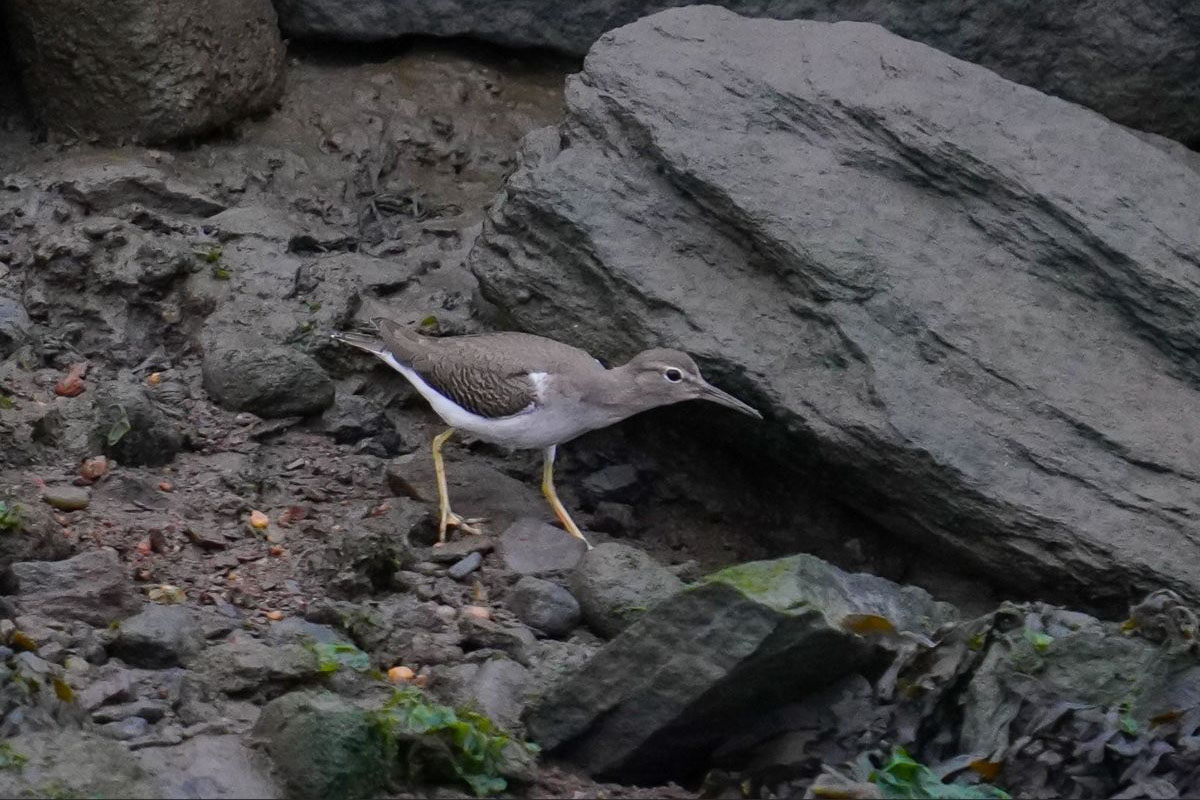
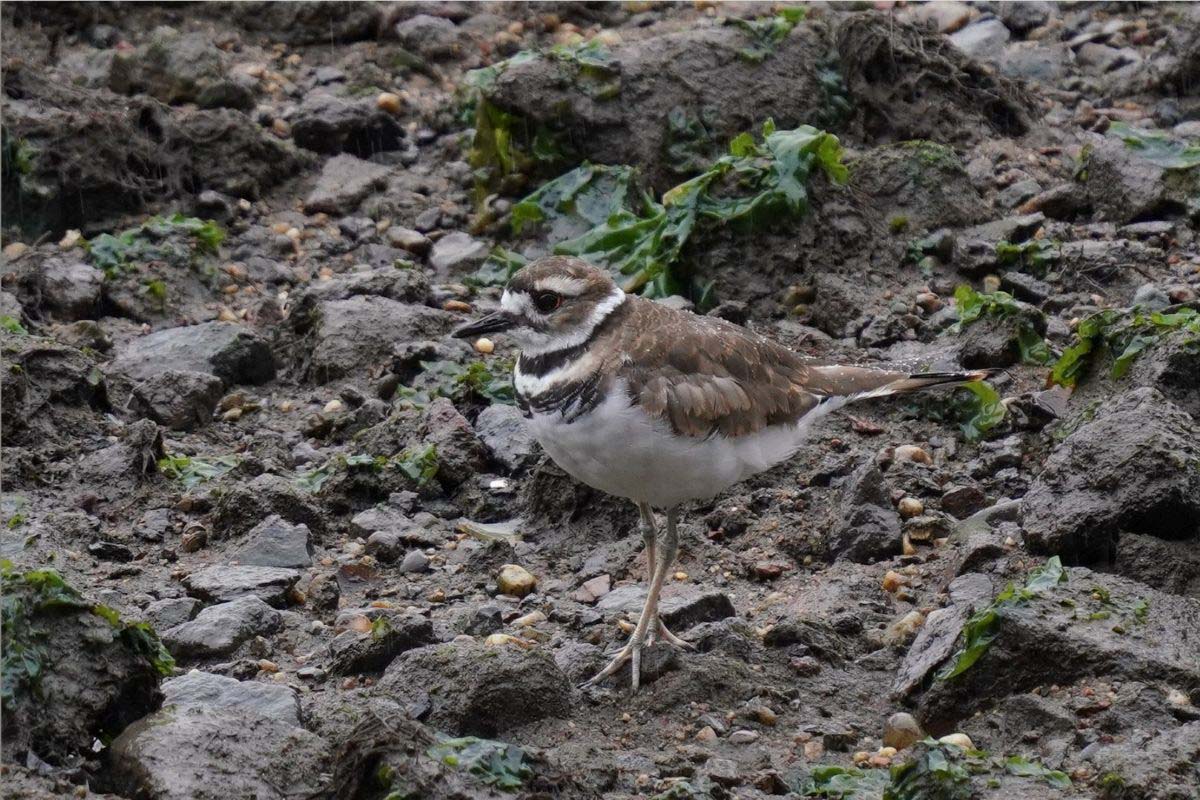
The route wound through several ballfields, the former driving range, the urban farm, and the freshwater woodlands, with the most productive stretch being the northern edge along the Bronx Kill. There, several Killdeer were seen feeding on the mudflats, and Spotted Sandpipers bobbed and jerked their way across the rocky opposite shore.
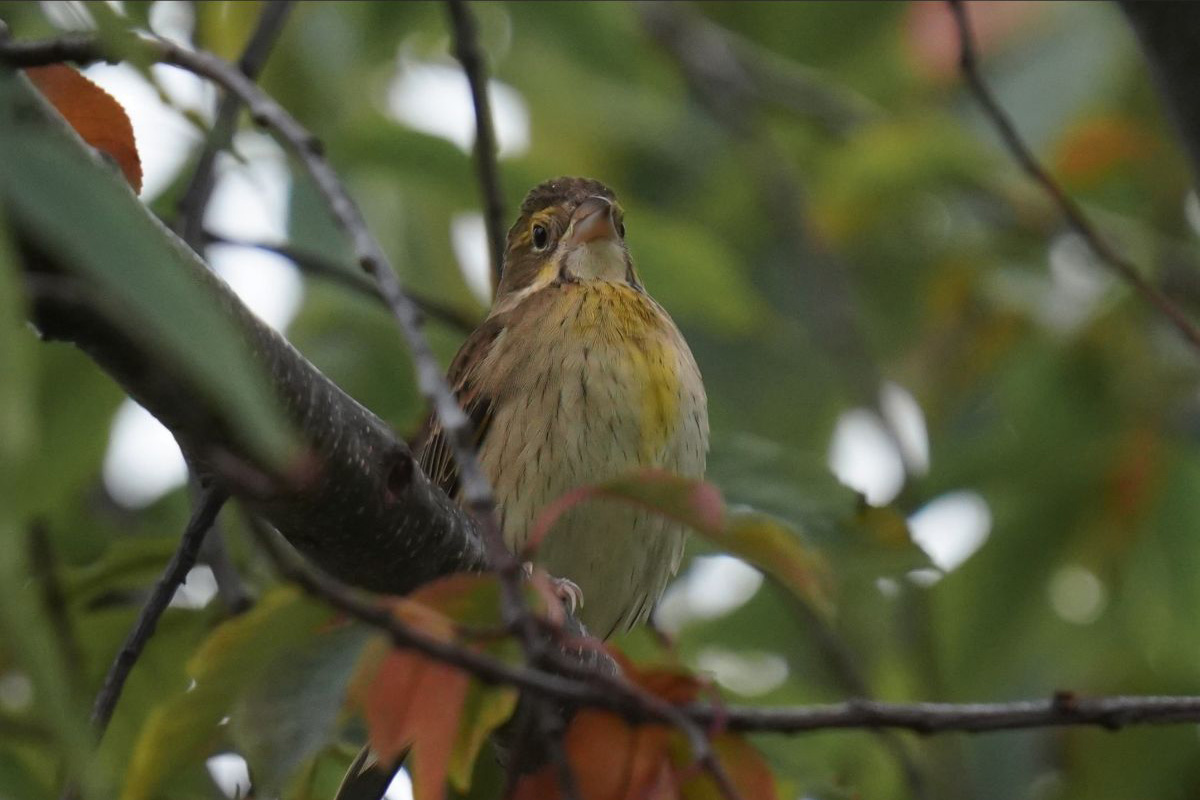
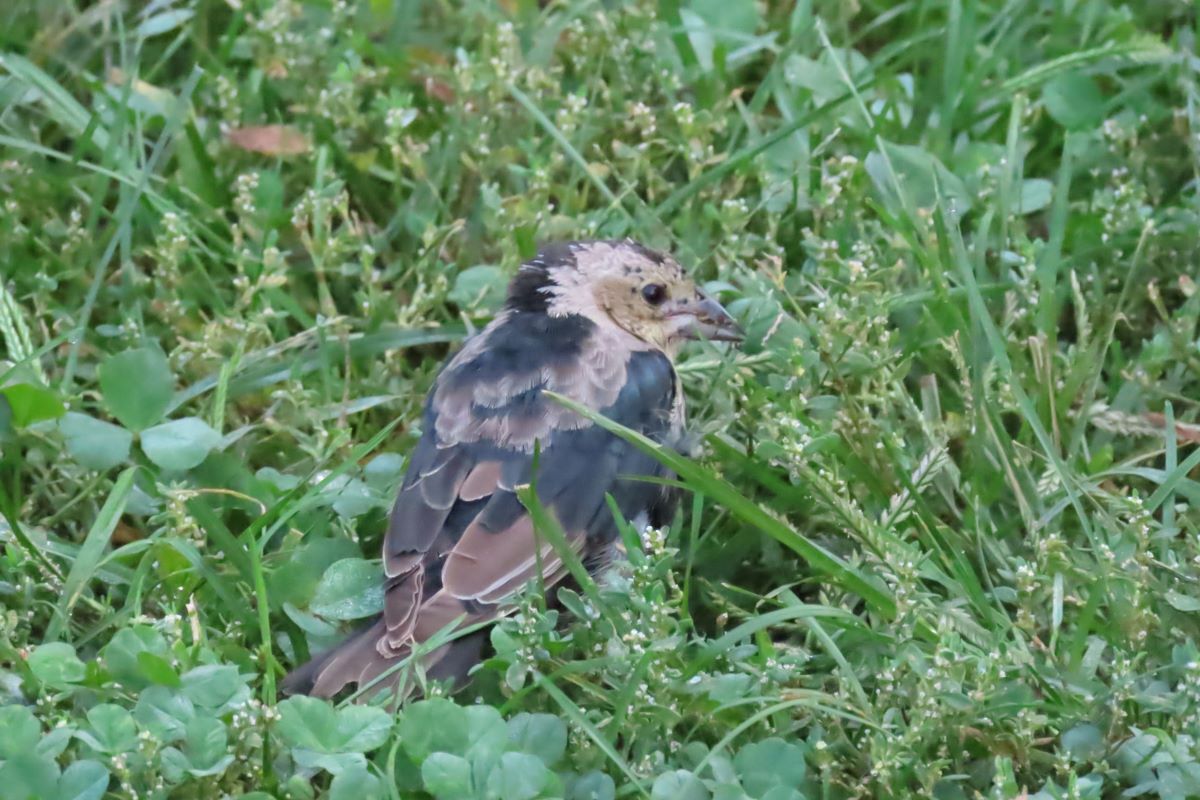
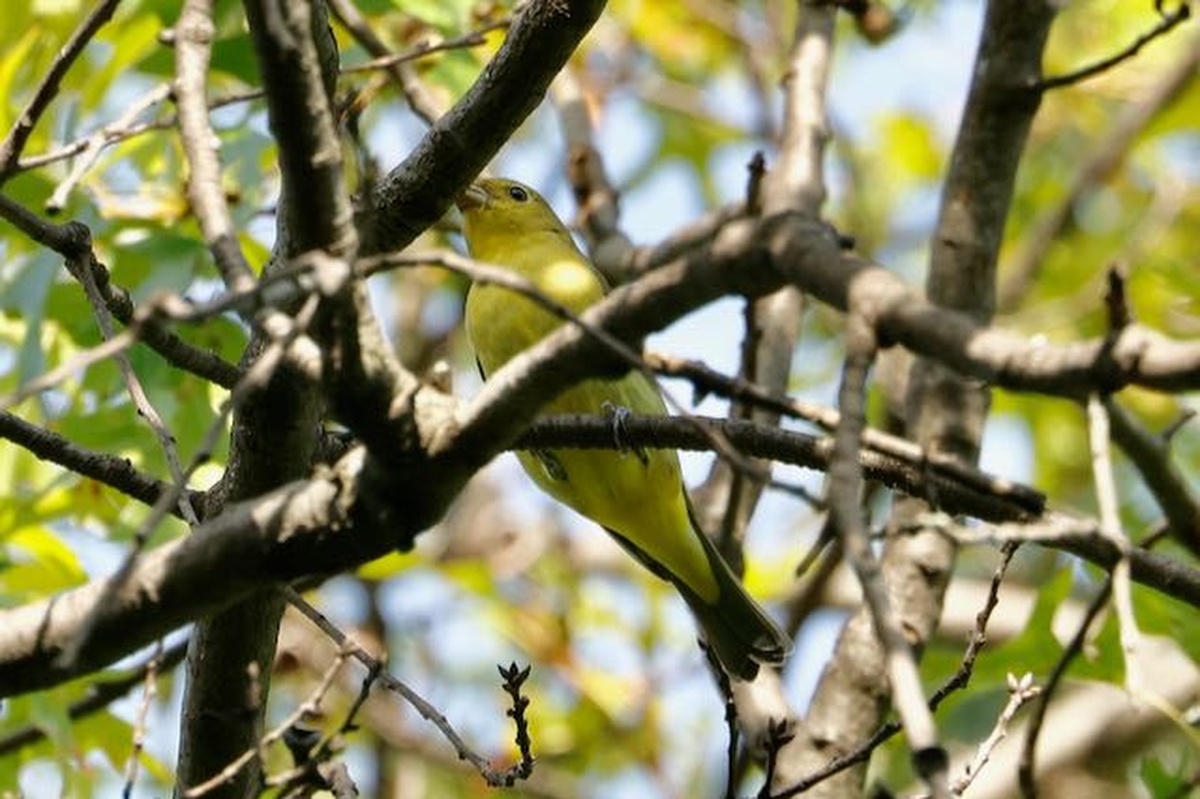
The group lingered in a meadow patch where they were treated to an immature Dickcissel. And although they missed a reported Orange-crowned Warbler, a few members managed to catch sight of a Vesper Sparrow.
Species List
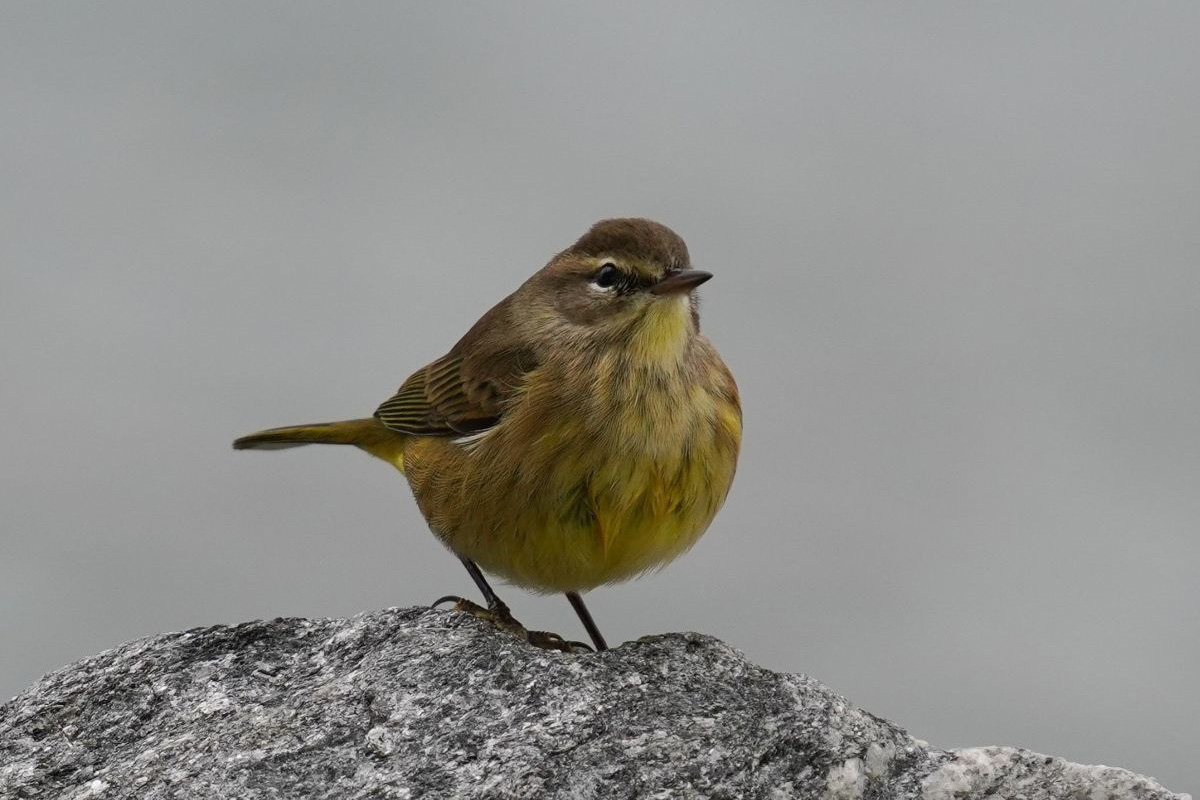
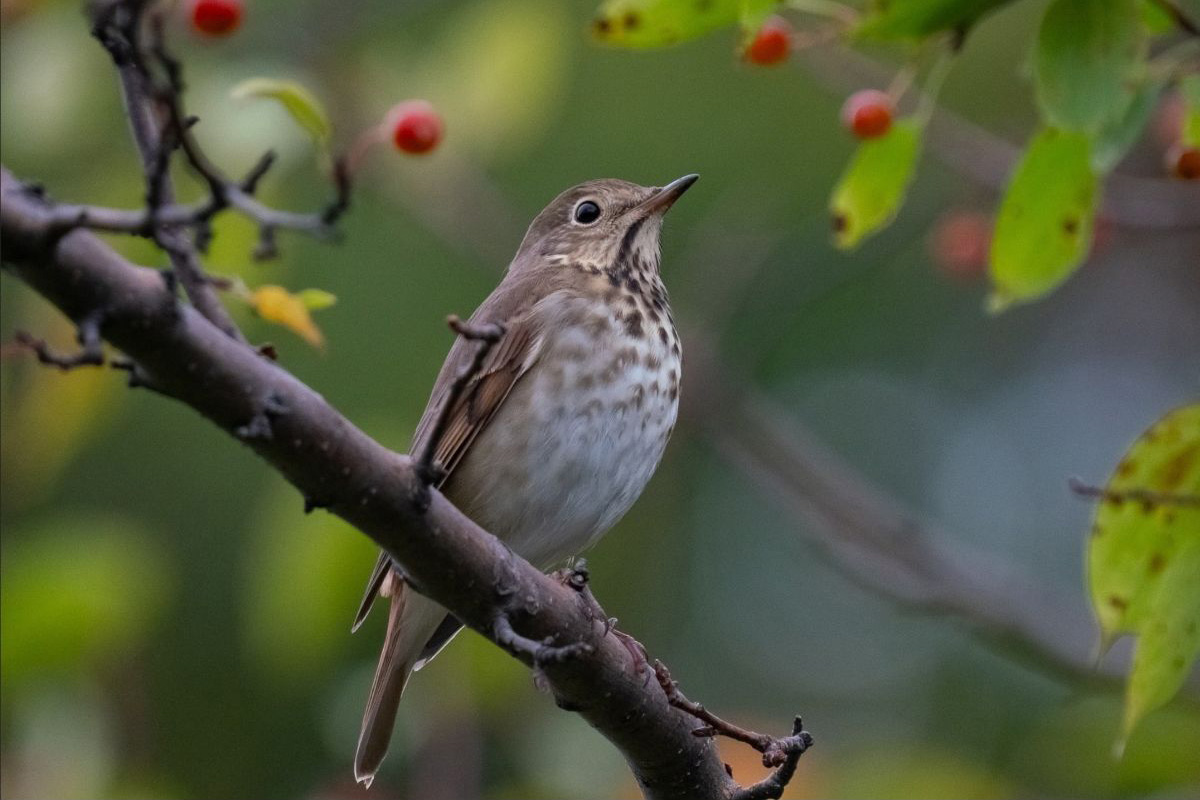
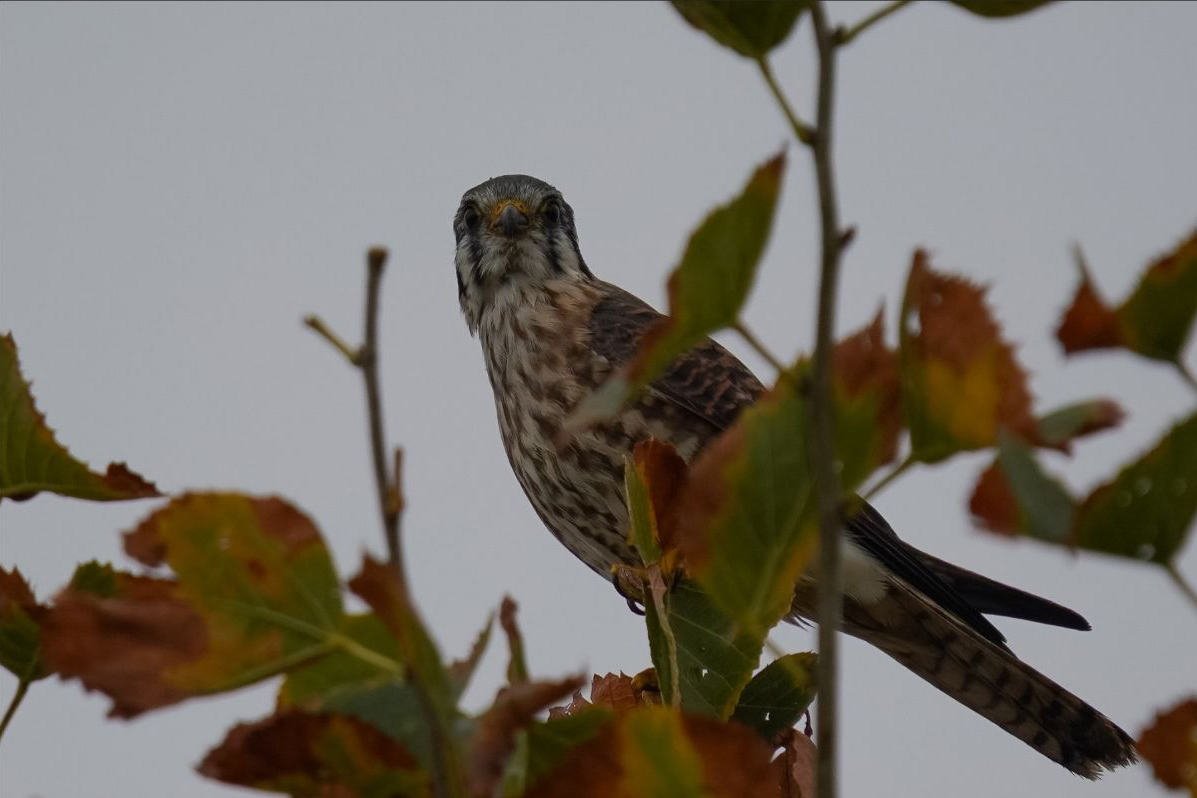
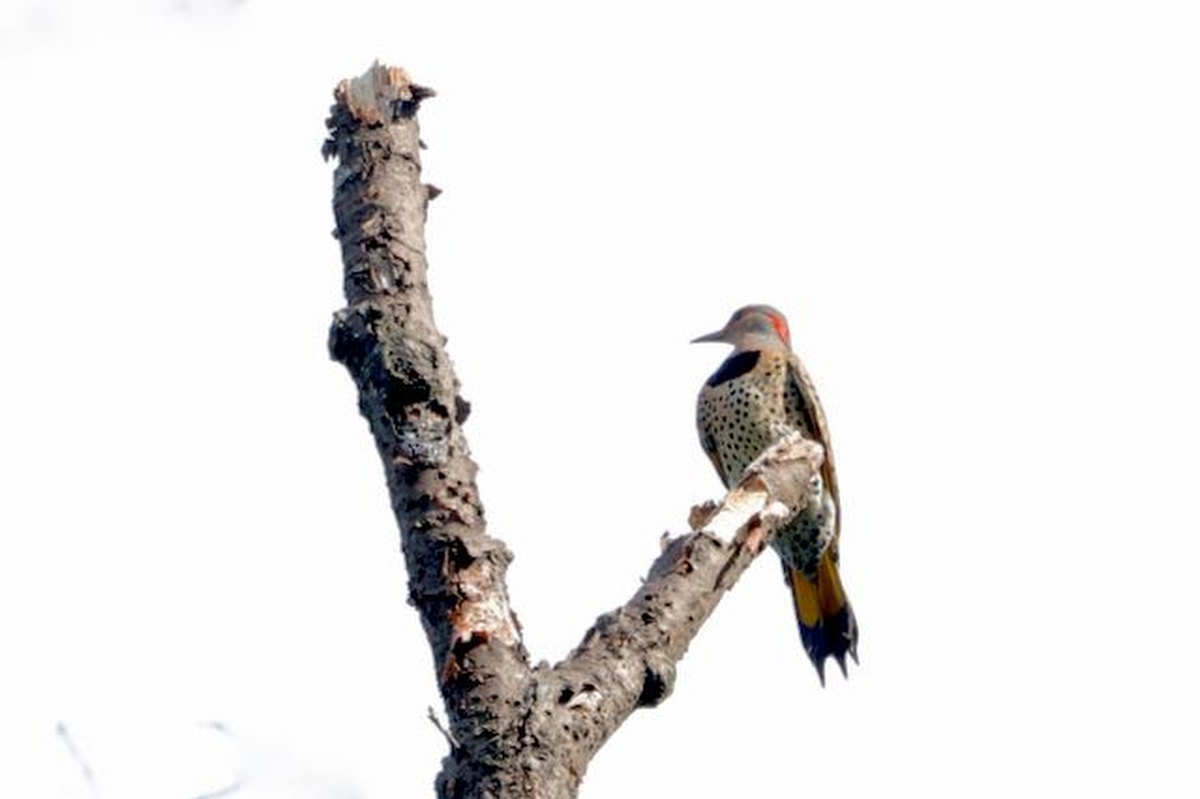
Canada Goose Mallard Rock Pigeon (Feral Pigeon) Mourning Dove Killdeer Spotted Sandpiper Laughing Gull Ring-billed Gull American Herring Gull Double-crested Cormorant Red-tailed Hawk Yellow-bellied Sapsucker Red-bellied Woodpecker Northern Flicker American Kestrel Eastern Phoebe Blue-headed Vireo Blue Jay American Crow Tufted Titmouse Carolina Wren European Starling Gray Catbird Northern Mockingbird Hermit Thrush American Robin House Sparrow House Finch White-throated Sparrow Vesper Sparrow Savannah Sparrow Song Sparrow Lincoln’s Sparrow Swamp Sparrow Eastern Towhee Common Grackle Common Yellowthroat Palm Warbler (including one Western) Yellow-rumped Warbler Northern Cardinal Dickcissel
Registrar: Junko Suzuki Trip report: Debbie Mullins Participants: 30 Weather: 57-59° F, clear, N to NNE winds at 9 mph with 16 mph gusts Species: 28
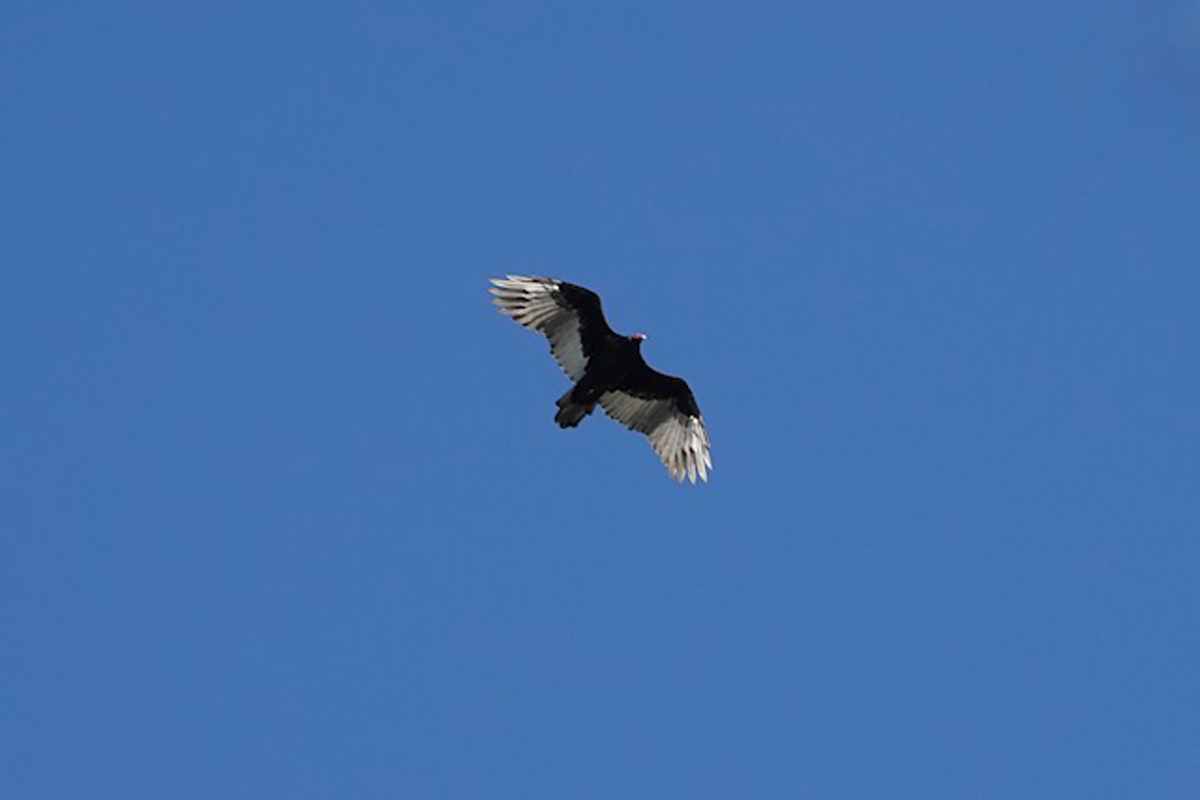
Conditions appeared ideal for a hawk watch, with a high-pressure system moving through overnight and bringing strong northerly winds. However, the system also cleared out all the clouds, leaving a bright blue sky—a challenging backdrop for spotting migrating raptors. Despite this, several large skeins of Canada Goose were observed, along with many Turkey Vultures, three Bald Eagles, and several other raptor species.
Species
Canada Goose Mallard Rock Pigeon (Feral Pigeon) Mourning Dove Chimney Swift American Herring Gull Turkey Vulture Cooper’s Hawk Bald Eagle Red-tailed Hawk Northern Flicker Merlin Peregrine Falcon Eastern Phoebe Blue Jay Common Raven Red-breasted Nuthatch American Robin House Finch American Goldfinch Dark-eyed Junco White-throated Sparrow Song Sparrow Eastern Towhee Common Grackle Pine Warbler Yellow-rumped Warbler Northern Cardinal
Registrar: Sarah Dahl Participants: 40 Weather: Cloudy and low 60s at the start Bird Species: 64
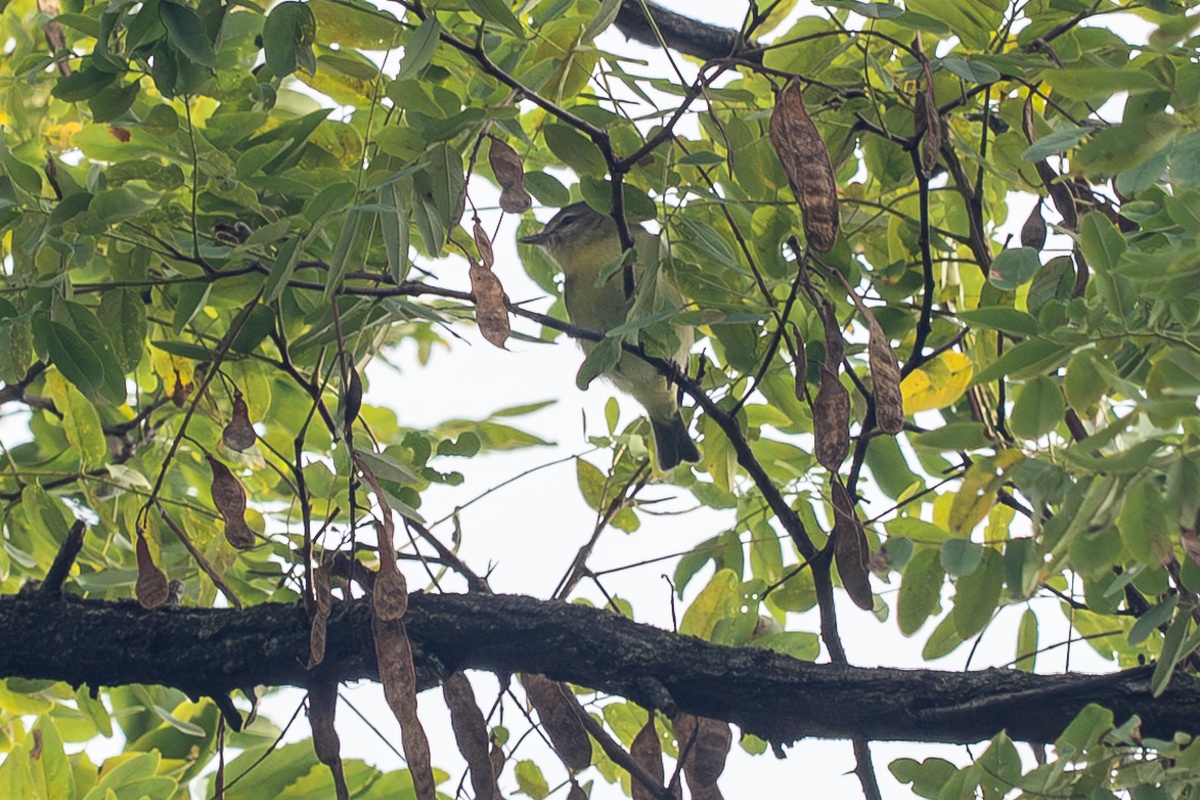
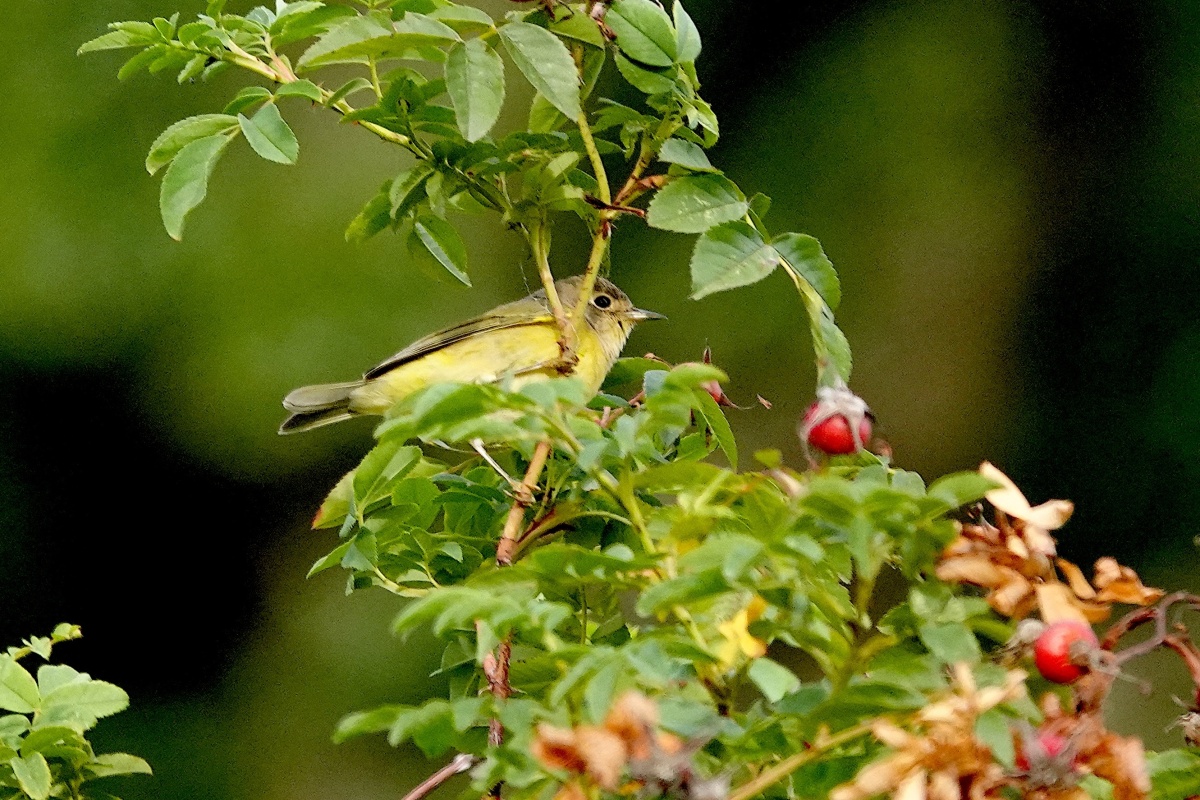
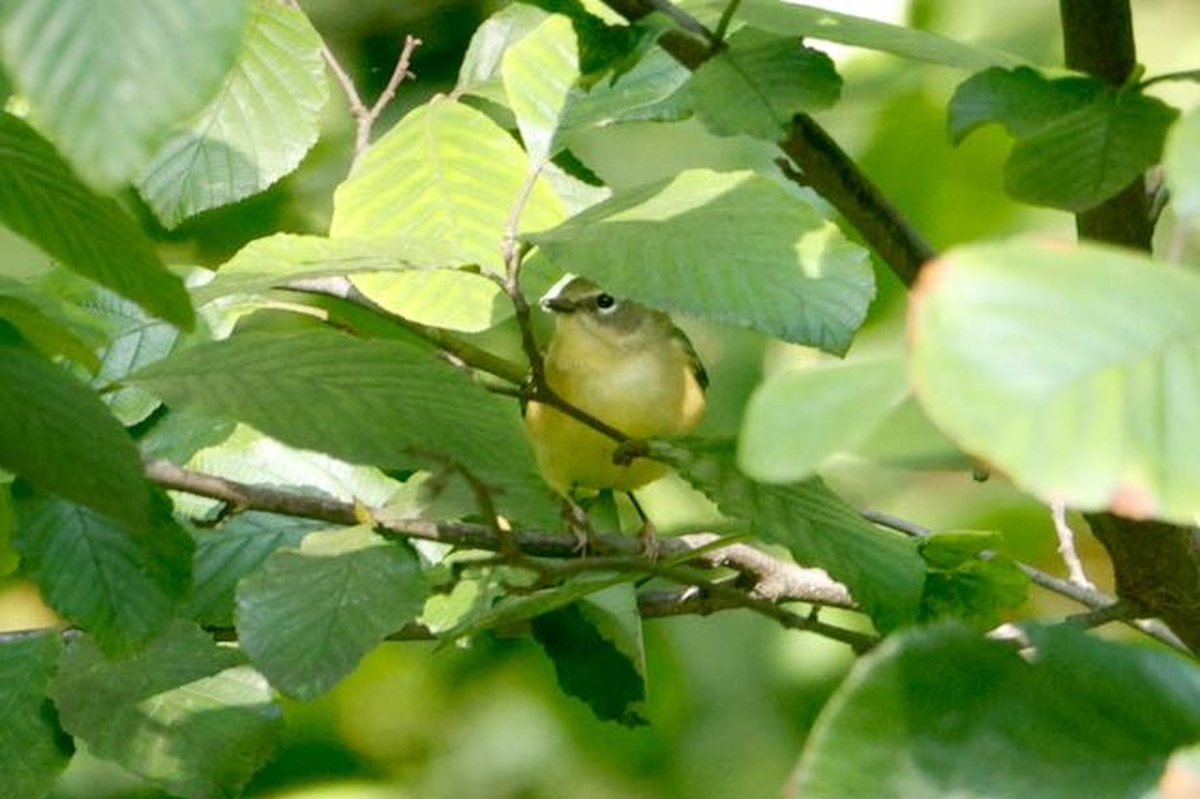
A mild, somewhat warm fall day greeted an energetic group of 40 birders. Though a few participants were delayed by early subway snags, all eventually arrived in good spirits, ready to explore. Highlights of the day included excellent looks at Orange-Crowned Warbler, Philadelphia Vireo, and White-eyed Vireo. A Cooper’s Hawk added excitement as it was mobbed noisily by a large flock of European Starlings.
Species List
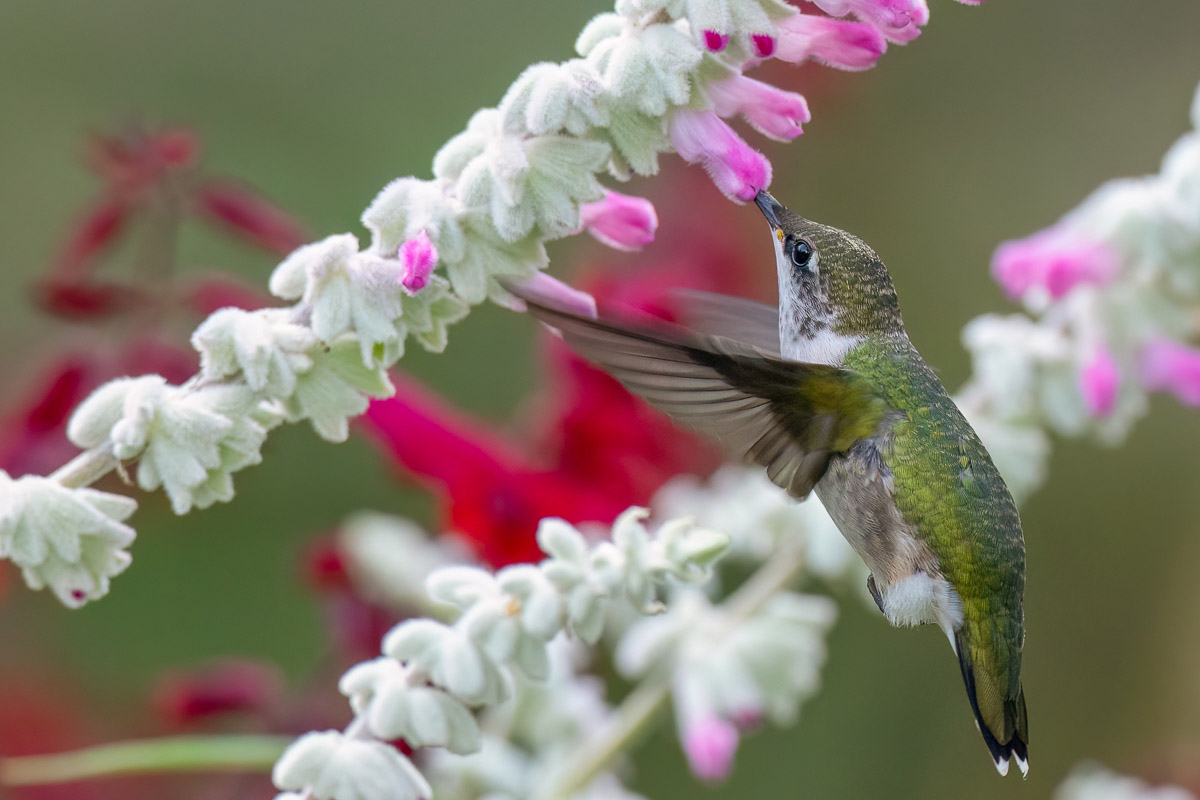
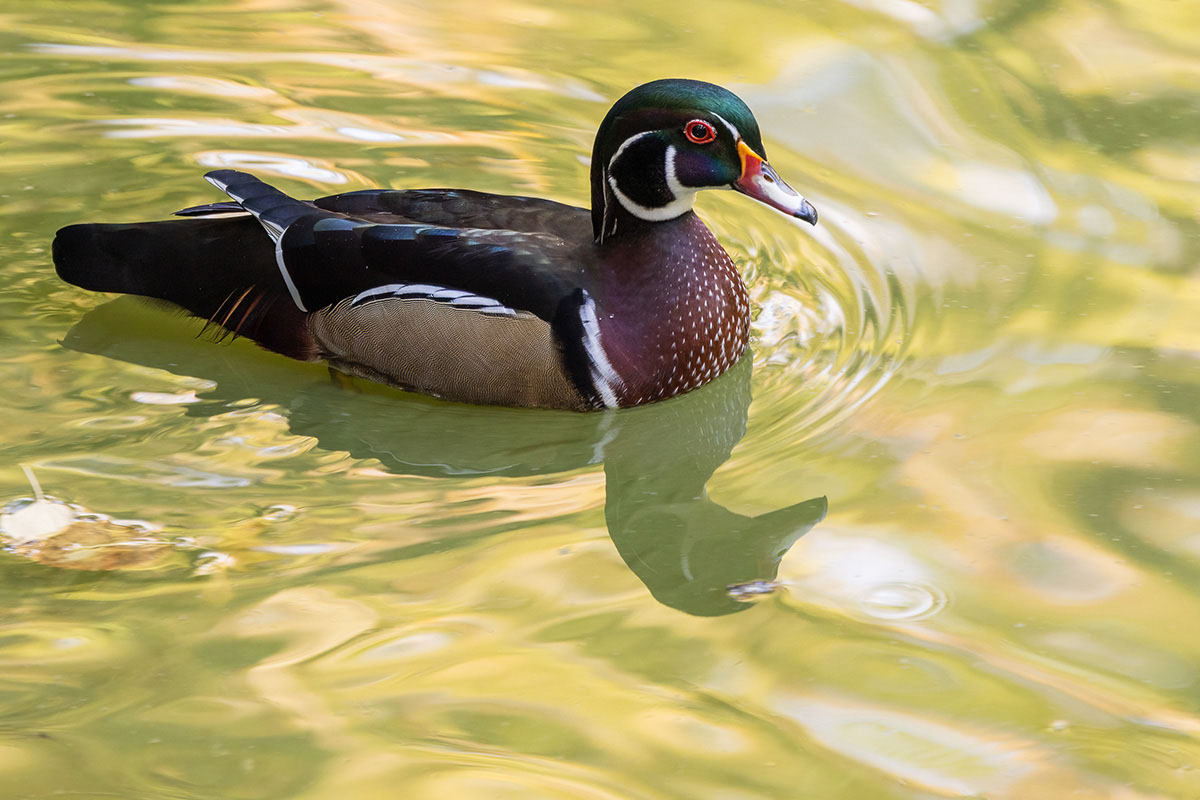
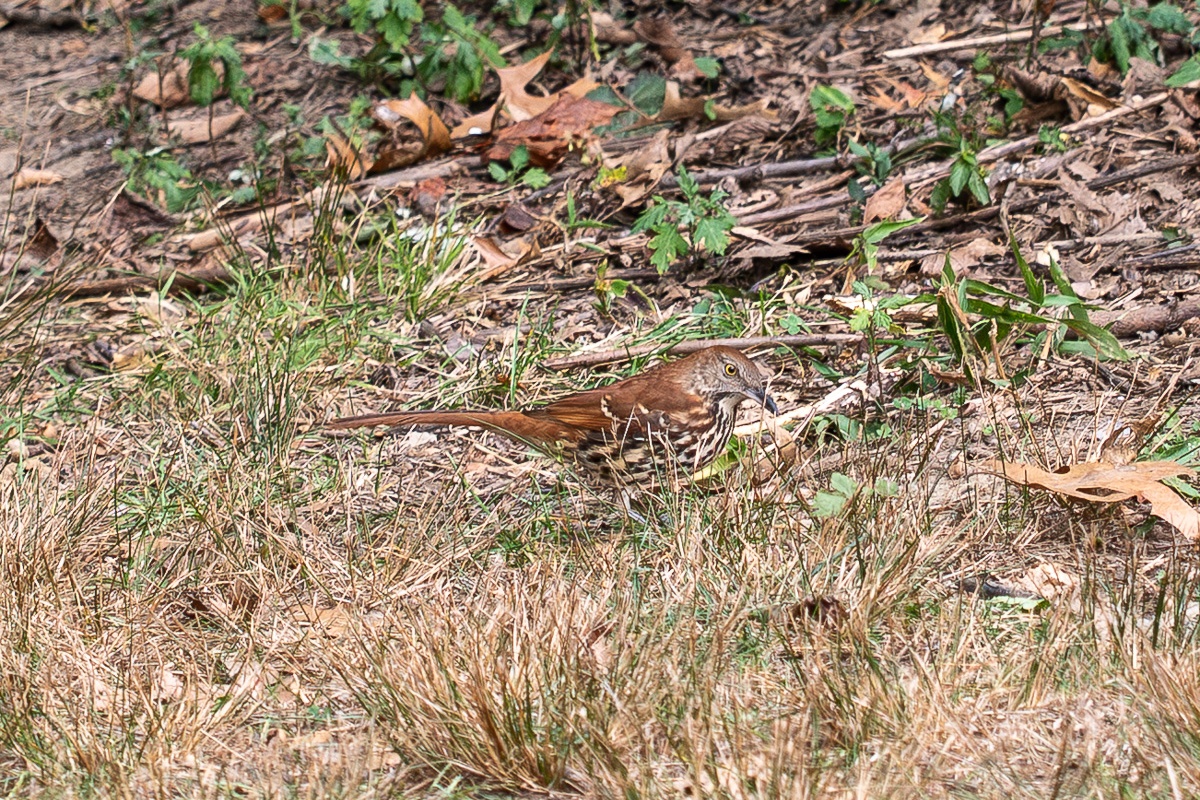
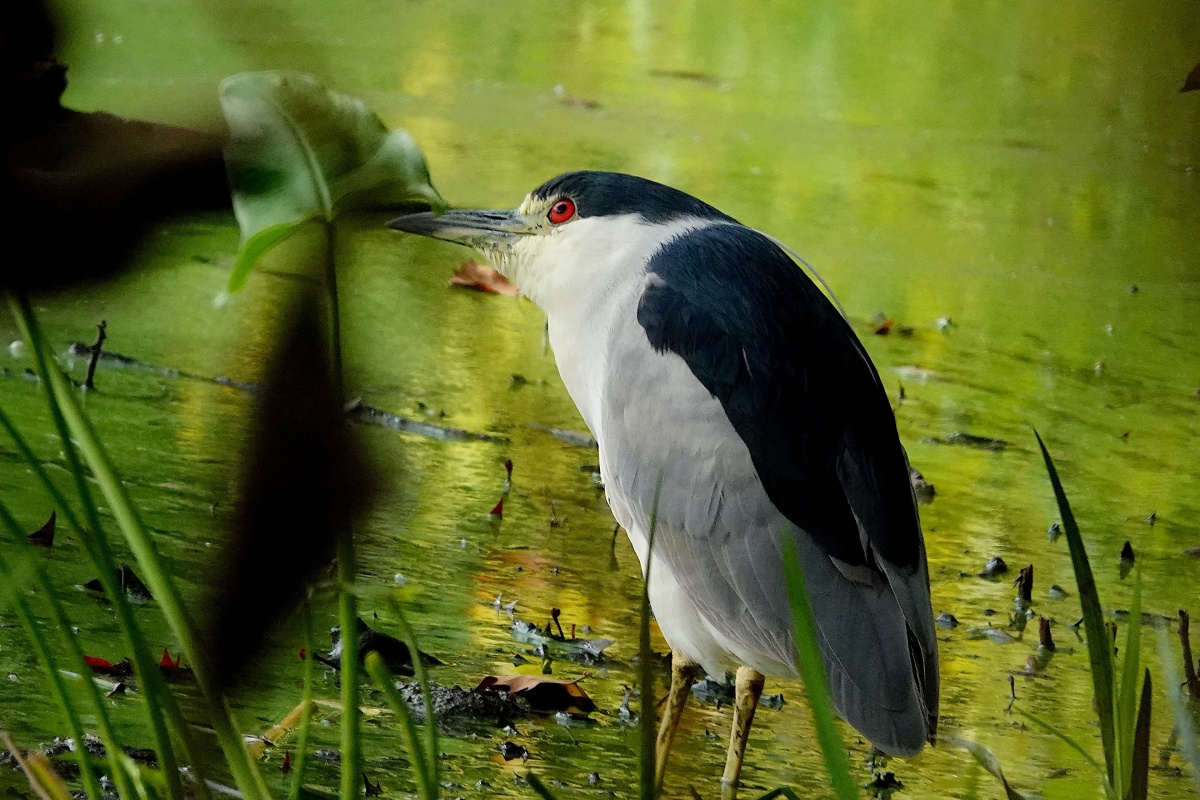
Canada Goose Wood Duck Northern Shoveler Mallard Rock Pigeon (Feral Pigeon) Mourning Dove Chimney Swift Ruby-throated Hummingbird Ring-billed Gull American Herring Gull Great Black-backed Gull Great Blue Heron Black-crowned Night Heron Cooper’s Hawk Broad-winged Hawk Red-tailed Hawk Yellow-bellied Sapsucker Red-bellied Woodpecker Downy Woodpecker Northern Flicker Peregrine Falcon Eastern Phoebe White-eyed Vireo Philadelphia Vireo Red-eyed Vireo Blue Jay American Crow Common Raven Tufted Titmouse Ruby-crowned Kinglet Golden-crowned Kinglet Red-breasted Nuthatch White-breasted Nuthatch Brown Creeper Northern House Wren Winter Wren Carolina Wren European Starling Gray Catbird Brown Thrasher Swainson’s Thrush Wood Thrush American Robin House Sparrow House Finch American Goldfinch Chipping Sparrow Dark-eyed Junco White-throated Sparrow Song Sparrow Eastern Towhee Common Grackle Ovenbird Black-and-white Warbler Orange-crowned Warbler Nashville Warbler Common Yellowthroat American Redstart Northern Parula Blackpoll Warbler Black-throated Blue Warbler Pine Warbler Northern Cardinal Rose-breasted Grosbeak
Registrar: Lisa Kroop Participants: 18 Weather: 66°F–79°F, sunny with haze; light breeze, 2 mph NE Bird Species: 41
It felt like a summer day, especially as the morning progressed, but we were now into October and some trees were starting to show signs of fall. It was close to high tide, and at our first stop we saw many sleeping Mallards concentrated along the far shore of the salt marsh. As it was quiet, with little activity, we moved on to a small fenced-in meadow nearby, adjacent to a large grass field, to see what we might find there. We took our time, carefully inspecting the House Sparrows that were energetically foraging in the grass along the fence. Over time, among them and nearby, we found a Swamp Sparrow, a couple of Savannah Sparrows, a Chipping Sparrow, and a Palm Warbler. We looked for the Indigo Bunting that Loyan had spotted before the walk, but we were unable to relocate it.
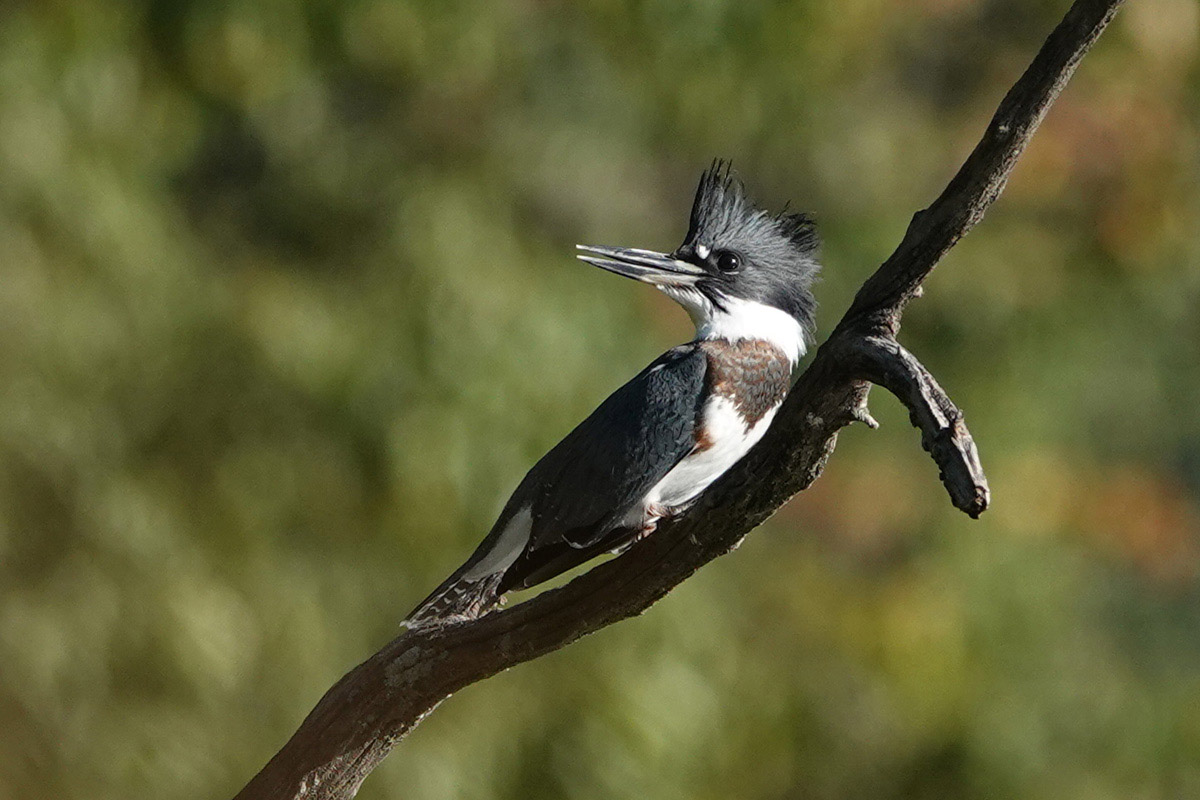
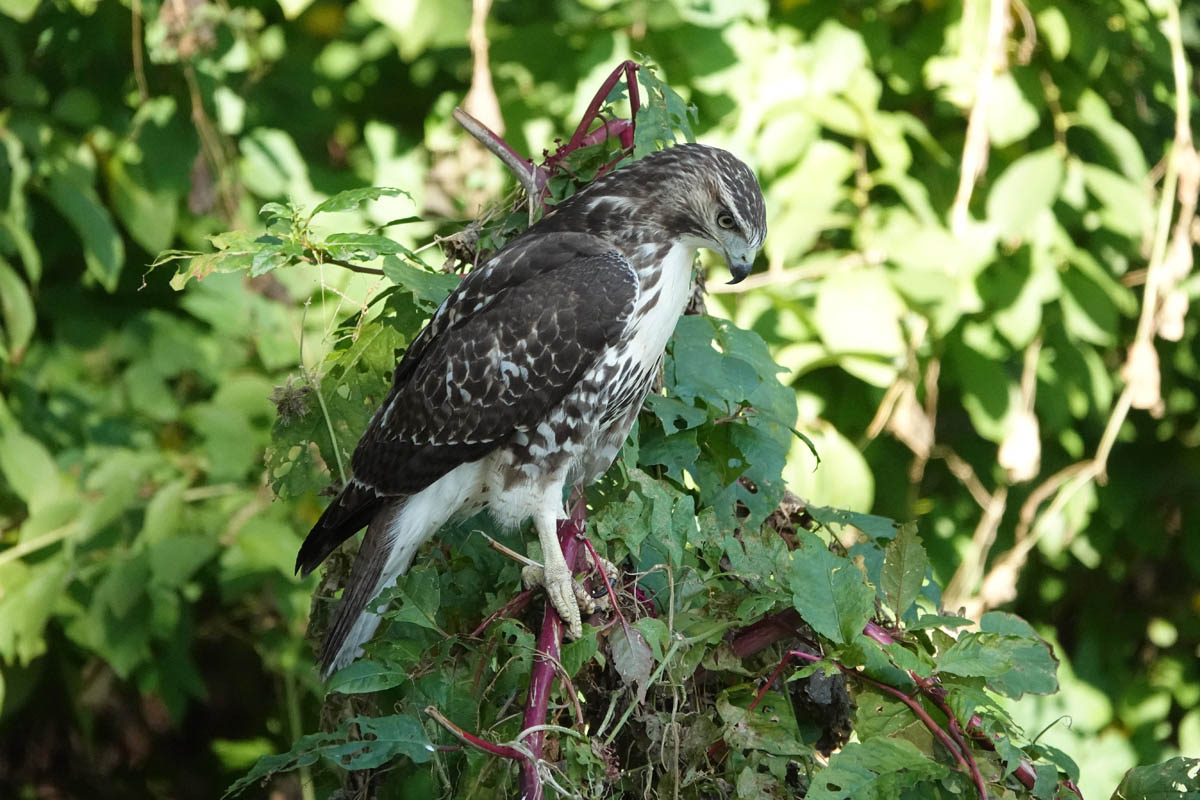
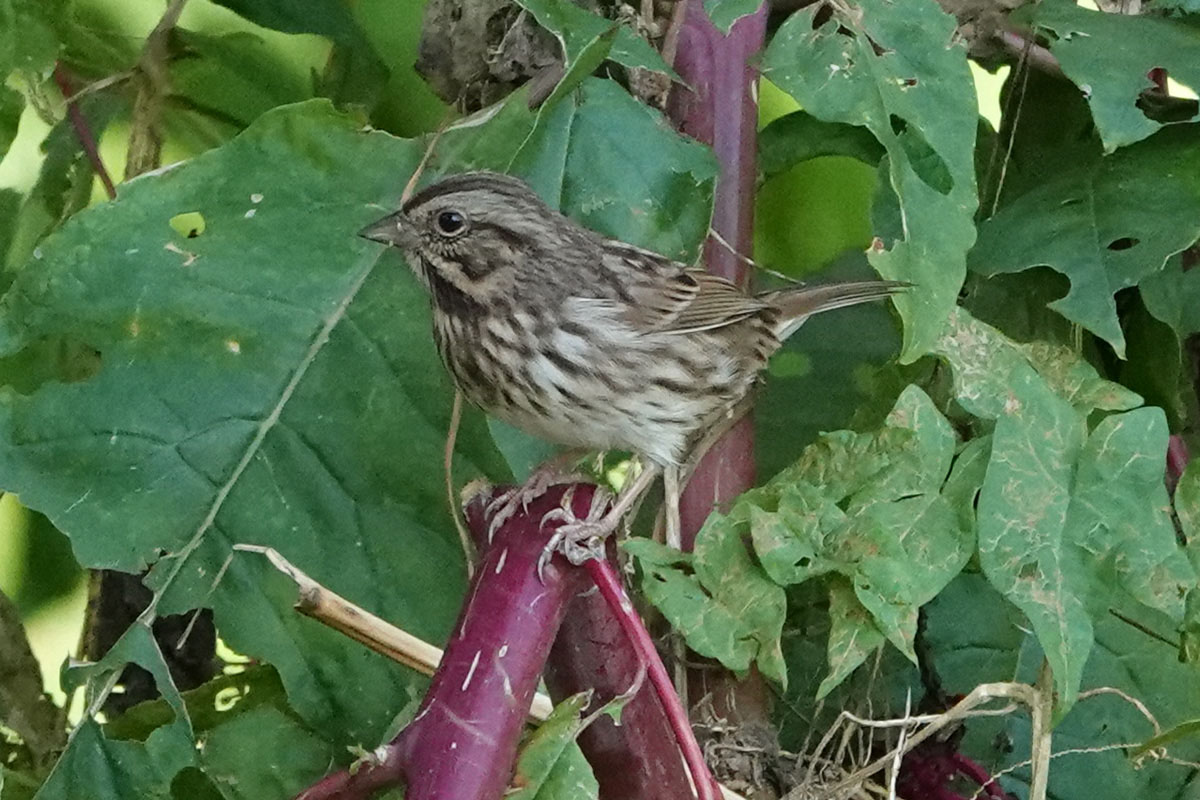
Continuing onward, soon reaching the corner of the field, we left the bay behind us and paused again. This time we found the action along the wooded edge of the field, first with sparrows, followed by the arrival of a juvenile Red-tailed Hawk who perched very close to us on a sturdy plant stalk that had just moments before been vacated by a Song Sparrow. And while the Red-tailed Hawk perched, a Belted Kingfisher alighted onto a snag nearby.
We entered the Clove, a deep, narrow valley between steep rock ridges and woods of mature, tall trees. In the heavily shaded and cool Clove, Blue Jays called loudly all around us. We paused several times to search for other migratory birds in the sunny patches high in the treetops, but didn’t find any. Then, to the delight of everyone, a warbler was spotted foraging in the path far ahead of us—a female Black-throated Blue Warbler. It continued there for several minutes, briefly moving out of the shade into a bright sliver of sunlight, and then flew into the understory and out of sight.
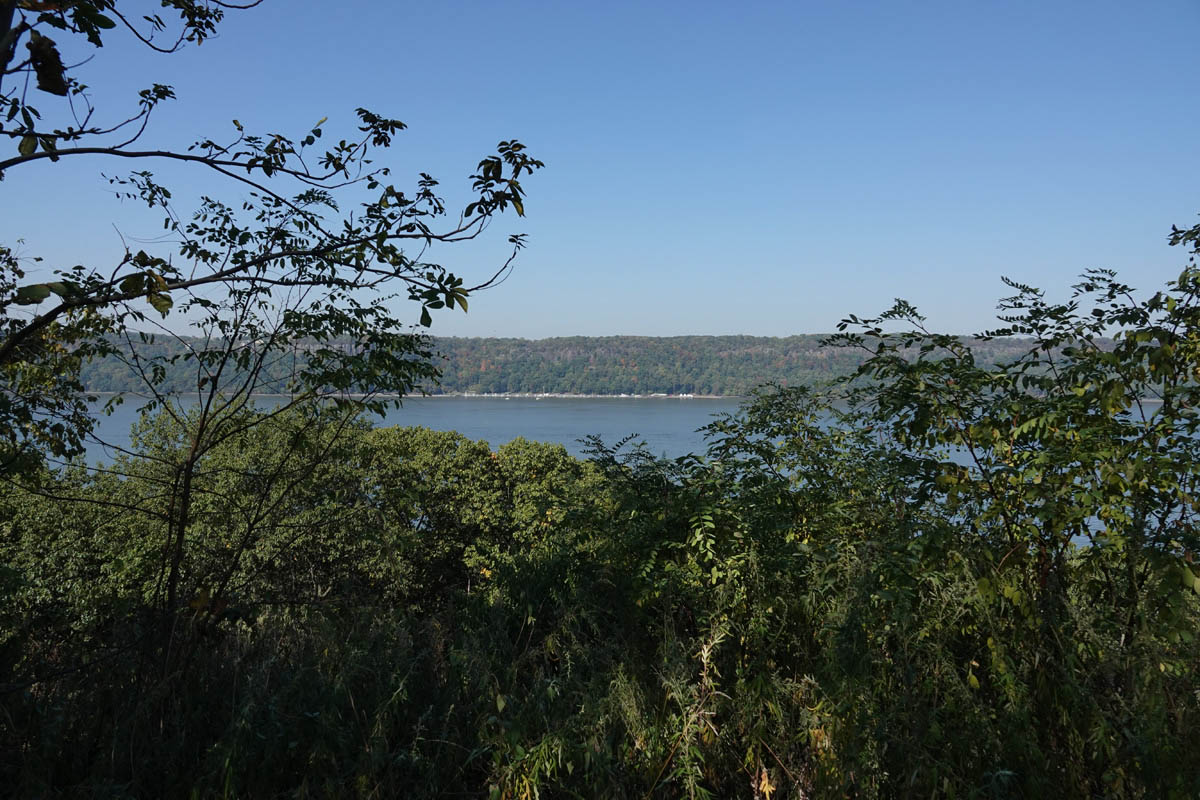
Observing the vista from the Overlook Meadow, we hoped to see raptors moving over the Hudson River. The view was beautiful, but we saw barely a flying bird, and no raptors. We resumed our walk back into the woods. We had heard and seen quite a few Red-bellied Woodpeckers by this time. Yet another one called—we located it, saw that it had an acorn in its bill, and watched it fly to another tree and cache the acorn under the peeling bark of the trunk—fascinating to watch.
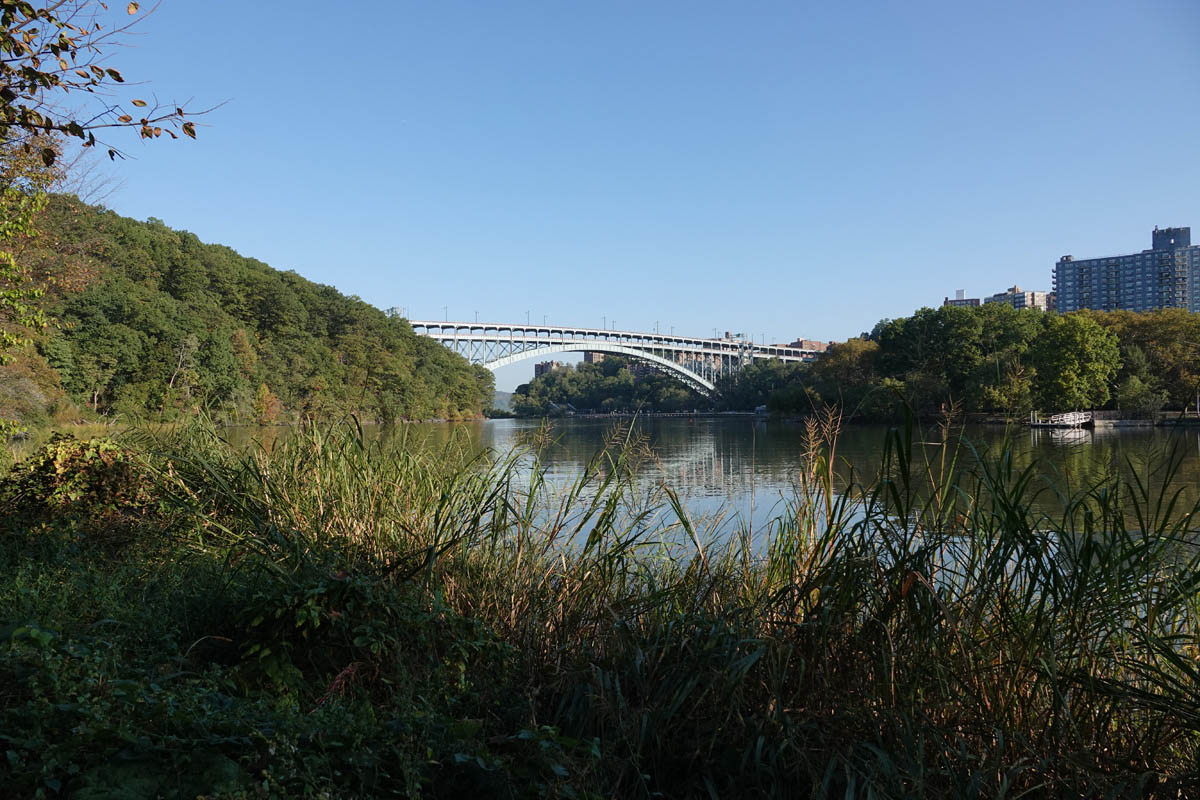
We followed the trail downhill to underneath the Henry Hudson Bridge that overlooks Spuyten Duyvil Creek. As we gazed out at the view, noting a distant Great Blue Heron, we heard the loud and clear croaking of a raven close by. There were two of them, directly overhead, perched on the supporting framework of the bridge. And across the creek, perched on the roof of an apartment building, was a third.
As we neared the end of our walk, we paused to observe a couple of phoebes, and then gathered at Shorakkopoch Rock to thank Loyan for leading us on a wonderful birding trip through Inwood Hill Park.
Species Lists
Birds Canada Goose Mallard Rock Pigeon (Feral Pigeon) Mourning Dove Chimney Swift Ring-billed Gull American Herring Gull Double-crested Cormorant Great Blue Heron Turkey Vulture Bald Eagle Red-tailed Hawk Belted Kingfisher Yellow-bellied Sapsucker Red-bellied Woodpecker Downy Woodpecker Hairy Woodpecker Northern Flicker Eastern Phoebe Blue Jay American Crow Common Raven Ruby-crowned Kinglet White-breasted Nuthatch Brown Creeper European Starling Gray Catbird American Robin House Sparrow House Finch American Goldfinch Chipping Sparrow White-throated Sparrow Savannah Sparrow Song Sparrow Swamp Sparrow Common Yellowthroat Black-throated Blue Warbler Palm Warbler Yellow-rumped Warbler Northern Cardinal
Esteemed leader Jason Denesevich started us off at Plum Island where we had a Saltmarsh Sparrow and another Ammospiza that we could not identify to the species level. We also had multiple Marsh Wrens, an Eastern Meadowlark, and Semipalmated Plovers. Afterwards, we explored the rest of the Hook, and it was very productive. We found an American Golden-Plover in a large flock of Black-bellied Plovers and Royal Terns at Spermaceti Cove; a late Blue-gray Gnatcatcher at the Life Saving Center; a Northern Parula, and a couple Black-throated Blue Warblers at Raccoon Alley. Happily, we saw many raptors as well, including two Bald Eagles, seven Cooper’s/Sharp-shinned Hawks, and a Northern Harrier! The 67 species total was one short of our tally last year. But, combined with the list from the previous year, we have seen a staggering 91 species at Sandy Hook, thanks to the expertise of our trip leader.
Species List
Canada Goose Mallard American Black Duck Surf Scoter Mourning Dove American Oystercatcher Black-bellied Plover American Golden-Plover Semipalmated Plover Least SandpiperLaughing Gull Ring-billed Gull American Herring Gull Great Black-backed Gull Forster’s Tern Royal Tern Double-crested Cormorant Snowy Egret Great Egret Great Blue Heron Black Vulture Turkey Vulture Osprey (American) Sharp-shinned Hawk Cooper’s Hawk Northern Harrier Bald Eagle Red-tailed Hawk Yellow-bellied Sapsucker Red-bellied Woodpecker Downy Woodpecker (Eastern) Northern Flicker (Yellow-shafted) Eastern Phoebe Red-eyed Vireo American Crow Common Raven Black-capped Chickadee Barn Swallow Ruby-crowned Kinglet Golden-crowned Kinglet Blue-gray Gnatcatcher Marsh Wren Carolina Wren (Northern) European Starling Gray Catbird Northern Mockingbird American Robin Cedar Waxwing House Sparrow House Finch American Goldfinch Dark-eyed Junco White-throated Sparrow Saltmarsh Sparrow Nelson’s / Saltmarsh Sparrow Savannah Sparrow Song Sparrow (melodia/atlantica) Swamp Sparrow Eastern Towhee Eastern Meadowlark Red-winged Blackbird Common Yellowthroat Northern Parula Black-throated Blue Warbler Palm Warbler Pine Warbler Yellow-rumped Warbler (Myrtle) Northern Cardinal
Registrar: Suzanne Zywicki Participants: 35 Weather: Cloudy skies, temperature ranging from 60 to the high-70s Bird Species: 74
Participants split into two groups, one led by Kevin and the other by Alice and Richard. Kevin’s group headed out to Strawberry Fields, where one of the highlights was a Philadelphia Vireo. Alice and Richard’s group walked over to the area behind the Falconer’s Statue, a good area to potentially see interesting sparrows, as well as warblers. Over the course of the morning, the two groups combined saw 74 species across the park, including 14 warbler species. The groups also observed some new visitors for the season, including Dark-eyed Juncos and Ruby-crowned and Golden-crowned Kinglets.
Species List
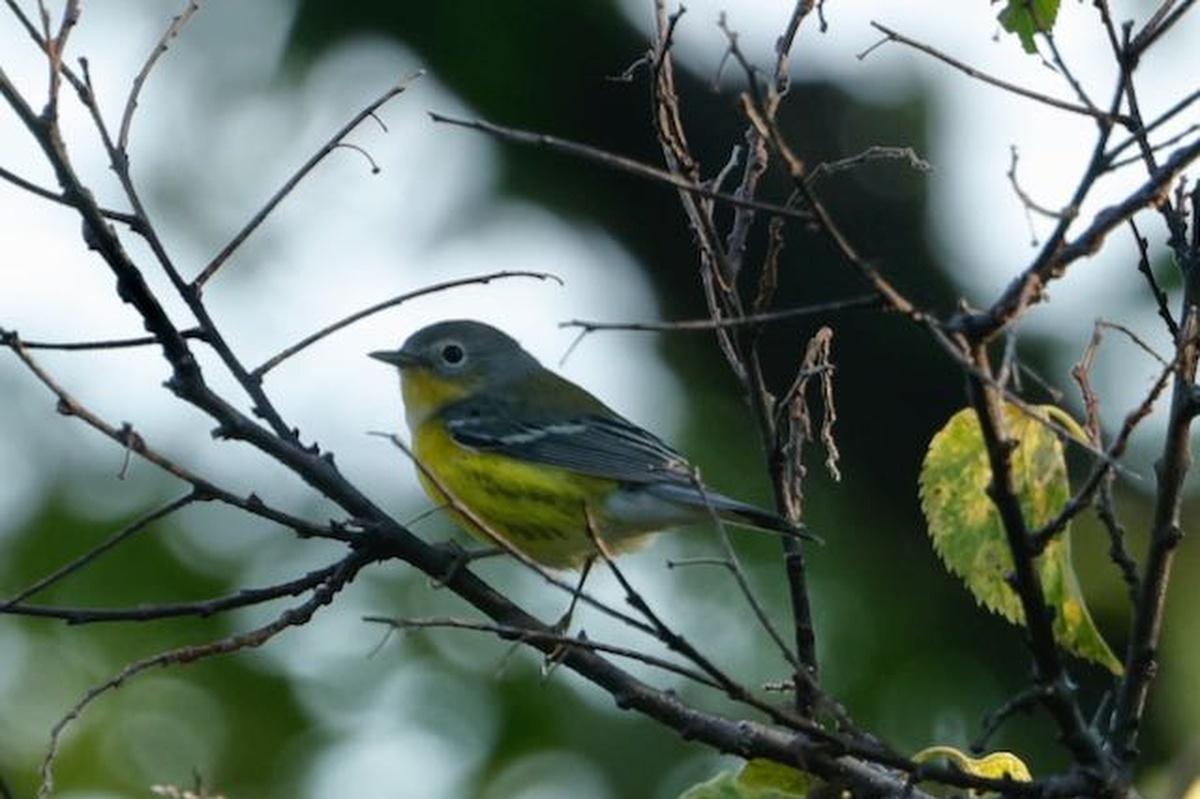
Canada Goose Wood Duck Northern Shoveler Gadwall Mallard Green-winged Teal Rock Pigeon (Feral Pigeon) Mourning Dove Chimney Swift Ruby-throated Hummingbird Laughing Gull Ring-billed Gull American Herring Gull Great Black-backed Gull Black-crowned Night Heron Green Heron Cooper’s Hawk Red-tailed Hawk Yellow-bellied Sapsucker Red-bellied Woodpecker Downy Woodpecker Northern Flicker Budgerigar (Domestic type) Eastern Wood-Peewee Eastern Phoebe Blue-headed Vireo Philadelphia Vireo Red-eyed Vireo Blue Jay American Crow Ruby-crowned Kinglet Golden-crowned Kinglet Red-breasted Nuthatch Brown Creeper Northern House Wren Winter Wren European Starling Gray Catbird Brown Thrasher Northern Mockingbird Swainson’s Thrush Wood Thrush American Robin Cedar Waxwing House Sparrow House Finch American Goldfinch Chipping Sparrow Dark-eyed Junco White-throated Sparrow Savannah Sparrow Song Sparrow Swamp Sparrow Eastern Towhee Brown-headed Cowbird Common Grackle Ovenbird Northern Waterthrush Black-and-white Warbler Prothonotary Warbler Nashville Warbler Common Yellowthroat American Redstart Northern Parula Magnolia Warbler Chestnut-sided Warbler Black-throated Blue Warbler Palm Warbler Pine Warbler Yellow-rumped Warbler Scarlet Tanager Northern Cardinal Rose-breasted Grosbeak Indigo Bunting
Registrar: Christina Black Participants: 12 Weather: Sunny, very warm, 75-85 degrees Bird Species: 42
For five delightful hours, Paul Sweet led our group through the area of the Fire Island National Seashore east of and in Watch Hill, NY. Also providing birding IDs and local commentary was Deborah Swamback, a Queens County Bird Club member who birds in and around Watch Hill and Davis Park for about half each year.
We spent most of the day along the walkway that leads through the sheltered dune areas between the ocean and the bay, which include low tree/bush cover, some fresh water ponds, and a large saltwater marsh. The shadier sections were fairly birdy, including a number of the warblers, along with scolding Gray Catbirds and singing Carolina Wrens. After about 90 minutes, the group walked up to a high platform overlooking the marsh, where a small Goldfinch, watching us from a nearby bare branch, contrasted with a Northern Harrier soaring overhead. Eventually, the group made it down to the marsh, which had less bird activity but included some Egrets and a Great Blue Heron near a pond, and Northern Flickers dashing about; it was too late in the fall for Seaside or Saltmarsh Sparrows.
After lunch, the group spent time on the beach discussing Gull and Tern IDs, before heading back to the woods and marsh. A first-of-season Dark-eyed Junco was spotted, and, later, the final bird of the day was a Palm Warbler (Western) right after a pair of Least Sandpipers were seen on a wee marsh beach.
Species List
Mallard Mourning Dove Least Sandpiper Laughing Gull Ring-billed Gull American Herring Gull Great Black-backed Gull Lesser Black-backed Gull Forster’s Tern Royal Tern Double-crested Cormorant Great Egret Great Blue Heron Osprey Northern Harrier Downy Woodpecker Northern Flicker Peregrine Falcon Red-eyed Vireo American Crow Black-capped Chickadee Ruby-crowned Kinglet Carolina Wren Gray Catbird American Robin Cedar Waxwing American Goldfinch Dark-eyed Junco Savannah Sparrow Song Sparrow Swamp Sparrow Black-and-white Warbler Common Yellowthroat American Redstart Cape May Warbler Northern Parula Magnolia Warbler Yellow Warbler Blackpoll Warbler Palm Warbler Pine Warbler Northern Cardinal
Registrar: Suzanne Zywicki Participants: 19 Weather: Cloudy, winds up to seven miles per hour, temperatures ranging from 64 – 79 degrees Bird Species: 59
After meeting our leader, Ursula Mitra, the group headed up to the Great Hill to begin exploring the North End of Central Park. We quickly observed a large number of Northern Flickers flying overhead, as well as several Northern Parula moving within the trees. The Northern Parulas were the first of fourteen warbler species we identified over the course of the day.
At The Pool, we had great looks at three Green-winged Teal associating with a group of Mallards, allowing us to fully appreciate the smaller size of the teals. Also seen were Northern Waterthrush, a Gadwall, and an additional warbler species.
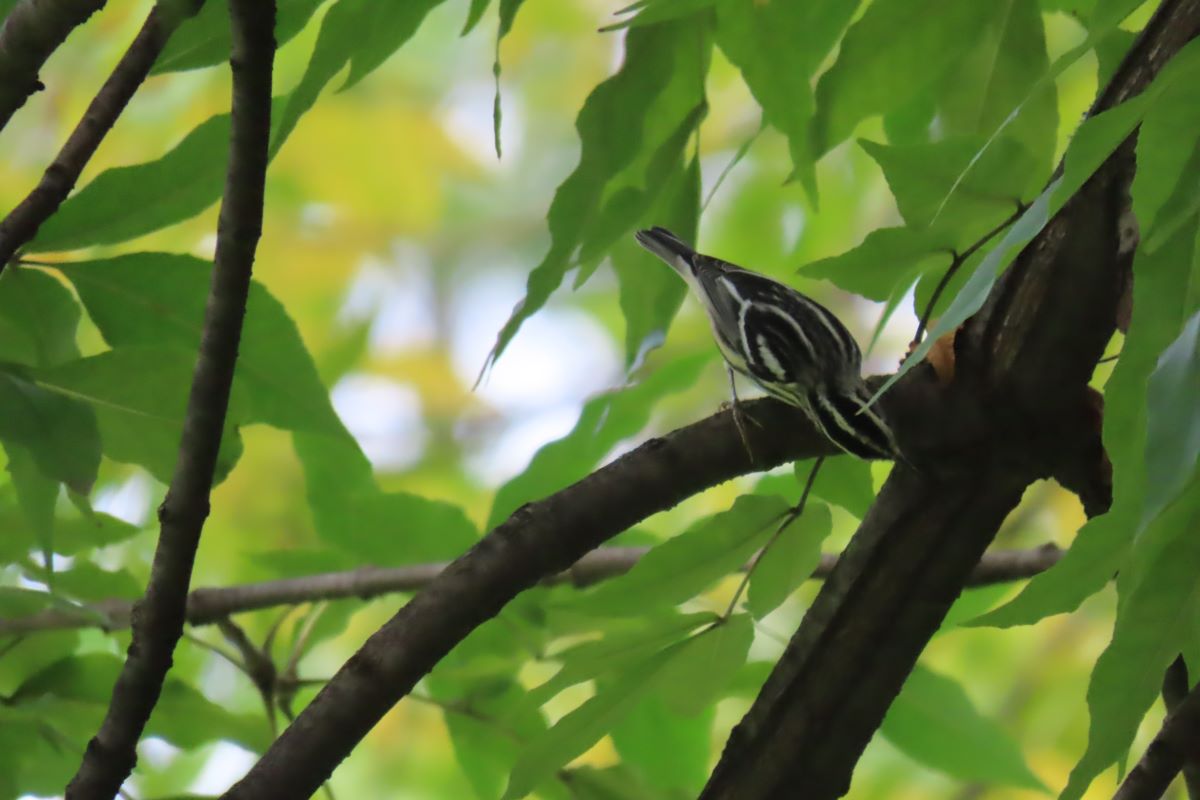
We moved on to some of the more wooded areas, including the Lily Pond, where we saw a Rose-breasted Grosbeak, additional Scarlet Tanagers, Black-and-white and other warblers, and Red-eyed Vireos. One participant also spotted a White-eyed Vireo. Additionally, we had good looks at a Cooper’s Hawk swooping overhead. At the Block House, we spotted Magnolia and other warblers, Cedar Waxwings, and at least one Red-tailed Hawk.
Our walk then took us through The Loch, where we continued to add to our warbler count. After our lunch break at the Green Bench, we headed over to the Nursery and Compost areas, where we were surprised to find an Indigo Bunting. In the nearby Wildflower Meadow, we spotted a Pine Warbler that had been reported earlier by others.
We ended our day back at The Pool, where we sat for a bit at the Bathing Rock and watched Common Yellowthroats and several other species splashing in the water. Those who stayed until the end birded for close to eight hours! A big thank you to Ursula for leading another great walk.
Species List
Canada Goose Northern Shoveler Gadwall Mallard Green-winged Teal Rock Pigeon (Feral Pigeon) Mourning Dove Chimney Swift Ring-billed Gull American Herring Gull Larus sp Cooper’s Hawk Red-tailed Hawk Yellow-bellied Sapsucker Red-bellied Woodpecker Downy Woodpecker Northern Flicker Empidonax sp. Eastern Phoebe Blue-headed Vireo Red-eyed Vireo Blue Jay American Crow Ruby-crowned Kinglet Northern House Wren Winter Wren European Starling Gray Catbird Brown Thrasher Northern Mockingbird Swainson’s Thrush Wood Thrush American Robin thrush sp. Cedar Waxwing House Sparrow House Finch American Goldfinch Chipping Sparrow White-throated Sparrow Song Sparrow Brown-headed Cowbird Common Grackle Ovenbird Northern Waterthrush Black-and-white Warbler Tennessee Warbler Common Yellowthroat American Redstart Northern Parula Magnolia Warbler Bay-breasted Warbler Yellow Warbler (Northern) Chestnut-sided Warbler Black-throated Blue Warbler Palm Warbler Pine Warbler Yellow-rumped Warbler Scarlet Tanager Northern Cardinal Rose-breasted Grosbeak Indigo Bunting