The Linnaean Society of New York

Field Trip Reports
 

Jamaica Bay Wildlife Refuge: 33rd Annual Tom Davis Memorial Shorebird Walk with Tom Stephenson, 8/23/2025

Registrar: Christina Black
Participants: 
24
Weather: 
Sunny, a few clouds, 75–80 degrees
Bird Species:
68

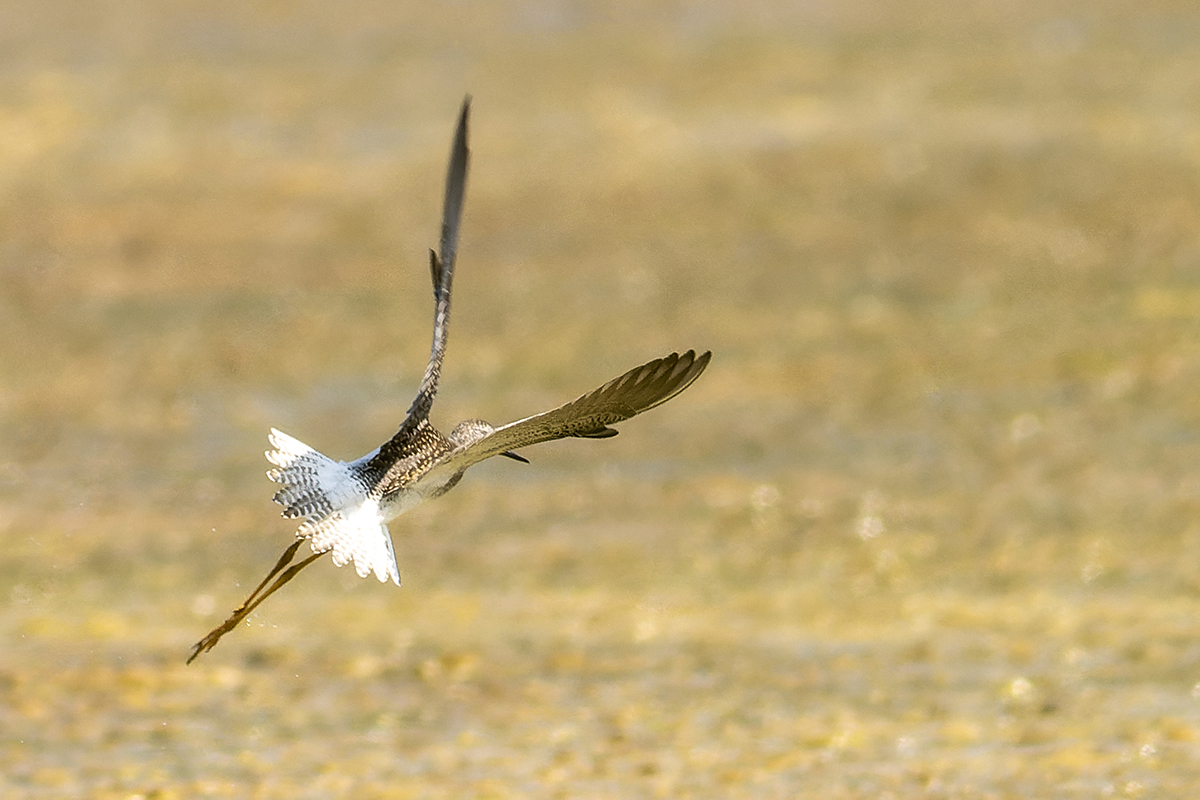
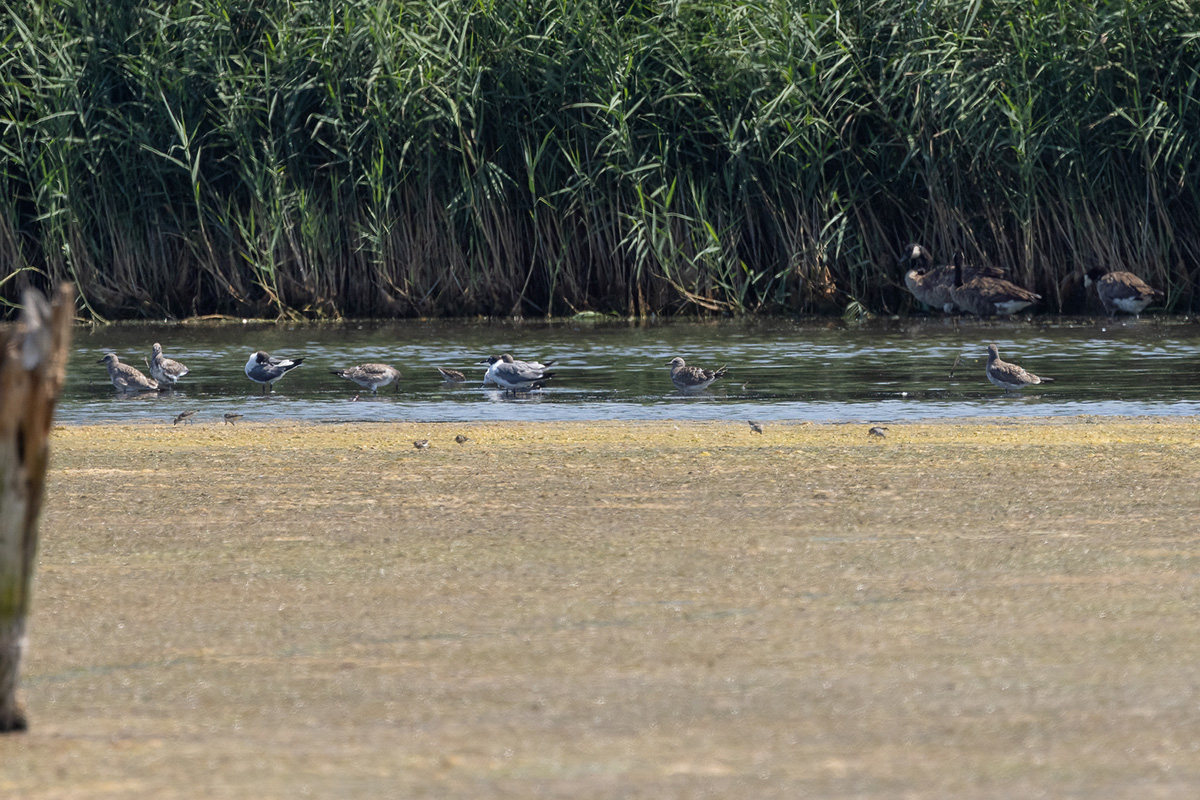
On an unseasonably lovely August Saturday, our group gathered early at the JBWR Visitor Center, and after an introduction by Tom, headed to the West Pond.  Along the way, we saw a significant number of Tree Swallows swooping above the path, along with a variety of other species in the trees, and then a Ruby-throated Hummingbird buzzing about the bushes. Upon reaching the cutouts, the group spent almost 90 minutes observing the non-stop activity on the West Pond: on the spits of mud, out on the water, in the air ,and on the far shore. With sharp eyes and scopes, a few unexpected species included a Green-winged Teal, one of the Scaups, a Caspian Tern, two Boat-tailed Grackles, and a Northern Harrier.

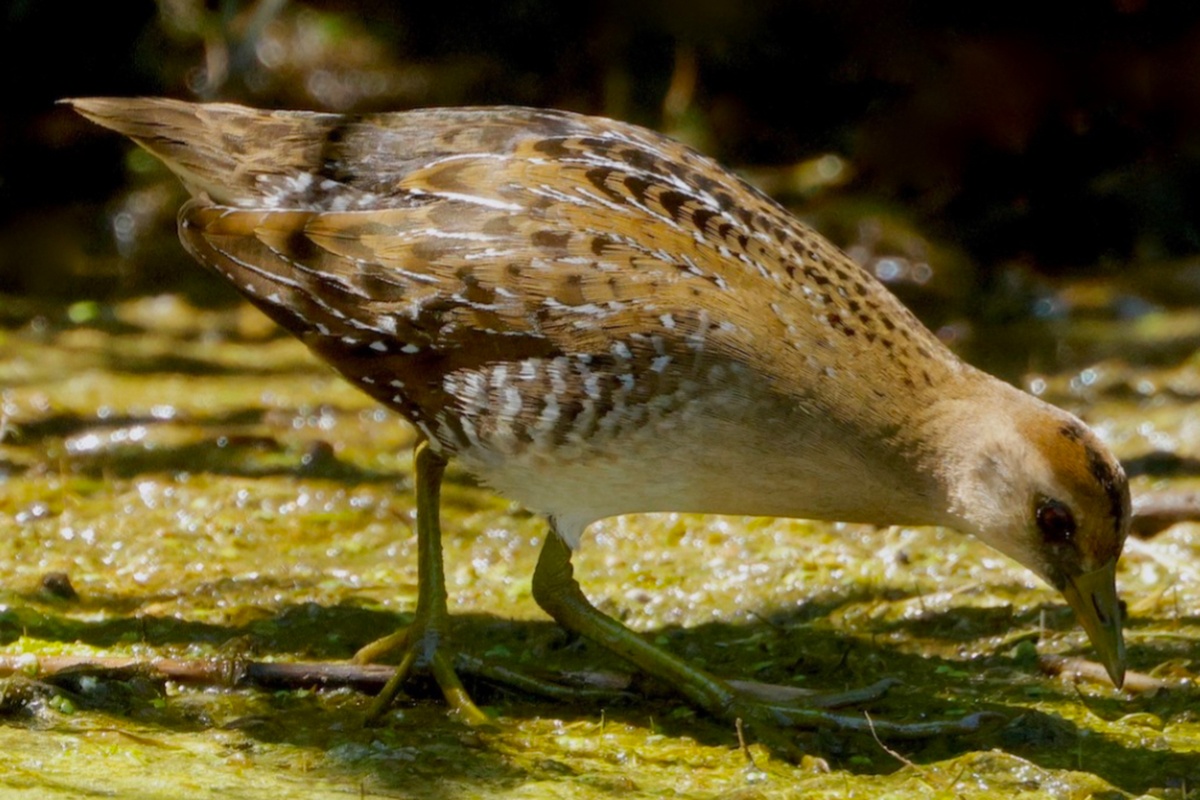
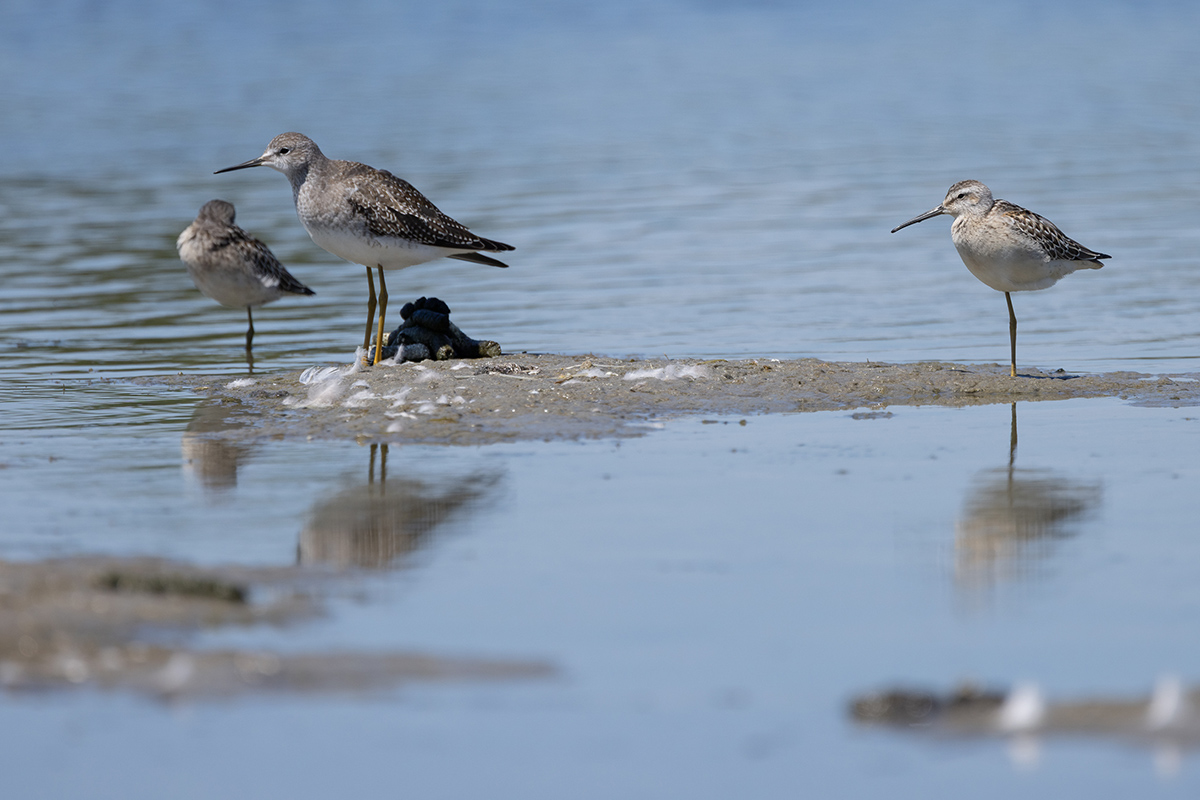
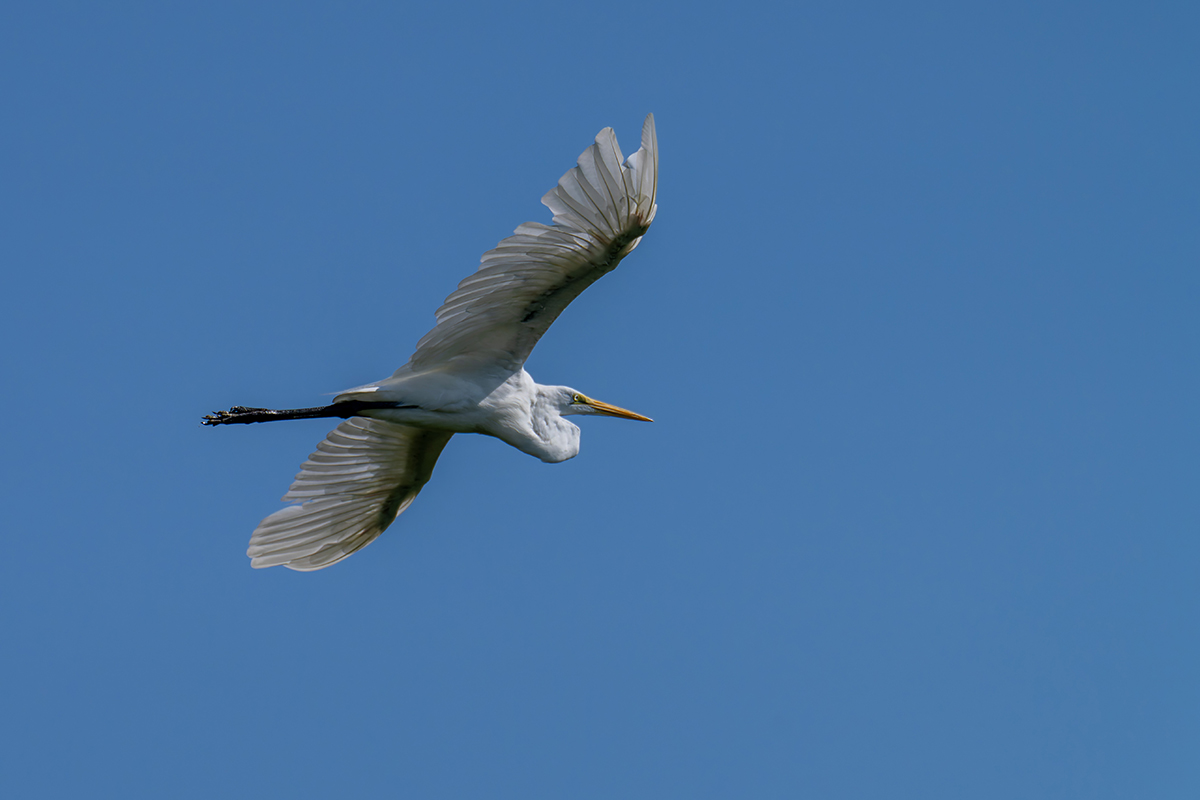
After a bathroom break, the group gathered for additional helpful instruction from Tom on late summer/fall and juvenile shorebird ID points. We then donned rubber boots and headed over to the East Pond where the water level had been running very high. Close to the first cutouts were numerous sandpipers, plovers, both yellowlegs and two Glossy Ibis, on the flats and in the shallow water, providing excellent comparisons among the species and plumages. The group then continued to walk north, getting better views of the visiting American White Pelican. The route still further north led to an Indiana Jones-type trek through nearly knee-deep water and a narrow, scratchy path surrounded by thick phragmites; while a few rubber boots met their demise, LSNY did not lose any participants! Finally, before leaving the East Pond, the group waited for the reported Sora to appear, and after some time, the Sora emerged and snacked for a while, oblivious to the excited crowd.

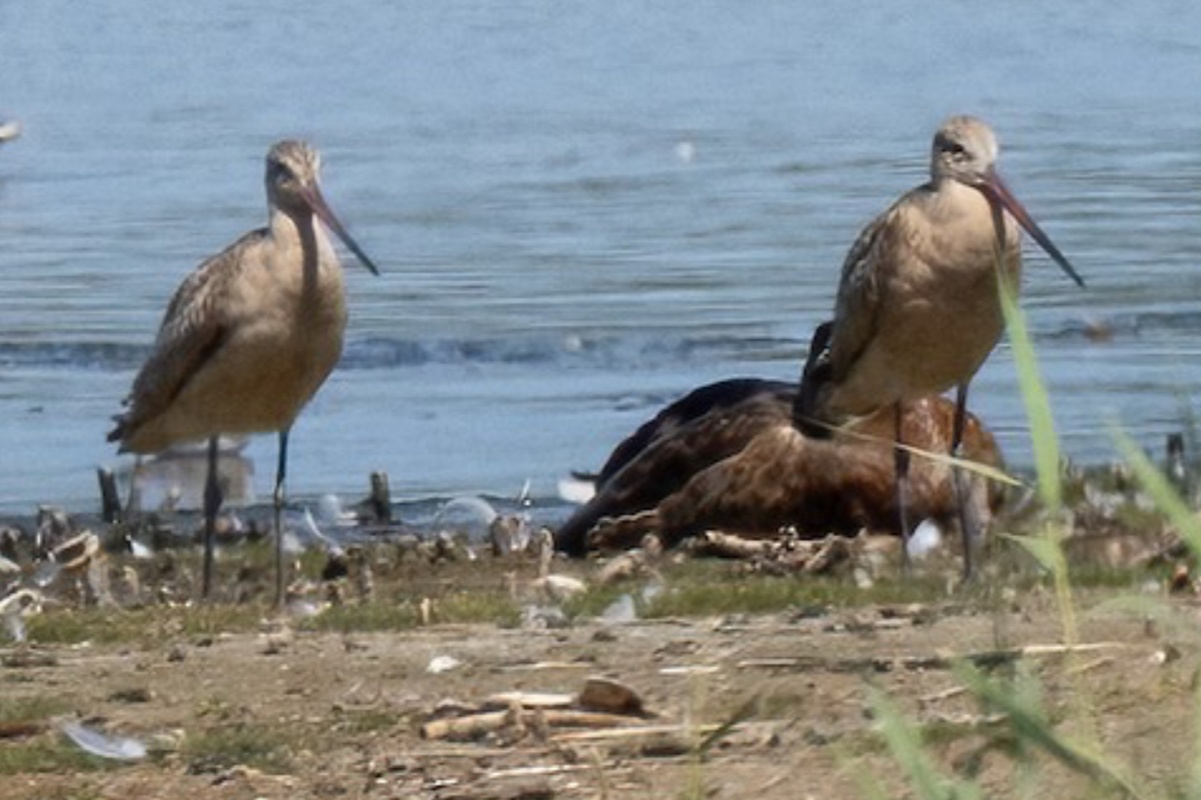
Finally, instead of sitting down to a late lunch before heading home, the group responded to a report of two Marbled Godwits back on the West Pond with a speedy return to those cutouts. A JBWR Park Ranger set up a scope and provided good looks at the the birds as they dozed and then stretched and preened. The trip concluded at about 3:00 pm.

Species Lists

West Pond

Canada Goose
Mute Swan 
Gadwall 
Mallard 
American Black Duck
Green-winged Teal
Greater/Lesser Scaup
Ruddy Duck
Rock Pigeon (Feral Pigeon)
Chimney Swift
Ruby-throated Hummingbird
Killdeer
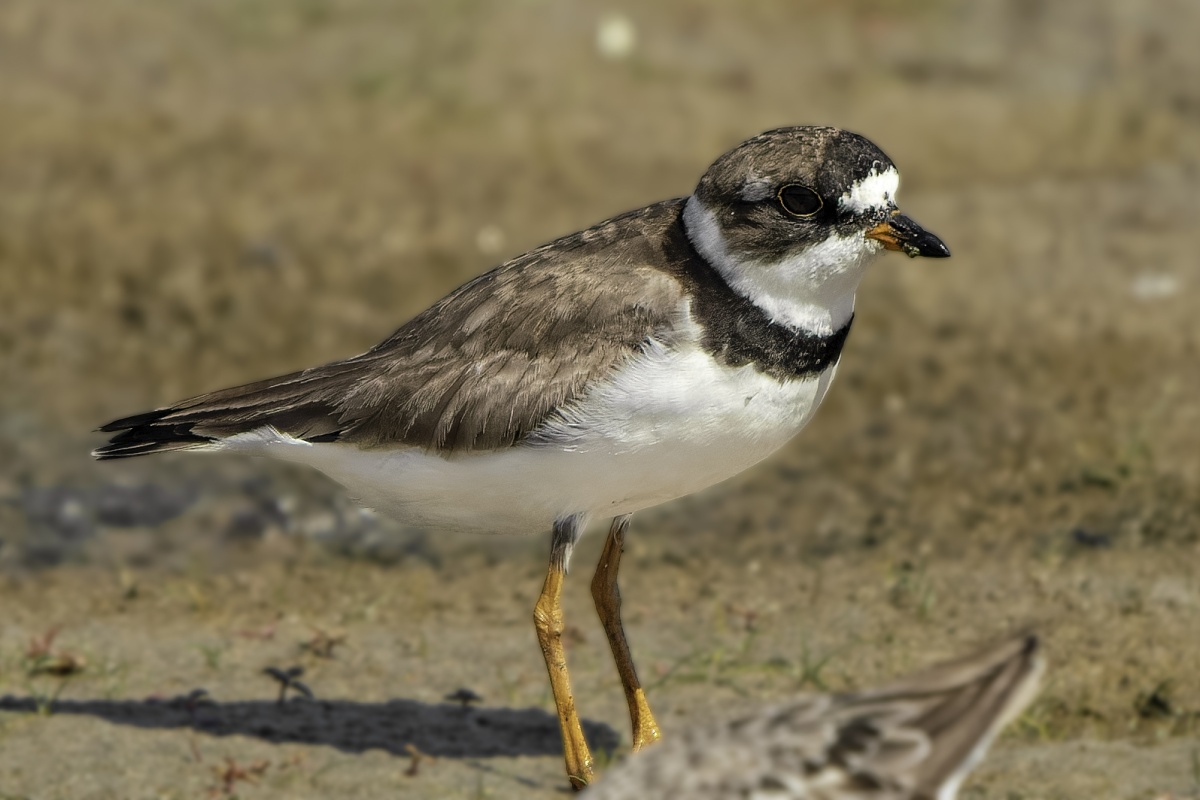
Semipalmated Plover
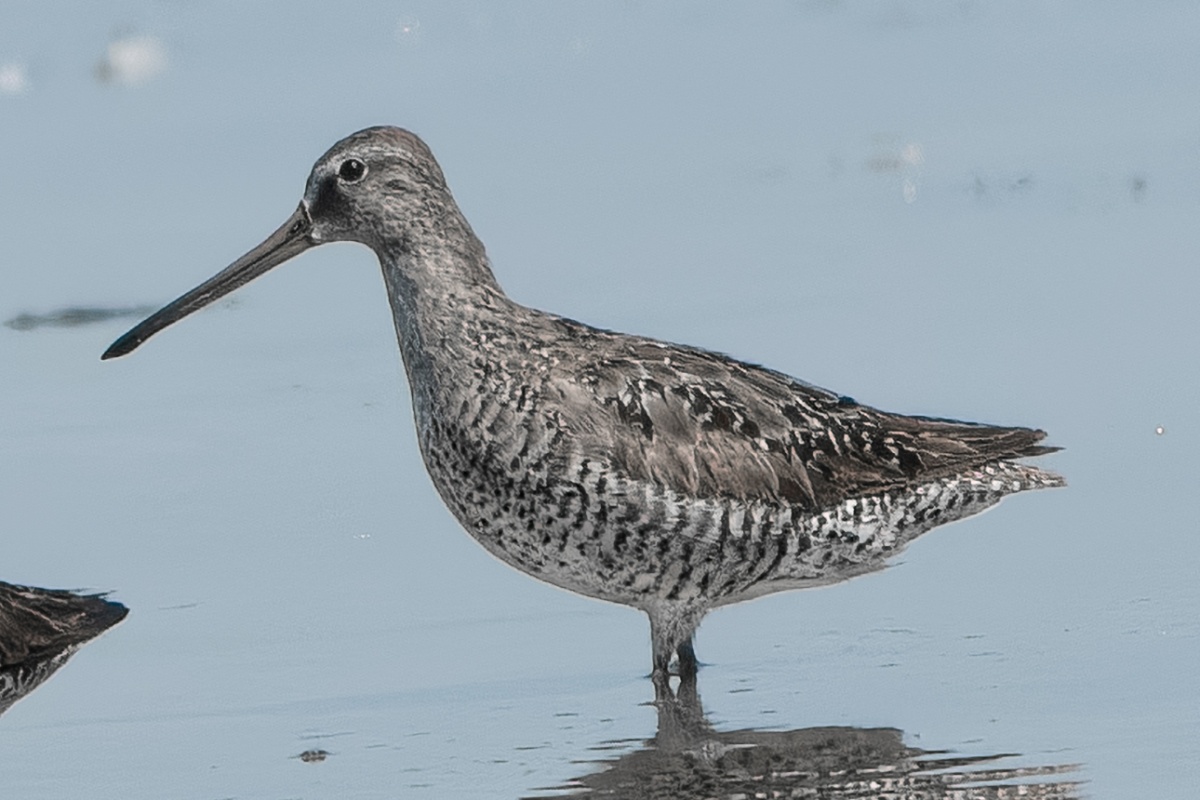
Short-billed Dowitcher 
Lesser Yellowlegs
Greater Yellowlegs
Stilt Sandpiper
Least Sandpiper     
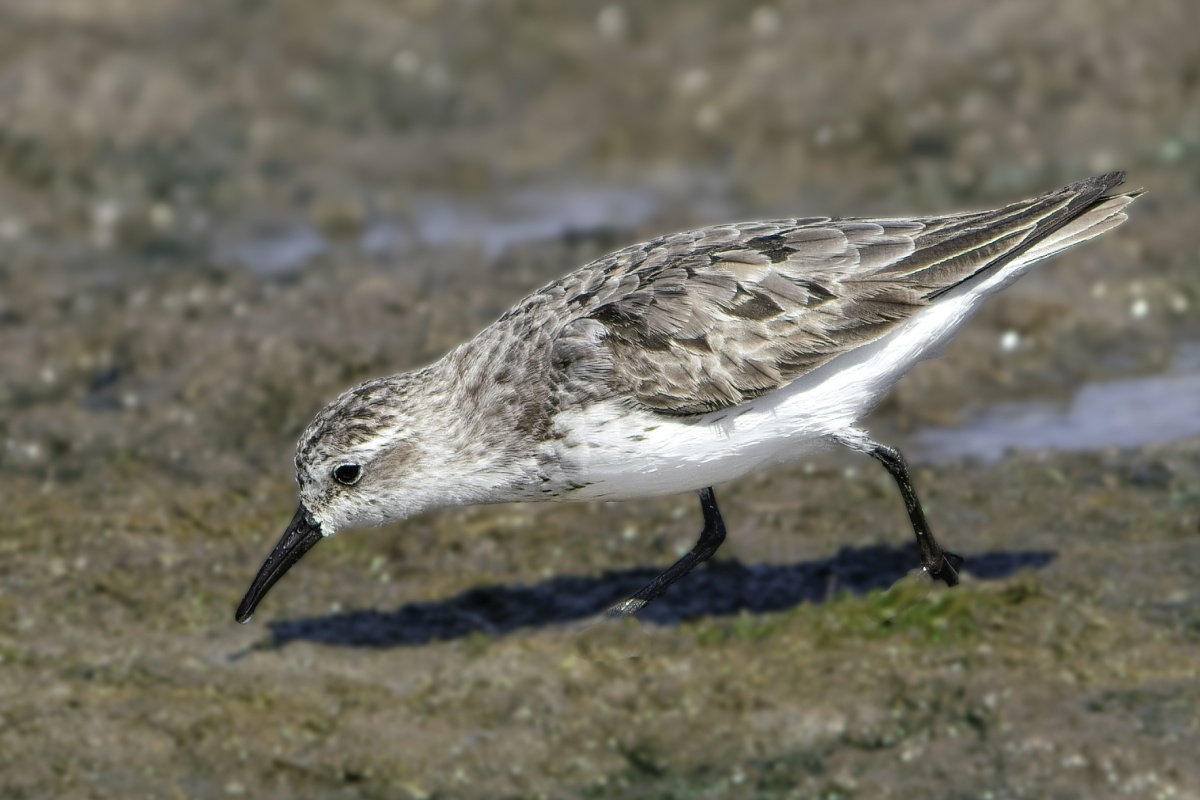
Semipalmated Sandpiper
Laughing Gull
Ring-billed Gull
American Herring Gull
Great Black-backed Gull
Caspian Tern
Forster’s Tern
Common Tern
Double-crested Cormorant
Yellow-crowned Night Heron
Black-crowned Night Heron
Snowy Egret
Great Egret
Great Blue Heron
Osprey
Northern Harrier
Northern Flicker (heard only)
Peregrine Falcon
Willow Flycatcher
Great Crested Flycatcher
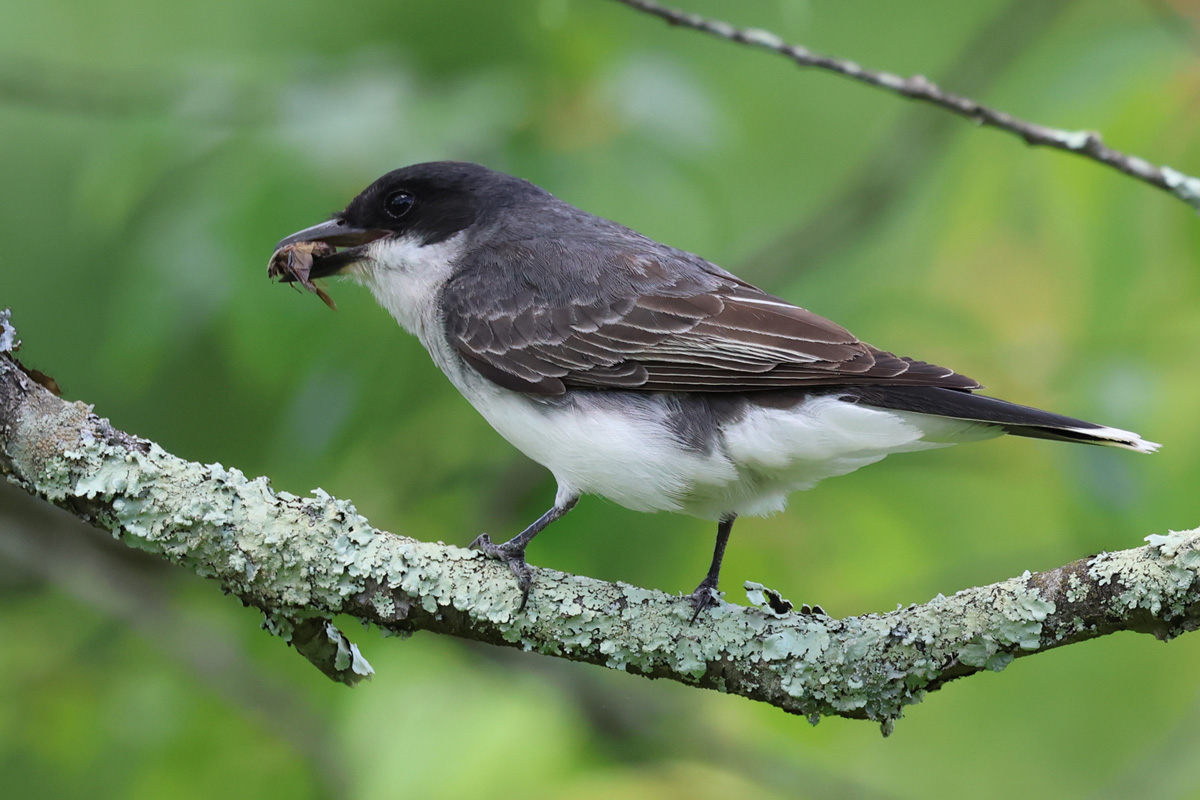
Eastern Kingbird
Blue Jay
Tree Swallow
Barn Swallow
Carolina Wren (heard only)
European Starling
Gray Catbird
Northern Mockingbird
American Robin
Cedar Waxwing
House Sparrow
House Finch
American Goldfinch
Song Sparrow
Eastern Towhee (heard only)
Red-winged Blackbird
Common Grackle
Boat-tailed Grackle
American Redstart
Yellow Warbler
Northern Cardinal
Marbled Godwit

East Pond

Canada Goose 
Mute Swan
goose sp.
Blue-winged Teal
Gadwall
Mallard
American Black Duck
Sora
Killdeer
Semipalmated Plover
Short-billed Dowitcher
Lesser Yellowlegs
Greater Yellowlegs
Stilt Sandpiper
White-rumped Sandpiper
Least Sandpiper
Pectoral Sandpiper
Semipalmated Sandpiper
Laughing Gull
Ring-billed Gull
Forster’s Tern
Double-crested Cormorant
Glossy Ibis
Snowy Egret
Great Egret
Great Blue Heron
American White Pelican     
Osprey
Red-tailed Hawk
Belted Kingfisher
Tree Swallow
Purple Martin     
Barn Swallow
Red-winged Blackbird
Jamaica Bay Wildlife Refuge with Gabriel Willow, 8/3/2025

Registrar: Richard Davis
Participants: 14
Weather: 71–83 F and sunny with gentle breezes, NE Wind 4–5 mph
Bird Species: 57

It was rather amazing to experience such mild weather at the start of August, but a heatwave earlier in the week had broken with a powerful inundation a couple of days previous to this trip. Gabriel situated the group with the geography of the refuge, as a unique spot along the New York New Jersey bight where the east-west orientation of Long Island begins to make a turn to the north-south oriented shoreline of New Jersey, and thus becomes an inviting stopover for migratory birds.

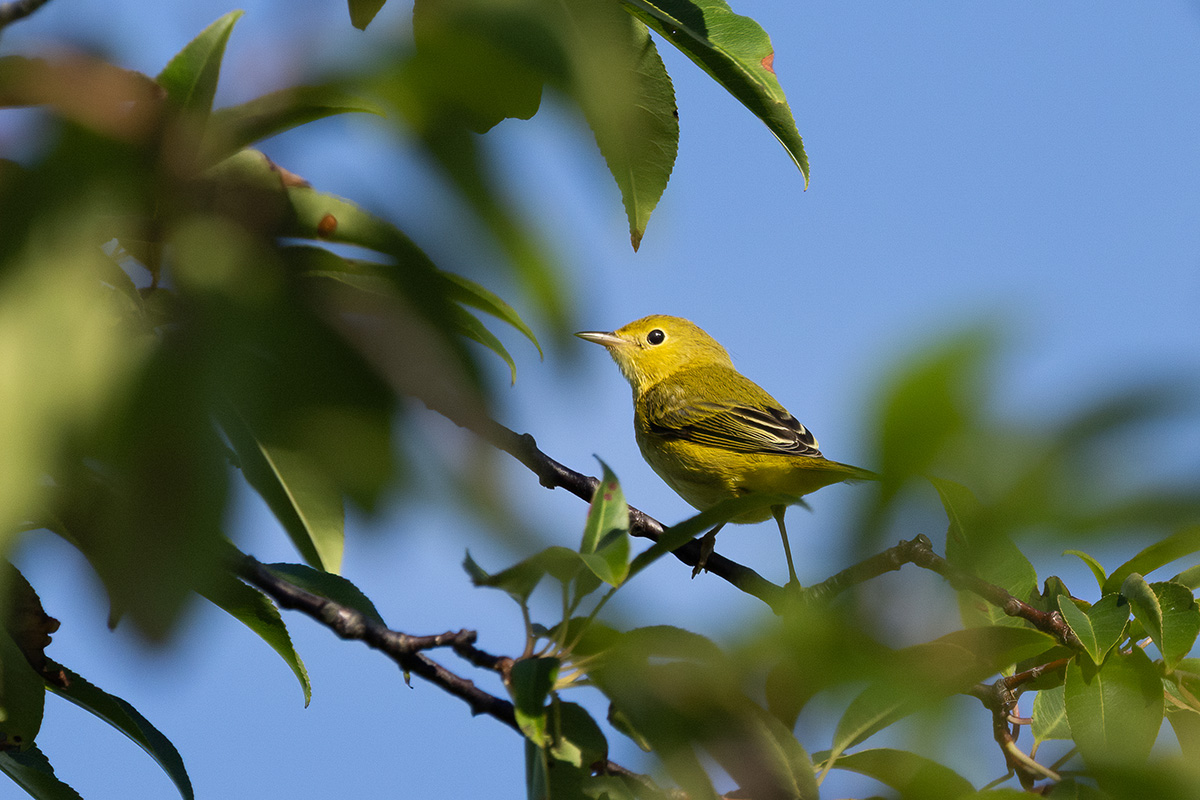
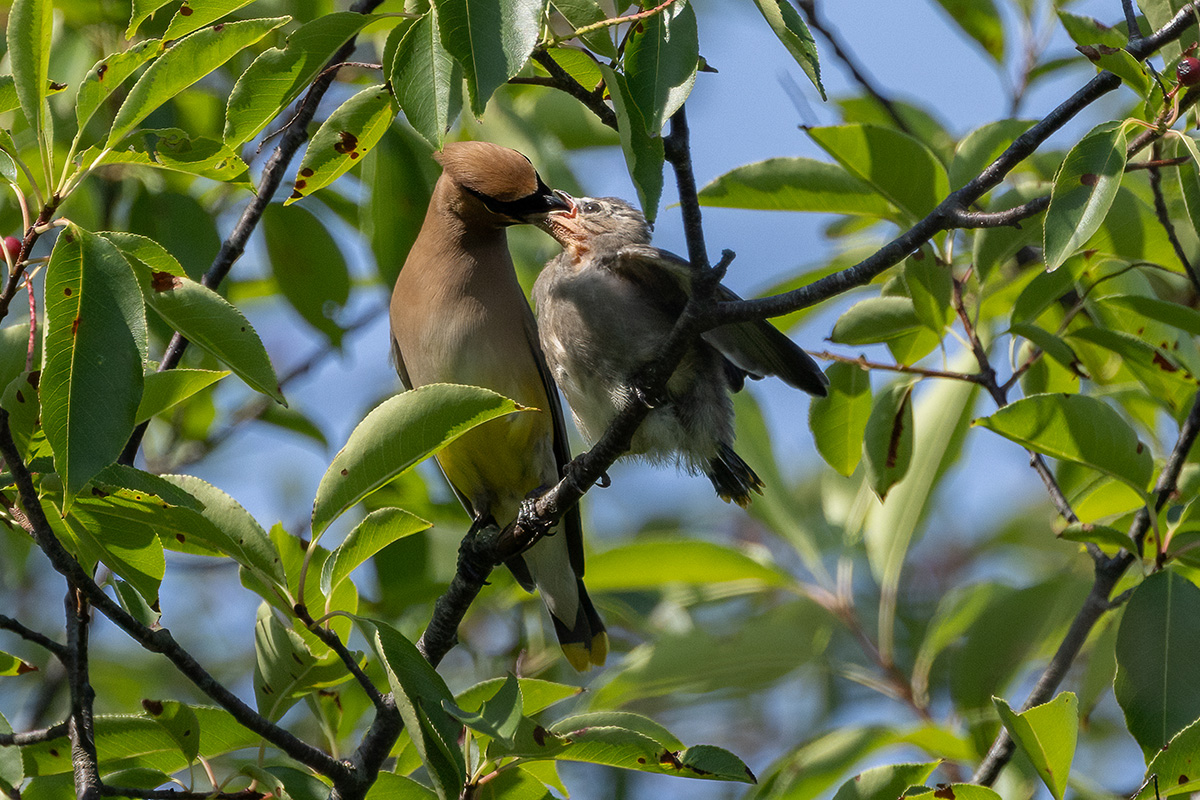
A young Peregrine Falcon took to the air just as the group arrived at the West Pond, but didn’t end up flushing many shorebirds. The group quickly discovered rather high water levels, and very few shorebirds compared to the much larger flocks seen just a week previously. It should also be noted that low tide was just before 10 am this morning. Looking out over the bay, we observed small schools of fish being driven along by groups of cormorants, with gulls and terns joining in the feeding frenzy. A pair of Black Skimmers put on a brief show. There were also a few scraggly molting passerines and a cute scene of young Cedar Waxwings being fed.

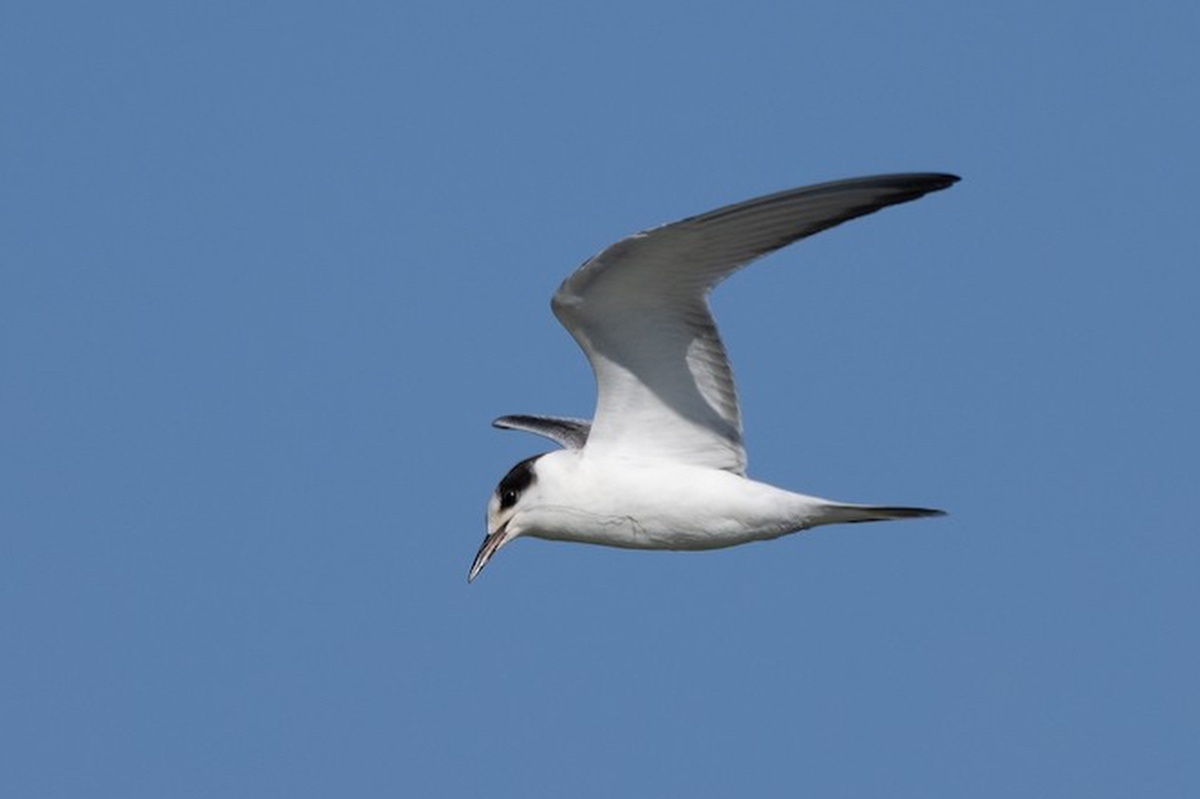
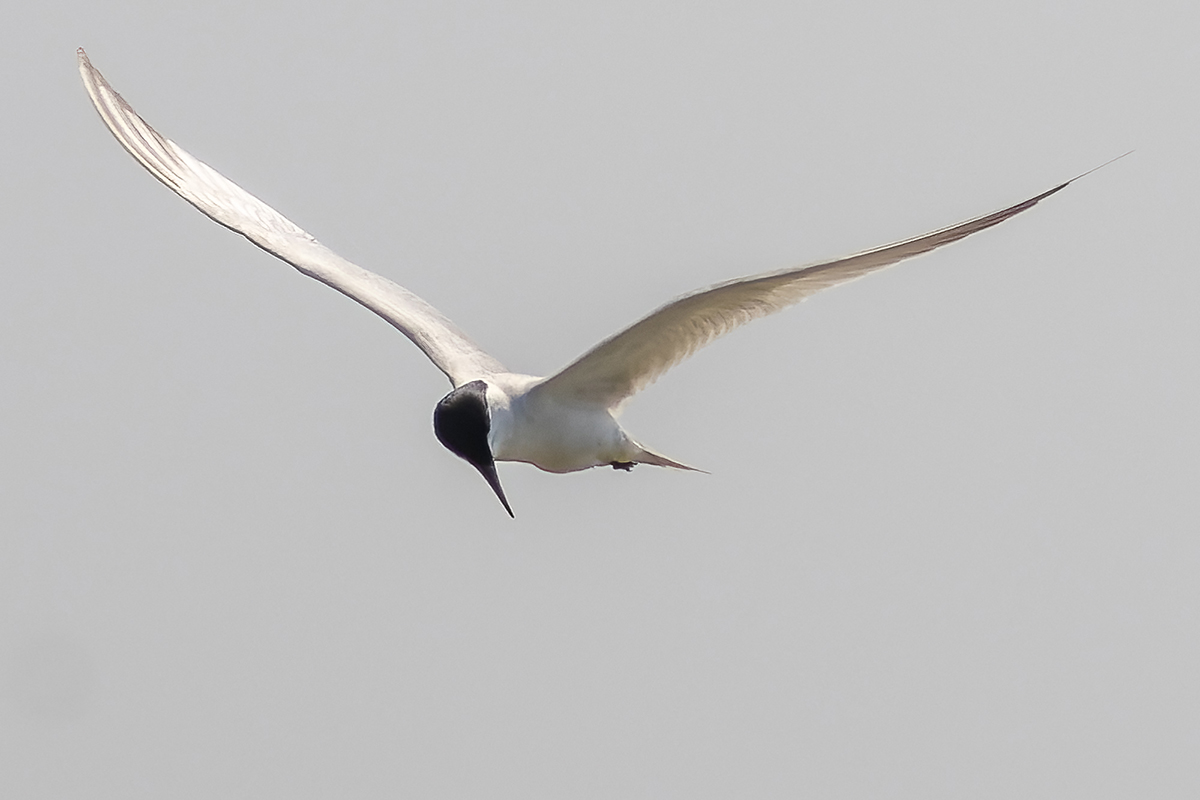
It was already known that the water levels in the East Pond were high because of the rains, and a valve installed a year ago by the park service to drain the pond was no longer working properly. The paths to access the south end of the East Pond were known to be under water, so we decided to check out the area of the bench, across from the Raunt. This decision was rewarded with views of many more shorebirds feeding across the water and a Gull-billed Tern flying by—a life bird for a few people in the group. After spending some time sifting through the dowitchers and sandpipers, Gabriel picked out a White-rumped Sandpiper and two Stilt Sandpipers—a delightful way to end a beautiful trip.

Species List

Canada Goose
Mute Swan
Gadwall
Mallard
American Black Duck
Ruddy Duck
Rock Pigeon (Feral Pigeon)
Mourning Dove
Ruby-throated Hummingbird
Clapper Rail (h)
American Oystercatcher
Semipalmated Plover
Killdeer
Stilt Sandpiper
Least Sandpiper
White-rumped Sandpiper
Semipalmated Sandpiper
Short-billed Dowitcher
Greater Yellowlegs
Lesser Yellowlegs
Laughing Gull
American Herring Gull
Gull-billed Tern
Common Tern
Forster’s Tern
Black Skimmer
Double-crested Cormorant
Great Blue Heron
Great Egret
Snowy Egret
Black-crowned Night Heron
Yellow-crowned Night Heron
Glossy Ibis
Osprey
Downy Woodpecker
Peregrine Falcon
Willow Flycatcher
Tree Swallow
Barn Swallow
Carolina Wren
European Starling
Gray Catbird
Northern Mockingbird
American Robin
Cedar Waxwing
American Goldfinch
Song Sparrow
Eastern Towhee
Orchard Oriole
Baltimore Oriole
Red-winged Blackbird
Brown-headed Cowbird
Common Grackle
Boat-tailed Grackle
Yellow Warbler
Northern Cardinal

Butterflies, Dragonflies, and More on Staten Island with Seth Wollney, 8/2/2025

Registrar: Anne Lazarus
Participants: 8
Weather: Mid 80s, sunny and calm

We met our expert leader, Seth Wollney, and his expert friend and assistant, Dave Eib, at Mount Loretto, where dragonflies also greeted us in the parking lot. Wandering Gliders and Spot-winged Gliders surrounded us, consuming invisible flying insects. Rarely do we see these two species perched—they are fliers. We walked a few feet and looked over the fence at the Swamp Milkweed, where we were overwhelmed by the diversity of butterflies, dragonflies, and other fascinating insects.

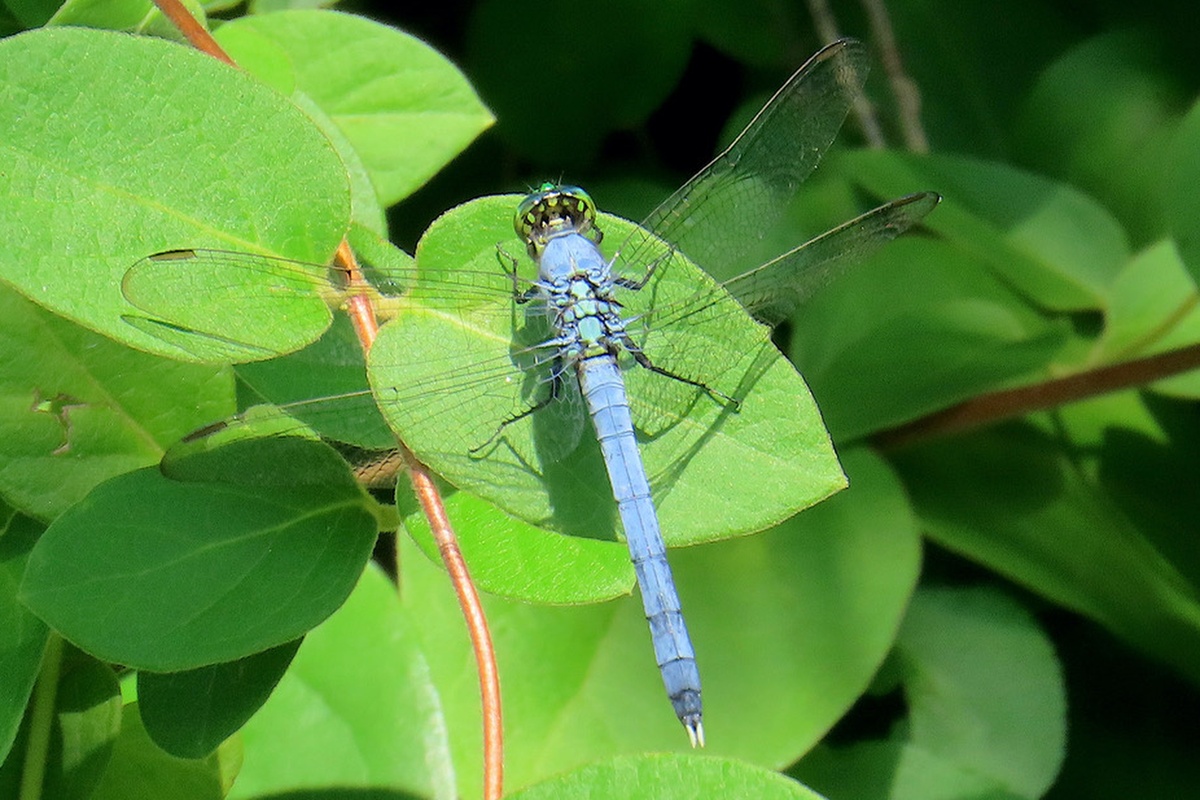
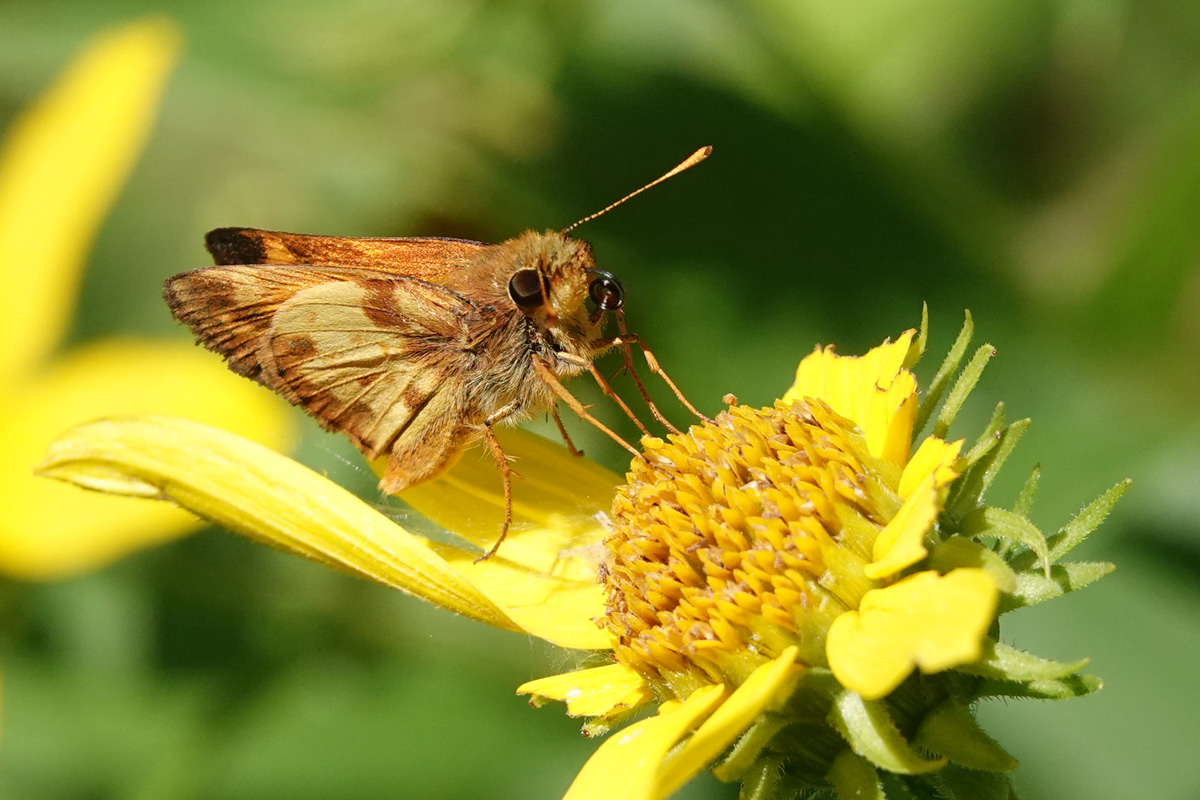
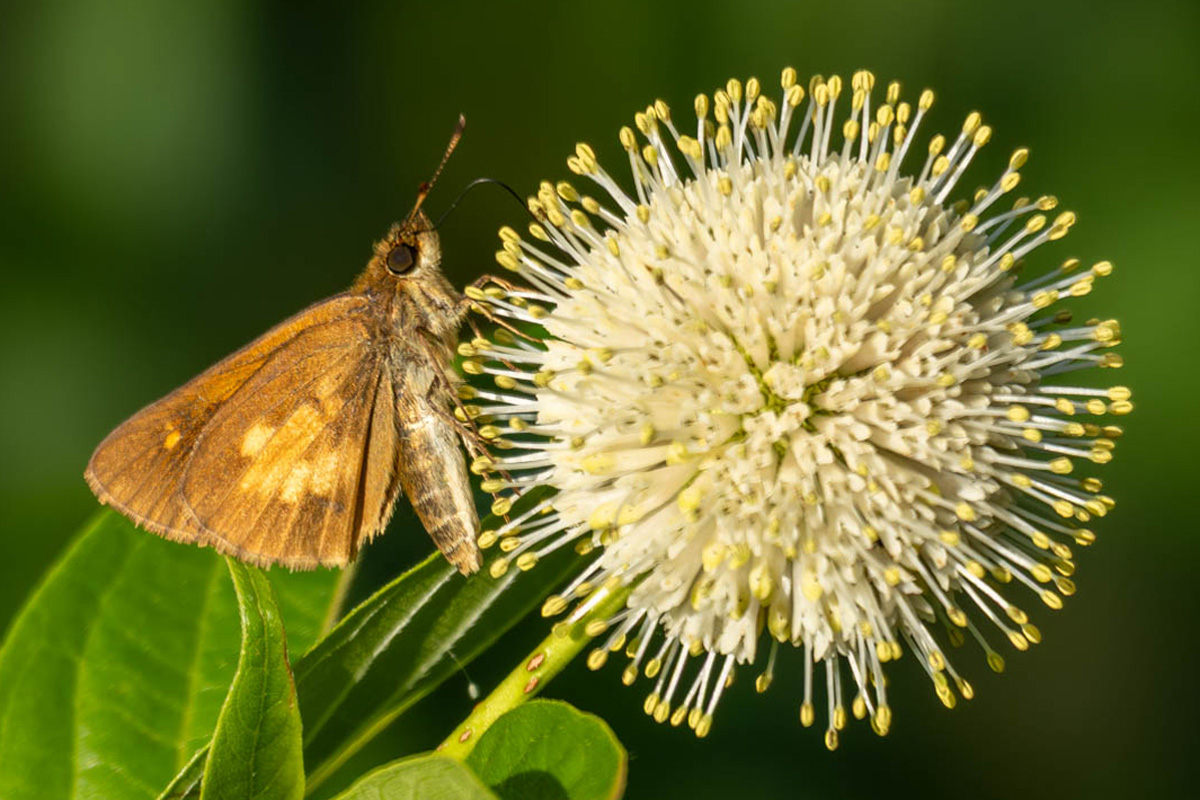
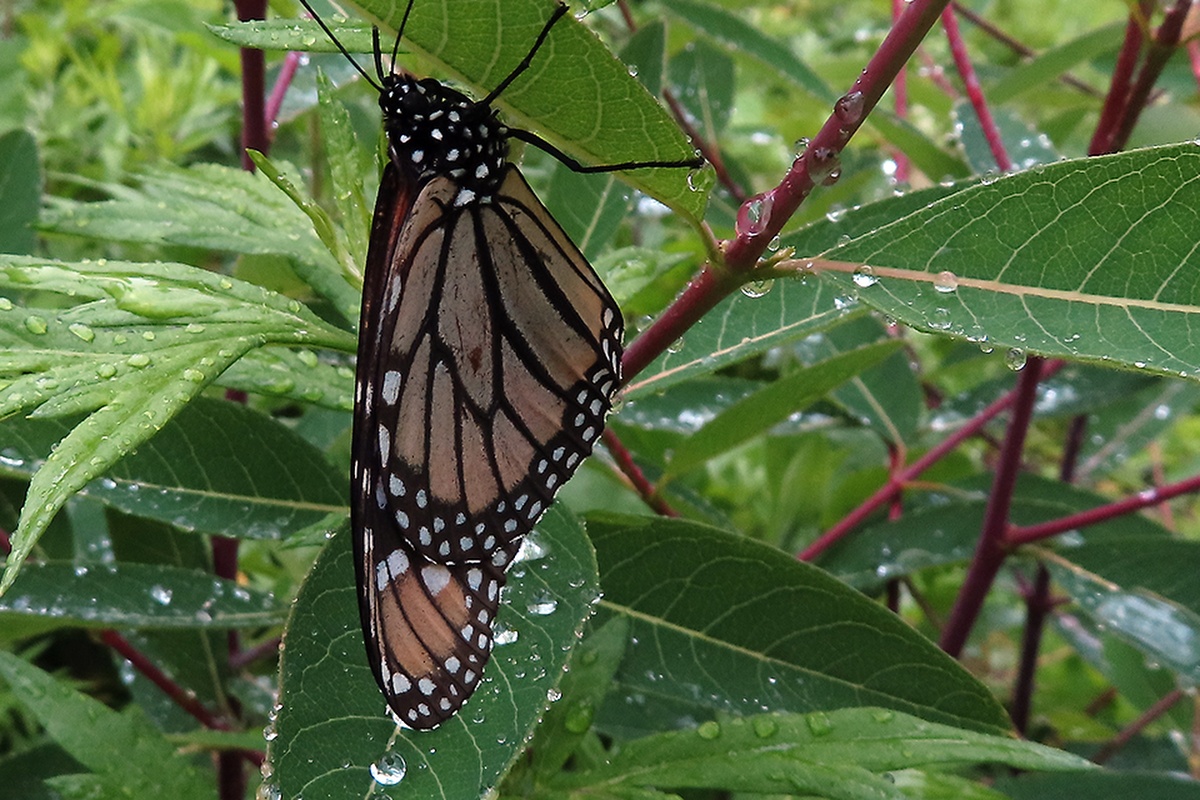
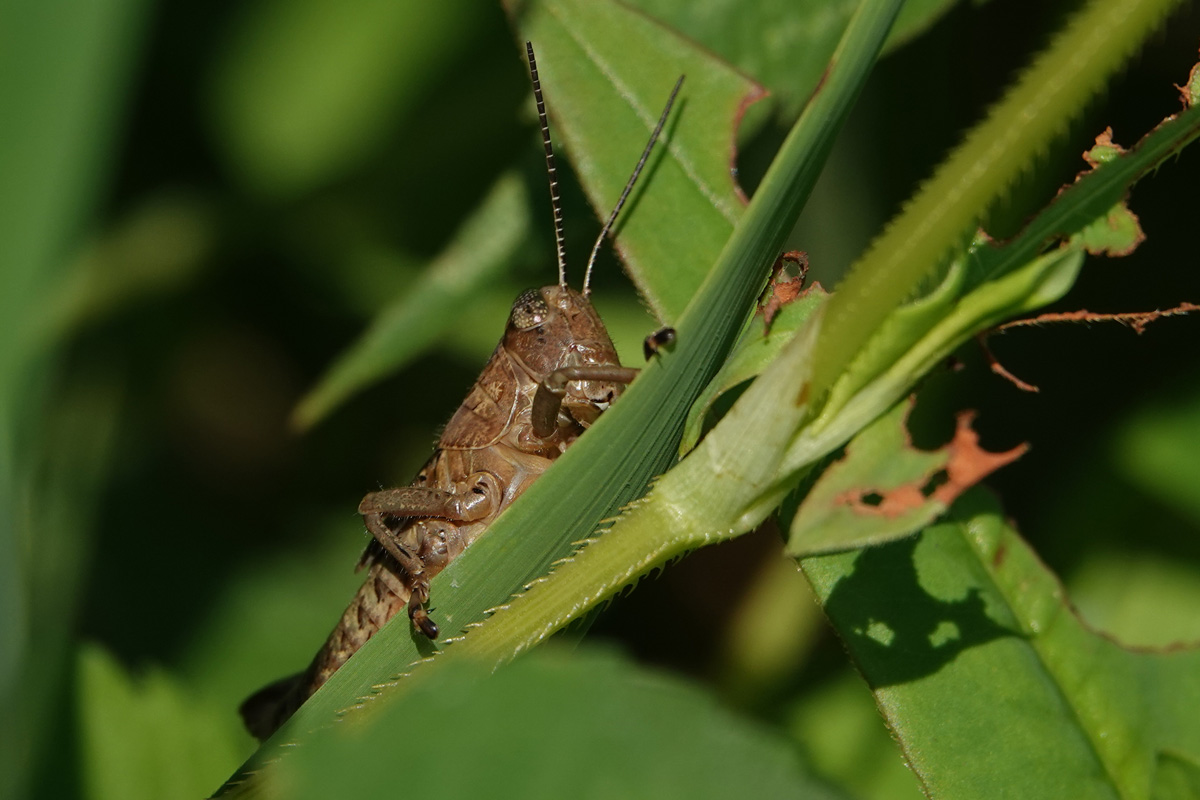
The Swamp Milkweed attracted large numbers of Monarch Butterflies, as well as a number of skippers, including Least, Sachem, Peck`s, and more. The field also hosted a Differential Grasshopper, Milkweed Bugs, a Black Saddlebag, Blue Dasher dragonflies, and many more invertebrates.

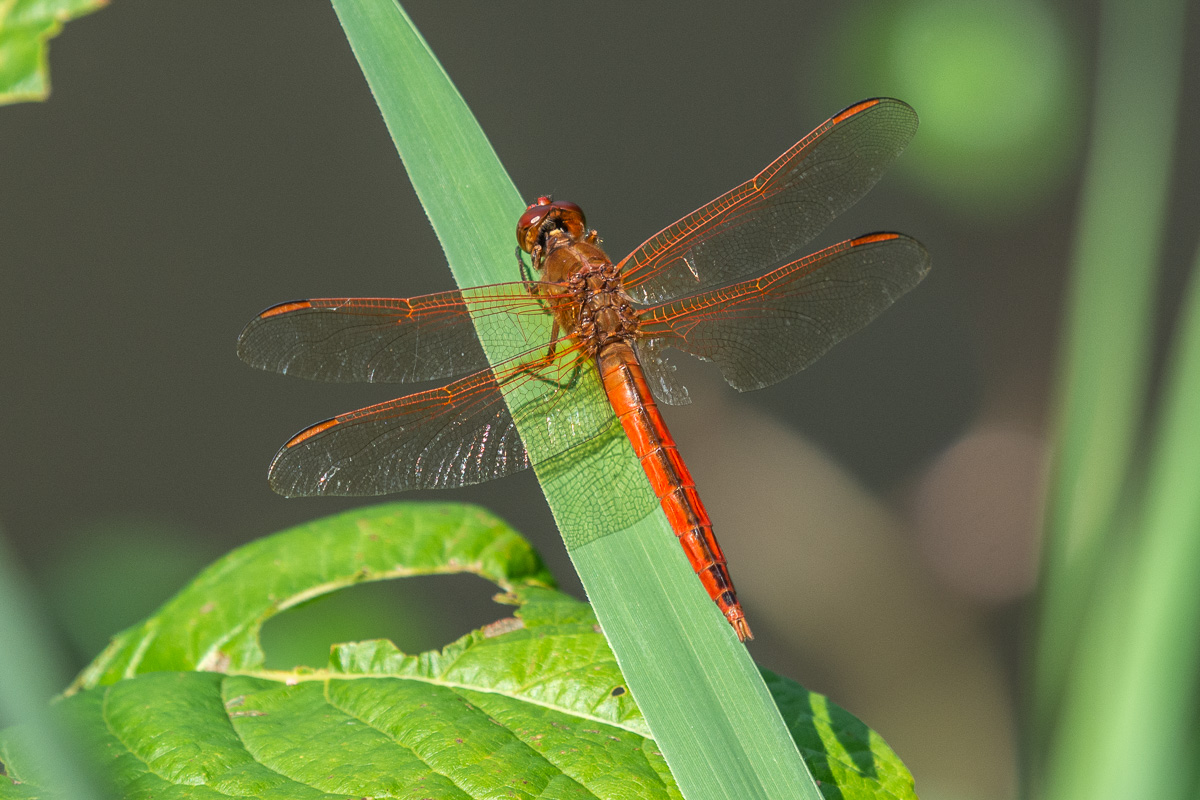
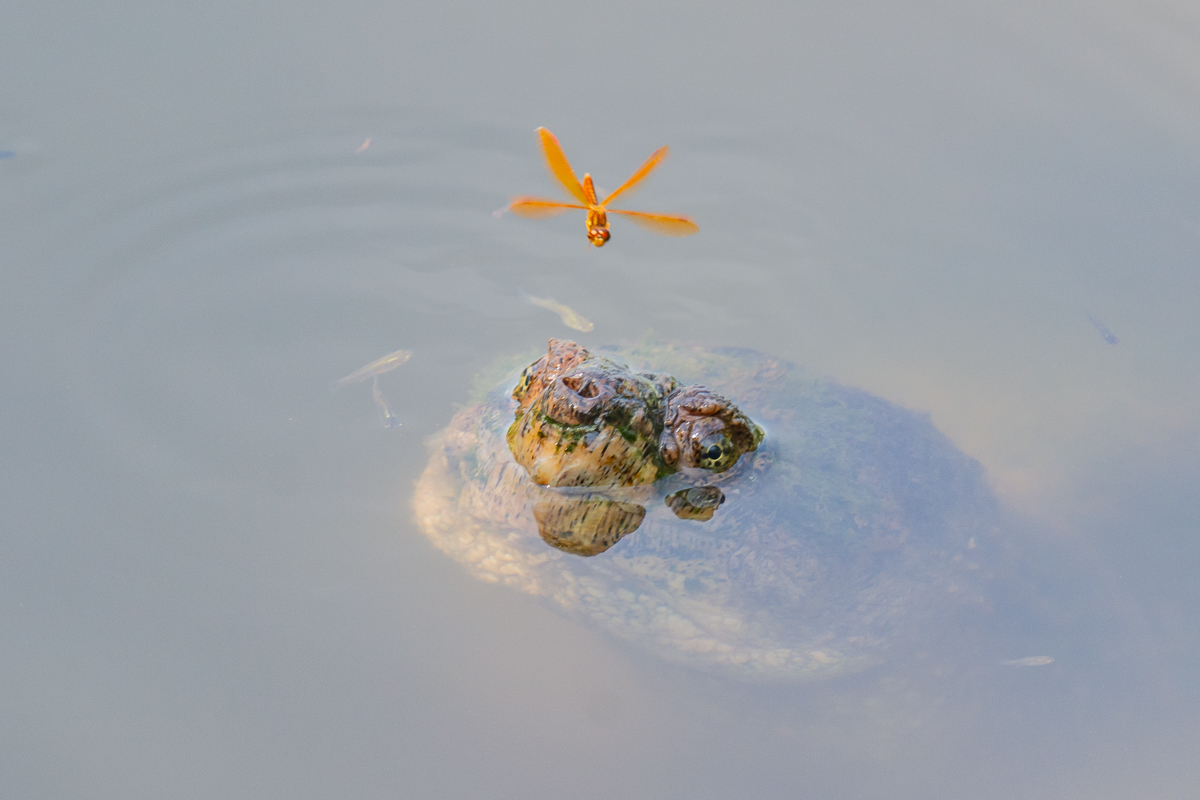
We continued along the path to the pond. Along this short walk we had good views of a Common Buckeye and a Pearl Crescent. The Cabbage Whites were almost ubiquitous. Mount Loretto is known for its population of Needham Skimmers, a magnificent red dragonfly. It was one of the first dragonflies we saw at the pond. All cameras were focused on this beautiful dragonfly, a percher. Other dragonflies included: Slaty Skimmers, Eastern Pondhawks, Eastern Amberwings, Blue Dashers, Green Darner and Blue Dashers. The Snapping Turtles often raised their massive heads. We finally departed and walked to the south pond.

As we continued our walk to the second pond, we saw a Snowberry clear-winged moth and a Spicebush Swallowtail. We arrived at the second pond to the croaking of a Bull Frog, and we saw a Green Frog. Shortly after our arrival, Dave spotted a most unusual dragonfly, the Mocha Emerald, an excellent sighting A very worried mama Mallard was perched on a tiny rock in the water with her two duckings. She was watched by Snapping Turtles, but she outsmarted them and swam safely to shore with her ducklings. Seth spotted a Yellow-billed Cuckoo in an adjacent tree and a Ruby-throated Hummingbird. We then began our walk to the parking lot.

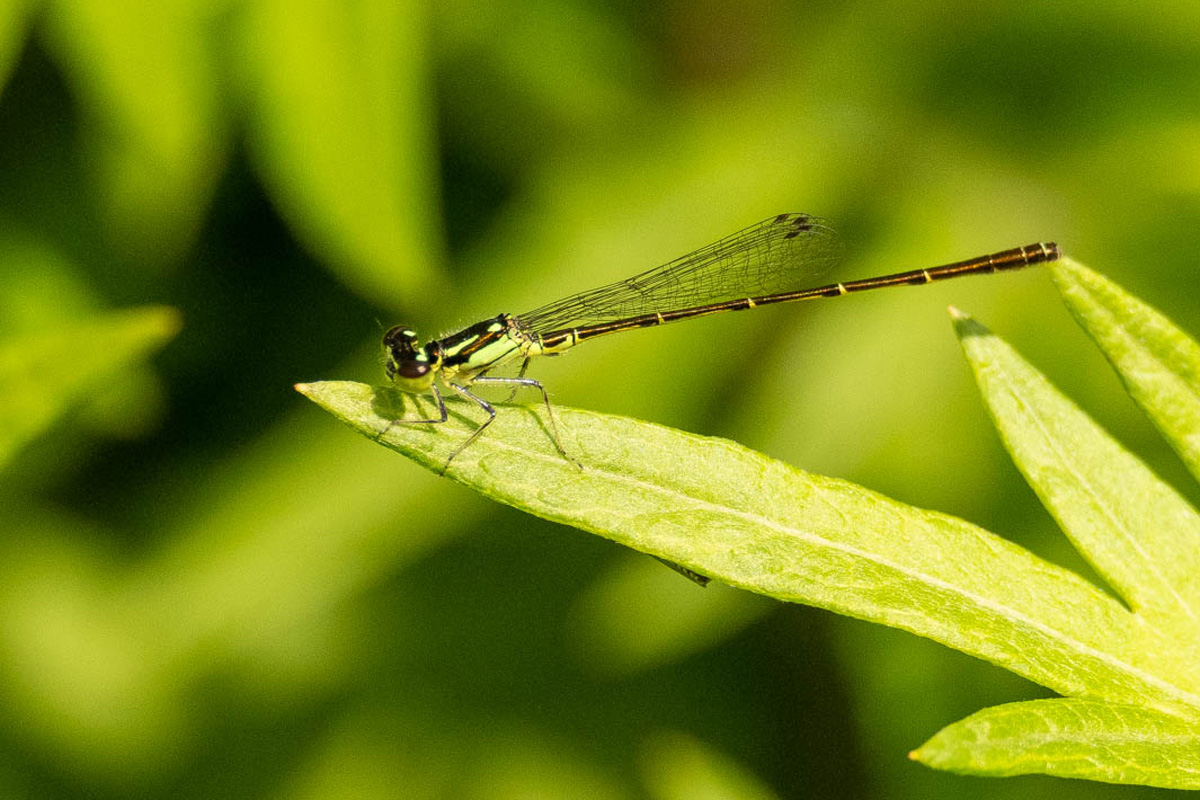
Damselflies are small odonates. They keep their wings folded when perched. Dave directed our eyes to a tiny one called Fragile Forktail and explained how to identify that species. As we were approaching the parking lot, Seth spotted the tiny Eastern-tailed Blue butterfly. Our next and final destination was Blue Heron Park.

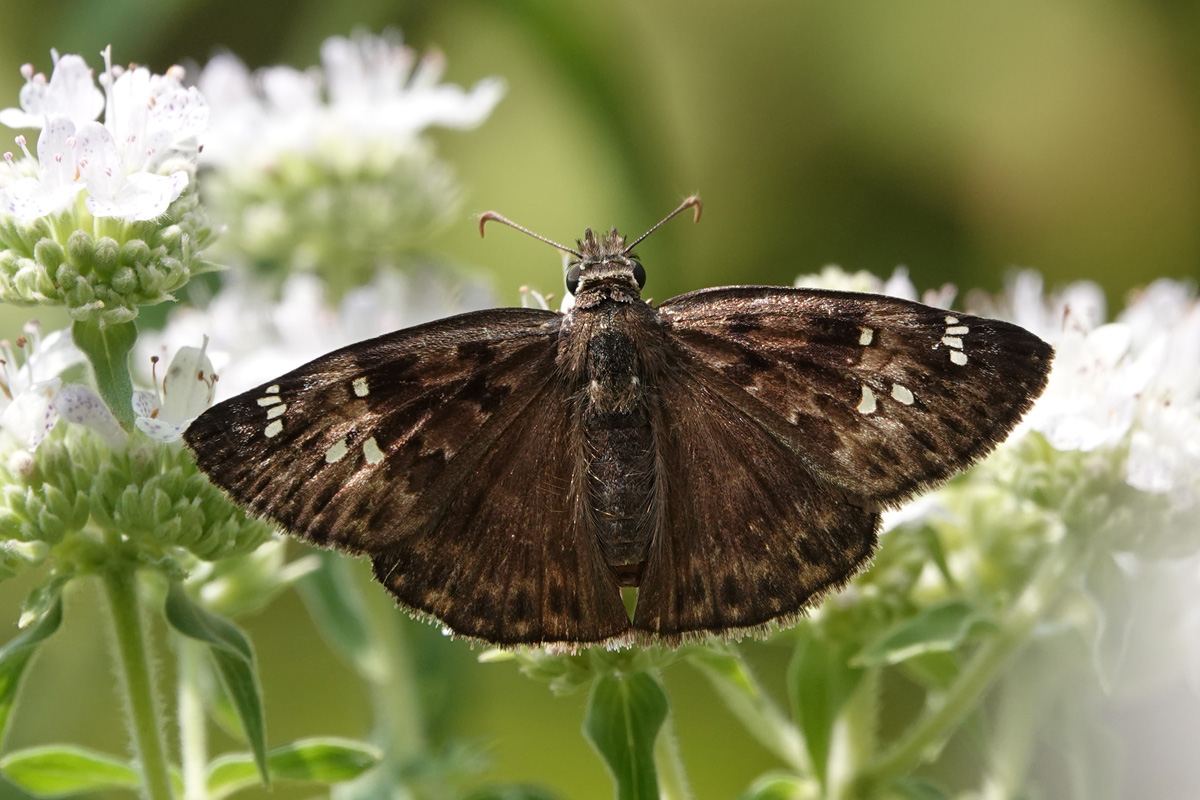
Blue Heron Park, with its woodlands, ponds, grasses, and shrubs, hosts a large variety of wildlife. The parking lot has bushes and flowers that welcome butterflies, odonates, bees, and more. Upon arrival, Seth immediately spotted a Gray Hairstreak, a diminutive, beautiful butterfly perched inconspicuously on a bush. The vegetation here also attracts Silver-spotted Skippers and Broadwing Skippers and various bee species, including Carpenter Bees. Scolia Dubia Wasps and Hover Flies were also finding sustenance in these bushes. Hover Flies (diptera, two wings) are bee mimickers. They pollinate, but do not sting.
 
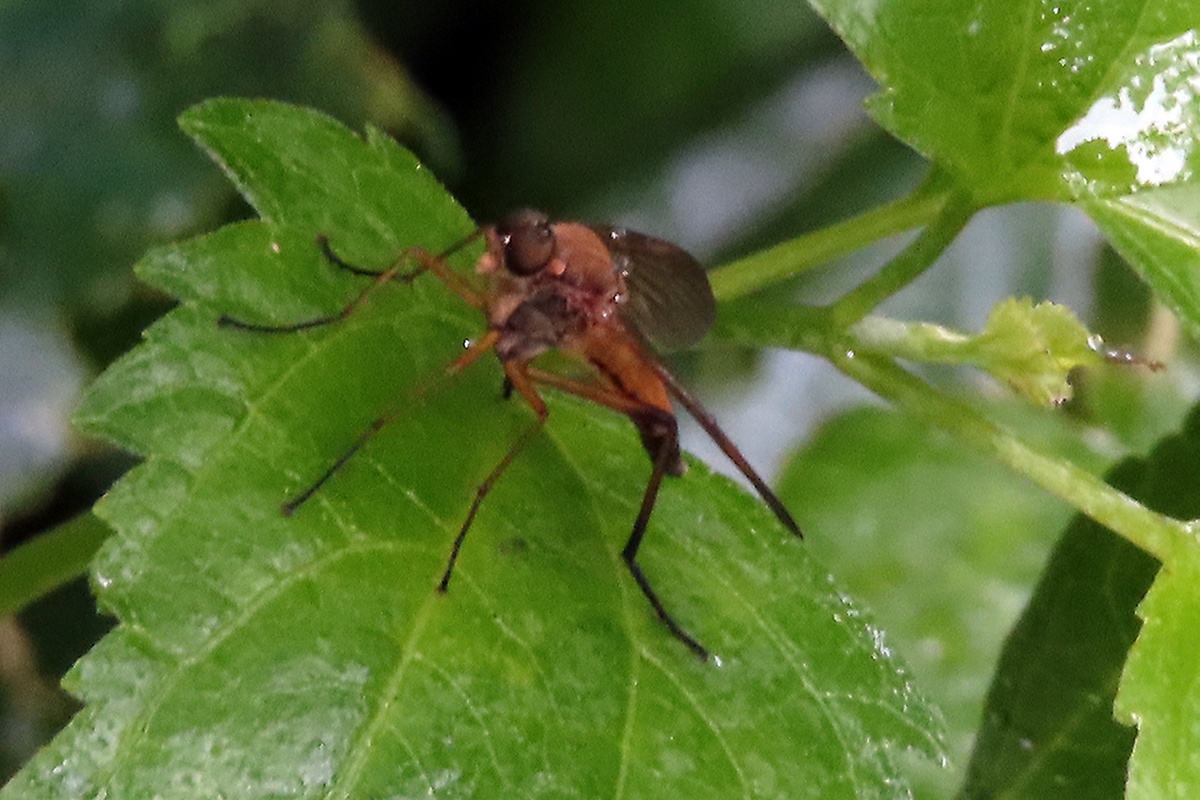
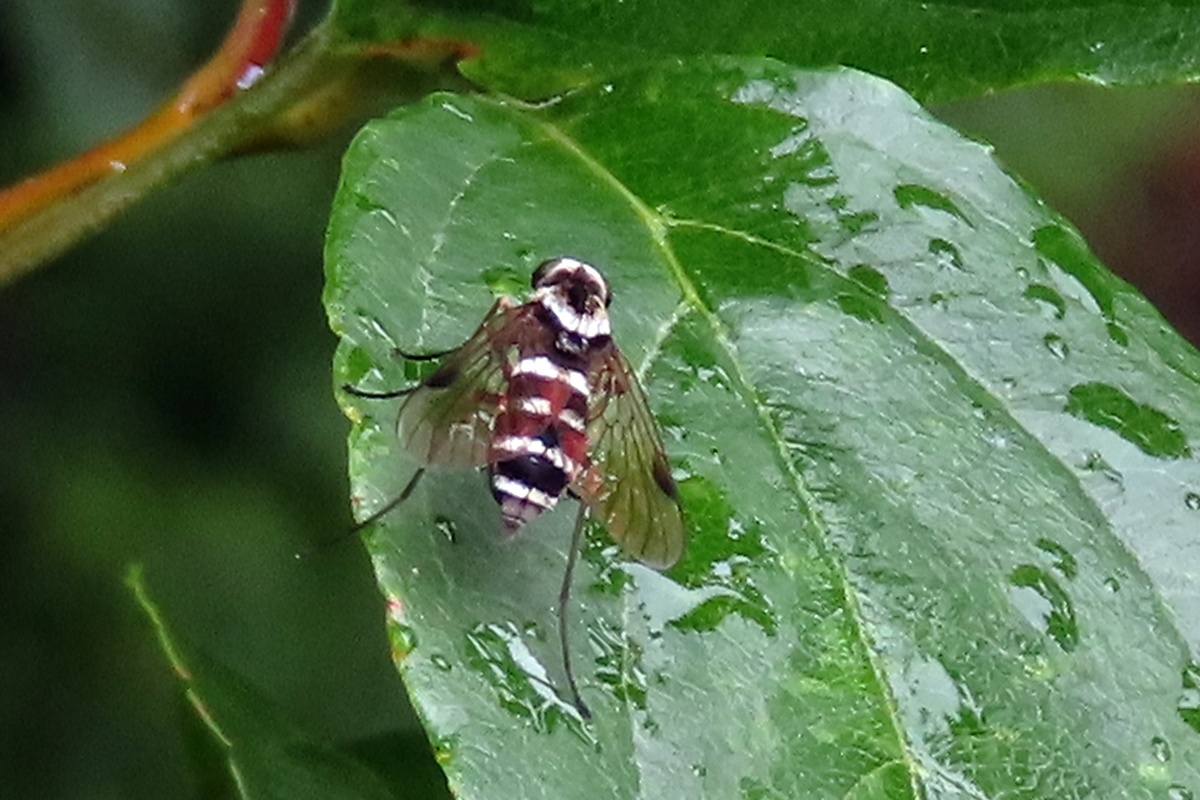
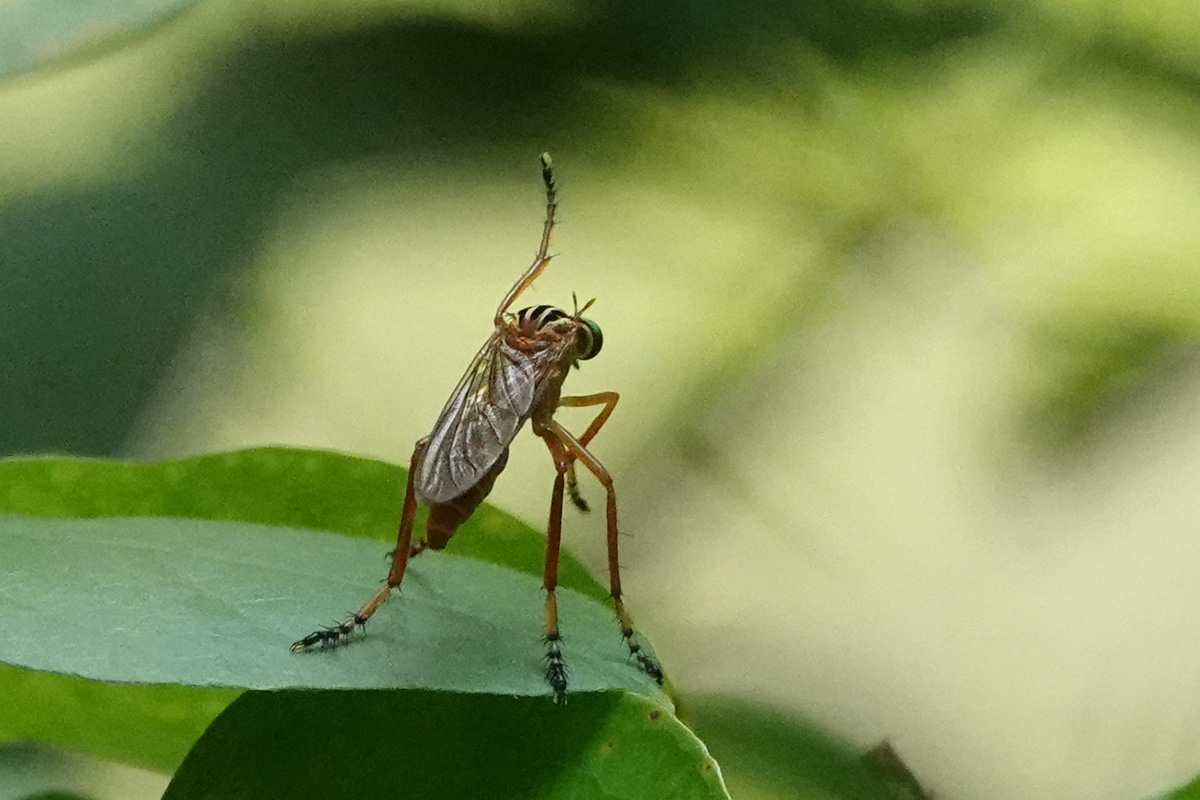
We proceeded to the adjacent pond and had fun watching the antics of a Spotted Sandpiper. This pond was also home to  many Slaty Skimmers, Blue Dashers, Eastern Amberwings, Eastern Pondhawks, and more. Another attraction here was the Plain-tailed Hanging Thief, a ferocious robber fly that lives up to its name.

We also identified birds. The Pileated Woodpecker was calling, and the Eastern Wood Pewee and Wood Thrush were also vocalizing.

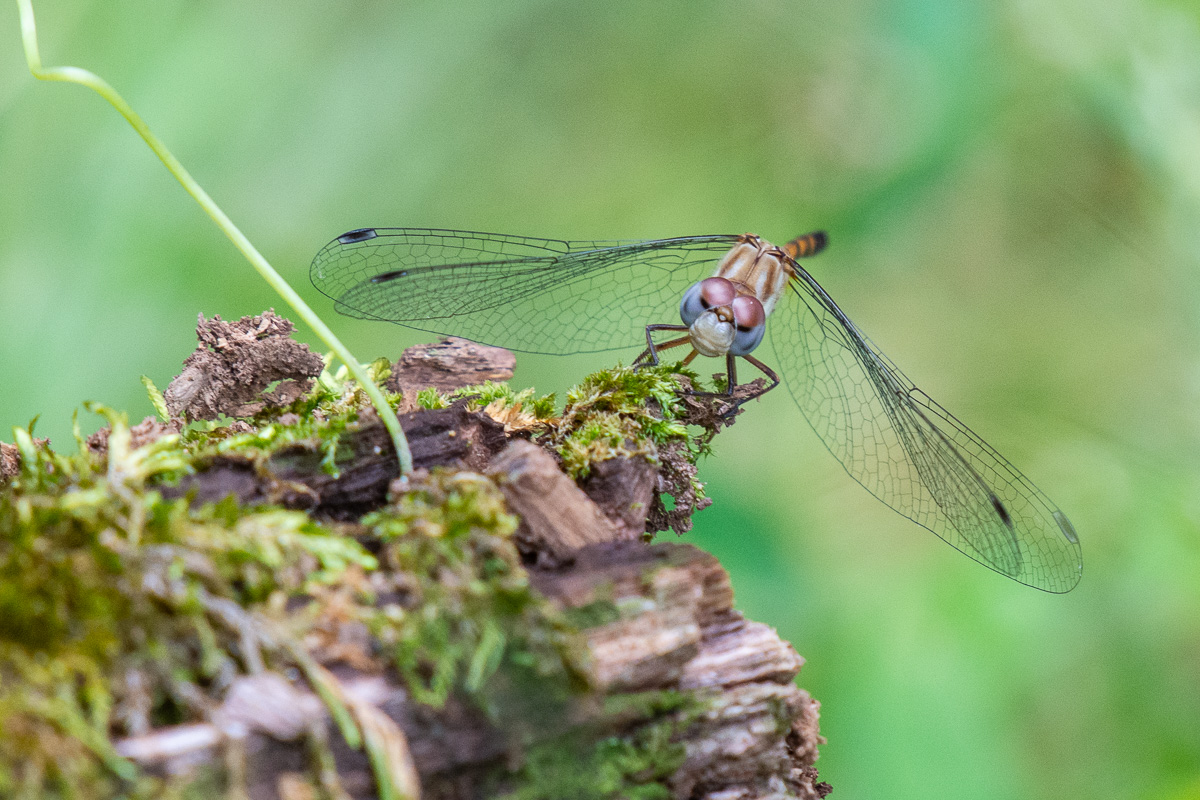
Seth spotted a Spreadwing Damselfly, but it disappeared. Neither Seth nor Dave could relocate it, but the piece de resistance was a rare Blue-faced Meadowhawk. This meadowhawk, found by Seth and Dave, is usually seen In Illinois and surrounding areas. As it is a percher, it was most cooperative, and we all have pictures.

Our wonderful trip ended, but our memories will be with us.

Species Lists

Birds (Mt. Loretto)
Mallard
Chimney Swift
Ruby-throated Hummingbird
Killdeer
Great Egret
Great Blue Heron (flying south of Mt. Loretto)
Double-crested Cormorant
Osprey
Bald Eagle
Northern Flicker
Great-crested Flycatcher
Eastern Kingbird
Warbling Vireo
American Crow
Common Raven
Tree Swallow
Barn Swallow
Northern Rough-wing Swallow
Purple Martin
Blue-gray Gnatcatcher
Northern House Wren
Carolina wren
European Starling
Gray Catbird
American Robin
Ceder Waxwing
American Goldfinch
Orchard Oriole ( female-yellow type )
Red-winged Blackbird
Common Grackle
Common Yellowthroat
American Redstart
Yellow Warbler
Northern Cardinal
Indigo Bunting

Birds (Blue Heron Park)
Ruby-crowned Kinglet
Spotted Sandpiper
Red-bellied Woodpecker
Pileated Woodpecker ( heard )
Northern Flicker
Eastern Wood Pewee ( heard )
Blue Jay
American Crow
Fish Crow
Purple Martin
Blue-gray Gnatcatcher
Carolina wren
Gray Catbird
Wood Thrush ( heard )
American Robin
Red-winged Blackbird
Yellow Warbler
Northern Cardinal
House Sparrow

Butterflies
Spicebush Swallowtail
Eastern Tiger Swallowtail
Cabbage White
Eastern-tailed Blue
Pearl Crescent
Common Buckeye
Monarch Butterfly
Horace’s Duskywing
Silver-spotted Skipper
Peck`s Skipper
Least Skipper
Zabulon Skipper
Broad-winged Skipper

Odonates
Fragile Forktail
Spreading species
Mocha Emerald
Green Darner
Black Saddlebags
Spot-winged Glider
Wandering Glider
Eastern Amberwing
Needham’s Skimmer
Common Whitetail
Slaty Skimmer
Blue Dasher
Eastern Pondhawk
Blue-faced Meadowhawk

Other Invertebrates

Cicada species
Cidada Killer
Scolia Dubia
Snowberry Clearwing Moth
Assassin Bug
Milkweed Bug
Differential Grasshopper
Plain-tailed Hanging Thief
Hover Fly
Lantern Fly

Herps
Green Frog
Bull Frog
Red-eared Slider
Snapping Turtle

Mammals
White-tailed Deer
Eastern Gray Squirrel
Groundhog


Staten Island, Purple Martins Plus with Howard Fischer, 7/5/2025

Registrar: Lisa Kroop
Participants: 15
Weather: 67°F–86°F; sunny with blue skies, wispy clouds and haze; calm 3–6 mph wind
Bird Species: 49

We gathered at the Visitor Center of Conference House Park to begin a day of birding on Staten Island. It was still relatively cool, and much of our walk here would be in the shade. After Howie, our trip leader, gave introductory remarks about the bird species we might encounter in the park at this quiet, nesting time of year, we headed into the woods.

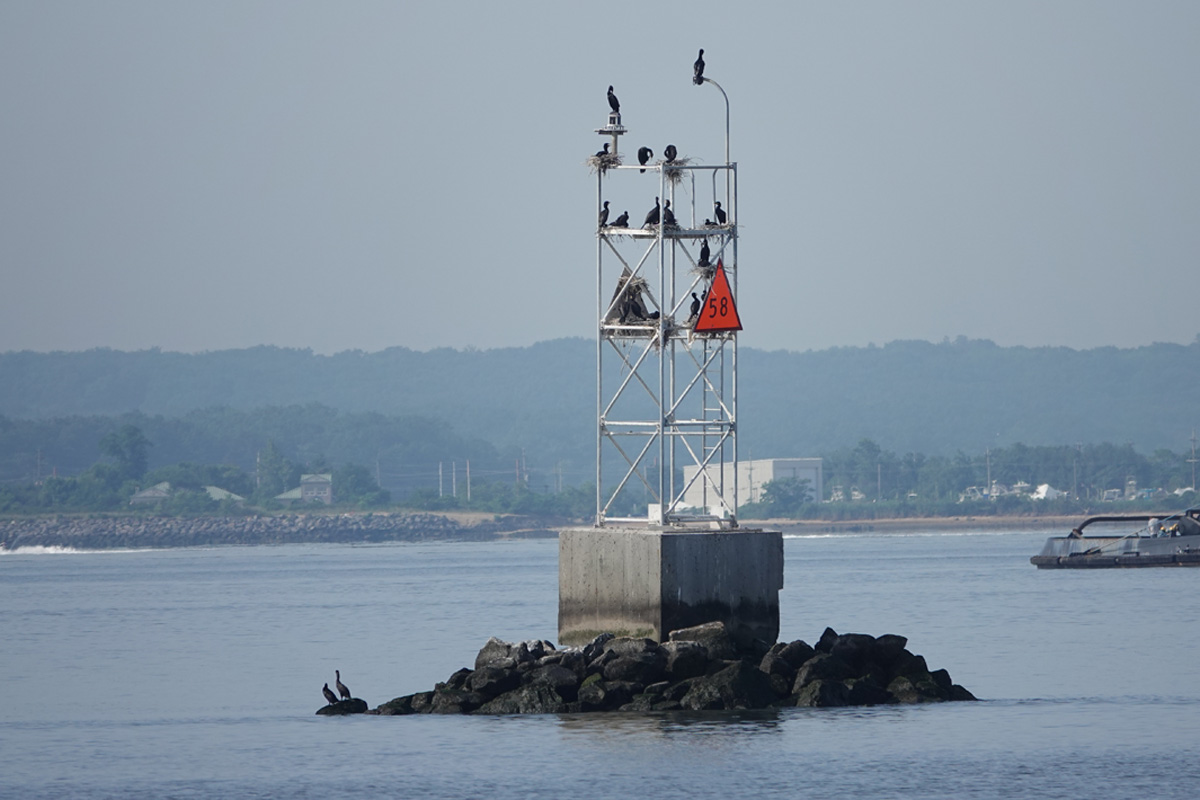
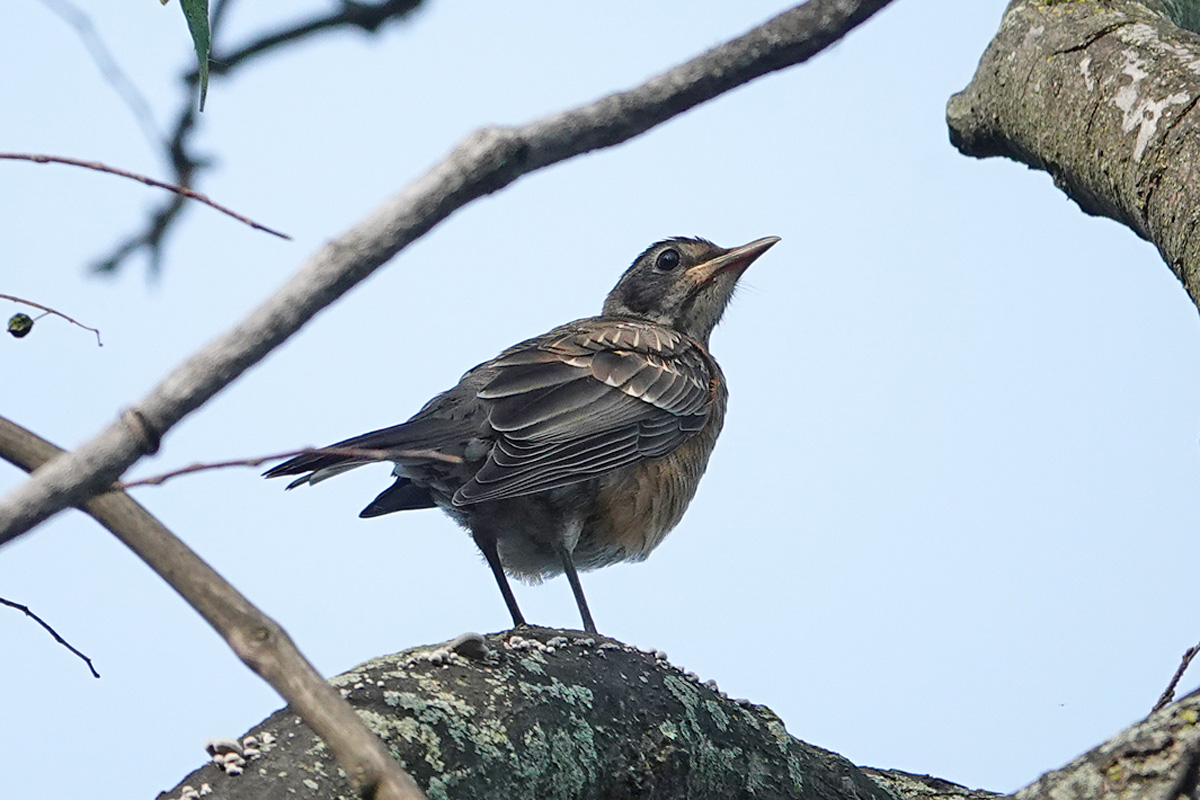
A target bird—the White-eyed Vireo, which we had heard and seen last year on this walk—remained elusive, and we did not succeed in finding one. But plenty of other birds were singing, and we were hearing the high-pitched calls of young chicks begging to be fed. Many of the birds were in juvenile plumage, especially robins that we encountered on the paths and in the trees. We briefly left the woods and walked out into the open to a sandy beach along Raritan Bay, where we observed a nesting colony of Double-crested Cormorants arranged on the framework of a channel marker.

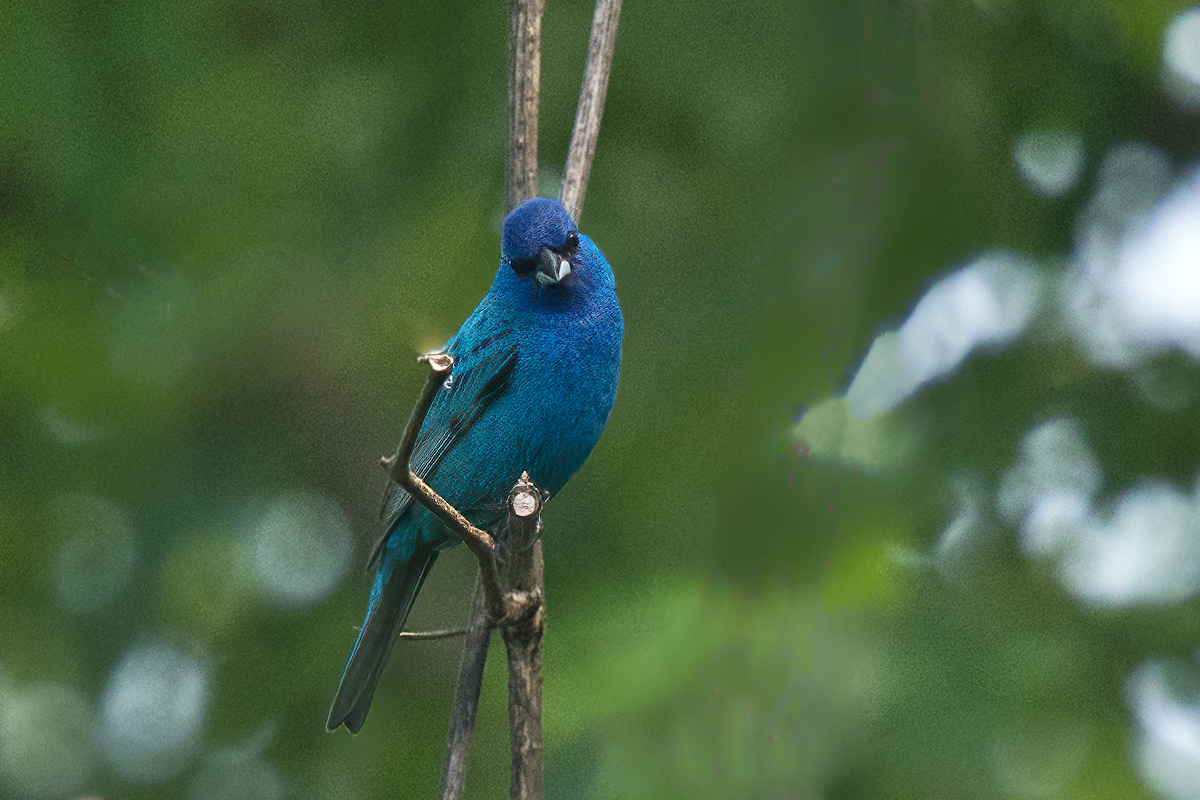
Our second stop was Mount Loretto Unique Area, a nature preserve of approximately 200 acres of grasslands, woods, a pond, and coastal habitat. Walking through the meadows near the entrance to the park, we heard Indigo Buntings singing around us, as well as a Warbling Vireo. Gathered on the platform overlooking the pond, we observed the birds along the edges of the pond: a group of perched Northern Rough-winged Swallows; a solitary perched Barn Swallow; a Snowy Egret and a Great Egret; an Osprey that was settling itself into the leaves at the top of a tree; and, when we looked over the bridge at the far side of the pond, two large snapping turtles and a red-eared slider that began swimming towards us, seeming to expect to be fed. The day was getting hotter, but we were well rewarded with several views of Indigo Buntings shining bright blue in the sun and a few Orchard Orioles perched in trees.

For the past week, a Purple Gallinule had been reported at Sharrotts Pond and had been seen that morning as well. Not only is it a rare bird for the region, but it is the first Staten Island record of the species. We headed there next, hoping to find it. When we arrived, it was close to 1 pm, and the sun beat down on us as we stood on the observation platform overlooking the pond and scanned for the bird. A young boy with binoculars who had come to the park for the same purpose got very excited—he was sure he had found the bird. We trained our binoculars on a small island across the pond and saw a tiny red splotch. It looked very promising, even when seen through a scope, but we ultimately decided that it was most likely a red flower that looked uncannily like the red bill characteristic of a Purple Gallinule.

After about an hour of watching and waiting for the Purple Gallinule, we decided to head to our next stop, Lemon Creek Park, where we were guaranteed to see our target bird—the Purple Martin, the eponymous species of this trip.

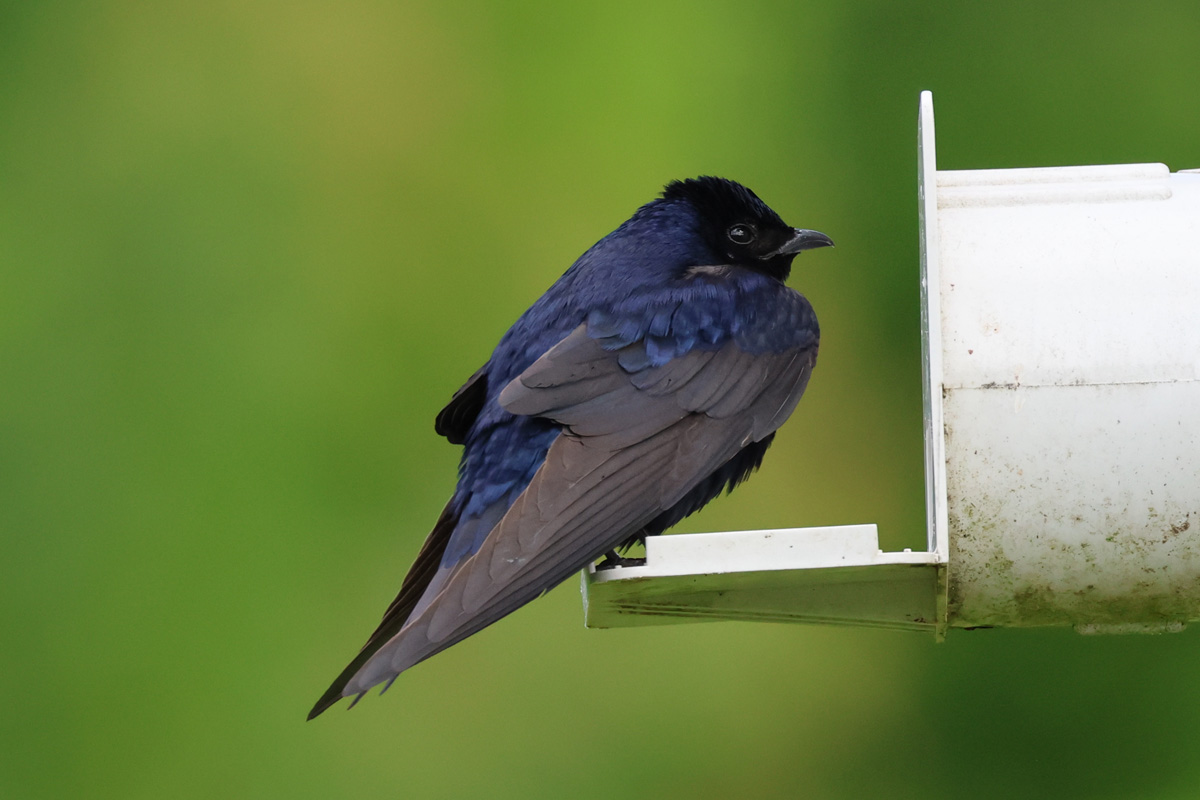
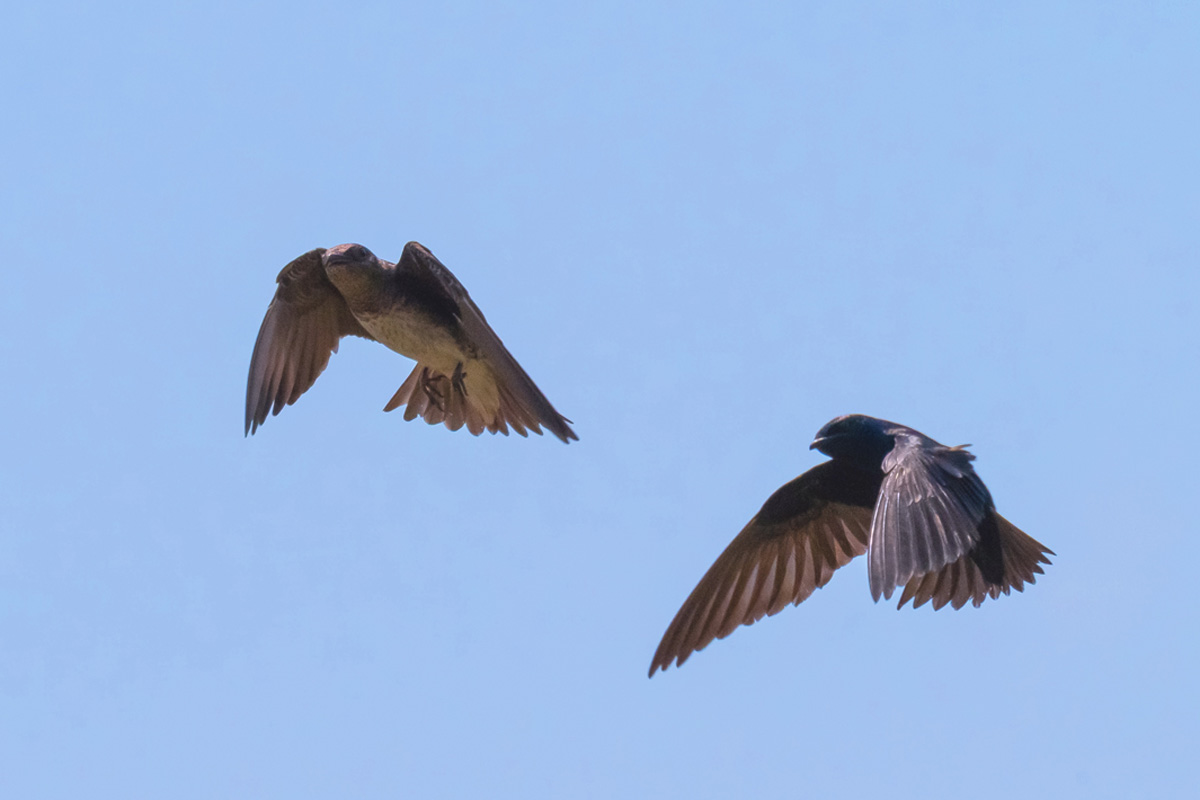
At Lemon Creek Park we found the Purple Martin colony busy with activity, with parents flying to and from the apartments and squeezing into the portals to attend to their young. Close by were terns and gulls flying up and down Lemon Creek. And behind us, beyond the trees, was a view of New Jersey—far in the distance across Raritan Bay.

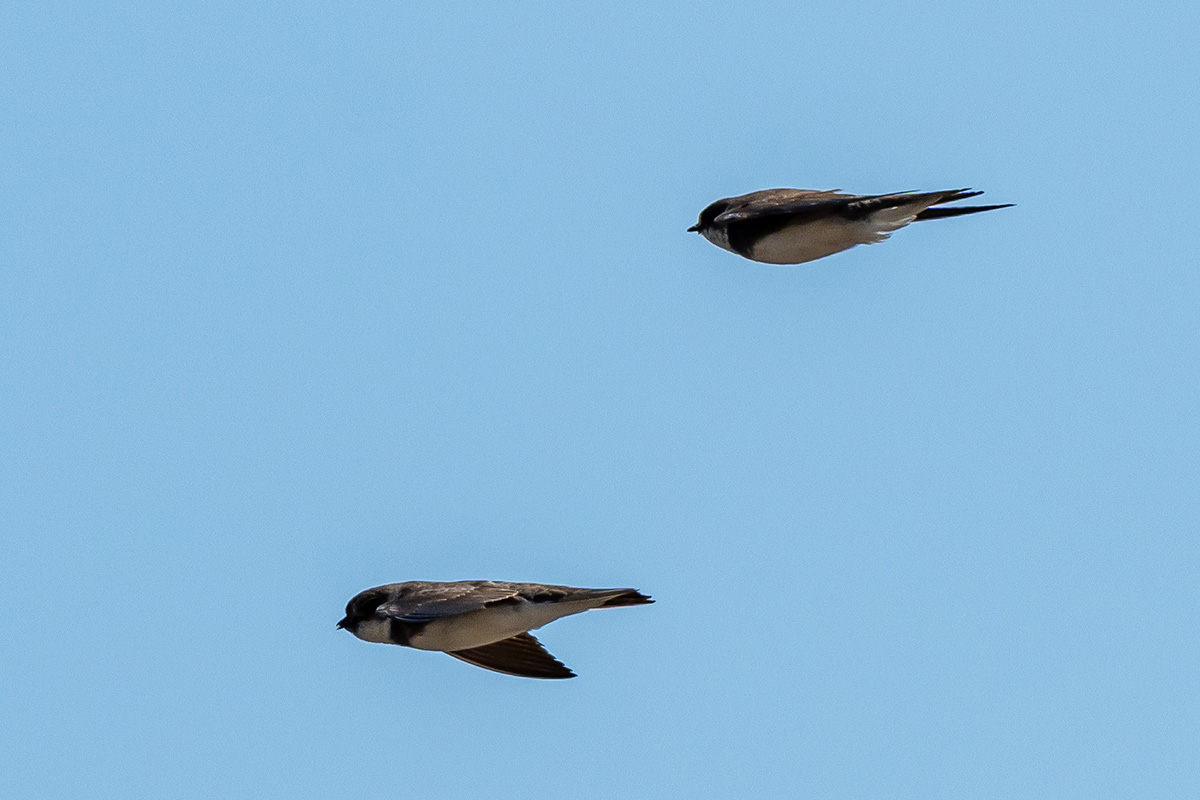
Our final destination was Great Kills Park to view the Bank Swallow colony that nests there every summer. When we arrived, we found many of the swallows swooping back and forth, up and down, over the beach and water below us, while a group remained perched on the branches of a bare tree. A short time later we noticed that that tree had been abandoned for yet another bare tree, and then that tree was abandoned; after that, all the birds remained aloft for the rest of our visit.  

It was delightfully breezy and cool along the water as our trip concluded, and watching the Barn Swallows at the edge of the bay was a highlight for many. Many thanks to Howie for leading us and sharing his insights and love of Staten Island birding. We had a wonderful day!

Species Lists

Birds
Canada Goose
Rock Pigeon
Mourning Dove
Chimney Swift
Ruby-throated Hummingbird
Laughing Gull
American Herring Gull
Great Black-backed Gull
Forster’s Tern
Common Tern
Double-crested Cormorant
Snowy Egret
Great Egret
Great Blue Heron
Turkey Vulture
Osprey
Red-bellied Woodpecker
Downy Woodpecker
Northern Flicker
Eastern Phoebe
Great Crested Flycatcher
Eastern Kingbird
Warbling Vireo
Red-eyed Vireo
Blue Jay
Fish Crow
Bank Swallow
Tree Swallow
Purple Martin
Northern Rough-winged Swallow
Barn Swallow
Northern House Wren
Carolina Wren
European Starling
Gray Catbird
American Robin
House Sparrow
American Goldfinch
Song Sparrow
Orchard Oriole
Baltimore Oriole
Red-winged Blackbird
Brown-headed Cowbird
Common Grackle
Boat-tailed Grackle
Common Yellowthroat
Yellow Warbler
Northern Cardinal
Indigo Bunting

Butterflies
Cabbage White
Silver-spotted Skipper
Broad-winged Skipper

Odonates
Fragile Forktail
Common Whitetail
Common Green Darner
Slaty Skimmer
Blue Dasher

Herps
Common Snapping Turtle
Red-eared Slider

Mammals
White-tailed Deer
Eastern Gray Squirrel

Van Cortlandt Park Nature Walk: Birds, Butterflies, and More with Ken Chaya and Mike Freeman, 6/14/2025

Registrars: Christina Black and Amanda Bielskas
Weather: Unseasonably cool, in the 60s; intermittent rain all day
Participants: 18
Bird Species: 33

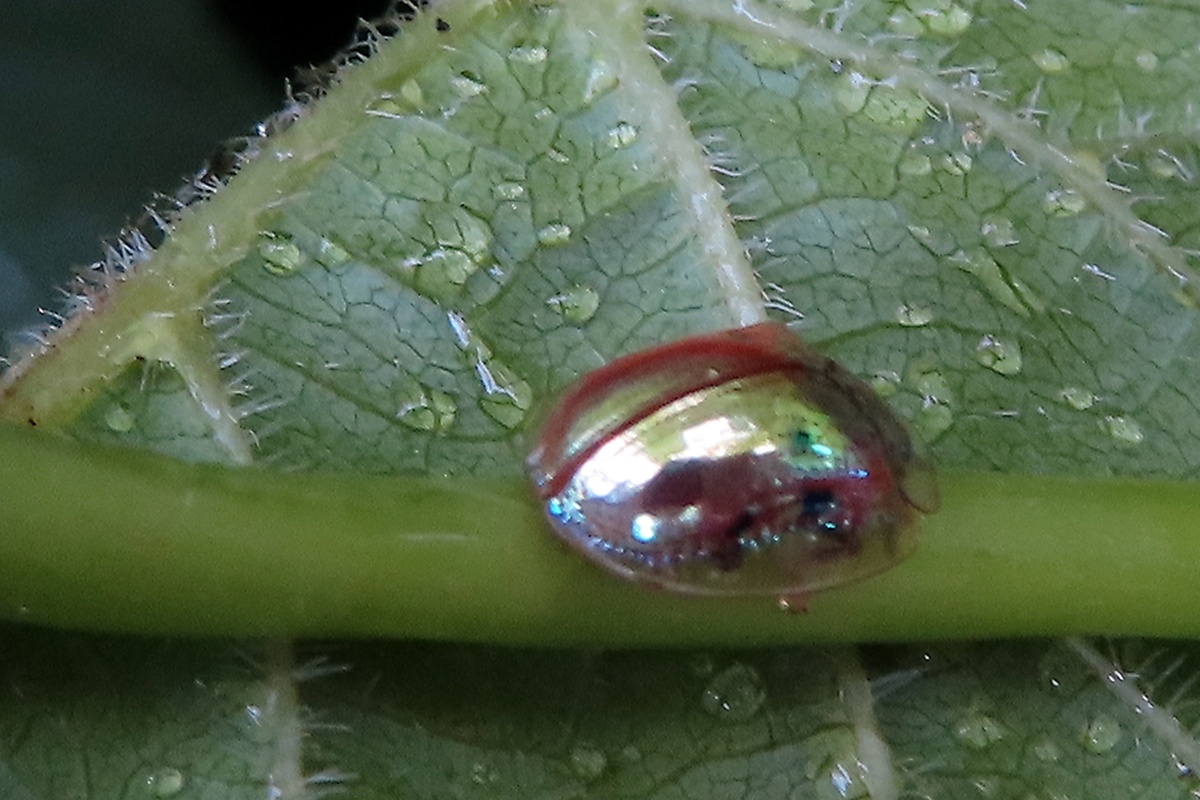
The intrepid group that showed up in Van Cortlandt Park despite a rainy weather forecast was rewarded with a six-hour nature bath and expert guidance on birds, insects, and local plants. Accompanied by the patter of mostly light rain, our leader Ken Chaya and his friend Mike Freeman began our walk near Van Cortlandt House/Museum, the former home of the Van Cortlandt family and the oldest surviving house in the Bronx. Inside the gated grounds we viewed a Barn Swallow on her nest under the eaves of the back porch, with several other individuals swooping about. Also nearby we spotted a Cedar Waxwing and a Baltimore Oriole. We then moved about the front and rear garden areas to view various insects, with some highlights being two Golden Tortoise Beetles, a Spittlebug ,and a Monarch Butterfly, all keeping dry while clinging to the underside of leaves. Also in the rear garden we observed several Tree Swallows flying to and from their nest boxes.

The group then waited out a somewhat heavier downpour before proceeding on the path to a spot near the Van Cortlandt Park Golf Course clubhouse. On the way, we observed an Eastern Harvestman (aka “Daddy Long Legs”) and some interesting flies, including a Marsh Snipe Fly and a few species of Syrphid flies, which are commonly known as “Hover Flies.” Some of the trees we noted were Hop-hornbeam, Red Maple, and Silver Maple.

Near the lake, the group spent some time overturning some large logs, yielding a cornucopia of amazing wriggly creatures, including primitive invertebrates known as Jumping Bristletails (which, happily, did not jump at us), as well as some millipedes and centipedes and different forms of fungi.

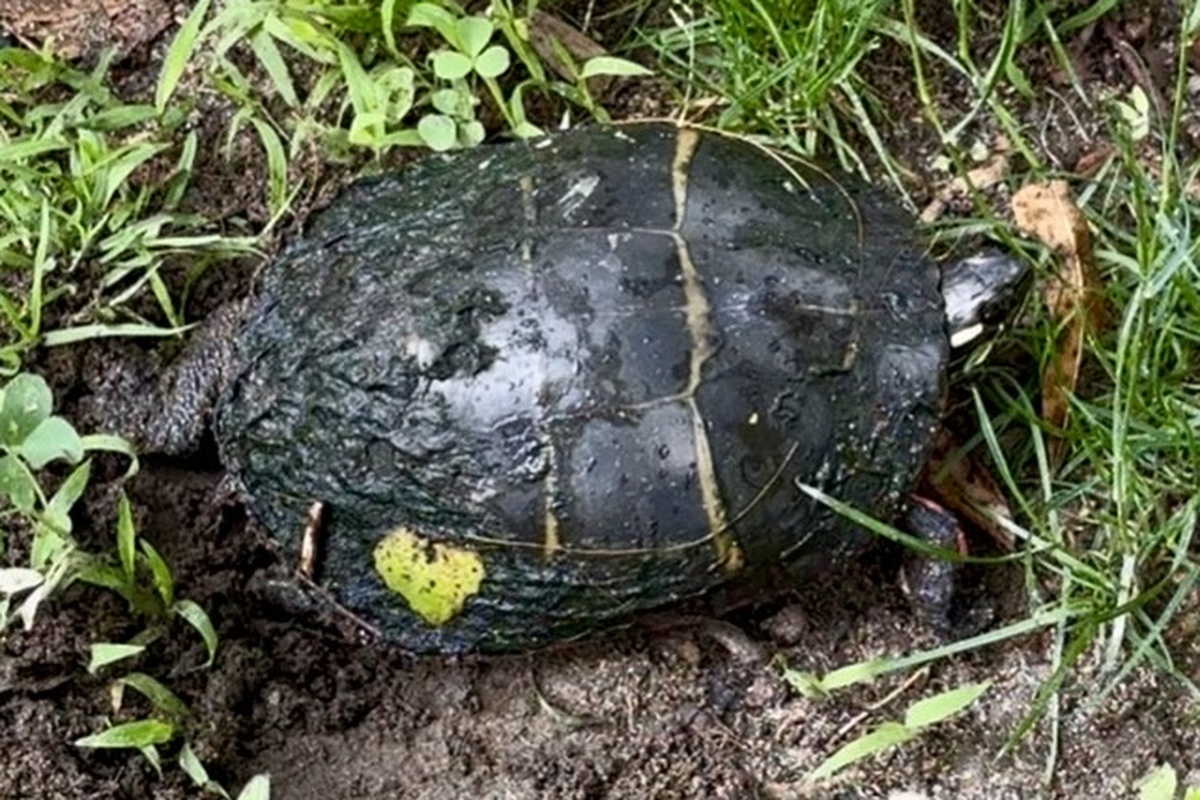
Along the shoreline of the lake we found a Fragile Forktail and an Orange Bluet, two species of native damselflies. The larvae of damselflies are aquatic creatures and it is common to find the adults perching and hunting near water areas. Continuing up the lakeside path, the group saw a Great Blue Heron, some Mallards with ducklings, and several Wood Ducks. Further along, three House Finches briefly flew down to the path. Before we left the lake area, we spotted a female Painted Turtle slowly excavating a nest in the soil by the path. Once her eggs are laid, she will cover the nest and return to the water. From that point on her parenting job is done. The baby turtles will hatch entirely on their own and claw their way to the surface, where they must quickly find their way to the safety of the water.

Walking along the Parade Ground, we admired an enormous century-old London Plane tree. Moving deeper into the woods past Vault Hill, the group spent some time in the planted meadow, where we were delighted to see an active Baltimore Oriole nest. Both parents were involved in bringing food to the hatchlings, which could just barely be seen above the rim of the woven nest. Other birds that breed here include the Tree Swallows that use the constructed nest boxes placed in the meadow for that purpose. Common Milkweed, Joe Pye weed, and Dogbane—all native plants—were showing their emerging buds that will soon be the flowers of summer and happily visited by a variety of pollinators.

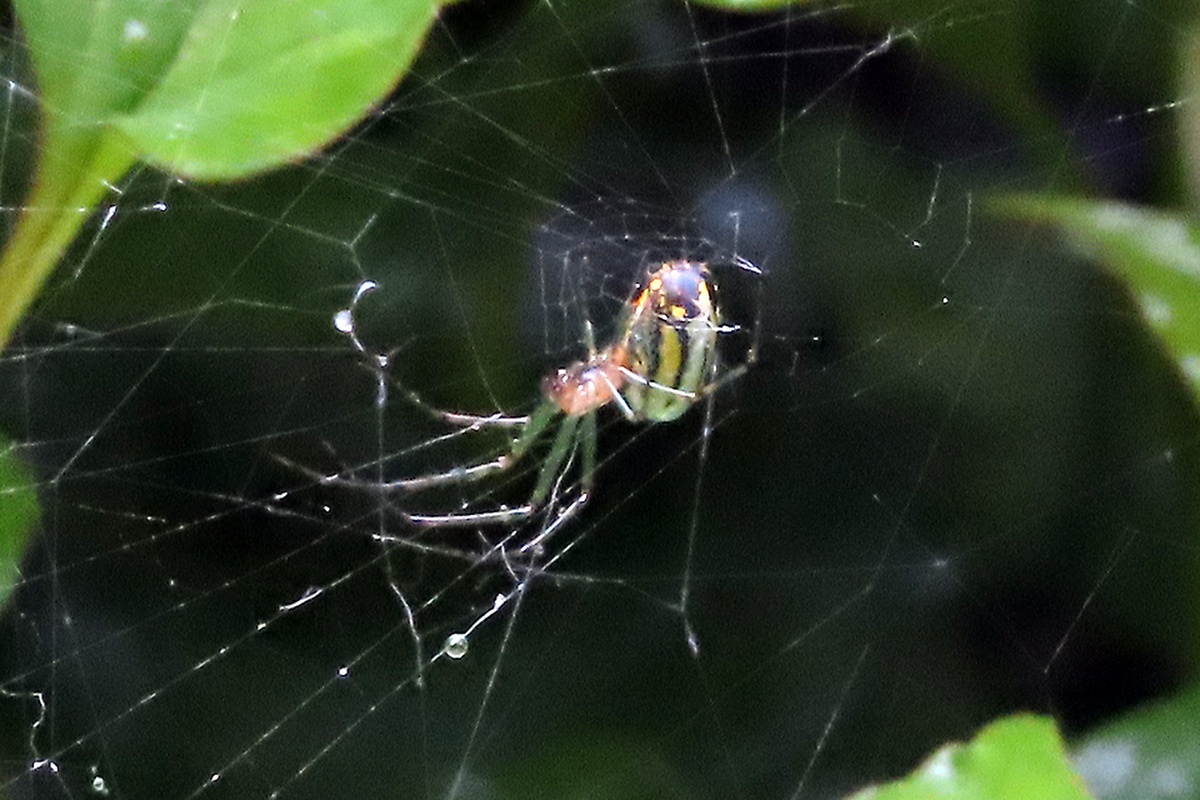
Farther along the wooded path that hosts a dense forest of Sassafras, we found an interesting species of fungus. Alarming in name as well as appearance, the ghostly white vertical growth of “Dead Man’s Fingers” reached up toward us, growing from a dark, rotted tree stump, and its surrounding soil. We stopped for a late lunch at Rockwood Circle, while a Wood Thrush serenaded us from the woodland. Down the path, a pair of Brown-headed Cowbirds appeared and made their way into the brush. Here, the canopy of tall, mature trees include oaks, hickories, and cottonwoods. Another highlight was a close-up view of an Orchard Orb Weaver spider on its web. Just inside the woodland, on a dead log, was a large yellow slug. It was identified as a Western Dusky Slug. It appeared to be (unsuccessfully) trying to hide in a large growth of mustard-colored,jelly fungus known as “Club-like Tuning Fork.” Thanks to the very wet spring we are having, dozens of tiny jelly fungi growths were emerging from this single log. 

Heading back towards Broadway, we passed a Praying Mantis egg case, a Meadow Spittlebug, and various woodland plants including blooming Fleabane and Silvery Cinquefoil.  Arriving back at the vast green Parade Ground, we saw an Osprey gliding across the gray sky above us, signaling the end of a very full day. A soggy but happy group headed home together on the subway, having explored a good part of the park’s 1,146 acres and seen hardly any other park visitors, thanks to the rain.

Species List

Birds

Canada Goose 
Wood Duck 
Mallard 
Rock Pigeon
Cuckoo sp
Chimney Swift
Double-crested Cormorant 
Great Blue Heron 
Osprey 
Cooper’s Hawk 
Red-bellied Woodpecker 
Northern Flicker 
Warbling Vireo 
Red-eyed Vireo 
Blue Jay 
American Crow 
Tree Swallow 
Barn Swallow 
Carolina Wren 
European Starling 
Gray Catbird 
Wood Thrush 
American Robin 
Cedar Waxwing 
House Sparrow 
House Finch 
Song Sparrow 
Orchard Oriole 
Baltimore Oriole
Red-winged Blackbird 
Brown-headed Cowbird 
Common Grackle 
American Redstart

Butterflies and Moths

Banded Olethruetes Moth (Olethreutes fasciatana)
Common Bagworm Moth (Psyche casta)
Monarch Butterfly (Danaus plexippus)
Bess, Wasps, and AntsHoney Bee (Apis mellifera)

True Bugs

Meadow Spittlebug (Philaenus spumarius)
Dogwood Spittlebug (Clastoptera proteus)
Alder Spittlebug (Clastoptera obtusa)
Spotted Lantern Flies (Lycorma delicatula)
Plant Bug (Family Miridae)

Flies

Hover Fly (Family Syrphidae)
Banded Snipe Fly (Chrysopilius fasciatus)
Marsh Snipe Fly (Rhagio tringarius)
Green Bottle Fly (Lucilia sericata)
Crane Fly (Family Tipulidae)
Long-legged Fly (Family Dolichopodidae)

Beetles

Golden Tortoise Beetle (Charidotella sexpunctata)
Asian Lady Beetle (Harmonia axyridis)

Damselflies

Fragile Forktail (Ischnura posita)
Orange Bluet (Enallagma signatum)

Other Non-insect Invertebrates

Orchard Orb Weaver Spider (Leucauge venusta)
Eastern Harvestman aka “Daddy Long Legs” (Leiobunum vittatum)
Warty Harvestman aka “Daddy Long Legs” (Leiobunum verrucosum)
Jumping Bristletail (Family Machilidae)
Centipede (Class Chilopoda)
Green House Millipede (Oxidus gracilis)
Western Dusky Slug (Arion subfuscus)

Fungi

Club-like Tuning Fork (Calocera cornea)
Jelly Fungus (Dacryopinax elegans)

Other Species

Painted Turtle, female digging nest for eggs
Chipmunk
Eastern Gray Squirrel (some black-form individuals as well)

Great Swamp N.W.R. with Richard ZainEldeen, 6/2/2025

Registrar: Lisa Kroop
Participants: 9
Weather: 55°F–67°F; sunny and partly cloudy; breezy 9–12 mph
Bird Species: 55

It was a beautiful day with bright blue skies and the sun coming in and out from behind large cumulus clouds. Richard remarked that it felt like March, given how cool and breezy it was, but compared to last year—when it was so hot and humid that we had to cancel the trip—this weather was exceedingly welcome.

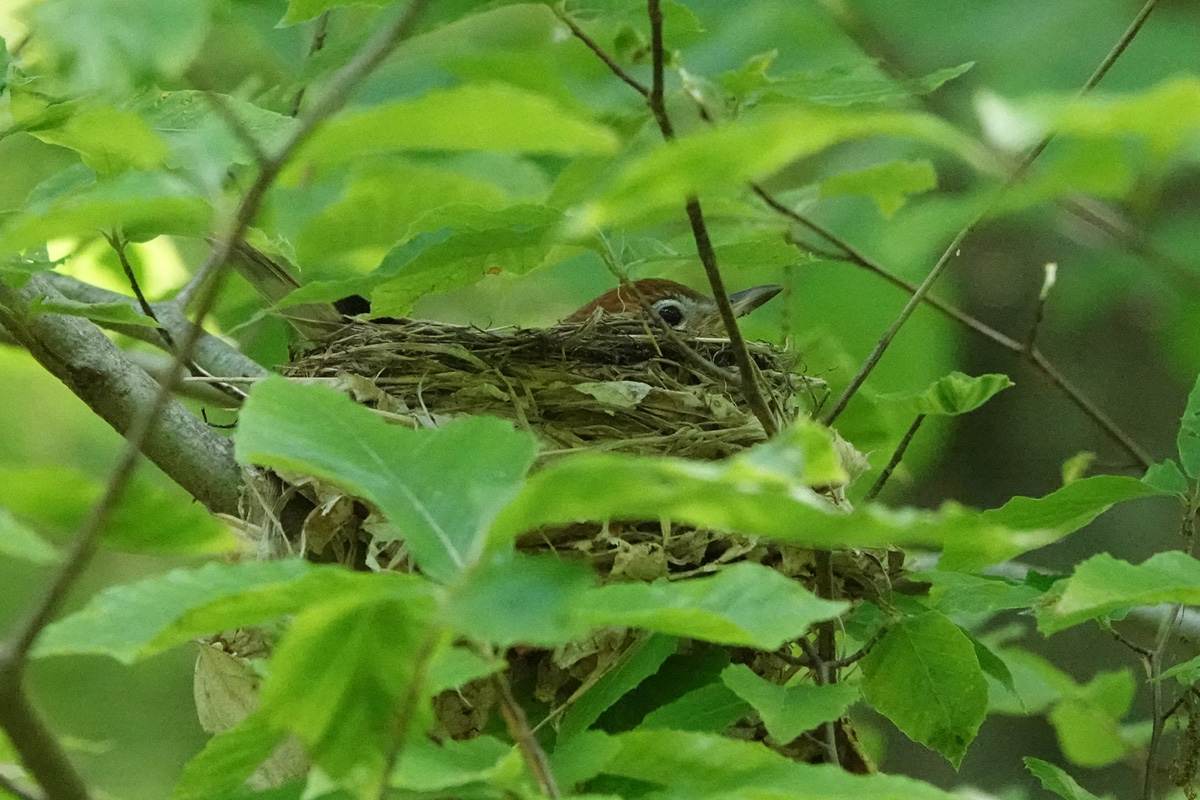
We spent the first part of the day at the Great Swamp, beginning at the meadows and the wooded trails near the Helen C. Fenske Visitor Center. While we watched the Purple Martins at their nesting gourds and swooping with the Tree Swallows and Barn Swallows overhead, a Red-shouldered Hawk flew by in the distance. After entering the woods, we saw the first of several active nests of the day, this one belonging to a Wood Thrush, its identity revealed by the mother peeking out over the edge.

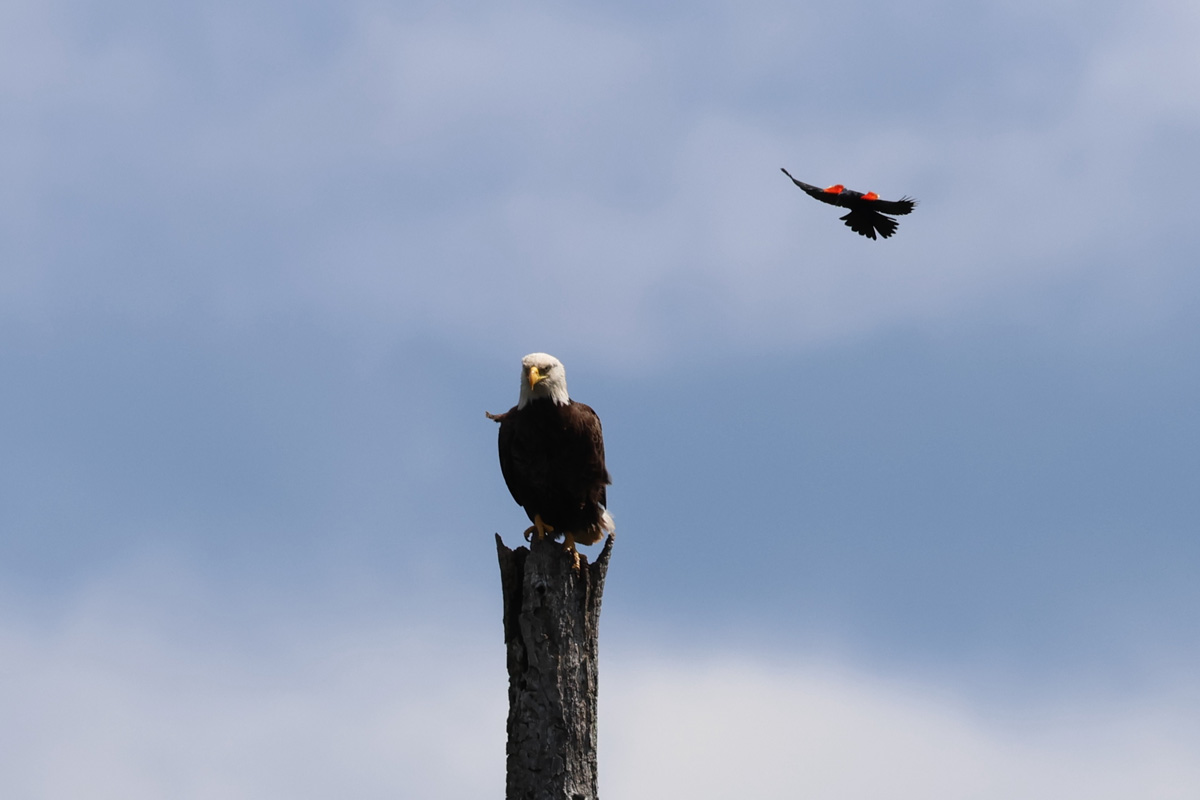
We next made our way down Pleasant Plains Road, and from the bridge over the Great Brook (a tributary to the Passaic River), we saw an adult Bald Eagle perched on the top of a tall snag being harassed by a pair of Red-winged Blackbirds. Walking towards the Overlook, we saw several Blue-gray Gnatcatchers defending their nests, and at the Overlook we watched a nearby Eastern Kingbird. Walking back to the cars, we saw a Spotted Sandpiper in the Great Brook on top of a log.

We spent the second part of our trip at the Scherman Hoffman Wildlife Sanctuary, headquarters of New Jersey Audubon. Soon after we arrived we heard a Pileated Woodpecker calling, and we headed into the woods to look for it. We were unsuccessful at finding it, but we enjoyed the lushness of the forest, especially its understory of ferns and other plants. We made our way down to the Passaic River, now farther upstream from the Great Swamp and close to its headwaters. Louisiana Waterthrush nest along the river here, and we were hoping to find one. That didn’t happen, but the setting was beautiful and there other active bird nests and plenty of other birds to see and hear.

Many thanks to Richard for leading us on a wonderful walk.

Species List

Birds

Canada Goose
Mourning Dove
Chimney Swift
Ruby-throated Hummingbird
Spotted Sandpiper
Great Blue Heron
Turkey Vulture
Bald Eagle
Red-shouldered Hawk
Belted Kingfisher
Red-bellied Woodpecker
Hairy Woodpecker (h)
Pileated Woodpecker (h)
Northern Flicker
Eastern Wood-Pewee
Willow Flycatcher (h)
Eastern Phoebe
Great Crested Flycatcher
Eastern Kingbird
Yellow-throated Vireo (h)
Warbling Vireo (h)
Red-eyed Vireo (h)
Blue Jay
American Crow
Black-capped Chickadee
Tree Swallow
Purple Martin
Barn Swallow
White-breasted Nuthatch
Blue-gray Gnatcatcher
Northern House Wren
Gray Catbird
Northern Mockingbird
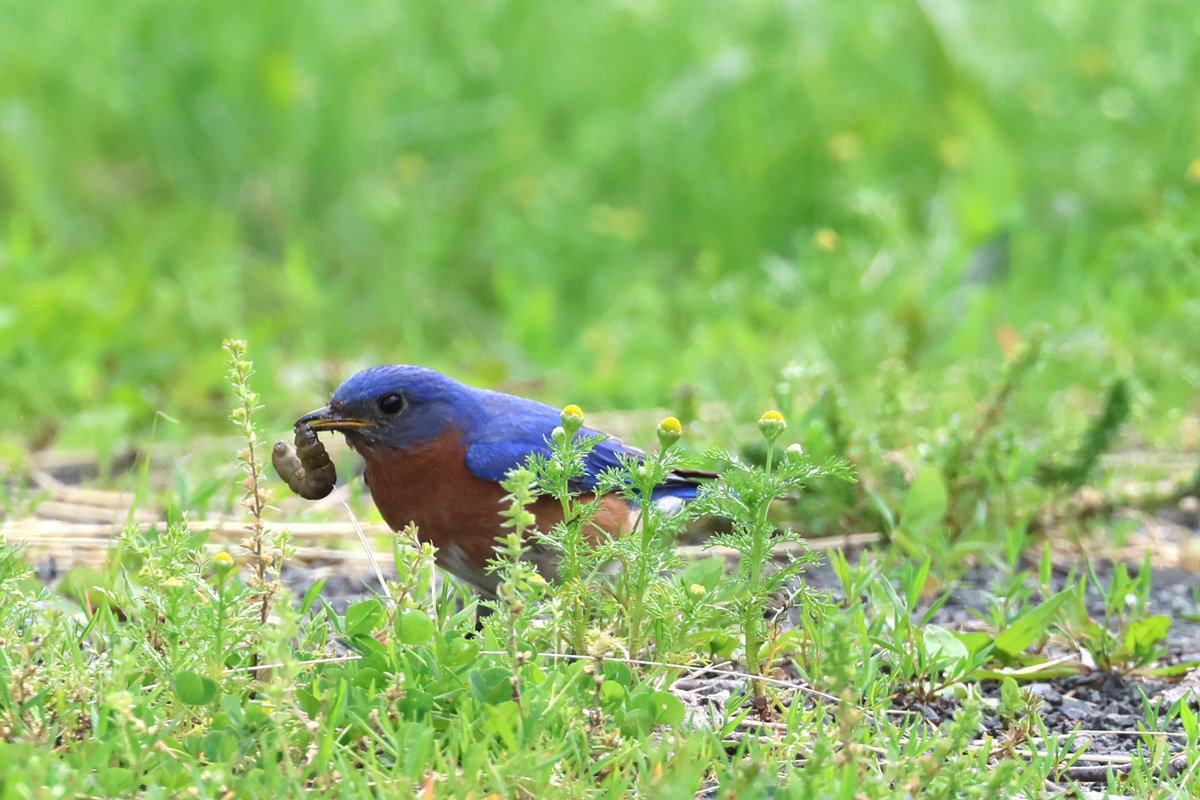
Eastern Bluebird
Veery
Wood Thrush
American Robin
Cedar Waxwing
House Finch
American Goldfinch
Chipping Sparrow
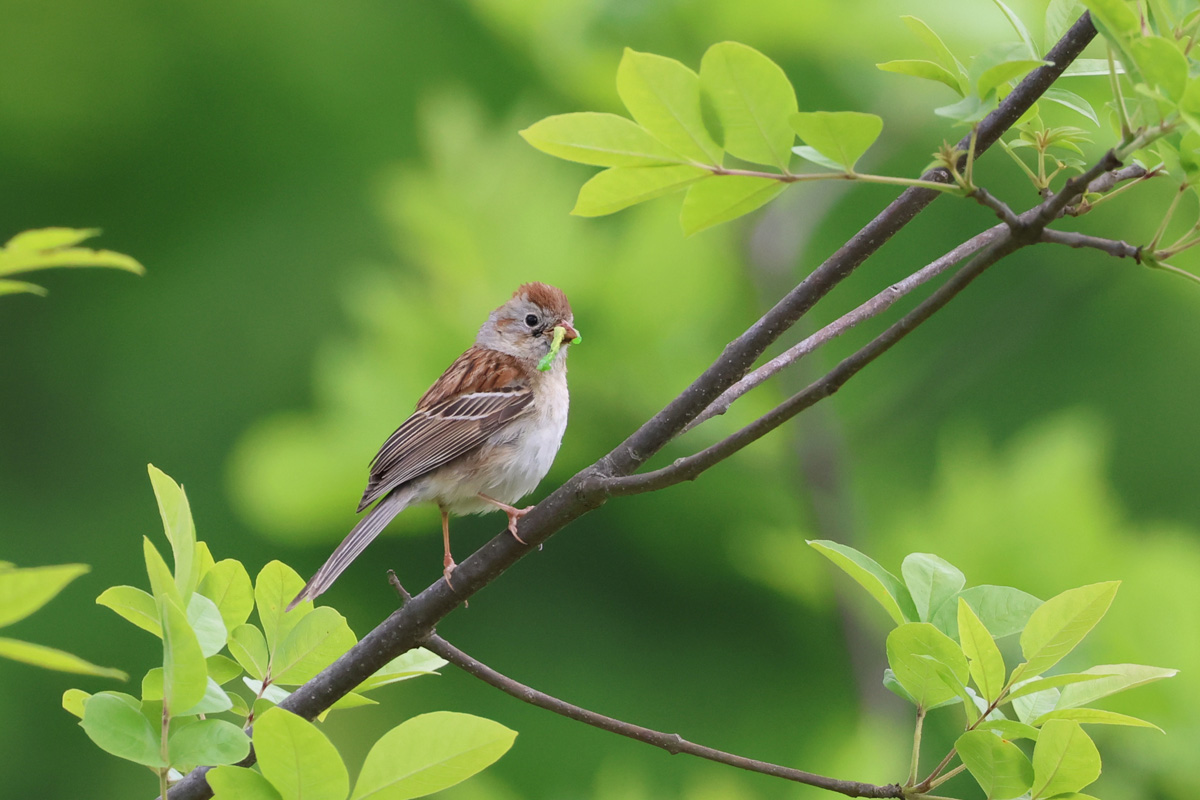
Field Sparrow
Song Sparrow
Swamp Sparrow
Eastern Towhee
Baltimore Oriole
Red-winged Blackbird
Brown-headed Cowbird
Common Grackle
Ovenbird (h)
Blue-winged Warbler
Common Yellowthroat (h)
American Redstart
Yellow Warbler
Indigo Bunting

Butterflies
Spring Azure
Skipper sp.

Herps
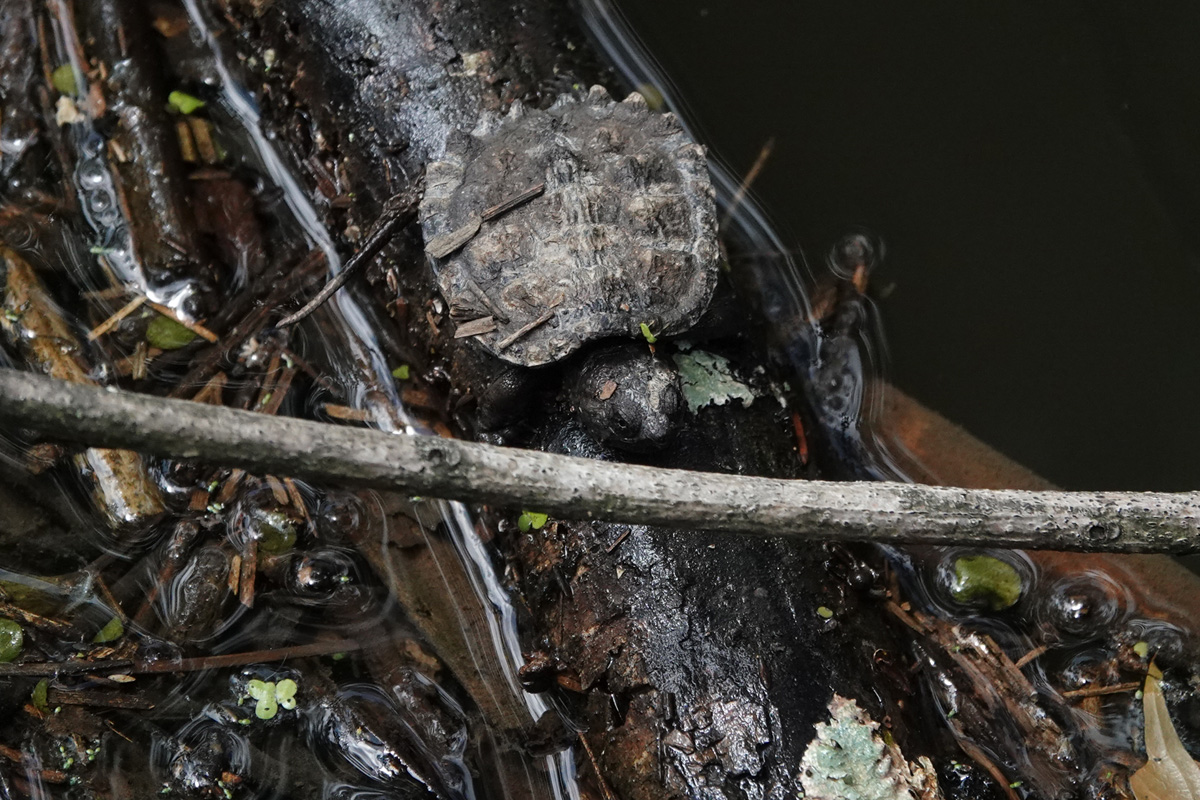
Snapping turtle

Mammals
Eastern Cottontail
Eastern Chipmunk
Eastern Gray Squirrel


Central Park Botany Walk with Regina Alvarez, 5/31/2025

Registrar:  Anne Lazarus
Participants:  15
Weather:  Cloudy early morning, then sunny, high 60 F.

May 31 was a perfect, sunny, mild day for a botany walk in the north end of Central Park. We met our wonderful leader, Regina Alvarez, who made sure we all had magnifying glasses. 

We began our day by examining leaf galls of the Washington Hawthorn tree. Plants defend themselves against invaders by isolating them in these galls. The eggs and  larvae develop in the galls, where they find nutrition and emerge at a later date as adults. Galls are specific for each tree. Adjacent to the Hawthorn tree were small plants in the buckwheat family. Buckwheats create a thin, leaf-like sheath around the stem, where the leaf blade attaches. Smartweed and Virginia Knotweed are in the buckwheat family. We examined the Smartweed without magnifying glasses.

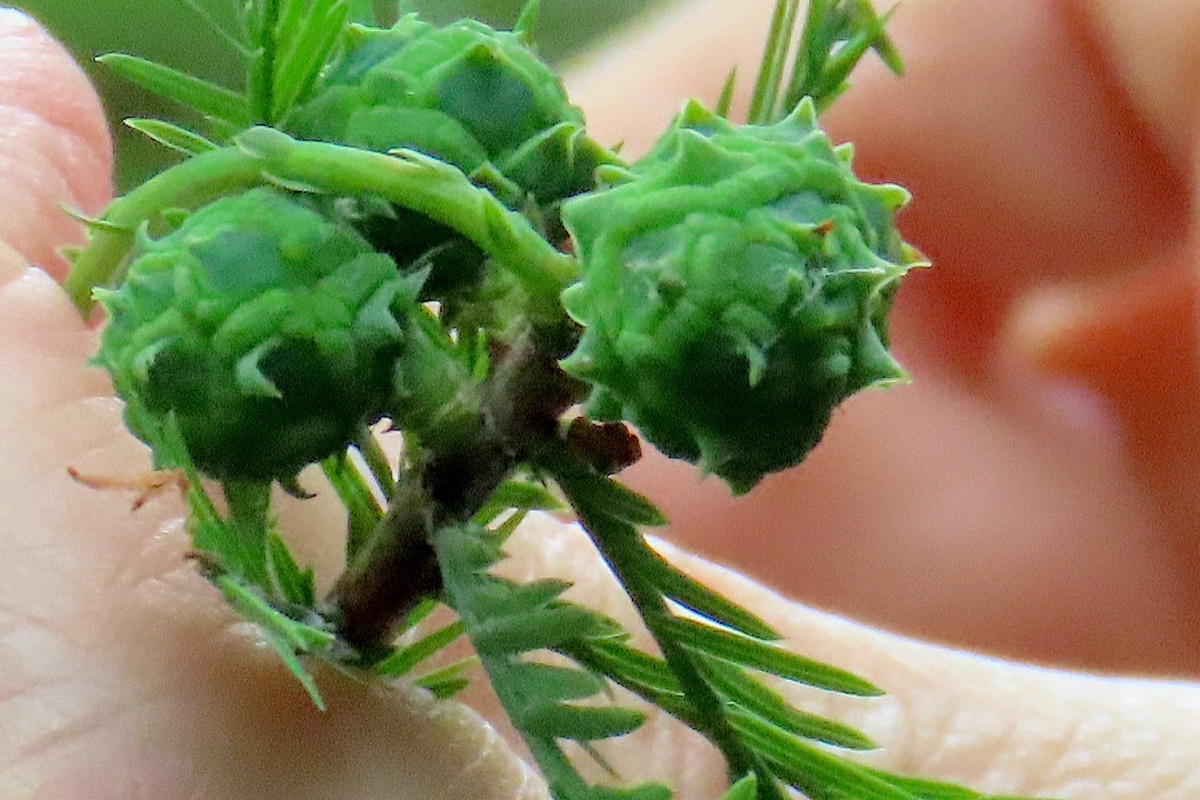
We could have spent over an hour in this one spot because there was so much to see and examine. We were fascinated by the Bald Cypress. It is a conifer that sheds its leaves in the fall. This tree is monoecious, with both male and female flowers on the same tree. The female flowers are wind pollinated and develop into little cones, which we viewed in detail. This tree has “knee” projections from above the root. The reason for the knees might be related to oxygen access, but this is still being investigated. We learned that Bald Cypress trees growing in drier areas do not have “knees”—for example, the Bald Cypress of Strawberry Field does not have “knees”.

The small plants that spend their lives close to the soil also play their role. We examined the humble English and the American (native) plantains. The base of our native plantain is red, but the English Plantain’s is white. These plants are dicots, but the leaf veins are parallel, like those of a monocot. 

We then strained our necks to look up to the crown of the mighty Tulip tree. This tree loses its bottom branches as it grows taller and reaches for the sunlight. We learned that each plant species has its own strategy for survival and reproduction. Oaks are fine growing in the shade. An English Elm has been planted in the Loch, and has been placed in a cage for protection. 

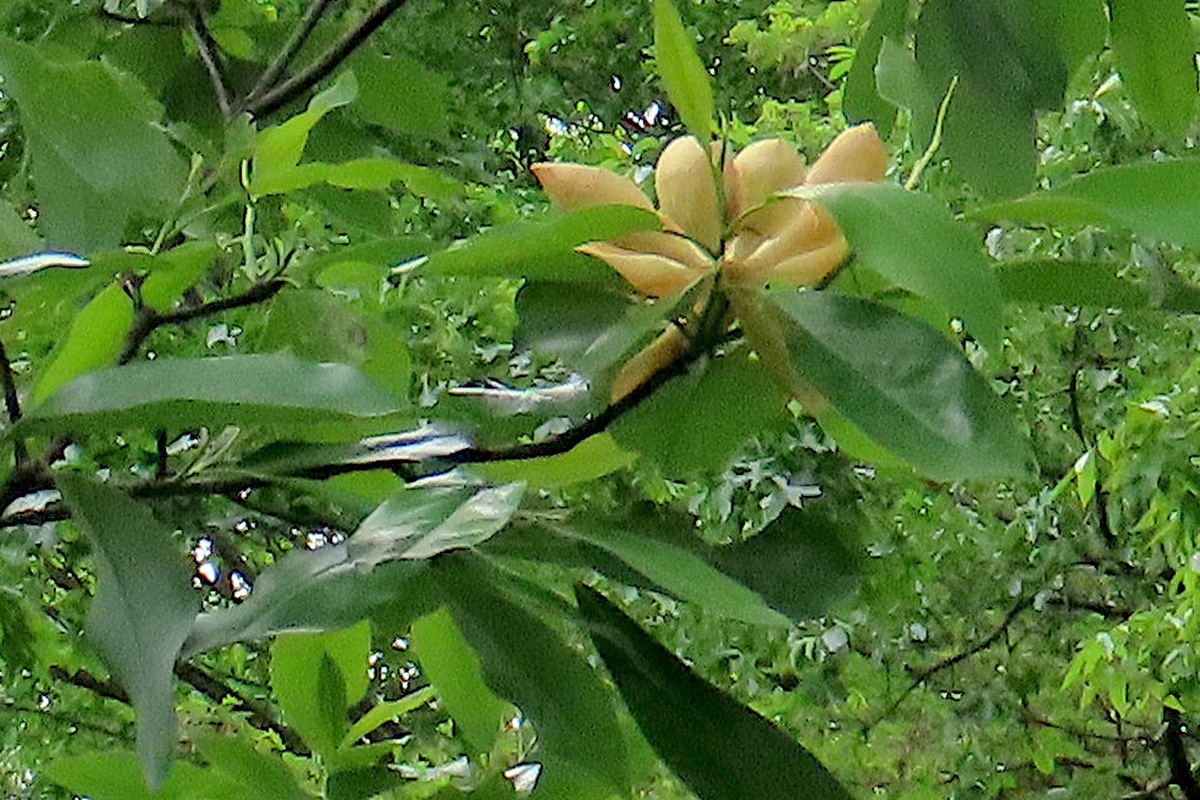
A beautiful native birch is the River Birch. It can grow in difficult environments, and is a rugged tree with nutrients that attract a variety of birds. Many insect-eating birds also find nourishment in this tree. We examined many specimens of our native Sweet Bay Magnolia, Staghorn Sumac, Sassafras, and many other species. Ironwood trees create burls, a distorted outward growth on the trunk that forms from stress. The tree can survive well with a burl.

The London Plane tree is a hybrid of the American Sycamore and the Oriental Plane tree. It is infertile, but it can remove pollutants from the air.

We switched our attention to the tiny flowering plants that were floating in the Pool—Milfoil. It offers shade, fish cover, and habitat for invertebrates. Odonates are insect predators; they are attracted to the Pool. The tiniest plant that we saw was the Watermeal. It is rootless, but capable of spreading rapidly. The Duckweed keeps aggressive algae under control, and the shoreline plants also stop nutrients from feeding algae. Blue Flag Iris is a native shoreline plant at the Pool.

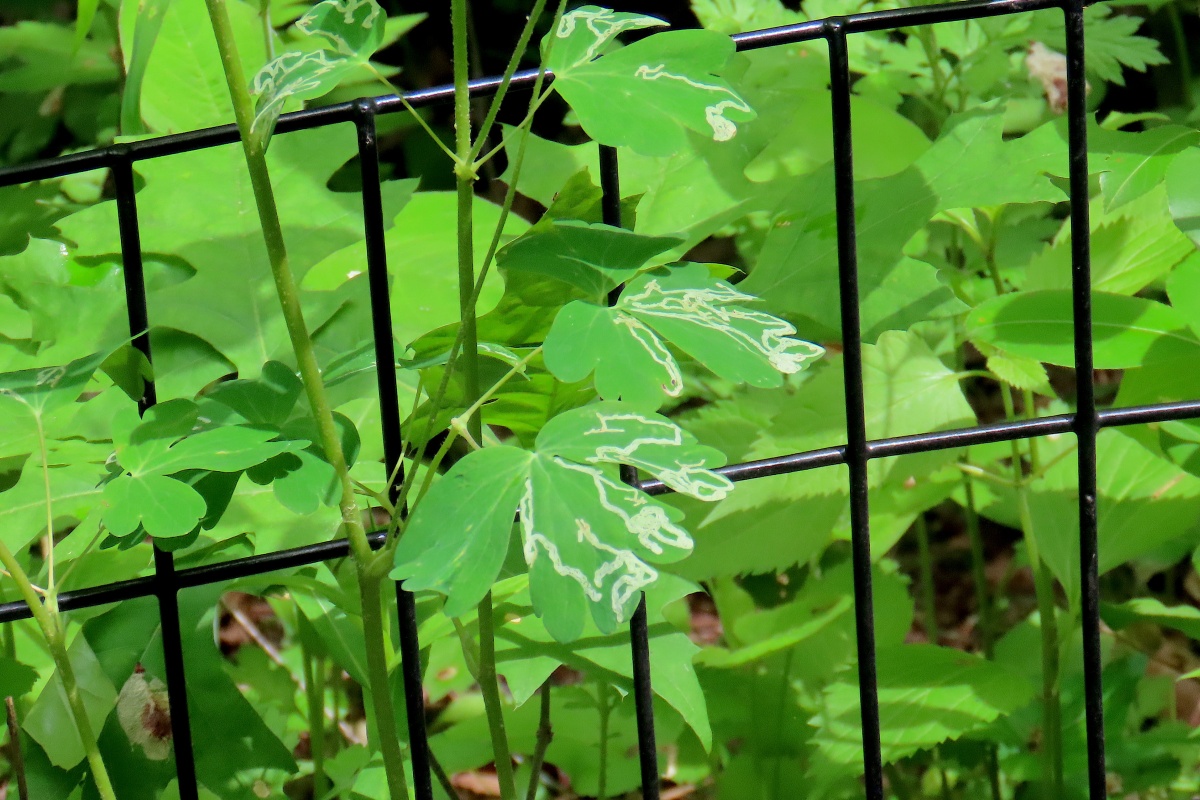
Many flowering shrubs captured our attention. We were happy to observe a native Azalea shrub. A sign of spring is the Trillium, which we saw in the Loch. It is a spring ephemeral, like violets. Jewelweed was starting to bloom in the Loch. Another favorite is the Columbine; leaf miners were tunneling their way through its leaf tissue, and will eventually emerge as adult insects. We took photos of the leaves and flowers. A valuable plant with fruit that nourishes many bird species is the Pokeweed. Burdock, another interesting plant, has a two-year reproduction cycle. This plant is the inspiration for velcro!

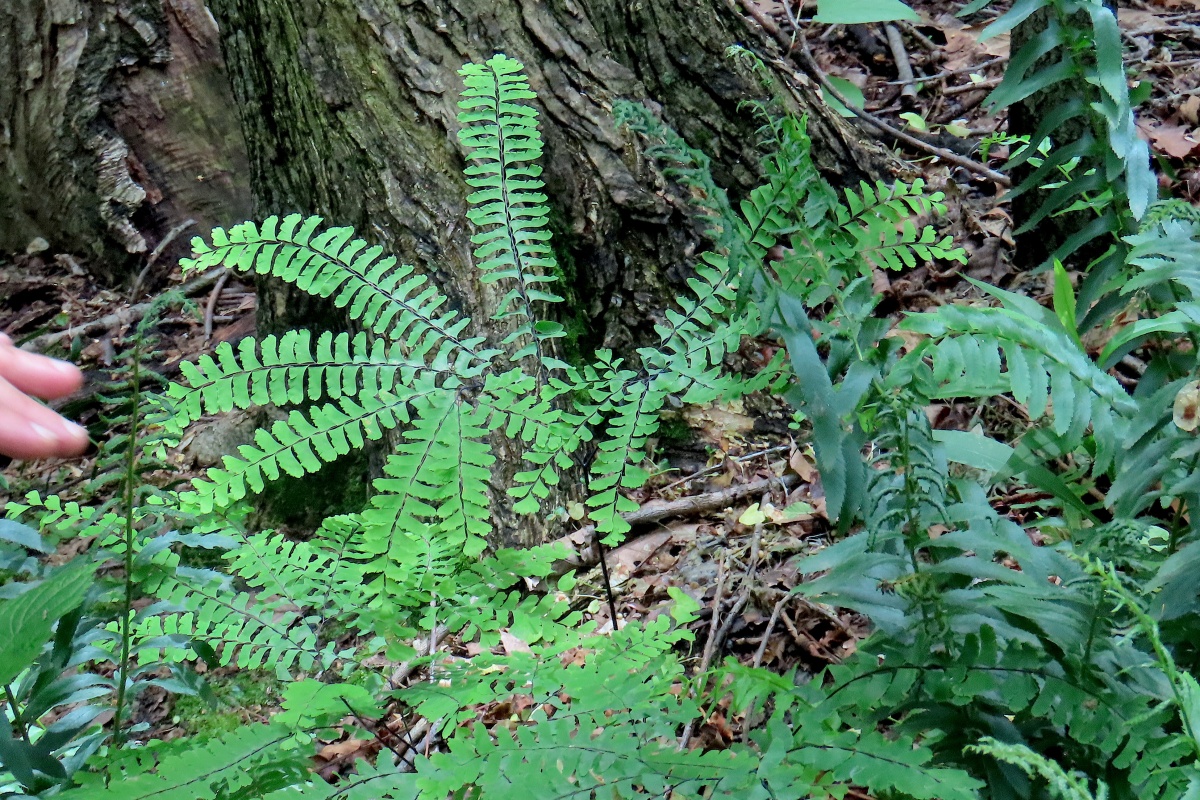
Ferns are an important part of the Pool’s ecology. They produce spores, not seeds. The sporangia seen on the back of the fern’s fronds, or on a separate frond, hold and release haploid spores (that is, spores with unpaired chromosomes in the cells) as part of fern’s complex reproductive process. A variety of fern species grow near the Pool: New York Fern, Ostrich Fern,  Royal Fern, and Christmas Fern are among them.

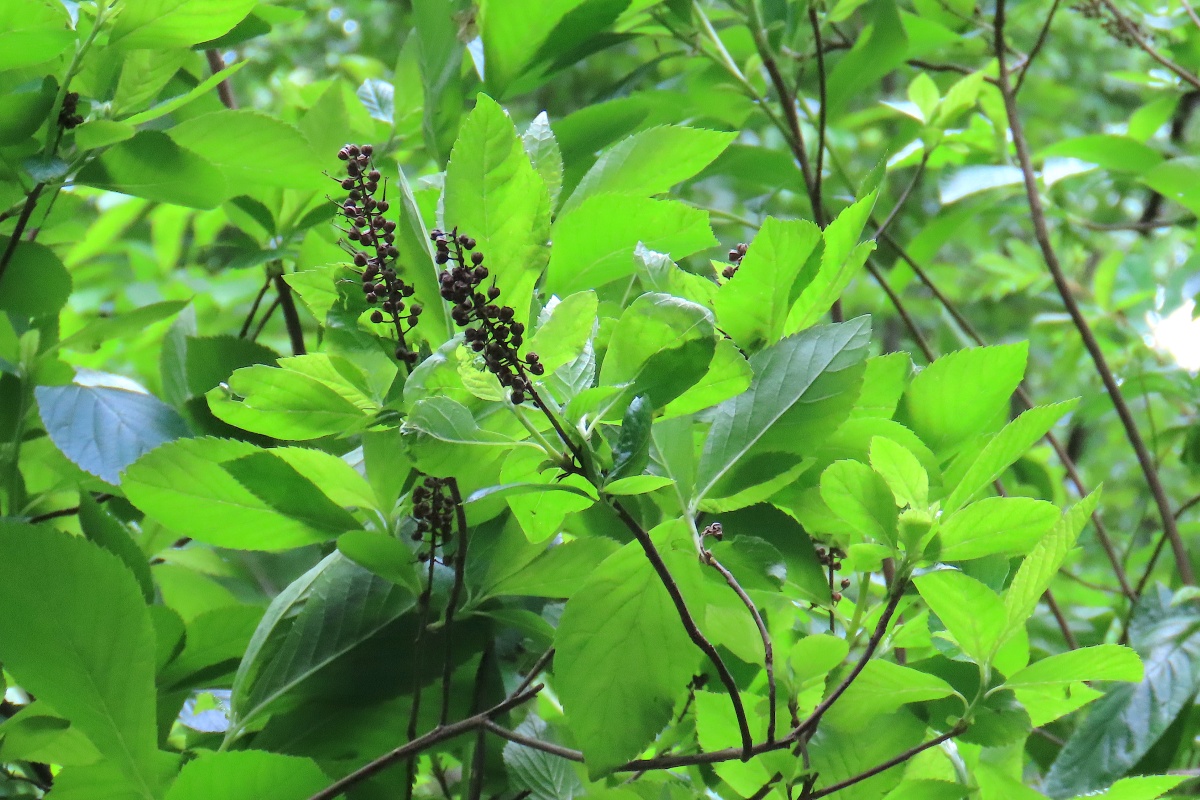
Central Park has both native and non-native plants. The native plants offer the nourishment needed by bees and birds; non-native plants like Mugwort do not attract bees and birds. Poison Ivy, a vine, is native and an important source of nutrients for our birds. It does not cover and choke the trees. Non-native Porcelain Berry does cover and harm the trees by choking them. It is in the grape family. Unfortunately, birds love the fruit and spread its seeds.

Lichen are not plants but, rather, associations between specific fungi and algae or cyanobacteria. The algae or cyanobacteria provide nutrients from photosynthesis for the fungi, and the fungi provide structure and protection. There are three common types of lichen: foliose, which we observed at close range, crustose, and fruticose. Lichen appear worldwide and are a source of food for caribou. 

Plant diversity can seem overwhelming. We learned so much during our outdoor classroom, and we look forward to returning to learn more.


Species List

Birds
Canada Goose
Mallard
Rock Pigeon (Feral Pigeon)
Mourning Dove
Great Egret
Black-crowned Night Heron
Black Vulture
Downy Woodpecker
Rough-winged Swallow
Least Flycatcher                                
Gray Catbird
Blue Jay
European Starling
House Sparrow
American Robin
Black-and-white Warbler
Common Grackle

Trees 
American Sycamore 
Bald Cypress 
Black Cherry 
Black Locust 
English Elm, (sapling, non-native)
Hackberry 
Hickory Tree (sapling)
London Plane Tree ( hybrid of American Sycamore Tree and Oriental Plane Tree)
Sassafras 
Serviceberry
Staghorn Sumac
Sweetgum 
Sweetbay Magnolia 
Swamp White Oak 
Tulip Tree
Tupelo Tree
Washington Hawthorn Berry 

Bushes and Shrubs, Flowers
American Plantain (native)
Azalea, several native varieties (Flame and Pinxter)
Blue Flag Iris (native)
Blue Violet
Burdock (biennial)
Carolina Rose
Columbine
Common Reed (invasive)
Cone Flower
Duckweed (tiny flowering plant in water)
Japanese Knotweed (Buckwheat family, invasive )
Jewelweed
Mugwort ( tiny flowers, invasive )
Poison Ivy (Vine)
Pokeweed
Porcelain Berry (vine, invasive)
Smartweed (Buckwheat family)
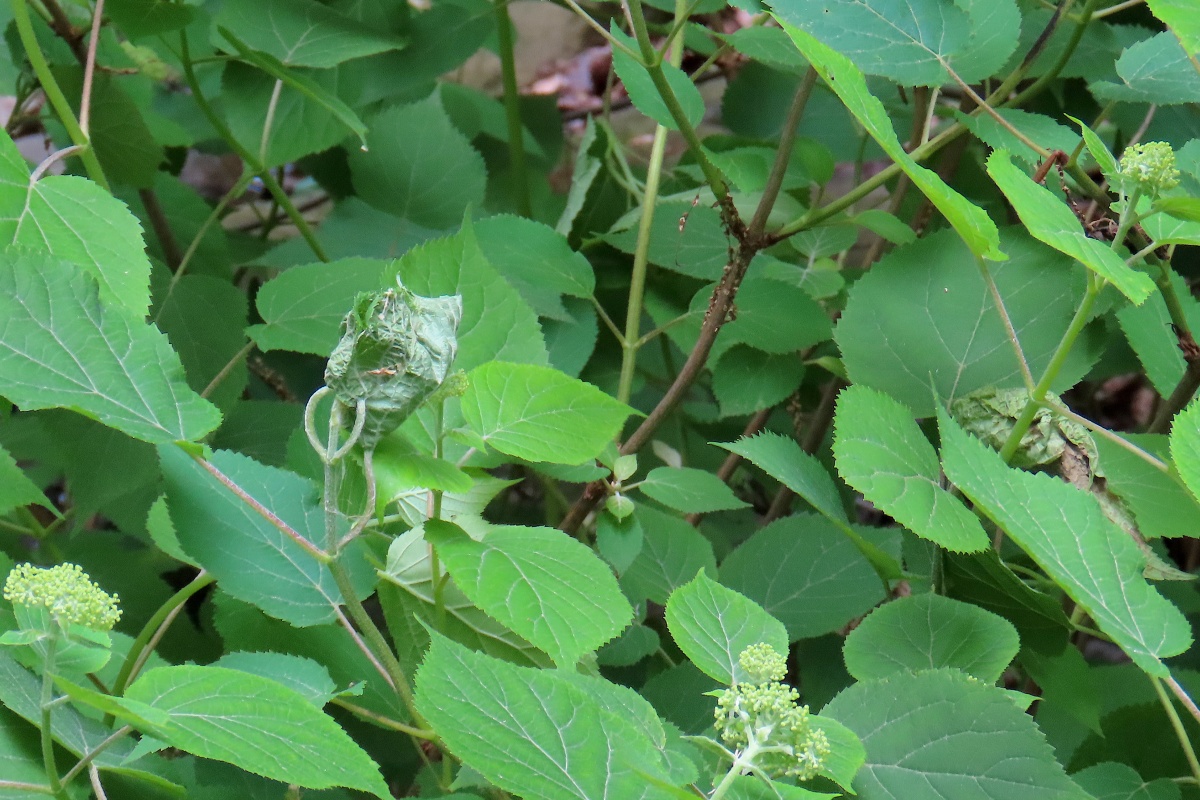
Smooth Hydrangea
Spicebush
Swamp Rose
Sweet Pepper Bush
Trillium species (flower not showing ) 
Virginia Creeper (Vine)
Virginia Knotweed (Buckwheat family)
Virginia Sweet Spire
Watermeal (even tinier flowering plant in water – the tiniest plant we know)
Yellow Iris (invasive)
Yellow Violet
Yellow Wood Sorrel

Ferns
Christmas Fern
Maidenhair
Ostrich Fern
Royal Fern
Wood Fern

Fungus and Lichen
Crustose form of lichen on rock, very flat
Leafy Foliose (algae, cyanobacteria with a fungus symbiotic)
Taphrinna farlowii  (fungus on cherry leaves)
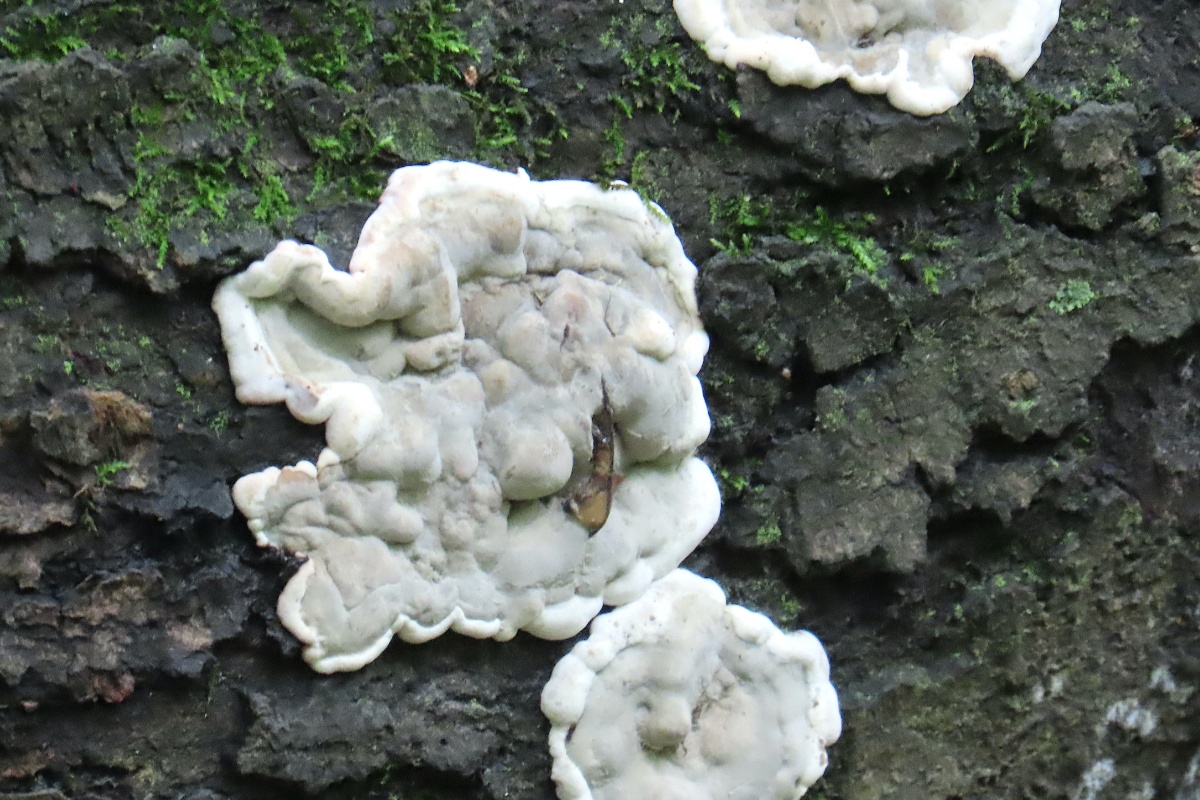
Tree Fungus (Brittle Cinder)

Herps
Snapping Turtle
Red-eared Slider

Mammals
Eastern Gray Squirrel

Insects
Elm leafminer (sawfly)
Hackberry star gall (psyllid)
Hackberry nipple gall (psyllid)
Hydrangea leafier moth (saw the leaf structure it makes)
Leafminer fly on Columbine
Rice root aphid gall
Witch hazel cone gall (aphid)

Butterfly
Question Mark


Central Park Spring Migration Walk with Alice Deutsch, Alan Drogin, and Kevin Sisco, 5/27/2025

Registrar: Catherine Ichord
Participants: 35
Weather: high 50s to mid 70s, partly cloudy, light breeze
Bird Species: 54

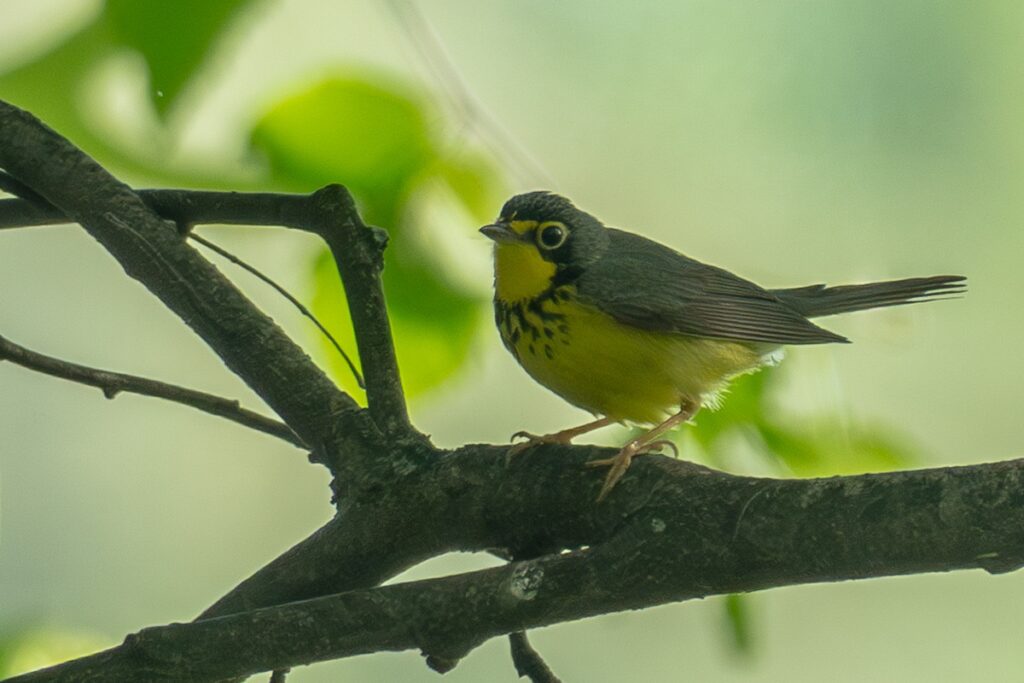
It was a beautiful day for the final walk in the Central Park spring migration series. Birders split into two groups and explored Strawberry Fields, the Ramble, and other nearby areas of the park. A combined total of 54 species were observed, including an Acadian Flycatcher and nine species of warblers.

Species List

Canada Goose
Gadwall
Mallard
Mallard x American Black Duck
Rock Pigeon (Feral Pigeon)
Mourning Dove
Chimney Swift
Ring-billed Gull
American Herring Gull
Great Black-backed Gull
Double-crested Cormorant
Black-crowned Night Heron
Great Egret
Osprey
Red-tailed Hawk
Red-bellied Woodpecker
Downy Woodpecker
Northern Flicker
American Kestrel
Eastern Wood-Pewee
Empidonax sp.
Acadian Flycatcher
Great Crested Flycatcher
Eastern Kingbird
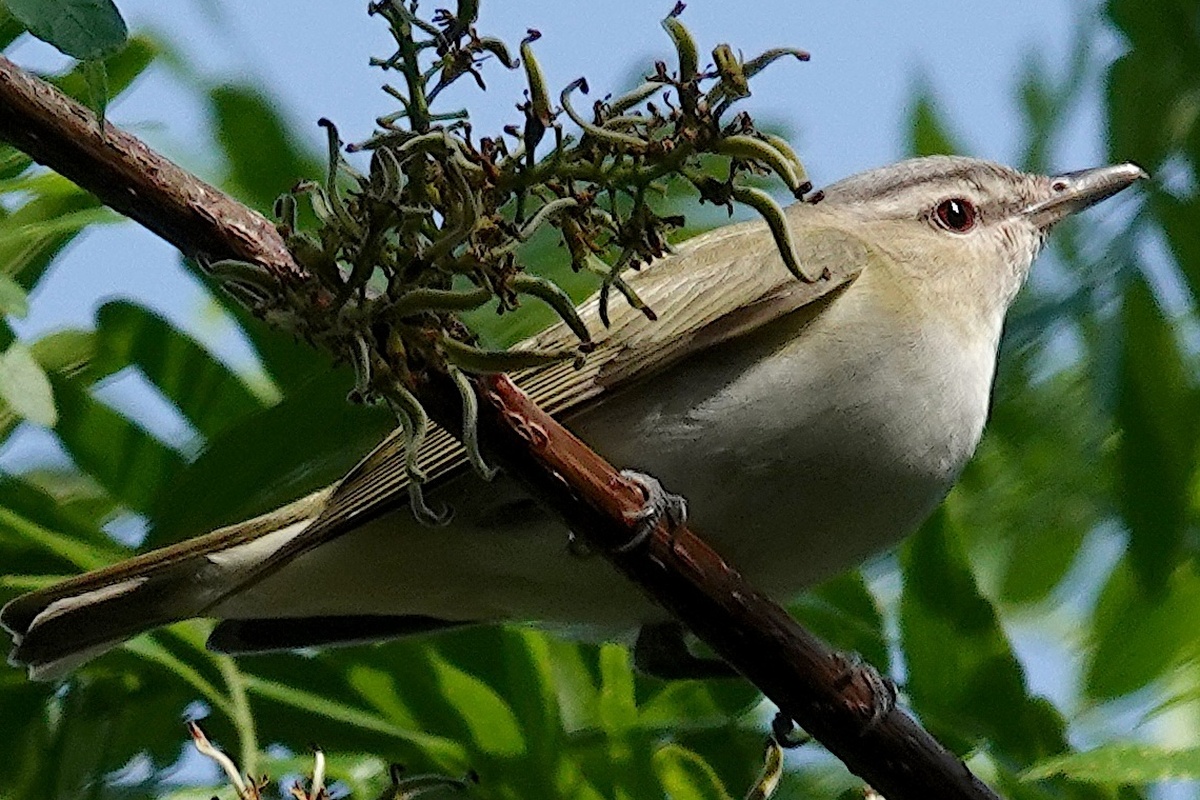
Warbling Vireo
Red-eyed Vireo
Blue Jay
American Crow
Barn Swallow
Carolina Wren
European Starling
Gray Catbird
Northern Mockingbird
Gray-cheeked Thrush
Swainson’s Thrush
Wood Thrush
American Robin
Cedar Waxwing
House Sparrow
House Finch
American Goldfinch
White-throated Sparrow
Baltimore Oriole
Red-winged Blackbird
Brown-headed Cowbird
Common Grackle
Northern Waterthrush
Black-and-white Warbler
Common Yellowthroat
American Redstart
Magnolia Warbler
Yellow Warbler
Chestnut-sided Warbler
Blackpoll Warbler
Canada Warbler
Northern Cardinal